
Sheet Metal
Is Sheet Metal China Your Best Manufacturing Choice? A Practical Sourcing Guide
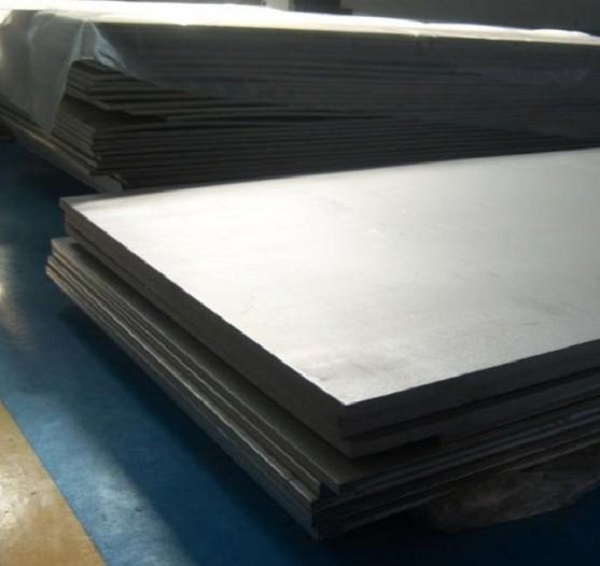
If you are searching for “Sheet Metal China,” you likely have questions. Why does China dominate this industry? How do you find reliable suppliers? What makes Chinese sheet metal services different from others? The short answer is straightforward. China’s sheet metal industry combines advanced technology, cost advantages, large-scale production, and mature supply chains.
Why Choose Sheet Metal China?
What Makes Chinese Manufacturing Cost-Effective?
Chinese manufacturers benefit from economies of scale. When factories produce massive volumes, the cost per unit drops significantly. But lower prices do not mean lower quality.
Consider a real example. A U.S. electronics company we worked with switched to a Chinese supplier for their sheet metal parts. They saved 25% to 30% on component costs while maintaining ISO 9001 and IATF 16949 certifications. These certifications matter for automotive and tech industries.
Where do savings come from? China produces huge amounts of steel—it ranks among the world’s top producers. Local material sourcing cuts costs. Efficient labor management adds more savings. The result is quality parts at better prices.
What Technologies Do Chinese Sheet Metal Factories Use?
The old image of basic Chinese manufacturing is outdated. Today’s top factories use modern equipment throughout their shops.
You will find:
- CNC punching machines running automated cycles
- Laser cutting systems holding precision to ±0.1mm
- Robotic welding arms producing consistent joints
- Automated bending machines forming complex shapes
A German medical device company needed stainless steel enclosures with tight tolerances. They sourced from a Chinese supplier using fiber laser cutters. The parts met strict EU Medical Device Regulation standards without issues.
Material options are equally broad. Factories handle aluminum, stainless steel grades 304 and 316, carbon steel, and specialty alloys like titanium. You can source simple brackets and complex aerospace components from the same supplier.
How Fast Is Production in China?
China’s supply chain maturity speeds everything up. Raw material suppliers, finishing services, and logistics connect smoothly. This cuts lead times significantly.
For urgent projects, many factories offer:
- 1 to 2 weeks for prototypes
- 4 to 6 weeks for mass production
Compare this to 6 to 8 weeks common in some Western countries. A European automotive parts distributor ordered 50,000 sheet metal brackets recently. They received everything in 5 weeks. The supplier’s automated lines and local material stock made this possible.
What Is the Current State of China’s Sheet Metal Industry?
How Large Is the Market?
Numbers tell the story clearly. China is the world’s largest sheet metal manufacturing hub. It accounts for over 40% of global sheet metal production according to 2024 data from the China Association of Metalforming.
The industry’s market value exceeded 1.2 trillion RMB—about $165 billion—in 2023. Growth runs at 6% to 8% annually. Automotive, electronics, and renewable energy sectors drive most of this demand.
Where Are the Main Manufacturing Clusters?
Sheet metal factories concentrate in specific regions. This clustering makes it easier for buyers to visit and coordinate work.
| Region | Focus Industries | Key Advantages |
|---|---|---|
| Guangdong (Shenzhen, Guangzhou) | Electronics, Consumer Goods | Close to tech hubs, fast prototyping |
| Jiangsu (Suzhou, Wuxi) | Automotive, Medical Equipment | Strict quality control, ISO certifications |
| Zhejiang (Hangzhou, Ningbo) | Machinery, Renewable Energy | Cost-competitive, large-scale production |
Shenzhen alone has over 5,000 sheet metal suppliers. Many specialize in custom parts for smartphones and IoT devices. You can find expertise for nearly any application in these clusters.
What New Trends Are Emerging?
Three trends shape the industry’s future.
Green manufacturing is growing rapidly. More factories adopt eco-friendly practices like water-based paints and scrap metal recycling. Over 60% of top suppliers now hold ISO 14001 environmental management certification according to a 2024 survey.
Smart factories are appearing. IoT sensors and artificial intelligence monitor production lines. A supplier in Suzhou cut defect rates by 18% after adding AI-powered quality checks for laser-cut parts.
Niche customization is expanding. High-precision sheet metal for aerospace brackets and solar panel frames drives new investment. Factories are buying advanced equipment like 5-axis laser cutters to meet these demands.
How Do You Choose a Reliable Sheet Metal Supplier in China?
Step 1: Define Your Requirements Clearly
Start with documentation. Before contacting any supplier, write down exactly what you need.
Include these details:
- Material type (304 stainless steel, 6061 aluminum, etc.)
- Thickness range (0.5mm to 20mm is standard)
- Tolerance needs (±0.1mm for precision parts)
- Finishing requirements (powder coating, anodizing, galvanizing)
- Quantity (prototype, small batch under 1,000, mass production over 10,000)
- Certifications required (ISO 9001, IATF 16949, CE, FDA for medical)
A U.K. robotics company we advised saved three months of back-and-forth this way. They shared 3D CAD files and a detailed spec sheet upfront. Suppliers provided accurate quotes within 48 hours.
Step 2: Screen Suppliers for Experience and Trust
Avoid middlemen by focusing on real factories. Look for these qualities:
Five or more years of experience in your industry matters. If you need automotive parts, choose suppliers with IATF 16949 certification and clients like Toyota or Volkswagen.
Verifiable client references are essential. Ask for two or three buyers from your country. Follow up with them about quality, lead times, and communication.
Transparent facilities should be visible. Request a virtual tour or photos of the factory floor. Reliable suppliers show you their CNC machines, quality labs, and storage areas.
Watch for red flags. Unwillingness to share certifications is suspicious. Vague answers about production processes are warning signs. Extremely low quotes often mean poor quality.
Step 3: Request Samples and Test Thoroughly
Never place large orders without sample testing first. This step prevents expensive mistakes.
Check these aspects carefully:
- Dimensional accuracy using calipers or coordinate measuring machines
- Surface finish for scratches, uneven coating, or burrs
- Material authenticity by requesting Mill Test Report certificates
A Canadian furniture brand once received samples that looked perfect. Load tests revealed they were weak. Testing before mass production saved them from a $50,000 disaster.
Step 4: Negotiate Contracts and Protect Your Interests
Clear contracts prevent problems later. Include these key terms:
| Contract Element | What to Specify |
|---|---|
| Pricing | Fixed or per-unit rates with volume discounts |
| Lead times | Delivery dates with penalties for delays |
| Quality guarantees | Return policies for defective parts |
| Payment terms | 30% deposit, 70% upon delivery is common |
| IP protection | Non-disclosure agreements for your designs |
For international shipping, work with suppliers experienced in Incoterms like EXW, FOB, or CIF. These terms clarify responsibility for shipping, insurance, and customs.
How to write a spec that gets priced correctly
A drawing is a contract. If it leaves a number open, the shop fills that number in with its own default. The default is rarely the one you had in mind. Put these five lines on every RFQ and most of the back-and-forth disappears before it starts.
- Flat pattern or STEP file plus a dimensioned drawing
- Material grade and thickness with the standard number
- Bend radii, K-factor and the direction of the grain
- Finish, masking and which faces stay bare
- Quantity and the assembly sequence
The point is not paperwork. Each line removes a decision the shop would otherwise make for you. A complete RFQ comes back priced. An incomplete one comes back guessed.
What actually drives the price
Buyers usually push on material because it is the line they can see. In practice the material is rarely the biggest number on a quote. These five lines decide most of it:
- blank size and nesting efficiency
- number of bends and weld joints
- material grade and thickness
- finish and masking
- batch quantity
Ask for the quote split by line. A supplier who cannot break it down is guessing, and you will pay for the guess. The line you can usually renegotiate is the tolerance band, not the raw material.
Problems you will meet, and the fix
Every process has a failure mode it prefers. The same four show up again and again on this kind of work, and none of them are mysteries once you know what to look for.
- Stretching at a bend that is tighter than the material allows
- Hole distortion when a hole sits too close to a bend line
- Weld draw on a visible face
- Springback that pulls a formed angle out of tolerance
Catch the fault on the first part, not the hundredth. A first-article check costs an hour. A bad batch costs the whole order. Write the check into the purchase order so nobody has to remember it.
What to check on the first article
The first article is the cheapest inspection you will ever buy. Use it properly and the rest of the run becomes boring, which is exactly what you want.
- Every dimension on the drawing, with the measured value written beside it.
- The material certificate, matched to the heat or lot number on the parts.
- The finish against the sample you approved, under the same light.
- Fit against the mating part, assembled rather than measured.
- Packaging, because parts that arrive damaged were never in tolerance.
Check in this order: datums, then mating features, then cosmetic faces. If the datums are wrong, every number after them is noise. Keep the report on file. When a problem shows up in month six, that document is the only thing that tells you what changed.
How to compare two quotes fairly
Two numbers are not comparable unless the scope matches. Line them up before you decide, because a low number with three gaps is not a low number.
Same drawing, same material, same finish, same inspection. Anything else is a different job wearing the same part number. Then look at what each quote leaves out. Freight, packaging, certificates and tooling are the usual gaps.
Ask each supplier to state their assumptions in writing. The one who does is usually the one who has run the process before.
Scaling from one part to a batch
The first part teaches you the process. The hundredth teaches you the process cost.
Watch three things as volume grows: setup amortisation, tool wear, and how much hand work the finish still needs. If the unit price barely moves between ten and a hundred, the cost sits in material or in hand work, not in setup. Ask which, because only one of them is negotiable.
Lead time behaves the same way. A one-off is scheduled around other jobs. A repeat order is scheduled around your forecast. Give the shop a forecast and the lead time gets shorter, not longer.
How to read a supplier's quote
A quote is a short document with a long shadow. Four things in it decide whether the job runs smoothly, and only one of them is the price.
- The scope line. It should name the process, the material and the finish, not just the part.
- The tolerance basis. General tolerance or the drawing, and which standard it follows.
- The exclusions. Tooling, freight, certificates and inspection are the usual omissions.
- The validity date. Material prices move, and an open-ended quote is a promise nobody can keep.
Read the exclusions before you read the total. A quote that leaves out tooling is not cheaper. It is a quote for a different job.
What to send with the first order
The first order sets the pattern for every order after it. Send a complete package once and the shop files it, and the second order takes a fraction of the time.
- A STEP or native model plus a PDF drawing carrying the same revision letter.
- The material callout by standard number, not by trade name.
- The finish and the exact faces it applies to.
- Any test the part must pass: fit, seal, drop, salt spray, dielectric.
- A contact who can answer a question inside one working day.
Then write down what was agreed. An email that confirms the material, the finish and the date is worth more than a longer purchase order that leaves them open.
When this is the wrong choice
A good supplier tells you when the process does not fit. These are the cases where we say so.
- The volume is so low that setup costs more than the parts are worth.
- The tolerance is tighter than the process can hold without a second operation.
- The geometry cannot be made without a tool feature that will not pay back.
- The material you need is not available in the form the process requires.
- The schedule is shorter than the tooling or setup time, and nobody has said so yet.
None of these are refusals. They are reasons to look at a different route, and the earlier that conversation happens the cheaper it is. The most expensive mistake in manufacturing is a process chosen before the question was understood.
What Challenges Arise When Sourcing from China?
How Do You Handle Language Barriers?
Many factory workers speak limited English. This can lead to misunderstood specifications.
Solution: Choose suppliers with English-speaking sales or project managers. Use visual tools like 3D models, diagrams, and photos instead of text alone. For complex projects, consider hiring a local sourcing agent—but verify their credentials first.
How Do You Ensure Consistent Quality?
Not all suppliers maintain the same standards. Some may cut corners to reduce costs.
Solution: Select suppliers with third-party certifications like ISO or IATF. Conduct regular quality audits in person or through inspectors like SGS or Bureau Veritas. For large orders, use batch inspections—check 10% to 15% of units before shipment.
How Do You Avoid Shipping Delays?
Global supply chain disruptions happen. Port congestion or incorrect documentation can halt deliveries.
Solution: Plan ahead by adding one to two weeks to your lead time for unexpected delays. Ensure suppliers provide all required documents: commercial invoice, packing list, and certificate of origin. Work with freight forwarders experienced in your country’s import rules.
Sheet Metal China represents a powerful manufacturing option for global buyers. The combination of cost savings, advanced technology, fast production, and mature supply chains is hard to match elsewhere.
Success comes from approaching sourcing systematically. Define your requirements clearly before starting. Screen suppliers thoroughly for experience and trust. Test samples before committing to large orders. Negotiate contracts that protect your interests.
The industry continues evolving with green manufacturing, smart factories, and niche capabilities. These trends make Chinese suppliers increasingly competitive for complex projects.
Whether you need prototypes or mass production, understanding how to navigate Sheet Metal China opens doors to better manufacturing outcomes. Take time to learn the process, verify your partners, and build relationships. The results justify the effort.
Our solution for Sheet Metal China
YiguProto runs sheet metal fabrication in house, from a single prototype to a production batch. We quote the process, the material and the finish as separate lines, so you can see where the money goes instead of arguing with one number.
Send a STEP file or a drawing and you get a DFM report in one to two business days. It flags the features that add cost and the features that will not hold tolerance on the process you picked.
Every order ships with an inspection report on the features you call out. If a part misses, we make it again. Ready to price a part? Start with a free quote and DFM review, or read more about our sheet metal fabrication. You can also talk to an engineer before you commit to a drawing.
FAQ about Sheet Metal China
How long does a first article take?
Usually a few business days once the drawing is frozen, and longer if tooling is involved. The date we give you is the date we confirm in writing, not the date we hope for.
What tolerance can you hold on Sheet Metal China?
The working default is ±0.2 mm on formed features, ±0.1 mm on laser-cut holes. Tighter than that the process changes and so does the price, because every step tighter adds inspection time. Call out only the faces that mate with something else and leave the rest on the general tolerance.
What files do you need in order to quote?
A STEP file plus a PDF drawing that carries the same revision letter. The model carries the geometry and the drawing carries the intent. When the two disagree, the shop picks one, and it is never the one you meant.
What is Sheet Metal China used for?
Sheet Metal China turns up wherever the part has to do a real job at a predictable cost: brackets, housings, fixtures, covers and the fittings that hold them together. The honest test is whether the properties match the load and the environment, not whether the material is fashionable.
What happens if a part is out of specification?
We measure it against the same drawing you approved and, if it misses, we make it again. What matters is that the report exists, because a disagreement without data is just an opinion.
Can Sheet Metal China be made in small quantities?
Yes, and small quantities are where a good supplier earns the next order. Setup dominates the price at low volume, so the cheapest route is usually the one with the fewest operations, not the cheapest material.
The short version
Sheet Metal China rewards the buyer who reads the data sheet and the drawing together. Pick the option for the property that matters, not for the price per kilo.
Tighten only what mates. Test a sample before the run. Then let the process do the rest.