
Sheet Metal
What Sheet Metal Material Grade Should You Choose?
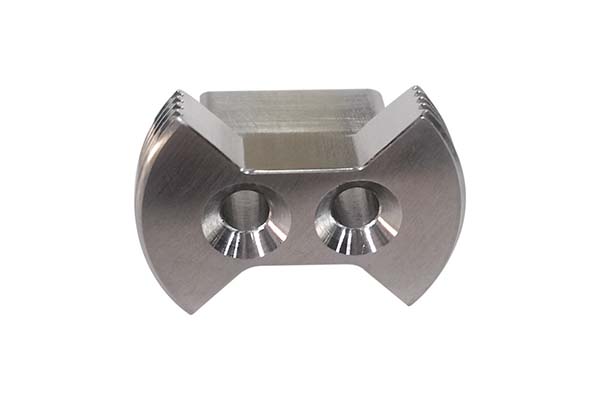
Sheet metal material grades are not random numbers. They are organized systems that tell you exactly what chemicals and properties a metal has. Standards from organizations like ASTM and SAE ensure that 304 stainless steel from one factory behaves the same as 304 stainless from another factory anywhere in the world.
Key takeaways
- Steel dominates sheet metal work because it offers strength, versatility, and affordability.
- Knowing individual grades helps, but real decisions require side-by-side comparison. This table shows practical differences between common grades.
- Turn material theory into practical decisions by answering these questions:
- Selecting the right grade means nothing if the material you receive doesn’t actually meet that specification.
What Do Steel Grades Mean?
Steel dominates sheet metal work because it offers strength, versatility, and affordability. But “steel” covers thousands of grades, each designed for specific needs. Understanding the main categories is your first step.
Carbon steel grades
Carbon steel is the industry workhorse. Its properties come primarily from carbon content—the amount of carbon determines strength, hardness, and formability.
Low carbon steel (up to 0.30% carbon)
- Common grades: A36, 1008, 1018
- Properties: Excellent formability, welds easily, lowest cost
- Uses: Auto body panels, enclosures, brackets, general fabrication
- Note: A36 is structural grade; 1008/1018 are drawing quality
Medium carbon steel (0.30–0.60% carbon)
- Common grade: 1045
- Properties: Stronger and harder than low carbon, less formable
- Uses: Machine parts, gears, axles, structural components
- Trade-off: Higher strength comes at cost of bendability
High carbon steel (0.60–1.00% carbon)
- Common grade: 1095
- Properties: Very hard, holds sharp edge, difficult to form
- Uses: Springs, cutting tools, wear applications
- Limitation: Rarely used for general sheet metal work
Stainless steel grades
Stainless steels contain at least 10.5% chromium, which forms a self-healing protective layer on the surface. This gives stainless its famous corrosion resistance.
Austenitic (300 series) — The workhorses of stainless
304 stainless steel (18% chromium, 8% nickel)
- Most common stainless grade worldwide
- Excellent corrosion resistance in most environments
- Outstanding formability and weldability
- Non-magnetic
- Uses: Food equipment, kitchen sinks, architectural panels
316 stainless steel (adds molybdenum)
- Often called “marine grade”
- Enhanced resistance to chlorides (salt water, road salt)
- Uses: Boat hardware, medical implants, chemical equipment
- Cost: Higher than 304
Ferritic (400 series)
430 stainless steel
- Good corrosion resistance (better than carbon, less than 304)
- Magnetic
- Lower cost than 300 series
- Uses: Automotive trim, appliance interiors, dishwasher panels
Coated steel grades
Coated steels start as carbon steel, then receive a protective metal layer to extend service life.
Galvanized steel
- Hot-dip galvanized: Steel dipped in molten zinc
- Zinc coating acts as sacrificial barrier
- Coating weight designated as G30, G60, G90 (higher number = thicker coating)
- Uses: HVAC ductwork, roofing, outdoor enclosures, farm equipment
Galvannealed steel
- Galvanized steel that undergoes additional heat treatment
- Zinc-iron alloy surface is harder, more scratch-resistant
- Matte gray finish takes paint exceptionally well
- Common grade: A60
- Uses: Automotive body panels, appliances, painted parts
What Do Aluminum Alloy Numbers Mean?
Aluminum is the choice when weight matters. Its strength-to-weight ratio beats steel, and its natural oxide layer provides excellent corrosion resistance without coatings.
Aluminum uses a 4-digit system. The first digit tells you the primary alloying element, which determines the alloy’s characteristics.
1xxx series (pure aluminum)
Primary element: None (99% minimum aluminum)
Common grade: 1100
Properties:
- Most formable of all aluminum grades
- Excellent corrosion resistance
- High electrical and thermal conductivity
- Very low mechanical strength
Uses: Chemical equipment, food packaging, reflectors, decorative trim
Best for: Applications needing formability and purity, not strength
3xxx series (manganese)
Primary element: Manganese
Common grade: 3003
Properties:
- General-purpose workhorse alloy
- About 20% stronger than 1100
- Excellent formability
- Very good corrosion resistance
Uses: General sheet metal work, fuel tanks, cookware, building siding, fan blades
Best for: Most everyday aluminum applications where moderate strength is enough
5xxx series (magnesium)
Primary element: Magnesium
Common grade: 5052
Properties:
- Highest strength among non-heat-treatable alloys
- Much stronger than 3003
- Excellent formability
- Outstanding corrosion resistance, especially in marine environments
Uses: Marine components, boat hulls, fuel tanks, pressure vessels, electronic enclosures
Best for: Applications needing higher strength and saltwater resistance
Choosing between 3003 and 5052:
- 3003 when cost and good formability are primary drivers
- 5052 when you need higher strength and better corrosion resistance
6xxx series (magnesium and silicon)
Primary elements: Magnesium and silicon
Common grade: 6061 (often in T6 temper)
Properties:
- Heat-treatable—strength increases significantly with T6 temper
- Good strength, corrosion resistance, and weldability
- Good machinability
- Less formable than 5052
Uses: Structural components, aircraft fittings, bicycle frames, automotive suspension parts
Best for: Applications needing a balance of strength, corrosion resistance, and light weight
How Do Properties Compare Across Grades?
Knowing individual grades helps, but real decisions require side-by-side comparison. This table shows practical differences between common grades.
| Material / Grade | Density (lb/in³) | Tensile Strength (ksi) | Formability | Corrosion Resistance | Weldability | Relative Cost |
|---|---|---|---|---|---|---|
| A36 Carbon Steel | 0.284 | 58–80 | Good | Poor | Excellent | Low |
| 304 Stainless | 0.289 | 75–90 | Excellent | Excellent | Good | High |
| 5052-H32 Aluminum | 0.097 | 33 | Excellent | Excellent | Good | Medium |
| 6061-T6 Aluminum | 0.098 | 45 | Fair | Very Good | Good | Medium-High |
Strength vs. weight
Strength-to-weight ratio matters when mass is critical. While A36 steel has higher absolute strength than 6061 aluminum (60 ksi vs. 45 ksi), steel is nearly three times heavier. This is why aluminum dominates aerospace, performance automotive, and robotics.
For stationary applications where pure strength, stiffness, and low cost drive design, steel remains the obvious choice.
Formability and weldability
These properties determine manufacturing ease and cost.
Formability is a material’s ability to bend or stretch without cracking:
- Low-carbon steel, 304 stainless, and 5052 aluminum all offer excellent formability
- Higher-strength materials like 6061-T6 require larger bend radii and may crack under aggressive forming
Weldability varies significantly:
- Carbon steel: Easiest to weld with common, low-cost methods
- Stainless steel: Requires more control to prevent overheating (which can reduce corrosion resistance at the weld)
- Aluminum: Challenges include high thermal conductivity and the need to clean the oxide layer before welding
Corrosion resistance and cost
This is the classic long-term value equation.
Carbon steel:
- Lowest upfront cost
- Rusts quickly without protective coating
- Coating adds cost and potential failure points
Stainless steel and aluminum:
- Higher initial material cost
- Built-in corrosion resistance
- In outdoor or corrosive environments, lifecycle cost is often lower than coated steel
The choice becomes: pay more upfront for inherent durability, or pay less upfront and plan for ongoing maintenance and eventual replacement.
How Do You Select the Right Grade?
Turn material theory into practical decisions by answering these questions:
- Operating environment: Indoor, outdoor, saltwater, chemical exposure, high temperature?
- Structural requirements: Load-bearing, impact resistance, required stiffness?
- Weight targets: Is strength-to-weight ratio critical?
- Manufacturing processes: Simple bends, deep drawing, welding, machining?
- Appearance needs: Raw finish, brushed, painted, polished?
- Budget: Consider both initial material cost and long-term lifecycle cost.
Scenario 1: Outdoor electrical enclosure
Requirements:
- High corrosion resistance for rain and humidity
- Moderate strength for security and component mounting
- Weight not critical, but cost matters for volume production
Primary choice: G90 galvanized steel
- Cost-effective corrosion protection
- Strong and secure
- Easily fabricated with standard tools
Alternative: 5052 aluminum
- Superior corrosion resistance
- Much lighter (advantage for pole-mounted units)
- Higher material cost
Scenario 2: High-end kitchen appliance
Requirements:
- Excellent appearance and cleanability
- Food-safe, corrosion-resistant from cleaning agents
- Formable for sleek designs with seamless corners
Primary choice: 304 stainless steel, #4 brushed finish
- Industry standard for good reason
- Meets all appearance and corrosion requirements
- Excellent formability
Alternative: A60 galvannealed steel
- If appliance will be painted
- Provides superior paint adhesion
- Good corrosion protection at lower cost
Scenario 3: Lightweight drone frame
Requirements:
- Strength-to-weight ratio is critical (every gram affects flight time)
- Stiff enough to resist flex and vibration
- Machinable for mounting points
Primary choice: 6061-T6 aluminum
- Ideal combination of strength, low density, and workability
- Provides needed rigidity
- Easily machined
Alternative: Carbon fiber (non-metal)
- Even better strength-to-weight ratio
- Much higher material and fabrication cost
- For ultimate performance when budget allows
Real example: Autonomous delivery robot chassis
In a recent project developing a chassis for an autonomous delivery robot, we initially selected 5052 aluminum for its excellent formability. Structural simulations revealed that vibration from rough terrain would affect onboard sensor accuracy—the chassis needed higher rigidity.
We switched to 6061-T6 aluminum. It provided the necessary stiffness with minimal weight penalty, though it required slightly larger bend radii during fabrication. This decision was critical to ensuring sensor accuracy and overall robot reliability.
How to write a spec that gets priced correctly
A drawing is a contract. If it leaves a number open, the shop fills that number in with its own default. The default is rarely the one you had in mind. Put these five lines on every RFQ and most of the back-and-forth disappears before it starts.
- Flat pattern or STEP file plus a dimensioned drawing
- Material grade and thickness with the standard number
- Bend radii, K-factor and the direction of the grain
- Finish, masking and which faces stay bare
- Quantity and the assembly sequence
The point is not paperwork. Each line removes a decision the shop would otherwise make for you. A complete RFQ comes back priced. An incomplete one comes back guessed.
What actually drives the price
Buyers usually push on material because it is the line they can see. In practice the material is rarely the biggest number on a quote. These five lines decide most of it:
- blank size and nesting efficiency
- number of bends and weld joints
- material grade and thickness
- finish and masking
- batch quantity
Ask for the quote split by line. A supplier who cannot break it down is guessing, and you will pay for the guess. The line you can usually renegotiate is the tolerance band, not the raw material.
Problems you will meet, and the fix
Every process has a failure mode it prefers. The same four show up again and again on this kind of work, and none of them are mysteries once you know what to look for.
- Stretching at a bend that is tighter than the material allows
- Hole distortion when a hole sits too close to a bend line
- Weld draw on a visible face
- Springback that pulls a formed angle out of tolerance
Catch the fault on the first part, not the hundredth. A first-article check costs an hour. A bad batch costs the whole order. Write the check into the purchase order so nobody has to remember it.
What to check on the first article
The first article is the cheapest inspection you will ever buy. Use it properly and the rest of the run becomes boring, which is exactly what you want.
- Every dimension on the drawing, with the measured value written beside it.
- The material certificate, matched to the heat or lot number on the parts.
- The finish against the sample you approved, under the same light.
- Fit against the mating part, assembled rather than measured.
- Packaging, because parts that arrive damaged were never in tolerance.
Check in this order: datums, then mating features, then cosmetic faces. If the datums are wrong, every number after them is noise. Keep the report on file. When a problem shows up in month six, that document is the only thing that tells you what changed.
How to compare two quotes fairly
Two numbers are not comparable unless the scope matches. Line them up before you decide, because a low number with three gaps is not a low number.
Same drawing, same material, same finish, same inspection. Anything else is a different job wearing the same part number. Then look at what each quote leaves out. Freight, packaging, certificates and tooling are the usual gaps.
Ask each supplier to state their assumptions in writing. The one who does is usually the one who has run the process before.
Scaling from one part to a batch
The first part teaches you the process. The hundredth teaches you the process cost.
Watch three things as volume grows: setup amortisation, tool wear, and how much hand work the finish still needs. If the unit price barely moves between ten and a hundred, the cost sits in material or in hand work, not in setup. Ask which, because only one of them is negotiable.
Lead time behaves the same way. A one-off is scheduled around other jobs. A repeat order is scheduled around your forecast. Give the shop a forecast and the lead time gets shorter, not longer.
What Quality Documentation Should You Expect?
Selecting the right grade means nothing if the material you receive doesn’t actually meet that specification. Standardization is engineering’s foundation, ensuring consistent, predictable performance.
Key standards organizations
ASTM International: Develops technical standards defining chemical composition and mechanical properties. An ASTM specification like ASTM A36 for structural steel tells you exactly what to expect.
SAE International: Maintains numbering systems for steel grades (e.g., SAE 1018) widely used across industries.
ISO: Creates global standards that often harmonize with regional standards like ASTM.
Understanding a Material Test Report (MTR)
An MTR (or Mill Certificate) is your quality assurance document. Requesting one is standard practice in professional purchasing and your proof that you’re getting what you paid for.
An MTR always includes:
- Chemical composition: Exact percentage breakdown of elements
- Mechanical properties: Measured tensile strength, yield strength, elongation
- Heat number: Unique code tracing back to the specific production batch
- Standards compliance: Statement confirming conformance to specific standards (e.g., “Conforms to ASTM A36”)
Always buy from reputable suppliers who can provide a full MTR. This documentation guarantees quality and ensures your final product’s integrity and safety.
Sheet metal material grades give you a precise language to specify exactly what you need. Carbon steel offers strength and economy—A36 for general use, 1008 for forming, 1045 for higher strength. Stainless steel provides corrosion resistance—304 for most applications, 316 for marine environments. Aluminum delivers light weight—3003 for general work, 5052 for higher strength and saltwater resistance, 6061 for structural applications. Match your grade to operating environment, structural needs, weight targets, and manufacturing processes. Always request Material Test Reports from reputable suppliers. The right grade choice ensures your project performs as intended, lasts as long as needed, and costs what it should.
Our solution for Sheet Metal Material Grade
YiguProto runs sheet metal fabrication in house, from a single prototype to a production batch. We quote the process, the material and the finish as separate lines, so you can see where the money goes instead of arguing with one number.
Send a STEP file or a drawing and you get a DFM report in one to two business days. It flags the features that add cost and the features that will not hold tolerance on the process you picked.
Every order ships with an inspection report on the features you call out. If a part misses, we make it again. Ready to price a part? Start with a free quote and DFM review, or read more about our sheet metal fabrication. You can also talk to an engineer before you commit to a drawing.
FAQ about Sheet Metal Material Grade
How long does a first article take?
Usually a few business days once the drawing is frozen, and longer if tooling is involved. The date we give you is the date we confirm in writing, not the date we hope for.
What happens if a part is out of specification?
We measure it against the same drawing you approved and, if it misses, we make it again. What matters is that the report exists, because a disagreement without data is just an opinion.
How much does Sheet Metal Material Grade cost?
Price comes from five lines: material, machine or tool time, setup, finishing and inspection. The material itself is usually the smallest of them. Send a drawing and we will split the quote so you can see which line is doing the damage.
What should I check before approving the parts?
Datums first, then the features that mate, then the cosmetic faces. Ask for a dimensional report, a material certificate and a finish sample. A part can be inside every tolerance and still not fit, so assemble one before you sign.
What is Sheet Metal Material Grade used for?
Sheet Metal Material Grade turns up wherever the part has to do a real job at a predictable cost: brackets, housings, fixtures, covers and the fittings that hold them together. The honest test is whether the properties match the load and the environment, not whether the material is fashionable.
Does the process work for prototypes as well as production?
Yes, and that is usually the point. Running the prototype on the production process removes a whole class of surprises, because the part you test is made the same way as the part you sell.
The short version
Sheet Metal Material Grade rewards the buyer who reads the data sheet and the drawing together. Pick the option for the property that matters, not for the price per kilo.
Tighten only what mates. Test a sample before the run. Then let the process do the rest.