
Blogs
Titanium 3D Printing Services
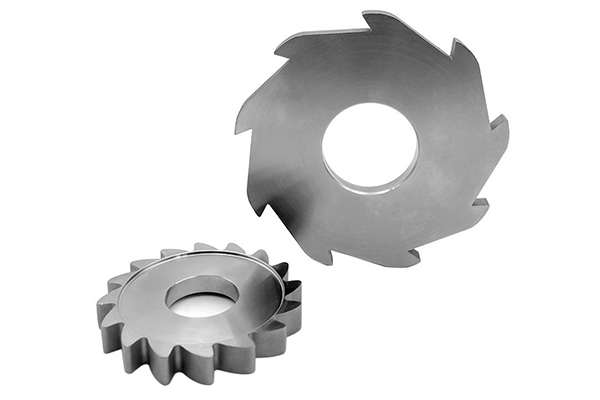
Elevate your most demanding projects with Titanium 3D Printing—the perfect fusion of titanium’s unmatched strength-to-weight ratio and advanced additive manufacturing technology. From biocompatible medical implants to lightweight aerospace components, our solutions deliver exceptional precision printing, complex geometries, and rapid production.
Key takeaways
- At our shop, our Titanium 3D Printing capabilities are engineered to meet the strictest industry standards—from aerospace to medical.
- Titanium3D Printing is a cutting-edge metal printing process that uses additive manufacturing principles to build parts layer by layer from titanium feedstock (typically powder).
- Not all titanium materials are the same—we offer a range of titanium alloys and pure titanium to match your application’s demands.
- Titanium 3D Printing offers a range of benefits that make it a superior choice for high-performance applications:

Our Capabilities: Delivering Titanium 3D Printing Excellence
At our shop, our Titanium 3D Printing capabilities are engineered to meet the strictest industry standards—from aerospace to medical. We combine advanced tools with deep technical expertise to deliver consistent, high-quality results:
- Precision Printing: Our machines (e.g., EOS M 400, Arcam Q20) achieve tight tolerances (as low as ±0.03mm) and part densities up to 99.9%—critical for medical implants and aerospace components.
- Complex Geometries: We print intricate designs (e.g., internal lattices, hollow structures) that are impossible with traditional machining—perfect for lightweighting parts without sacrificing strength.
- High-Quality Outputs: Every titanium part undergoes rigorous testing (tensile, fatigue, corrosion) to ensure it meets industry standards (e.g., ASTM F136 for medical titanium).
- Custom Solutions: Whether you need a patient-specific dental implant or a custom aerospace bracket, we tailor every step (material selection, post-processing) to your unique needs.
- Large Build Volume: Our EBM machines handle parts up to 400mm × 400mm × 400mm—ideal for large industrial or aerospace components.
- Post-Processing Services: We offer sandblasting, polishing, and heat treatment to enhance part performance and aesthetics.
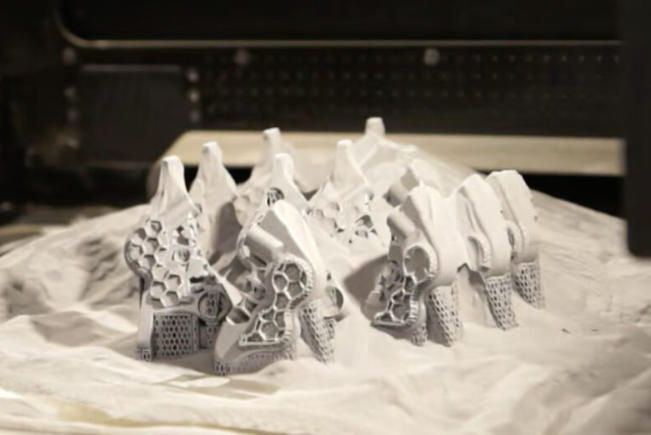
Table: Our Titanium 3D Printing Capabilities vs. Industry Averages
| Capability | our shop Performance | Industry Average |
| Max Build Volume | 400mm × 400mm × 400mm (EBM) | 300mm × 300mm × 300mm |
| Prototyping Lead Time | 4–6 days | 8–12 days |
| Production Capacity | Up to 5,000 parts/week | Up to 2,000 parts/week |
| Part Density | 99.7–99.9% | 95–98% |
| Tolerance Range | ±0.03–±0.1mm | ±0.1–±0.2mm |
What Is Titanium 3D Printing?
Titanium3D Printing is a cutting-edge metal printing process that uses additive manufacturing principles to build parts layer by layer from titanium feedstock (typically powder). Unlike traditional subtractive methods (e.g., machining), it follows the core principle of layer-by-layer fabrication—adding material only where needed to transform a digital design into a physical object via digital fabrication.
At its heart, this technology leverages titanium’s unique properties: exceptional strength (comparable to steel), ultra-lightweight (40% lighter than steel), biocompatibility (safe for human implantation), and corrosion resistance (unaffected by saltwater, chemicals, and extreme temperatures). These traits, combined with 3D printing’s flexibility, make it ideal for industries where performance and reliability are non-negotiable.
Key Basics of Titanium 3D Printing:
| Term | Description | Role in the Process |
| Titanium Powders | Fine, spherical particles (15–45μm) used as feedstock | The raw material melted or sintered to form dense, high-strength layers |
| Rapid Prototyping | Quickly turning digital designs into physical titanium prototypes | Accelerates product development by 50–70% vs. traditional methods |
| Customized Production | Creating one-of-a-kind or low-volume titanium parts without tooling | Ideal for medical implants (patient-specific) and aerospace components (unique geometries) |
Materials: Choosing the Right Titanium for Your Project
Not all titanium materials are the same—we offer a range of titanium alloys and pure titanium to match your application’s demands. Here’s how our materials stack up:
| Material Type | Key Properties | Ideal Applications |
| Ti-6Al-4V (Grade 5) | High strength (860 MPa), excellent corrosion resistance, biocompatible | Aerospace components (engine brackets, wing parts), medical implants (hip cups, bone screws) |
| Pure Titanium (Grade 2) | High ductility, superior biocompatibility, low strength (345 MPa) | Dental implants, surgical instruments, chemical processing parts |
| Ti-6Al-4V ELI (Grade 23) | Extra low interstitial (fewer impurities), enhanced biocompatibility | Implantable medical devices (spinal cages, cranial plates) |
| Titanium Composites (Ti + carbon fiber) | 30% higher strength-to-weight ratio than Ti-6Al-4V | High-performance aerospace parts, racing automotive components |
| Ti-5Al-2.5Sn | High-temperature resistance (up to 500°C), good creep strength | Aerospace engine components, industrial furnace parts |
We source titanium powders from certified suppliers—every batch is tested for purity (minimum 99.95% titanium content) and flowability to ensure consistent print quality.
Advantages: Why Titanium 3D Printing Outperforms Traditional Methods
Titanium 3D Printing offers a range of benefits that make it a superior choice for high-performance applications:
- Weight Reduction: Titanium is 40% lighter than steel and 60% lighter than copper—ideal for aerospace (reduces fuel consumption by ~10% per 10% weight reduction) and automotive (improves EV range).
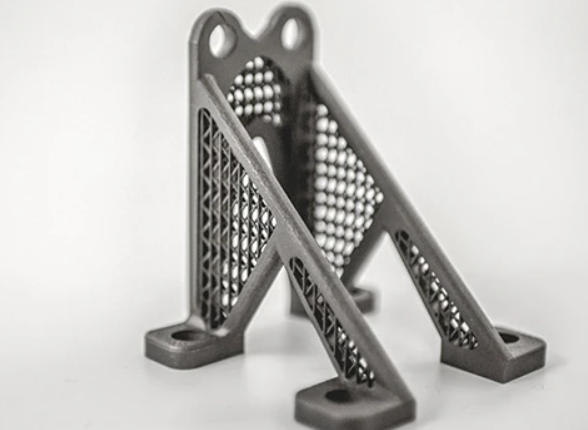
- Design Freedom: Create complex geometries (e.g., lattice structures, internal channels) that are impossible with machining—saving material and improving performance (e.g., better heat dissipation in electronics).
- Reduced Waste: Traditional machining of titanium generates 70–80% waste, while 3D printing reduces waste to <5% (unused powder is recycled).
- Rapid Production: Prototypes are ready in 4–6 days (vs. 2–4 weeks for casting), and production lead times are cut by 60%—accelerating time to market.
- Cost-Effective: For small batches (1–100 parts), 3D printing eliminates expensive tooling (saving 50–70% vs. casting) and reduces material waste.
- High Strength-to-Weight Ratio: Titanium’s strength matches steel, but at half the weight—making it perfect for load-bearing parts (e.g., aerospace brackets, medical implants).
Applications Industry: Where Titanium 3D Printing Shines
Titanium’s unique properties make it a versatile material across industries. Here’s how we’re using Titanium 3D Printing to solve real-world challenges:
| Industry | Key Applications | Why Titanium? |
| Aerospace | Engine components, wing brackets, satellite parts | High strength-to-weight ratio, heat resistance (up to 500°C for Ti-5Al-2.5Sn) |
| Medical | Implantable devices (hip cups, spinal cages), surgical tools, dental implants | Biocompatibility (no rejection), corrosion resistance (to bodily fluids) |
| Automotive | Racing components (engine parts, suspension brackets), luxury car trim | Lightweight (improves speed/fuel efficiency), durability |
| Defense | Armor plates, missile components, drone parts | High strength, corrosion resistance (for harsh environments) |
| Dental | Custom crowns, bridges, implant abutments | Biocompatibility, precision fit (matches patient teeth) |
| Sports Equipment | Golf club heads, bicycle frames, ski bindings | Lightweight, high strength (improves performance) |
How to write a spec that gets priced correctly
A drawing is a contract. If it leaves a number open, the shop fills that number in with its own default. The default is rarely the one you had in mind. Put these five lines on every RFQ and most of the back-and-forth disappears before it starts.
- A model and a drawing that agree
- Material by standard number
- Tolerance only where it mates
- Finish and the faces it applies to
- Quantity and required date
The point is not paperwork. Each line removes a decision the shop would otherwise make for you. A complete RFQ comes back priced. An incomplete one comes back guessed.
What actually drives the price
Buyers usually push on material because it is the line they can see. In practice the material is rarely the biggest number on a quote. These five lines decide most of it:
- process choice
- material
- tolerance band
- finish
- volume
Ask for the quote split by line. A supplier who cannot break it down is guessing, and you will pay for the guess. The line you can usually renegotiate is the tolerance band, not the raw material.
Problems you will meet, and the fix
Every process has a failure mode it prefers. The same four show up again and again on this kind of work, and none of them are mysteries once you know what to look for.
- A drawing that contradicts the model
- A tolerance with no datum
- A cosmetic callout with no approved sample
- A quote compared against a different scope
Catch the fault on the first part, not the hundredth. A first-article check costs an hour. A bad batch costs the whole order. Write the check into the purchase order so nobody has to remember it.
What to check on the first article
The first article is the cheapest inspection you will ever buy. Use it properly and the rest of the run becomes boring, which is exactly what you want.
- Every dimension on the drawing, with the measured value written beside it.
- The material certificate, matched to the heat or lot number on the parts.
- The finish against the sample you approved, under the same light.
- Fit against the mating part, assembled rather than measured.
- Packaging, because parts that arrive damaged were never in tolerance.
Check in this order: datums, then mating features, then cosmetic faces. If the datums are wrong, every number after them is noise. Keep the report on file. When a problem shows up in month six, that document is the only thing that tells you what changed.
How to compare two quotes fairly
Two numbers are not comparable unless the scope matches. Line them up before you decide, because a low number with three gaps is not a low number.
Same drawing, same material, same finish, same inspection. Anything else is a different job wearing the same part number. Then look at what each quote leaves out. Freight, packaging, certificates and tooling are the usual gaps.
Ask each supplier to state their assumptions in writing. The one who does is usually the one who has run the process before.
Scaling from one part to a batch
The first part teaches you the process. The hundredth teaches you the process cost.
Watch three things as volume grows: setup amortisation, tool wear, and how much hand work the finish still needs. If the unit price barely moves between ten and a hundred, the cost sits in material or in hand work, not in setup. Ask which, because only one of them is negotiable.
Lead time behaves the same way. A one-off is scheduled around other jobs. A repeat order is scheduled around your forecast. Give the shop a forecast and the lead time gets shorter, not longer.
How to read a supplier's quote
A quote is a short document with a long shadow. Four things in it decide whether the job runs smoothly, and only one of them is the price.
- The scope line. It should name the process, the material and the finish, not just the part.
- The tolerance basis. General tolerance or the drawing, and which standard it follows.
- The exclusions. Tooling, freight, certificates and inspection are the usual omissions.
- The validity date. Material prices move, and an open-ended quote is a promise nobody can keep.
Read the exclusions before you read the total. A quote that leaves out tooling is not cheaper. It is a quote for a different job.
What to send with the first order
The first order sets the pattern for every order after it. Send a complete package once and the shop files it, and the second order takes a fraction of the time.
- A STEP or native model plus a PDF drawing carrying the same revision letter.
- The material callout by standard number, not by trade name.
- The finish and the exact faces it applies to.
- Any test the part must pass: fit, seal, drop, salt spray, dielectric.
- A contact who can answer a question inside one working day.
Then write down what was agreed. An email that confirms the material, the finish and the date is worth more than a longer purchase order that leaves them open.
When this is the wrong choice
A good supplier tells you when the process does not fit. These are the cases where we say so.
- The volume is so low that setup costs more than the parts are worth.
- The tolerance is tighter than the process can hold without a second operation.
- The geometry cannot be made without a tool feature that will not pay back.
- The material you need is not available in the form the process requires.
- The schedule is shorter than the tooling or setup time, and nobody has said so yet.
None of these are refusals. They are reasons to look at a different route, and the earlier that conversation happens the cheaper it is. The most expensive mistake in manufacturing is a process chosen before the question was understood.
Planning the ramp from prototype to production
The gap between one good part and a thousand identical ones is a plan, not a machine. Three decisions close it.
First, freeze the design. Every change after tooling starts is a re-cut, and re-cuts are where schedules go. Second, decide the inspection level. A prototype is checked by eye; a production part is checked against a report. Third, agree the change process in writing, including who pays for it.
Write the ramp down as dates and owners, not as intentions. A ramp plan with three names and three dates is worth more than a page of good intentions.
What documentation to expect
Paperwork is not bureaucracy when a part fails at the customer. It is the only record of what was agreed. A normal shipment should carry four documents.
- A dimensional report covering every callout on the drawing.
- A material certificate traceable to the heat or lot number.
- A finish or coating certificate where the specification requires one.
- A packing list that matches the carton labels.
If a supplier cannot produce these on request, they are not running a controlled process. Ask for one sample set before you place the first order and you will know exactly what you are buying.
How to handle a change after the order
Changes happen. What matters is whether the change is priced, scheduled and recorded, or absorbed quietly and discovered later.
Send the change as a new revision, not as a note in an email. Ask for three answers in writing: what it costs, what it does to the date, and what happens to material or tooling already committed. Then decide.
A change without a revision number is a rumour. The shop will build what it has on file, and both sides will be right and unhappy at the same time.
Manufacturing Techniques: Matching the Right Method to Your Titanium Project
We use a range of Titanium 3D Printing manufacturing techniques to optimize part quality, cost, and speed:
| Technique | How It Works | Best For | Volume Range | Cost per Part (100 units) |
| Selective Laser Melting (SLM) | Laser melts titanium powder into dense parts (99.7–99.9% density) | High-precision parts (e.g., medical implants, small aerospace components) | 1–1,000 | 300–1,200 |
| Electron Beam Melting (EBM) | Electron beam melts powder (faster than SLM, better for high-temperature alloys) | Large aerospace parts, high-temperature components | 1–500 | 400–1,500 |
| Direct Metal Laser Sintering (DMLS) | Laser sinters powder (slightly lower density than SLM: 98–99%) | Prototypes, low-volume industrial parts | 1–300 | 250–1,000 |
| Wire Arc Additive Manufacturing (WAAM) | Electric arc melts titanium wire to build large parts | Very large industrial components (e.g., ship hull parts) | 1–50 | 500–2,000 |
| Binder Jetting | Binder glues powder into shape (then sintered to densify) | High-volume, low-cost parts (e.g., consumer electronics components) | 1,000+ | 150–500 |
Our solution for Titanium 3D Printing Services
YiguProto runs custom manufacturing in house, from a single prototype to a production batch. We quote the process, the material and the finish as separate lines, so you can see where the money goes instead of arguing with one number.
Send a STEP file or a drawing and you get a DFM report in one to two business days. It flags the features that add cost and the features that will not hold tolerance on the process you picked.
Every order ships with an inspection report on the features you call out. If a part misses, we make it again. Ready to price a part? Start with a free quote and DFM review, or read more about our custom manufacturing. You can also talk to an engineer before you commit to a drawing.
FAQ about Titanium 3D Printing Services
Is titanium 3D printing suitable for high-temperature applications, like aerospace engine parts?
Yes! While pure titanium handles temperatures up to 300°C, we offer high-temperature titanium alloys (e.g., Ti-5Al-2.5Sn, Ti-6Al-2Sn-4Zr-2Mo) that withstand continuous use up to 500°C—perfect for aerospace engine components, industrial furnace parts, and defense applications. We also optimize post-processing (e.g., beta heat treatment) to enhance thermal stability, ensuring parts maintain strength even in extreme heat.
How long does it take to 3D print a titanium part, and can you scale to high-volume production?
Print time depends on part size and complexity: small parts (e.g., dental abutments) take 4–8 hours, medium parts (e.g., medical implants) take 12–24 hours, and large parts (e.g., aerospace brackets) take 48–72 hours. For high-volume production, we scale using multiple machines (we have 12 SLM/EBM printers) and automated post-processing—capable of producing 5,000+ parts weekly with consistent quality. For example, we currently produce 3,000 titanium dental abutments monthly for a global dental lab.
Are titanium 3D printed parts biocompatible, and do they meet medical regulations?
Absolutely! We use biocompatible titanium grades (e.g., Ti-6Al-4V ELI, pure titanium Grade 2) that meet ISO 10993 (biological evaluation of medical devices) and ASTM F136 (standard for titanium alloys for surgical implants). All medical parts undergo additional testing (e.g., cytotoxicity, corrosion resistance) and are traceable—we provide full documentation (material certificates, test reports) to meet FDA, CE, and CFDA regulations. Our titanium implants are currently used in 50+ hospitals worldwide for orthopedic, dental, and cranial applications.
Can Titanium 3D Printing Services be made in small quantities?
Yes, and small quantities are where a good supplier earns the next order. Setup dominates the price at low volume, so the cheapest route is usually the one with the fewest operations, not the cheapest material.
Does the process work for prototypes as well as production?
Yes, and that is usually the point. Running the prototype on the production process removes a whole class of surprises, because the part you test is made the same way as the part you sell.
How much does Titanium 3D Printing Services cost?
Price comes from five lines: material, machine or tool time, setup, finishing and inspection. The material itself is usually the smallest of them. Send a drawing and we will split the quote so you can see which line is doing the damage.
The short version
Titanium 3D Printing Services rewards the buyer who reads the data sheet and the drawing together. Pick the option for the property that matters, not for the price per kilo.
Tighten only what mates. Test a sample before the run. Then let the process do the rest.