
Sheet Metal
What Is Sheet Metal Gauge? A Complete Thickness Guide
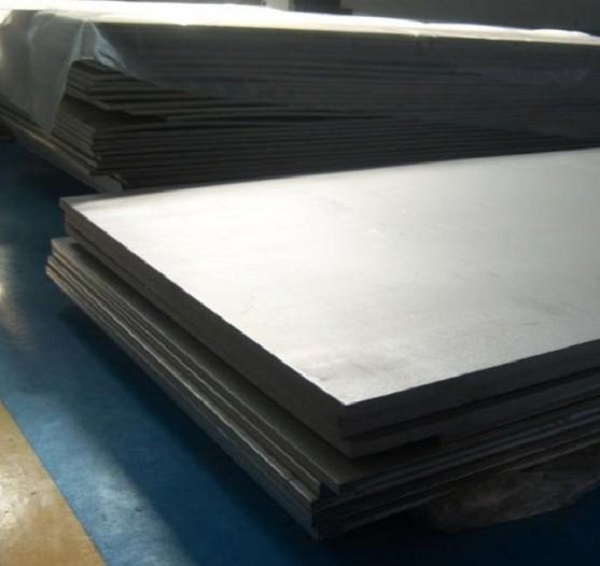
If you’ve ever ordered sheet metal, you’ve encountered the gauge system. It’s confusing. Smaller numbers mean thicker metal. Different metals use different scales. And one wrong assumption can cost you thousands in scrap. Understanding sheet metal thickness standards isn’t optional—it’s essential for getting parts that fit, function, and last.
How Does the Sheet Metal Gauge System Work?
The counterintuitive scale
The gauge system measures thickness based on weight per square foot—a historical standard from when metalworkers weighed sheets rather than measuring them directly. This created a backwards relationship: the smaller the gauge number, the thicker the metal. A 3-gauge steel sheet is 6.07mm thick. A 38-gauge steel sheet is just 0.15mm thick.
Why gauge varies by metal type
Different metals have different densities. Steel is denser than aluminum. So a 10-gauge steel sheet weighs the same per square foot as a 10-gauge aluminum sheet—but because aluminum is lighter, it must be thicker to achieve that weight. This means you can’t use one gauge table for all metals.
Sheet metal thickness range
Industry standards define “sheet metal” within specific limits:
- Minimum thickness: 0.5mm (below this is foil)
- Maximum thickness: 6mm (above this is plate)
Some regions use 8mm as the upper limit. Always confirm with your supplier for international projects.
What Are the Gauge Standards for Different Metals?
Standard steel gauge table
Mild steel is the most common sheet metal. This table is your baseline reference.
| Gauge | Inches | Millimeters | Typical Applications |
|---|---|---|---|
| 3 | 0.239 | 6.07 | Structural beams, heavy machinery frames |
| 5 | 0.209 | 5.31 | Truck beds, construction supports |
| 8 | 0.164 | 4.18 | Metal doors, safety barriers |
| 10 | 0.135 | 3.42 | Load-bearing brackets, automotive chassis |
| 12 | 0.105 | 2.66 | HVAC ductwork, metal shelving |
| 14 | 0.075 | 1.90 | Electrical enclosures, light brackets |
| 16 | 0.060 | 1.52 | Computer cases, appliance panels |
| 18 | 0.048 | 1.21 | Decorative trim, lightweight covers |
| 20 | 0.036 | 0.91 | Thin panels, instrument housings |
| 22 | 0.030 | 0.76 | Electronics chassis, thin shields |
| 24 | 0.024 | 0.61 | Small precision parts |
| 26 | 0.018 | 0.46 | Very thin applications (approaching foil) |
Real example: A construction company built warehouse shelving using 12-gauge steel (2.66mm). The shelves hold 500kg each without deflection. Thinner 16-gauge would have bowed under load.
Galvanized steel gauge table
Galvanized steel adds a zinc coating for rust resistance. The coating adds about 0.1mm to base thickness.
| Gauge | Inches | Millimeters | Typical Applications |
|---|---|---|---|
| 8 | 0.168 | 4.27 | Outdoor fences, heavy-duty sheds |
| 10 | 0.138 | 3.51 | Roofing panels, gutter systems |
| 12 | 0.108 | 2.75 | Outdoor furniture frames |
| 14 | 0.078 | 1.98 | Mailboxes, outdoor light fixtures |
| 16 | 0.064 | 1.61 | Ventilation grilles |
| 18 | 0.052 | 1.31 | Decorative outdoor trim |
| 20 | 0.040 | 1.01 | Thin flashing, gutter accessories |
Real example: A garden furniture maker switched from standard steel to 16-gauge galvanized for outdoor chairs. The galvanized chairs last 5 years outdoors versus 2 years for uncoated steel.
Stainless steel gauge table
Stainless steel (304 and 316 grades) resists corrosion through chromium content. It’s used where rust can’t be tolerated.
| Gauge | Inches | Millimeters | Typical Applications |
|---|---|---|---|
| 000 | 0.375 | 9.53 | Marine components, heavy food equipment |
| 3 | 0.250 | 6.35 | Industrial kitchen counters |
| 8 | 0.172 | 4.37 | Sinks, commercial work surfaces |
| 10 | 0.135 | 3.43 | Food conveyor belts |
| 12 | 0.109 | 2.78 | Medical device housings |
| 14 | 0.078 | 1.98 | Appliance panels, laboratory equipment |
| 16 | 0.063 | 1.59 | Cutlery, small kitchen tools |
| 18 | 0.049 | 1.24 | Electronics enclosures |
| 20 | 0.038 | 0.95 | Thin panels, instrument covers |
| 22 | 0.031 | 0.79 | Precision medical parts |
| 24 | 0.024 | 0.61 | Sensor housings |
| 26 | 0.018 | 0.46 | Very thin applications |
| 28 | 0.015 | 0.38 | Ultra-thin shields |
| 30 | 0.013 | 0.32 | Precision instruments |
Real example: A medical device manufacturer uses 20-gauge 316 stainless (0.95mm) for surgical tray components. The material withstands 1,000+ autoclave cycles without corrosion.
Aluminum gauge table
Aluminum weighs one-third of steel. The same gauge number gives a thinner sheet than steel.
| Gauge | Inches | Millimeters | Typical Applications |
|---|---|---|---|
| 6 | 0.162 | 4.12 | Aircraft structural parts |
| 8 | 0.128 | 3.26 | Heavy aluminum frames |
| 10 | 0.102 | 2.59 | Automotive body panels |
| 12 | 0.081 | 2.06 | Ladders, marine components |
| 14 | 0.064 | 1.63 | Electronic enclosures |
| 16 | 0.051 | 1.29 | Laptop casings |
| 18 | 0.040 | 1.02 | Signage, thin panels |
| 20 | 0.032 | 0.81 | Smartphone frames |
| 22 | 0.025 | 0.64 | Thin heat sinks |
| 24 | 0.020 | 0.51 | Beverage cans |
| 26 | 0.016 | 0.41 | Very thin packaging |
| 28 | 0.013 | 0.33 | Foil applications |
| 30 | 0.010 | 0.25 | Ultra-thin foil |
Real example: A laptop manufacturer uses 16-gauge aluminum (1.29mm) for unibody cases. The thickness provides enough stiffness while keeping weight under 2kg for the complete device.
Copper gauge table
Copper conducts electricity and heat exceptionally well. It’s softer than steel.
| Gauge | Inches | Millimeters | Typical Applications |
|---|---|---|---|
| 7 | 0.180 | 4.57 | Heavy electrical busbars |
| 8 | 0.165 | 4.19 | Industrial grounding systems |
| 10 | 0.134 | 3.40 | Medium plumbing pipes |
| 12 | 0.109 | 2.77 | Decorative panels |
| 14 | 0.083 | 2.11 | Electrical connectors |
| 16 | 0.065 | 1.65 | Wiring insulation shielding |
| 18 | 0.049 | 1.24 | Craft materials |
| 20 | 0.040 | 1.02 | Thin electrical components |
| 22 | 0.032 | 0.81 | Precision contacts |
| 24 | 0.022 | 0.56 | Decorative trim |
| 26 | 0.018 | 0.46 | Very thin applications |
| 28 | 0.014 | 0.36 | Ultra-thin foil |
| 30 | 0.012 | 0.30 | Specialized electrical |
Real example: An electrical contractor specs 10-gauge copper (3.40mm) for main grounding conductors. Thinner wire would overheat under fault currents.
Brass gauge table
Brass (copper-zinc alloy) offers a gold-like appearance and good corrosion resistance.
| Gauge | Inches | Millimeters | Typical Applications |
|---|---|---|---|
| 7 | 0.144 | 3.66 | Musical instrument bells |
| 8 | 0.129 | 3.28 | Heavy architectural trim |
| 10 | 0.102 | 2.59 | Decorative hardware |
| 12 | 0.081 | 2.06 | Door kick plates |
| 14 | 0.064 | 1.63 | Jewelry components |
| 16 | 0.051 | 1.29 | Small fittings |
| 18 | 0.040 | 1.02 | Nameplates |
| 20 | 0.032 | 0.81 | Decorative inlay |
| 22 | 0.025 | 0.64 | Thin trim |
| 24 | 0.020 | 0.51 | Engraving stock |
| 26 | 0.016 | 0.41 | Very thin applications |
| 28 | 0.013 | 0.33 | Ultra-thin decorative |
| 30 | 0.010 | 0.25 | Foil for art |
Real example: A luxury hardware company uses 14-gauge brass (1.63mm) for cabinet pulls. The thickness provides substantial feel while the brass finish adds visual appeal.
How Do You Choose the Right Sheet Metal Thickness?
Step 1: Determine load requirements
Start with what the part must support.
Heavy load (structural, load-bearing):
- Steel: 3–10 gauge (4–6mm)
- Aluminum: 6–10 gauge (4–5mm)
Medium load (shelves, brackets):
- Steel: 12–16 gauge (1.5–2.7mm)
- Aluminum: 12–16 gauge (2–3mm)
Light load (enclosures, trim):
- Steel: 18–24 gauge (0.7–1.2mm)
- Aluminum: 18–24 gauge (0.8–1.6mm)
Real example: A shelving company initially chose 18-gauge steel for storage racks. The shelves sagged under 200kg loads. Switching to 14-gauge eliminated deflection.
Step 2: Evaluate environmental conditions
Where will the part live?
Outdoor/wet environments:
- Galvanized steel: 10–16 gauge
- Stainless steel: 12–20 gauge
- Aluminum: 14–20 gauge (naturally corrosion-resistant)
Indoor/dry environments:
- Standard steel: Any gauge (cheaper)
- Aluminum: Any gauge (lightweight option)
Chemical exposure:
- Stainless steel 316: 12–18 gauge
Real example: A marine parts supplier switched from galvanized to 316 stainless for boat fittings. Salt water corroded galvanized in 18 months. Stainless now lasts 10+ years.
Step 3: Match thickness to manufacturing process
Different processes prefer different thickness ranges.
Bending and forming:
- Ideal range: 16–20 gauge (0.8–1.5mm steel, 1–2mm aluminum)
- Too thick (8–12 gauge): May crack on tight radii
- Too thin (24+ gauge): May wrinkle or distort
Welding:
- Ideal range: 10–16 gauge (1.5–4mm)
- Thinner than 20 gauge: Burns through easily
- Thicker than 8 gauge: Needs heavy equipment
Machining:
- Thicker metal (8–12 gauge): Easier to hold
- Thin metal (20+ gauge): Vibrates during cutting
Sweet spot: For parts requiring both bending and welding, 16-gauge steel (1.52mm) balances formability and weld strength.
Step 4: Consider cost and availability
Thicker metal costs more—both material and processing.
Cost factors:
- Material cost: Thicker = more expensive
- Shipping weight: Thicker = heavier = higher freight
- Machine time: Thicker = slower cutting = higher labor
Availability:
- Common gauges (10, 12, 16, 18, 20) are stocked everywhere
- Odd gauges (9, 11, 13) often require special orders
Rule of thumb: Design with standard gauges to avoid delays and premium pricing.
Step 5: Verify with gauge tables
Once you’ve selected a target thickness, confirm the gauge using the correct metal table.
Example selection process:
- Need: Lightweight outdoor sign
- Load: Minimal (wind only)
- Environment: Outdoor (corrosion resistance needed)
- Process: Laser cut + bent edges
- Decision: Aluminum, 16–18 gauge
- Table check: 16-gauge aluminum = 1.29mm, 18-gauge = 1.02mm
- Final: 16-gauge for extra stiffness
What Common Gauge Mistakes Ruin Projects?
Using the wrong metal’s gauge table
A designer specified 10-gauge aluminum expecting 3.4mm thickness (based on steel experience). The actual aluminum was 2.59mm—too thin for the structural load. Parts failed in testing. Cost to remake: $8,000.
Assuming gauge consistency across suppliers
Gauge standards have slight historical variations. A 16-gauge sheet from one mill might measure 1.5mm; from another, 1.6mm. For tight-tolerance parts, specify millimeters as the primary dimension, gauge as reference.
Confusing sheet with plate
A contractor ordered “6mm steel plate” for a structural beam. The supplier delivered 6mm sheet (technically correct but rolled differently). The sheet lacked the strength of true plate. The beam failed inspection. Lesson: For thicknesses above 6mm, call it plate, not sheet.
Ignoring coating thickness
Galvanized steel includes the zinc coating in its thickness. A 16-gauge galvanized sheet is 1.61mm total—about 1.5mm steel + 0.11mm zinc. If you machine through the coating, base metal thickness is less than expected.
What Are Common Sheet Metal Thickness Myths?
Myth 1: All metals use the same gauge scale
Fact: Gauge varies by metal density. Ten-gauge steel (3.42mm) is thicker than ten-gauge aluminum (2.59mm). Always use metal-specific tables.
Myth 2: Thicker metal always means stronger parts
Fact: Strength depends on material, temper, and design. A well-designed 16-gauge stainless steel bracket can outperform a poorly designed 10-gauge mild steel one. Material properties matter as much as thickness.
Myth 3: Gauge is more accurate than metric
Fact: Gauge is a historical standard with inherent variation. Metric thickness (mm) is a direct measurement. For critical parts, specify both—gauge for industry communication, millimeters for manufacturing precision.
Myth 4: All galvanized steel uses the same gauge table
Fact: Galvanized gauge tables account for the zinc coating. But coating thickness varies by process (hot-dip vs. electrogalvanized). Confirm actual dimensions if post-processing will remove coating.
Sheet metal gauge is a historical system that continues to confuse manufacturers. Remember the golden rule: smaller number = thicker metal. But never assume one metal’s gauge matches another’s. Use the specific tables for steel, galvanized steel, stainless steel, aluminum, copper, and brass. Choose thickness based on load requirements, environmental conditions, manufacturing processes, and cost. Verify with the correct gauge table before ordering. And for critical parts, specify thickness in millimeters alongside gauge to eliminate ambiguity. Getting thickness right means parts that fit, function, and last.
How to write a spec that gets priced correctly
A drawing is a contract. If it leaves a number open, the shop fills that number in with its own default. The default is rarely the one you had in mind. Put these five lines on every RFQ and most of the back-and-forth disappears before it starts.
- Flat pattern or STEP file plus a dimensioned drawing
- Material grade and thickness with the standard number
- Bend radii, K-factor and the direction of the grain
- Finish, masking and which faces stay bare
- Quantity and the assembly sequence
The point is not paperwork. Each line removes a decision the shop would otherwise make for you. A complete RFQ comes back priced. An incomplete one comes back guessed.
What actually drives the price
Buyers usually push on material because it is the line they can see. In practice the material is rarely the biggest number on a quote. These five lines decide most of it:
- blank size and nesting efficiency
- number of bends and weld joints
- material grade and thickness
- finish and masking
- batch quantity
Ask for the quote split by line. A supplier who cannot break it down is guessing, and you will pay for the guess. The line you can usually renegotiate is the tolerance band, not the raw material.
Problems you will meet, and the fix
Every process has a failure mode it prefers. The same four show up again and again on this kind of work, and none of them are mysteries once you know what to look for.
- Stretching at a bend that is tighter than the material allows
- Hole distortion when a hole sits too close to a bend line
- Weld draw on a visible face
- Springback that pulls a formed angle out of tolerance
Catch the fault on the first part, not the hundredth. A first-article check costs an hour. A bad batch costs the whole order. Write the check into the purchase order so nobody has to remember it.
FAQ About Sheet Metal Thickness and Gauge
Can I use a steel gauge table for aluminum parts?
No. Steel and aluminum use different gauge scales because of density differences. A 10-gauge steel sheet is 3.42mm thick. A 10-gauge aluminum sheet is only 2.59mm thick. Using the wrong table will give you parts the wrong thickness.
What’s the difference between sheet metal and plate metal?
Sheet metal ranges from 0.5mm to 6mm thick. Plate metal is thicker than 6mm. Plate follows different standards, often specified directly in millimeters rather than gauge. Using plate when sheet would work wastes money on unnecessary material and weight.
How do I convert gauge to millimeters without a table?
For rough estimates only:
- Steel: Gauge 10 ≈ 3.4mm, Gauge 16 ≈ 1.5mm, Gauge 20 ≈ 0.9mm
- Aluminum: Gauge 10 ≈ 2.6mm, Gauge 16 ≈ 1.3mm, Gauge 20 ≈ 0.8mm
For critical parts, always use official gauge tables—estimates cause errors.
Why is 16-gauge steel so common?
Sixteen-gauge steel (1.52mm) hits a sweet spot. It’s thick enough for structural integrity in most light-to-medium applications. It bends well without cracking. It welds without burning through. It’s cost-effective. And it’s widely available at every supplier.
Does paint or coating affect gauge thickness?
For ordering raw material, no—gauge refers to base metal thickness. For finished parts, yes—coatings add thickness. A 16-gauge galvanized sheet is 1.61mm total (1.5mm steel + 0.11mm zinc). If you need precise final dimensions, account for coating thickness.
What gauge should I use for a part that needs both strength and light weight?
Consider aluminum in 12–16 gauge (2–3mm). It offers good strength at one-third the weight of steel. For example, 14-gauge aluminum (1.63mm) weighs the same as 22-gauge steel but is nearly twice as thick—stiffer for its weight.
Can I bend 10-gauge steel in a standard press brake?
Yes, with proper equipment. Ten-gauge (3.42mm) requires a press brake with enough tonnage—typically 50+ tons for longer parts. The inside bend radius must be at least 1× material thickness to prevent cracking. Many job shops handle 10-gauge routinely.
Our solution for Sheet Metal Gauge
YiguProto runs sheet metal fabrication in house, from a single prototype to a production batch. We quote the process, the material and the finish as separate lines, so you can see where the money goes instead of arguing with one number.
Send a STEP file or a drawing and you get a DFM report in one to two business days. It flags the features that add cost and the features that will not hold tolerance on the process you picked.
Every order ships with an inspection report on the features you call out. If a part misses, we make it again. Ready to price a part? Start with a free quote and DFM review, or read more about our sheet metal fabrication. You can also talk to an engineer before you commit to a drawing.
FAQ about Sheet Metal Gauge
How do I compare two quotes fairly?
Match the scope first: same drawing, same material, same finish, same inspection. Then read the exclusions. Freight, tooling and certificates are the usual gaps, and a low number with three gaps is not a low number.
Can Sheet Metal Gauge be made in small quantities?
Yes, and small quantities are where a good supplier earns the next order. Setup dominates the price at low volume, so the cheapest route is usually the one with the fewest operations, not the cheapest material.
How long does a first article take?
Usually a few business days once the drawing is frozen, and longer if tooling is involved. The date we give you is the date we confirm in writing, not the date we hope for.
Does the process work for prototypes as well as production?
Yes, and that is usually the point. Running the prototype on the production process removes a whole class of surprises, because the part you test is made the same way as the part you sell.
What tolerance can you hold on Sheet Metal Gauge?
The working default is ±0.2 mm on formed features, ±0.1 mm on laser-cut holes. Tighter than that the process changes and so does the price, because every step tighter adds inspection time. Call out only the faces that mate with something else and leave the rest on the general tolerance.
What should I check before approving the parts?
Datums first, then the features that mate, then the cosmetic faces. Ask for a dimensional report, a material certificate and a finish sample. A part can be inside every tolerance and still not fit, so assemble one before you sign.
The short version
Sheet Metal Gauge rewards the buyer who reads the data sheet and the drawing together. Pick the option for the property that matters, not for the price per kilo.
Tighten only what mates. Test a sample before the run. Then let the process do the rest.