
3D Printing
Is Silicone 3D Printing Your Next Manufacturing Game-Changer?
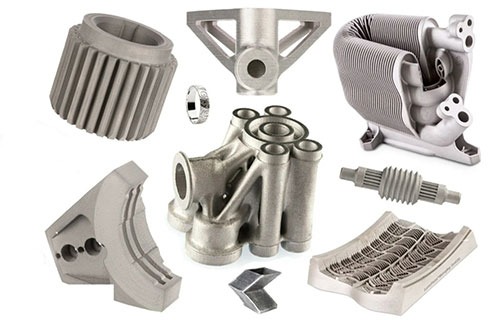
In the relentless pursuit of better, faster, and more agile manufacturing, a new player is making waves: silicone 3D printing. For engineers battling design constraints, purchasers weighing equipment investments, and business owners seeking a competitive edge, this technology isn’t just a novelty—it’s a tangible solution to long-standing production headaches.
How Does Silicone 3D Printing Actually Work?
At its core, silicone 3D printing is an additive manufacturing process that builds soft, elastomeric objects layer by layer. But unlike Fused Deposition Modeling (FDM) with plastic filament, printing with liquid silicone rubber (LSR) is more complex. The predominant technology is Drop-on-Demand (DoD) inkjet printing. Here’s a simplified breakdown:
- Material Preparation: A two-part, platinum-cure liquid silicone is loaded. Its viscosity is precisely controlled for jetting.
- Jetting & Deposition: Piezoelectric printheads deposit microscopic droplets of the silicone material onto a build platform.
- Instant Curing: As each droplet is deposited, it is immediately exposed to UV light, initiating a rapid curing (cross-linking) process. This turns the liquid into a solid elastomer instantly.
- Layer-by-Layer Build: The platform lowers, and the process repeats, with each new layer bonding chemically to the one below, creating a monolithic, void-free part.
This fundamental process enables its standout features: exceptional design freedom, high precision for complex geometries, and the elimination of traditional tooling.
What Are the Key Advantages Over Traditional Silicone Manufacturing?
Why go through the trouble of 3D printing silicone when molding has been the standard for decades? The advantages are transformative for prototyping and low-to-medium volume production.
- Radical Design Freedom & Complexity: Traditional molding struggles—economically or physically—with undercuts, internal lattices, and integrated assemblies. Silicone 3D printing thrives on them. Imagine a single-print respiratory mask with graded stiffness: soft at the skin interface and firmer at the connector. This complex functional grading is virtually impossible with a single mold.
- Unmatched Speed for Prototyping & Customization: The biggest bottleneck? Tooling. Machining an aluminum mold can take weeks and cost thousands. With 3D printing, a digital file goes directly to a finished part in hours. This is revolutionary for custom medical devices (like patient-specific orthotics) or rapid iteration of seal designs.
- Material Efficiency & Sustainability: Molding involves sprues, runners, and flash—material that is wasted. Additive manufacturing is inherently material-efficient, using only what is needed for the part and support structures, minimizing waste of often expensive silicone compounds.
- Consistency and Precision: Automated, digital production removes human variables. Every part is an exact digital replica, ensuring lot-to-lot consistency critical for medical and automotive applications. Tolerances within ±0.1 mm are achievable.
| Challenge | Traditional Molding | Silicone 3D Printing | User Benefit |
|---|---|---|---|
| Lead Time for 1st Part | Weeks (for tooling) | Hours to Days | Faster time-to-market |
| Cost for Low Volumes | Very High (amortized tooling) | Inherently Cost-Effective | Affordable prototyping & custom work |
| Design Changes | New tool needed ($$$, Time) | Digital Edit & Reprint | Agile development, no tooling penalty |
| Part Complexity | Limited by moldability | Nearly Unlimited | Innovative, optimized part designs |
What Are the Real-World Applications Solving Problems Today?
The proof is in the production. Across industries, this technology is moving beyond R&D labs into operational workflows.
Medical & Healthcare: A Revolution in Patient Care
This is perhaps the most impactful field. The ability to produce biocompatible, sterilizable parts on-demand is transformative.
- Surgical Guides & Anatomical Models: Surgeons now practice on patient-specific, tissue-realistic models 3D printed in silicone, leading to shorter operation times and better outcomes.
- Custom Wearables & Orthotics: From perfectly fitted hearing aid seals to personalized diabetic insoles, 3D scanning and printing create devices with unparalleled comfort and efficacy.
- Drug Delivery & Microfluidics: Engineers can prototype complex microfluidic channels and drug-eluting devices in a single material, accelerating development of next-generation therapies.
Automotive & Aerospace: Pushing Performance Boundaries
In these high-stakes fields, performance and weight are everything.
- Seals, Gaskets & Damping Components: Companies print low-volume, specialty seals for prototype vehicles or legacy aerospace systems where tooling no longer exists. The temperature resistance and durability of printed silicone matches OEM standards.
- Soft Robotics & Grippers: For automated assembly lines, custom silicone grippers that won’t scratch sensitive components (like battery cells or painted surfaces) can be designed and printed in days.
Consumer Products & Wearables
The drive for personalization and rapid innovation is key here.
- Protective Cases & Ergonomic Handles: A startup can iterate dozens of ergonomic handle designs in a week, testing feel and function with real silicone before committing to mass-production tooling.
- Fashion & High-End Accessories: Designers are experimenting with textured, graded, and impossible-to-mold silicone forms for avant-garde jewelry and wearable art.
What Should You Know About Materials and Equipment?
Entering this space requires understanding the ecosystem. It’s not a plug-and-play desktop hobbyist market—yet.
Material Properties Matter: Not all “silicone” is equal. 3D printable silicones come in formulations offering different Shore hardness (from A10 to A50), tear strength, elongation at break, and biocompatibility certifications (ISO 10993, USP Class VI). You select a material based on the functional requirement: does it need to be skin-soft, chemically resistant, or high-temperature stable?
A Look at the Leading Printer Landscape:
The market is specialized, with key players focusing on industrial and medical-grade results.
| Company | Notable Printer | Core Technology | Best For |
|---|---|---|---|
| Spectroplast | S1 | DoD Inkjet | High-precision, certified medical parts |
| Lynxter | S600D | Multi-material (Silicone + Thermoplastics) | Industrial tooling, functional prototypes |
| ACEO (by Wacker) | – | DoD Inkjet | R&D and industrial service bureau model |
| Innovation | Their open printhead platform allows integration of various silicones, fostering material development. |
Critical Consideration: For most businesses, especially at the beginning, partnering with an experienced service bureau is a smart strategy. It allows you to test the technology, validate parts, and understand your true production needs without a major capital expenditure.
What Does the Future Hold for Silicone 3D Printing?
The trajectory is pointed steeply upward, driven by material science and market demand.
- Material Expansion: The next frontier includes conductive silicones for embedded sensors, self-healing formulations, and silicone composites with enhanced properties. This will open doors in smart wearables and adaptive robotics.
- Speed & Scale Improvements: Current print speeds are a limitation for mass production. Expect advances in parallel printhead technology and faster-curing chemistries to dramatically increase throughput.
- Hybrid Manufacturing: The future lies in integration. Imagine a single part with rigid skeletal structures (printed in nylon or metal) seamlessly encapsulated by a functional silicone grip or seal in one build cycle. This is the promise of true multi-material 3D printing.
- Democratization: As patents expire and competition increases, machine costs will fall, making the technology accessible to more small and medium-sized enterprises (SMEs).
Conclusion
Silicone 3D printing has decisively transitioned from a promising experiment to a practical, problem-solving manufacturing tool. It addresses the most persistent pain points in product development: the high cost and slow pace of tooling, and the limitations of design for manufacturability. While it may not replace injection molding for millions of identical parts, it has already carved out a vital niche in prototyping, customization, low-volume production, and manufacturing of geometrically complex components. For any forward-looking engineer or business leader, the question is no longer if this technology is relevant, but how and when to integrate it into your workflow to gain a critical advantage in speed, innovation, and efficiency.
FAQ
Q: How durable are 3D-printed silicone parts compared to molded ones?
A: When post-processed correctly (often with a thermal cure), the material properties—tear strength, elongation, and temperature resistance—can meet or exceed those of comparable molded LSR. The key is using a printer and material system designed for true, homogeneous cross-linking, not just UV-surface curing.
Q: Can I achieve transparent or skin-toned silicones with 3D printing?
A: Yes, material advancements are rapid. Several vendors offer optical clarity formulations for lenses or fluidic channels, and a range of pigmentation options, including realistic skin tones for prosthetics and anatomical models.
Q: Is silicone 3D printing cost-effective for production runs of 1,000 units?
A: It depends on part complexity and size. For small, intricate parts, it can be very competitive. For simple, solid parts, traditional molding likely wins on pure per-part cost at that volume. However, the break-even point is rising as printing technology improves. The true advantage often lies in the total cost of ownership, which includes zero tooling investment, zero inventory (print-on-demand), and the ability to make mid-run design changes.
Q: What are the main limitations or challenges right now?
A: The primary constraints are build speed, limited material color/opacity options compared to LSR pellets, and the need for support structures for certain geometries, which can affect surface finish and require manual removal. The capital investment for industrial-grade machines is also still significant.
Discuss Your Projects with our shop
At our shop we see silicone 3D printing as a cornerstone of the future of flexible manufacturing. Our experience has shown that its greatest impact is in bridging the gap between digital design and functional reality faster than ever before. We work with clients to navigate this landscape—whether it’s selecting the right material for a biocompatible device, designing for additive to maximize performance, or identifying when a hybrid approach (printed mold for short-run casting) is the optimal path.
Are you wrestling with a design that seems unmoldable? Spending too much time and money on prototype tooling? Let’s talk. Bring your challenges for seals, gaskets, wearable components, or medical device parts. We can help you explore if silicone 3D printing is the key to unlocking your project’s potential, providing insights from our direct experience and a clear roadmap to implementation. Contact our engineering team today for a consultation.
How to write a spec that gets priced correctly
A drawing is a contract. If it leaves a number open, the shop fills that number in with its own default. The default is rarely the one you had in mind. Put these five lines on every RFQ and most of the back-and-forth disappears before it starts.
- File format and units, with the model exported in millimetres
- Process and material grade, not a trade name
- Critical features and the tolerance each one needs
- Surface finish and the faces it applies to
- Quantity for the pilot build and for the year
The point is not paperwork. Each line removes a decision the shop would otherwise make for you. A complete RFQ comes back priced. An incomplete one comes back guessed.
What actually drives the price
Buyers usually push on material because it is the line they can see. In practice the material is rarely the biggest number on a quote. These five lines decide most of it:
- build volume and orientation
- layer height and support structure
- material grade and colour
- post-processing and hand finishing
- quantity per build plate
Ask for the quote split by line. A supplier who cannot break it down is guessing, and you will pay for the guess. The line you can usually renegotiate is the tolerance band, not the raw material.
Problems you will meet, and the fix
Every process has a failure mode it prefers. The same four show up again and again on this kind of work, and none of them are mysteries once you know what to look for.
- Warping on long flat faces where the part lifts off the plate
- Layer lines showing through a cosmetic surface
- Support scars on a mating face nobody flagged
- Dimensional drift on thin walls after cooling
Catch the fault on the first part, not the hundredth. A first-article check costs an hour. A bad batch costs the whole order. Write the check into the purchase order so nobody has to remember it.
What to check on the first article
The first article is the cheapest inspection you will ever buy. Use it properly and the rest of the run becomes boring, which is exactly what you want.
- Every dimension on the drawing, with the measured value written beside it.
- The material certificate, matched to the heat or lot number on the parts.
- The finish against the sample you approved, under the same light.
- Fit against the mating part, assembled rather than measured.
- Packaging, because parts that arrive damaged were never in tolerance.
Check in this order: datums, then mating features, then cosmetic faces. If the datums are wrong, every number after them is noise. Keep the report on file. When a problem shows up in month six, that document is the only thing that tells you what changed.
How to compare two quotes fairly
Two numbers are not comparable unless the scope matches. Line them up before you decide, because a low number with three gaps is not a low number.
Same drawing, same material, same finish, same inspection. Anything else is a different job wearing the same part number. Then look at what each quote leaves out. Freight, packaging, certificates and tooling are the usual gaps.
Ask each supplier to state their assumptions in writing. The one who does is usually the one who has run the process before.
Scaling from one part to a batch
The first part teaches you the process. The hundredth teaches you the process cost.
Watch three things as volume grows: setup amortisation, tool wear, and how much hand work the finish still needs. If the unit price barely moves between ten and a hundred, the cost sits in material or in hand work, not in setup. Ask which, because only one of them is negotiable.
Lead time behaves the same way. A one-off is scheduled around other jobs. A repeat order is scheduled around your forecast. Give the shop a forecast and the lead time gets shorter, not longer.
How to read a supplier's quote
A quote is a short document with a long shadow. Four things in it decide whether the job runs smoothly, and only one of them is the price.
- The scope line. It should name the process, the material and the finish, not just the part.
- The tolerance basis. General tolerance or the drawing, and which standard it follows.
- The exclusions. Tooling, freight, certificates and inspection are the usual omissions.
- The validity date. Material prices move, and an open-ended quote is a promise nobody can keep.
Read the exclusions before you read the total. A quote that leaves out tooling is not cheaper. It is a quote for a different job.
Our solution for Silicone 3D Printing
YiguProto runs 3D printing in house, from a single prototype to a production batch. We quote the process, the material and the finish as separate lines, so you can see where the money goes instead of arguing with one number.
Send a STEP file or a drawing and you get a DFM report in one to two business days. It flags the features that add cost and the features that will not hold tolerance on the process you picked.
Every order ships with an inspection report on the features you call out. If a part misses, we make it again. Ready to price a part? Start with a free quote and DFM review, or read more about our 3D printing. You can also talk to an engineer before you commit to a drawing.
FAQ about Silicone 3D Printing
What tolerance can you hold on Silicone 3D Printing?
The working default is ±0.1 mm on small features, ±0.3% on long spans. Tighter than that the process changes and so does the price, because every step tighter adds inspection time. Call out only the faces that mate with something else and leave the rest on the general tolerance.
Does the process work for prototypes as well as production?
Yes, and that is usually the point. Running the prototype on the production process removes a whole class of surprises, because the part you test is made the same way as the part you sell.
Can Silicone 3D Printing be made in small quantities?
Yes, and small quantities are where a good supplier earns the next order. Setup dominates the price at low volume, so the cheapest route is usually the one with the fewest operations, not the cheapest material.
What is the lead time for Silicone 3D Printing?
Expect 2 to 5 business days for a first batch. Tooling, material stock and the finishing queue all move that number, so we confirm the date in writing before the run starts rather than after.
What happens if a part is out of specification?
We measure it against the same drawing you approved and, if it misses, we make it again. What matters is that the report exists, because a disagreement without data is just an opinion.
What should I check before approving the parts?
Datums first, then the features that mate, then the cosmetic faces. Ask for a dimensional report, a material certificate and a finish sample. A part can be inside every tolerance and still not fit, so assemble one before you sign.
The short version
Silicone 3D Printing rewards the buyer who reads the data sheet and the drawing together. Pick the option for the property that matters, not for the price per kilo.
Tighten only what mates. Test a sample before the run. Then let the process do the rest.