
Blogs
Our Stamping Sheet Metal Services
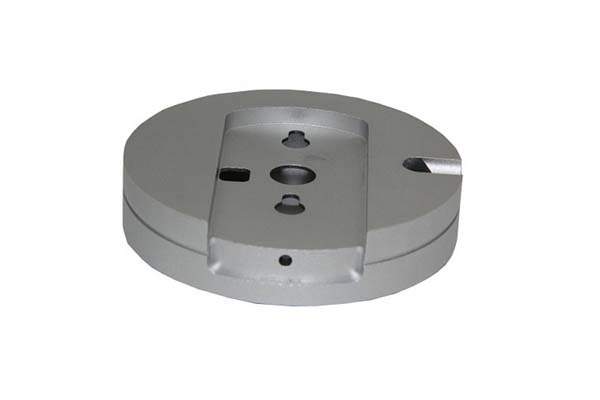
Our Stamping Sheet Metal Services, explained the way we would explain it across a table: what it is good at, what it costs you, and the details that keep the part out of the scrap bin.
Key takeaways
- At our shop, our Stamping Sheet Metal Services combine cutting-edge technology with decades of expertise to deliver high-quality, precise metal components.
- At our shop, our stamping capacity is designed to meet diverse industry needs, from small-scale projects to large-volume orders.
- The stamping steps follow a structured sequence to ensure accuracy and efficiency.
- We work with a wide range of sheet metal materials to match your project’s requirements, from strength and durability to corrosion resistance and cost.
Our Stamping Sheet Metal Services
At our shop, our Stamping Sheet Metal Services combine cutting-edge technology with decades of expertise to deliver high-quality, precise metal components.
Whether you need custom parts for the automotive, aerospace, or electronics industry, we offer flexible solutions—from small-batch prototypes to high-volume production—backed by strict quality control and competitive pricing. Experience the benefits of cost-effectiveness, high-speed production, and consistent precision with our trusted stamping services.

Our Capabilities: What We Can Deliver
At our shop, our stamping capacity is designed to meet diverse industry needs, from small-scale projects to large-volume orders. We pride ourselves on flexibility and precision, with capabilities that include:
- Tonnage range: 10 tons to 500 tons, allowing us to handle both delicate parts (e.g., electronics components) and heavy-duty components (e.g., automotive frames).
- Machine capabilities: State-of-the-art hydraulic and mechanical presses, equipped with automated feed systems for consistent results.
- Custom stamping: Tailored solutions for unique part designs, including complex geometries and tight tolerances.
- Production volume: Support for 100-unit prototypes up to 1,000,000+ unit mass production runs.
| Capacity Type | Our Specifications | Ideal Use Case |
| Tonnage range | 10–500 tons | Small electronics parts to large automotive components |
| Production volume | 100–1,000,000+ units | Prototypes to mass-produced consumer appliances |
| Custom stamping | Complex geometries, tight tolerances | Aerospace parts, medical devices |
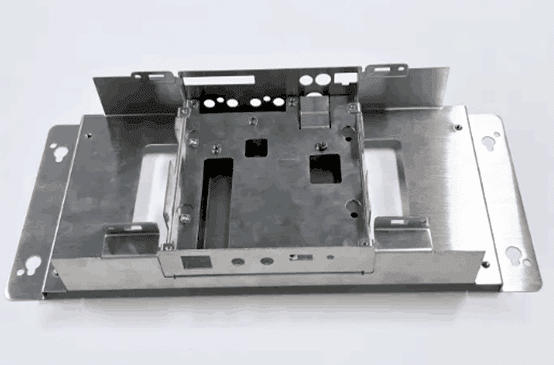
Process: Step-by-Step Stamping Workflow
The stamping steps follow a structured sequence to ensure accuracy and efficiency. Each phase is critical to delivering high-quality parts, and we adhere to strict protocols at every stage:
- Die setup: The first step, where custom dies (metal tools that define the part shape) are installed in the press. Proper die alignment is key to avoiding defects.
- Blanking: Cutting flat metal sheets into the initial “blank” shape (the rough outline of the final part).
- Punching: Creating holes, slots, or cutouts in the blank using a punch and die set.
- Bending: Using press brakes to fold the metal into angles or curves (e.g., creating brackets or enclosures).
- Drawing: Pulling the metal blank into a die to create 3D shapes (e.g., cups, cylinders, or automotive housings).
- Finishing checks: Inspecting parts for dimensional accuracy before moving to surface treatment.
This forming sequence is optimized for speed and consistency—our automated presses can complete up to 500 cycles per minute for simple parts, reducing lead times without compromising quality.
Materials: Choosing the Right Sheet Metal
We work with a wide range of sheet metal materials to match your project’s requirements, from strength and durability to corrosion resistance and cost. Below is a breakdown of our most commonly used materials:
| Material | Common Grades/Alloys | Thickness Range | Key Benefits |
| Steel | A36, 1018, 4130 | 0.005–0.25 inches | High strength, low cost, ideal for structural parts |
| Aluminum | 6061, 5052, 3003 | 0.003–0.125 inches | Lightweight, corrosion-resistant, easy to form |
| Stainless steel | 304, 316, 430 | 0.004–0.187 inches | Rust-resistant, durable, suitable for food/medical use |
| Copper | C11000, C17200 | 0.002–0.100 inches | Excellent conductivity, malleable |
| Brass | C26000, C36000 | 0.003–0.125 inches | Aesthetic appeal, corrosion-resistant, machinable |
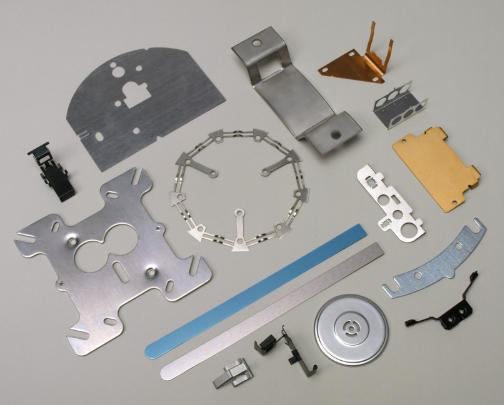
We also offer custom material thickness options—just share your design specs, and our engineers will recommend the best fit.
Surface Treatment: Enhancing Durability and Aesthetics
After stamping, surface treatment is critical to improving part performance, longevity, and appearance. We offer a full range of surface finishing options to meet your needs:
- Painting: Applying liquid paint (e.g., acrylic, enamel) for color customization and basic corrosion protection. Ideal for consumer appliances and decorative parts.
- Plating: Depositing a thin metal layer (e.g., zinc, nickel, chrome) to enhance conductivity, corrosion resistance, or aesthetics. Zinc plating is common for automotive parts.
- Powder coating: Spraying a dry powder (polyester, epoxy) onto the part, then curing it with heat. Offers a durable, scratch-resistant finish—great for outdoor or high-wear parts.
- Anodizing: Creating an oxide layer on aluminum parts to boost corrosion resistance and allow dyeing (e.g., black, silver). Used in electronics and aerospace components.
- Passivation: Treating stainless steel with acid to remove iron contaminants, enhancing its natural rust resistance. Essential for medical and food-grade parts.
| Treatment Type | Process Time | Durability Rating (1–10) | Ideal Application |
| Painting | 1–3 days | 6 | Consumer appliances, decorative parts |
| Plating | 12–24 hours | 8 | Automotive parts, electronics |
| Powder coating | 2–4 days | 9 | Outdoor furniture, industrial equipment |
| Anodizing | 8–16 hours | 8 | Aerospace components, electronics enclosures |
| Passivation | 4–8 hours | 10 | Medical devices, food-processing equipment |
Advantages: Why Choose Stamping Sheet Metal?
Stamping sheet metal offers unmatched benefits for high-volume, precision-focused projects. Here’s why it’s the top choice for industries worldwide:
- Cost-effectiveness: For large production runs, stamping reduces per-unit costs compared to machining or 3D printing. Once dies are made, parts can be produced quickly and at scale.
- High-speed production: Our presses can produce up to 500 parts per minute for simple designs, cutting lead times from weeks to days.
- Precision: Automated stamping ensures consistent part dimensions—no two parts will differ, even in mass production.
- Consistency: Unlike manual forming, stamping eliminates human error, so every part meets the same quality standards.
- Strength: Stamping work-hardens metal, making parts stronger than those made with casting or machining. This is critical for load-bearing components (e.g., automotive frames).
| Advantage | Comparison to Other Methods (e.g., Machining) |
| Cost-effectiveness | 30–50% lower per-unit cost for 10,000+ parts |
| High-speed production | 10–20x faster than manual machining |
| Precision | Tighter tolerances (±0.001 vs. ±0.005 inches) |
| Strength | 15–25% higher tensile strength |
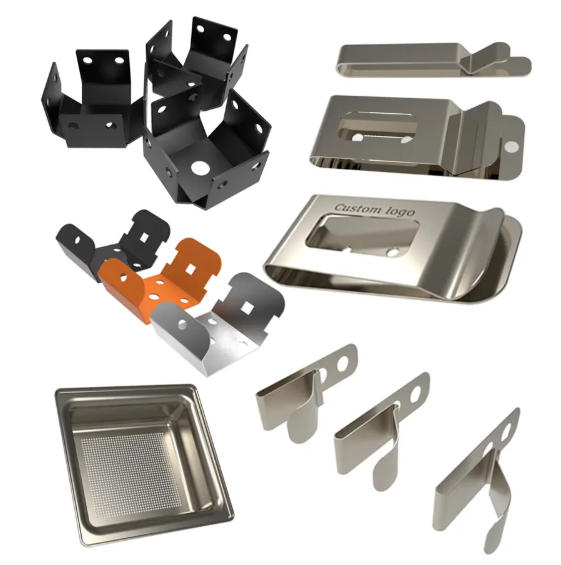
Applications Industry: Where Stamping Shines
Our stamping sheet metal services support a wide range of applications industry, delivering parts that meet sector-specific standards (e.g., ISO, ASTM, AS9100 for aerospace):
- Automotive industry: Engine brackets, door hinges, battery trays, and exhaust components. We meet IATF 16949 standards for automotive quality.
- Aerospace applications: Lightweight aluminum brackets, fuel system parts, and avionics enclosures (compliant with AS9100).
- Electronics: Circuit board housings, connector parts, and heat sinks (made with conductive materials like copper or aluminum).
- Appliances: Refrigerator shelves, washing machine drums, and oven door components (finished with corrosion-resistant coatings).
- Construction: HVAC ductwork, roofing clips, and structural brackets (made with high-strength steel).
- Medical devices: Surgical instrument components, implantable parts (stainless steel or titanium), and diagnostic equipment housings (compliant with ISO 13485).
| Industry | Common Stamped Parts | Material of Choice |
| Automotive industry | Engine brackets, battery trays | Steel, aluminum |
| Aerospace applications | Avionics enclosures, fuel parts | Aluminum, titanium |
| Electronics | Circuit board housings, heat sinks | Copper, aluminum |
| Appliances | Refrigerator shelves, oven door parts | Stainless steel, steel |
| Medical devices | Surgical instrument components | Stainless steel, titanium |
Case Studies: Real-World Success Stories
Our stamping case studies demonstrate how we solve unique challenges for clients across industries. Here are two standout examples:
Case Study 1: Automotive Battery Tray for a Major OEM
- Challenge: A leading automotive manufacturer needed 500,000 lightweight, high-strength battery trays for electric vehicles (EVs) with a 6-week lead time.
- Solution: We used progressive die stamping with 6061 aluminum (lightweight, corrosion-resistant) and optimized the forming sequence to reduce production time.
- Results: Delivered 500,000 trays 3 days early, with 99.98% dimensional accuracy. The client reported a 20% cost savings compared to their previous supplier.
Case Study 2: Medical Instrument Component for a Diagnostic Company
- Challenge: A medical device firm needed 10,000 stainless steel surgical tool components with ±0.001 inch tolerance and passivation for biocompatibility.
- Solution: We used precision stamping with 316 stainless steel, followed by passivation and 100% CMM inspection.
- Results: All parts met ISO 13485 standards, and the client expanded their order to 50,000 units within 3 months.
These success stories highlight our ability to adapt to tight deadlines, strict standards, and unique design needs—backed by customer testimonials that praise our communication and quality.
How to write a spec that gets priced correctly
A drawing is a contract. If it leaves a number open, the shop fills that number in with its own default. The default is rarely the one you had in mind. Put these five lines on every RFQ and most of the back-and-forth disappears before it starts.
- A model and a drawing that agree
- Material by standard number
- Tolerance only where it mates
- Finish and the faces it applies to
- Quantity and required date
The point is not paperwork. Each line removes a decision the shop would otherwise make for you. A complete RFQ comes back priced. An incomplete one comes back guessed.
What actually drives the price
Buyers usually push on material because it is the line they can see. In practice the material is rarely the biggest number on a quote. These five lines decide most of it:
- process choice
- material
- tolerance band
- finish
- volume
Ask for the quote split by line. A supplier who cannot break it down is guessing, and you will pay for the guess. The line you can usually renegotiate is the tolerance band, not the raw material.
Problems you will meet, and the fix
Every process has a failure mode it prefers. The same four show up again and again on this kind of work, and none of them are mysteries once you know what to look for.
- A drawing that contradicts the model
- A tolerance with no datum
- A cosmetic callout with no approved sample
- A quote compared against a different scope
Catch the fault on the first part, not the hundredth. A first-article check costs an hour. A bad batch costs the whole order. Write the check into the purchase order so nobody has to remember it.
What to check on the first article
The first article is the cheapest inspection you will ever buy. Use it properly and the rest of the run becomes boring, which is exactly what you want.
- Every dimension on the drawing, with the measured value written beside it.
- The material certificate, matched to the heat or lot number on the parts.
- The finish against the sample you approved, under the same light.
- Fit against the mating part, assembled rather than measured.
- Packaging, because parts that arrive damaged were never in tolerance.
Check in this order: datums, then mating features, then cosmetic faces. If the datums are wrong, every number after them is noise. Keep the report on file. When a problem shows up in month six, that document is the only thing that tells you what changed.
How to compare two quotes fairly
Two numbers are not comparable unless the scope matches. Line them up before you decide, because a low number with three gaps is not a low number.
Same drawing, same material, same finish, same inspection. Anything else is a different job wearing the same part number. Then look at what each quote leaves out. Freight, packaging, certificates and tooling are the usual gaps.
Ask each supplier to state their assumptions in writing. The one who does is usually the one who has run the process before.
Scaling from one part to a batch
The first part teaches you the process. The hundredth teaches you the process cost.
Watch three things as volume grows: setup amortisation, tool wear, and how much hand work the finish still needs. If the unit price barely moves between ten and a hundred, the cost sits in material or in hand work, not in setup. Ask which, because only one of them is negotiable.
Lead time behaves the same way. A one-off is scheduled around other jobs. A repeat order is scheduled around your forecast. Give the shop a forecast and the lead time gets shorter, not longer.
How to read a supplier's quote
A quote is a short document with a long shadow. Four things in it decide whether the job runs smoothly, and only one of them is the price.
- The scope line. It should name the process, the material and the finish, not just the part.
- The tolerance basis. General tolerance or the drawing, and which standard it follows.
- The exclusions. Tooling, freight, certificates and inspection are the usual omissions.
- The validity date. Material prices move, and an open-ended quote is a promise nobody can keep.
Read the exclusions before you read the total. A quote that leaves out tooling is not cheaper. It is a quote for a different job.
What to send with the first order
The first order sets the pattern for every order after it. Send a complete package once and the shop files it, and the second order takes a fraction of the time.
- A STEP or native model plus a PDF drawing carrying the same revision letter.
- The material callout by standard number, not by trade name.
- The finish and the exact faces it applies to.
- Any test the part must pass: fit, seal, drop, salt spray, dielectric.
- A contact who can answer a question inside one working day.
Then write down what was agreed. An email that confirms the material, the finish and the date is worth more than a longer purchase order that leaves them open.
When this is the wrong choice
A good supplier tells you when the process does not fit. These are the cases where we say so.
- The volume is so low that setup costs more than the parts are worth.
- The tolerance is tighter than the process can hold without a second operation.
- The geometry cannot be made without a tool feature that will not pay back.
- The material you need is not available in the form the process requires.
- The schedule is shorter than the tooling or setup time, and nobody has said so yet.
None of these are refusals. They are reasons to look at a different route, and the earlier that conversation happens the cheaper it is. The most expensive mistake in manufacturing is a process chosen before the question was understood.
Planning the ramp from prototype to production
The gap between one good part and a thousand identical ones is a plan, not a machine. Three decisions close it.
First, freeze the design. Every change after tooling starts is a re-cut, and re-cuts are where schedules go. Second, decide the inspection level. A prototype is checked by eye; a production part is checked against a report. Third, agree the change process in writing, including who pays for it.
Write the ramp down as dates and owners, not as intentions. A ramp plan with three names and three dates is worth more than a page of good intentions.
FAQ for Stamping Sheet Metal
Our solution for Our Stamping Sheet Metal Services
YiguProto runs custom manufacturing in house, from a single prototype to a production batch. We quote the process, the material and the finish as separate lines, so you can see where the money goes instead of arguing with one number.
Send a STEP file or a drawing and you get a DFM report in one to two business days. It flags the features that add cost and the features that will not hold tolerance on the process you picked.
Every order ships with an inspection report on the features you call out. If a part misses, we make it again. Ready to price a part? Start with a free quote and DFM review, or read more about our custom manufacturing. You can also talk to an engineer before you commit to a drawing.
FAQ about Our Stamping Sheet Metal Services
What is the minimum order quantity (MOQ) for your stamping sheet metal services?
Our MOQ is 100 units for custom parts, but we can accommodate smaller prototype runs (as low as 10 units) for an additional setup fee. For high-volume orders (10,000+ units), we offer volume discounts.
How long does it take to receive a custom stamping order?
Lead times depend on order volume and complexity:Prototypes (100–500 units): 1–2 weeksMedium-volume (1,000–10,000 units): 2–3 weeksHigh-volume (10,000+ units): 3–4 weeksRush orders (with a 20% premium) can be delivered in as little as 5–7 days for simple parts.
Can you help with design optimization for stamping projects?
Absolutely! Our team of product engineers offers free design consultation to optimize your part for stamping. We review your CAD files to:Simplify complex geometries (e.g., reducing sharp angles that can cause die wear) to lower production costs.Recommend the best sheet metal materials and material thickness for your part’s function (e.g., aluminum for lightweight needs, stainless steel for corrosion resistance).Ensure designs align with our stamping tolerances and forming sequence capabilities, avoiding potential defects like wrinkling or tearing.Many clients see a 15–30% reduction in costs after design optimization, and we can provide 3D renderings of the optimized design for your approval before production begins.
What is the lead time for Our Stamping Sheet Metal Services?
Expect 5 to 15 business days depending on process. Tooling, material stock and the finishing queue all move that number, so we confirm the date in writing before the run starts rather than after.
How long does a first article take?
Usually a few business days once the drawing is frozen, and longer if tooling is involved. The date we give you is the date we confirm in writing, not the date we hope for.
How much does Our Stamping Sheet Metal Services cost?
Price comes from five lines: material, machine or tool time, setup, finishing and inspection. The material itself is usually the smallest of them. Send a drawing and we will split the quote so you can see which line is doing the damage.
The short version
Our Stamping Sheet Metal Services rewards the buyer who reads the data sheet and the drawing together. Pick the option for the property that matters, not for the price per kilo.
Tighten only what mates. Test a sample before the run. Then let the process do the rest.