
3D Printing
Superalloy 3D Printing: Is It Future of High-Temperature Manufacturing?
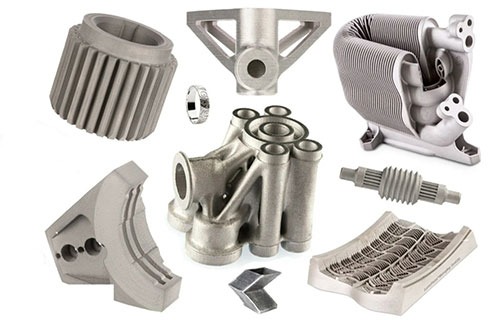
If you’re an engineer, designer, or manufacturer working in aerospace, energy, or any field that demands extreme performance, you’ve likely heard the buzz aroundsuperalloy 3D printing technology. It’s not just hype. By merging the exceptional high-temperature properties of superalloys with the design freedom of additive manufacturing, this technology is solving problems that traditional methods couldn’t touch.
Key takeaways
- Traditional methods like investment casting and forging have served us well, but they come with significant trade-offs: long lead times, high material waste, and design limitations.
- The technology has moved beyond the lab and is now qualifying and flying in the most demanding sectors.
- For all its promise, superalloy 3D printing isn’t a push-button solution.
- The future of superalloy 3D printing lies not in replacing all traditional methods, but in becoming an integrated, digital tool in the manufacturing portfolio.
What Makes Superalloys So Special for Extreme Environments?
Superalloys aren’t your everyday metals. They are the elite performers engineered to thrive where others fail—think inside jet engines or power generation turbines. Their unmatched combination of properties stems from complex compositions primarily based on nickel, cobalt, or iron. Let’s break down why they are non-negotiable for high-stakes applications.
| Property | Key Feature | Why It Matters in Industry |
|---|---|---|
| High-Temperature Strength | Maintains structural integrity at temperatures exceeding 600°C, even under sustained stress. | Enables the creation of aero engine turbine blades and gas turbine components that operate in intense heat. |
| Corrosion & Oxidation Resistance | Forms a stable, protective oxide layer to resist attack from hot gases and corrosive chemicals. | Drastically extends the service life of parts in harsh environments like combustion chambers. |
| Mechanical Durability | Offers excellent fatigue performance and fracture toughness under cyclic loading. | Reduces the risk of catastrophic failure in components subjected to constant stress fluctuations. |
| Creep Resistance | Resists slow, permanent deformation under constant mechanical stress at high temperatures. | Critical for ensuring dimensional stability and safety in long-duration high-temperature operations. |
Take Nickel-based superalloys, for example, like Inconel 718. They are the go-to for the hottest sections of jet engines because they retain strength up to about 700°C. Their performance isn’t an accident; it’s a result of sophisticated metallurgy involving solid solution strengthening and precipitate formation.
Why Choose 3D Printing Over Traditional Manufacturing for Superalloys?
Traditional methods like investment casting and forging have served us well, but they come with significant trade-offs: long lead times, high material waste, and design limitations. Superalloy 3D printing, primarily using Selective Laser Melting (SLM) or Electron Beam Melting (EBM), tackles these head-on with compelling advantages.
How Does 3D Printing Drive Down Cost and Waste?
The economic argument is strong. Traditional manufacturing of a complex turbine blade involves creating molds, multiple machining steps, and joining separate parts—a process that can see material waste as high as 70%. 3D printing is additive; it builds parts layer by layer using only the material needed.
- Dramatically Higher Material Utilization: Waste is often reduced to less than 10%. In an industry where superalloy powders can cost hundreds of dollars per kilogram, this is a game-changer.
- Consolidated Production Steps: It integrates what used to be 5-10 manufacturing stages into one digital process. This can cut production time by 30-50%, getting prototypes and end-use parts to testing and assembly faster.
Can Design Freedom Truly Transform Part Performance?
This is where 3D printing shines. It decouples cost from complexity, allowing designs that are simply impossible to cast or machine.
- Integrated, Lightweight Structures: You can design hollow, lattice-filled components that reduce weight—paramount in aerospace—without compromising strength.
- Complex Internal Geometries: The ability to create sophisticated conformal cooling channels inside a turbine blade or a fuel injector is revolutionary. A real-world case study from a leading engine OEM showed that a 3D-printed blade with optimized internal channels achieved a 25% improvement in cooling efficiency compared to its cast counterpart, directly enabling higher engine operating temperatures and efficiency.
- Part Consolidation: Multiple assembled components can be redesigned as a single, integrated part, eliminating joints and potential failure points.
Does 3D Printing Enhance the Metal’s Inherent Properties?
When parameters are dialed in correctly, yes. The rapid melting and solidification cycle of laser or electron beam printing leads to a very fine, uniform microstructure.
- Compared to traditional castings, 3D-printed superalloy parts can exhibit 15-20% higher tensile strength and improved fatigue life due to this refined grain structure.
- This precise control over the material’s thermal history allows for tailored material properties in different sections of a single part—a concept known as functional grading.
Where Is Superalloy 3D Printing Making a Real Impact Today?
The technology has moved beyond the lab and is now qualifying and flying in the most demanding sectors.
Is Aerospace the Primary Driver for Adoption?
Absolutely. The aerospace industry’s relentless pursuit of weight reduction, performance gains, and supply chain agility makes it a perfect fit.
- Jet Engines: Critical hot-end components like turbine blades, guide vanes, and combustor liners are being 3D printed. Companies like GE Aviation have famously integrated 3D-printed fuel nozzles into their LEAP engines, consolidating 20 parts into one, with a 25% weight reduction and improved durability.
- Space Exploration: Rocket engine components, such as combustion chambers and injectors, face extreme thermal and mechanical stresses. 3D printing allows for the rapid iteration and production of designs with integrated cooling channels that withstand temperatures over 1,000°C.
How Is the Energy Sector Leveraging This Technology?
The demand for efficient, reliable, and longer-lasting power generation equipment is a powerful catalyst.
- Gas Turbines for Power Plants: Components like burner tips, heat shields, and turbine blades benefit from 3D printing’s corrosion resistance and complex cooling designs, helping to extend maintenance intervals and improve thermal efficiency.
- Nuclear Energy: Cobalt-based superalloy components are valued here for their ability to withstand combined high temperatures and radiation environments within reactor systems.
What Are the Key Technical Challenges Holding It Back?
For all its promise, superalloy 3D printing isn’t a push-button solution. Scaling it for widespread, certified use involves overcoming significant hurdles.
Do We Fully Understand the Science Behind the Process?
Not entirely. The multiphysics phenomena occurring during the micro-second melting and solidification of superalloy powder are incredibly complex.
- The lack of comprehensive, predictive models for residual stress formation, unique microstructural evolution, and defect generation means process development often still relies on extensive (and expensive) trial-and-error.
Is Process Optimization a Major Hurdle?
Yes, it’s a delicate balancing act. Achieving a fully dense, crack-free part requires meticulous optimization of a vast parameter space:
* Laser/Beam Power & Speed
* Scan Strategy & Hatch Spacing
* Powder Layer Thickness
* Pre-heat Temperature
* Inert Atmosphere Control
There is no universal setting. A parameter set perfect for Nickel-based Inconel 718 will not work for a Cobalt-based alloy like Haynes 188. This necessitates deep material-specific expertise.
How Do We Ensure Consistent, Certified Quality?
This is the paramount challenge for safety-critical industries. A single internal pore or micro-crack can lead to catastrophic failure.
- Non-Destructive Testing (NDT) like micro-CT scanning is essential but can be time-consuming and costly for every part.
- The industry is actively moving towards in-situ process monitoring—using high-speed cameras, thermal imagers, and photodiodes to detect anomalies in real-time. Coupled with robust post-processing heat treatments (like HIP – Hot Isostatic Pressing) to eliminate residual porosity, this is building the confidence needed for certification.
How to write a spec that gets priced correctly
A drawing is a contract. If it leaves a number open, the shop fills that number in with its own default. The default is rarely the one you had in mind. Put these five lines on every RFQ and most of the back-and-forth disappears before it starts.
- File format and units, with the model exported in millimetres
- Process and material grade, not a trade name
- Critical features and the tolerance each one needs
- Surface finish and the faces it applies to
- Quantity for the pilot build and for the year
The point is not paperwork. Each line removes a decision the shop would otherwise make for you. A complete RFQ comes back priced. An incomplete one comes back guessed.
What actually drives the price
Buyers usually push on material because it is the line they can see. In practice the material is rarely the biggest number on a quote. These five lines decide most of it:
- build volume and orientation
- layer height and support structure
- material grade and colour
- post-processing and hand finishing
- quantity per build plate
Ask for the quote split by line. A supplier who cannot break it down is guessing, and you will pay for the guess. The line you can usually renegotiate is the tolerance band, not the raw material.
Problems you will meet, and the fix
Every process has a failure mode it prefers. The same four show up again and again on this kind of work, and none of them are mysteries once you know what to look for.
- Warping on long flat faces where the part lifts off the plate
- Layer lines showing through a cosmetic surface
- Support scars on a mating face nobody flagged
- Dimensional drift on thin walls after cooling
Catch the fault on the first part, not the hundredth. A first-article check costs an hour. A bad batch costs the whole order. Write the check into the purchase order so nobody has to remember it.
What to check on the first article
The first article is the cheapest inspection you will ever buy. Use it properly and the rest of the run becomes boring, which is exactly what you want.
- Every dimension on the drawing, with the measured value written beside it.
- The material certificate, matched to the heat or lot number on the parts.
- The finish against the sample you approved, under the same light.
- Fit against the mating part, assembled rather than measured.
- Packaging, because parts that arrive damaged were never in tolerance.
Check in this order: datums, then mating features, then cosmetic faces. If the datums are wrong, every number after them is noise. Keep the report on file. When a problem shows up in month six, that document is the only thing that tells you what changed.
How to compare two quotes fairly
Two numbers are not comparable unless the scope matches. Line them up before you decide, because a low number with three gaps is not a low number.
Same drawing, same material, same finish, same inspection. Anything else is a different job wearing the same part number. Then look at what each quote leaves out. Freight, packaging, certificates and tooling are the usual gaps.
Ask each supplier to state their assumptions in writing. The one who does is usually the one who has run the process before.
Scaling from one part to a batch
The first part teaches you the process. The hundredth teaches you the process cost.
Watch three things as volume grows: setup amortisation, tool wear, and how much hand work the finish still needs. If the unit price barely moves between ten and a hundred, the cost sits in material or in hand work, not in setup. Ask which, because only one of them is negotiable.
Lead time behaves the same way. A one-off is scheduled around other jobs. A repeat order is scheduled around your forecast. Give the shop a forecast and the lead time gets shorter, not longer.
How to read a supplier's quote
A quote is a short document with a long shadow. Four things in it decide whether the job runs smoothly, and only one of them is the price.
- The scope line. It should name the process, the material and the finish, not just the part.
- The tolerance basis. General tolerance or the drawing, and which standard it follows.
- The exclusions. Tooling, freight, certificates and inspection are the usual omissions.
- The validity date. Material prices move, and an open-ended quote is a promise nobody can keep.
Read the exclusions before you read the total. A quote that leaves out tooling is not cheaper. It is a quote for a different job.
What to send with the first order
The first order sets the pattern for every order after it. Send a complete package once and the shop files it, and the second order takes a fraction of the time.
- A STEP or native model plus a PDF drawing carrying the same revision letter.
- The material callout by standard number, not by trade name.
- The finish and the exact faces it applies to.
- Any test the part must pass: fit, seal, drop, salt spray, dielectric.
- A contact who can answer a question inside one working day.
Then write down what was agreed. An email that confirms the material, the finish and the date is worth more than a longer purchase order that leaves them open.
The Path Forward: Integration and Innovation
The future of superalloy 3D printing lies not in replacing all traditional methods, but in becoming an integrated, digital tool in the manufacturing portfolio. It excels at high-value, complex, low-to-medium volume parts. Advances in multi-laser machines, AI-driven process control, and standardized qualification frameworks are steadily tackling the challenges, paving the way for broader adoption.
FAQ: Your Superalloy 3D Printing Questions Answered
Q1: Is superalloy 3D printing cost-effective for mass production?
Currently, its sweet spot is low-volume, high-complexity, and high-value components, like aerospace engine parts. However, with advancements in multi-laser systems and higher throughput machines, it is becoming increasingly feasible for larger batch production of smaller, critical parts.
Q2: How long does it take to get a 3D-printed superalloy part?
Lead time is a major advantage. For a single complex part (e.g., a prototype turbine blade), lead time can be 2-4 weeks from design to finished part, compared to 8-12 weeks or more for traditional tooling and casting. For small batches, lead times can be even more efficient due to digital inventory and parallel production.
Q3: Are 3D-printed superalloy parts as strong as forged or cast ones?
When the process is fully optimized and includes appropriate post-processing (like HIP and heat treatment), 3D-printed parts can meet or exceed the mechanical properties of their cast counterparts, particularly in tensile strength and fatigue life, thanks to their fine, homogeneous microstructure.
Q4: What are the main limitations in part size?
Part size is constrained by the build volume of the industrial printer. While machines with volumes exceeding 500mm x 500mm x 500mm are common, very large structural components (like entire turbine disks) may still be produced through traditional means or segmented and joined.
Our solution for Superalloy 3D Printing
YiguProto runs 3D printing in house, from a single prototype to a production batch. We quote the process, the material and the finish as separate lines, so you can see where the money goes instead of arguing with one number.
Send a STEP file or a drawing and you get a DFM report in one to two business days. It flags the features that add cost and the features that will not hold tolerance on the process you picked.
Every order ships with an inspection report on the features you call out. If a part misses, we make it again. Ready to price a part? Start with a free quote and DFM review, or read more about our 3D printing. You can also talk to an engineer before you commit to a drawing.
FAQ about Superalloy 3D Printing
What is Superalloy 3D Printing used for?
Superalloy 3D Printing turns up wherever the part has to do a real job at a predictable cost: brackets, housings, fixtures, covers and the fittings that hold them together. The honest test is whether the properties match the load and the environment, not whether the material is fashionable.
How long does a first article take?
Usually a few business days once the drawing is frozen, and longer if tooling is involved. The date we give you is the date we confirm in writing, not the date we hope for.
Is there a minimum order quantity?
No hard minimum. One part is fine. What changes with volume is which costs dominate, so a single unit is priced mostly on setup and a thousand units are priced mostly on cycle time and material.
How much does Superalloy 3D Printing cost?
Price comes from five lines: material, machine or tool time, setup, finishing and inspection. The material itself is usually the smallest of them. Send a drawing and we will split the quote so you can see which line is doing the damage.
What tolerance can you hold on Superalloy 3D Printing?
The working default is ±0.1 mm on small features, ±0.3% on long spans. Tighter than that the process changes and so does the price, because every step tighter adds inspection time. Call out only the faces that mate with something else and leave the rest on the general tolerance.
Does the process work for prototypes as well as production?
Yes, and that is usually the point. Running the prototype on the production process removes a whole class of surprises, because the part you test is made the same way as the part you sell.
The short version
Superalloy 3D Printing rewards the buyer who reads the data sheet and the drawing together. Pick the option for the property that matters, not for the price per kilo.
Tighten only what mates. Test a sample before the run. Then let the process do the rest.