
Rapid Prototyping
Top Prototype Development Companies – How to Choose the Right One
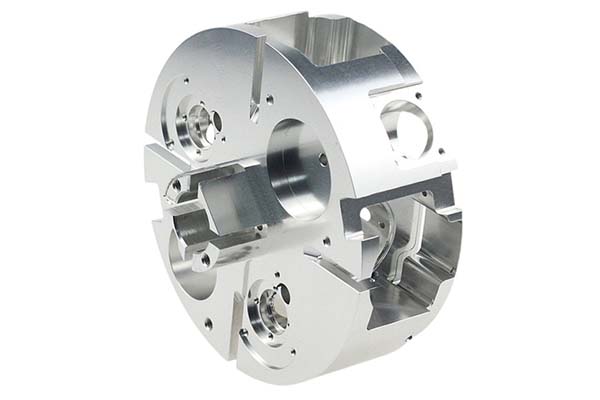
You have a great idea. Maybe it’s a new smart device, a medical tool, or a simple consumer gadget. Turning that idea into a real product is an exciting journey. But it’s also full of technical challenges and financial risks. The single most important decision you will make at the start is choosing the right partner to help you.
Key takeaways
- To choose the right partner, you must first understand their real value.
- Top-quality prototype development companies offer a complete set of services that cover the entire product journey.
- Choosing from a long list of companies can feel overwhelming. You need a structured plan.
- Knowing what to avoid is just as important as knowing what to look for.
What Do Prototype Development Companies Actually Do?
To choose the right partner, you must first understand their real value. Many people think they are just service shops—places where you send a file to get a part 3D printed. This is a big misunderstanding. A top development company is much more than a vendor. They are a full partner, acting as both the architect and the builder for your new product.
A true prototyping partner reduces risk for your entire business. They use engineering and design skills to turn your abstract idea into a working, manufacturable, and appealing product. Here are their main jobs:
- Idea testing: They turn rough sketches into real physical models you can hold and test. This lets you prove—or disprove—that your idea works before you invest a lot of money.
- Risk reduction: Finding a design flaw during manufacturing is very expensive. These companies find problems early, saving you huge amounts of time and money later.
- Getting investment: A slick presentation is good. But a working, professional-quality prototype is powerful. It shows investors that your idea works and that you are making real progress.
- User-focused design: They help create prototypes for testing with real users. Getting feedback on how a physical object feels and works is extremely valuable for making a product people want.
- Path to production: The final goal is not just a prototype, but a product that can be made in large quantities. Good companies use Design for Manufacturability (DFM) principles from day one. This ensures the final design is set up for efficient and cost-effective production.
What Services Do These Companies Offer?
Top-quality prototype development companies offer a complete set of services that cover the entire product journey. This is usually broken down into three clear phases.
Phase 1: Ideas and Design
This is where the idea takes shape, moving from a concept to a detailed digital blueprint.
- Industrial Design: This is the art and science of a product’s form and function. Industrial designers focus on how it looks, feels, and how you interact with it. They make sure it’s not just functional, but also appealing.
- Mechanical Engineering: While industrial design defines the outside, mechanical engineering defines the inside. Engineers design the internal structure, mechanisms, and moving parts that make the product work.
- CAD (Computer-Aided Design): This is the language of product development. Using advanced software, they create highly detailed 2D drawings and 3D digital models of every part. These CAD files are the master blueprint for prototyping and manufacturing.
- DFM (Design for Manufacturability) Analysis: Throughout the design phase, engineers analyze the CAD models to make sure each part can be produced efficiently and within budget using standard methods like injection molding or CNC machining.
Phase 2: Prototyping and Testing
With a digital design complete, the next step is to create physical models for testing. Prototypes are made for specific purposes, ranging from simple function tests to final production-ready samples.
| Prototype Type | Main Purpose | Common Materials / Tech |
|---|---|---|
| Proof-of-Concept (PoC) | Test a single, main function or technology. | Off-the-shelf parts, Arduino, simple 3D prints. |
| Looks-Like Prototype | Test appearance, feel, and overall shape. | High-quality 3D printing (SLA), CNC machining. |
| Works-Like Prototype | Test functionality and internal mechanisms. | Machined parts, 3D prints (FDM/SLS), basic electronics. |
| Pre-Production Prototype | Final test of form, fit, and function using production-ready materials. | Injection molding (soft tooling), final electronics. |
Phase 3: Manufacturing Transition
A successful prototype is not the end. The final, and often most complex, phase is preparing for mass production.
- Low-Volume Production: Before spending on expensive tooling, companies may offer low-volume runs (e.g., 50-500 units) using methods like urethane casting. This is ideal for market testing or early sales.
- Sourcing & Supply Chain Management: The company helps you find and manage factories and component suppliers, often using their existing relationships. This includes negotiating costs and managing logistics.
- Quality Assurance & Control Planning: A good partner helps you set the standards for a quality product. They create quality control plans and testing protocols to ensure every unit from the factory meets your specifications.
How Do You Evaluate and Compare Companies?
Choosing from a long list of companies can feel overwhelming. You need a structured plan. Use this simple scorecard method to make an informed decision.
Create a spreadsheet. For each company you are considering, score them from 1 to 5 on these criteria.
Criterion 1: Portfolio and Experience
A company’s past work is the best predictor of its future performance. Look beyond just pretty pictures.
- [ ] Do they have experience in your specific product area, like consumer electronics or medical devices?
- [ ] Have they worked with the materials and processes your product needs, like high-precision plastics or metal alloys?
- [ ] Can they provide detailed case studies that explain the problem they solved, not just show final photos?
Criterion 2: Team and Capabilities
You are hiring a team of people. Their expertise matters.
- Who will be my main contact? You need a dedicated project manager.
- What is done in-house versus outsourced? This is crucial for quality control and accountability. In our experience, companies with in-house design, engineering, and prototyping teams produce better results faster. Communication flows smoothly, and there are no finger-pointing issues between different vendors.
- What are the backgrounds of the lead designer and engineer?
Criterion 3: Process and Communication
A company that cannot clearly explain its development process is a major risk.
- Do they have a clearly defined project roadmap with phases and deliverables?
- Do they commit to regular communication, like weekly check-in calls?
- Do they use professional project management tools?
Criterion 4: Intellectual Property (IP) Protection
Your idea is your most valuable asset. Protecting it is non-negotiable.
- Must sign an NDA: They must be willing to sign a mutual Non-Disclosure Agreement (NDA) before you share any confidential details. If they hesitate, it’s a deal-breaker.
- IP ownership: The contract must clearly state that you (or your company) own 100% of the intellectual property developed during the project.
What Are the Critical Red Flags to Avoid?
Knowing what to avoid is just as important as knowing what to look for.
- 🚩 Vague or “Too-Good-to-Be-True” Quotes: A professional proposal is detailed, breaking down costs by phase. A single, low number with no explanation is a major red flag. It often means they don’t understand the work and will hit you with unexpected charges later.
- 🚩 No Clear Process: If they can’t walk you through their development steps, they likely don’t have a structured process. This leads to missed deadlines and poor results.
- 🚩 Poor Communication from the Start: If they are slow to reply or vague during the sales process, this behavior will only get worse once they have your money.
- 🚩 Hesitation to Sign an NDA: This is the biggest red flag of all. Any pushback on this is non-negotiable. Walk away.
- 🚩 Lack of Relevant Case Studies: If all they can show are 3D renderings or projects unrelated to yours, you will be paying them to learn on your dime.
Real example: We once saw a project fail because a founder chose a company with a very low price. To save money, that company outsourced all the critical engineering to an unvetted freelancer. The result was a non-functional prototype, a complete loss of the founder’s investment, and a six-month delay. A detailed quote and transparency about who does the work would have prevented this disaster.
How to write a spec that gets priced correctly
A drawing is a contract. If it leaves a number open, the shop fills that number in with its own default. The default is rarely the one you had in mind. Put these five lines on every RFQ and most of the back-and-forth disappears before it starts.
- A model you are willing to freeze for the build
- The question the prototype must answer
- Process and material that can answer it
- Tolerance on the features under test
- How many iterations you have budgeted
The point is not paperwork. Each line removes a decision the shop would otherwise make for you. A complete RFQ comes back priced. An incomplete one comes back guessed.
What actually drives the price
Buyers usually push on material because it is the line they can see. In practice the material is rarely the biggest number on a quote. These five lines decide most of it:
- process choice
- part size and feature count
- material
- finish and fit checks
- number of iterations
Ask for the quote split by line. A supplier who cannot break it down is guessing, and you will pay for the guess. The line you can usually renegotiate is the tolerance band, not the raw material.
Problems you will meet, and the fix
Every process has a failure mode it prefers. The same four show up again and again on this kind of work, and none of them are mysteries once you know what to look for.
- A prototype that is too good and hides a production problem
- A prototype that is too rough to test the real question
- Material chosen for speed rather than for the test
- No measurement plan, so the result is an opinion
Catch the fault on the first part, not the hundredth. A first-article check costs an hour. A bad batch costs the whole order. Write the check into the purchase order so nobody has to remember it.
What to check on the first article
The first article is the cheapest inspection you will ever buy. Use it properly and the rest of the run becomes boring, which is exactly what you want.
- Every dimension on the drawing, with the measured value written beside it.
- The material certificate, matched to the heat or lot number on the parts.
- The finish against the sample you approved, under the same light.
- Fit against the mating part, assembled rather than measured.
- Packaging, because parts that arrive damaged were never in tolerance.
Check in this order: datums, then mating features, then cosmetic faces. If the datums are wrong, every number after them is noise. Keep the report on file. When a problem shows up in month six, that document is the only thing that tells you what changed.
How to compare two quotes fairly
Two numbers are not comparable unless the scope matches. Line them up before you decide, because a low number with three gaps is not a low number.
Same drawing, same material, same finish, same inspection. Anything else is a different job wearing the same part number. Then look at what each quote leaves out. Freight, packaging, certificates and tooling are the usual gaps.
Ask each supplier to state their assumptions in writing. The one who does is usually the one who has run the process before.
Scaling from one part to a batch
The first part teaches you the process. The hundredth teaches you the process cost.
Watch three things as volume grows: setup amortisation, tool wear, and how much hand work the finish still needs. If the unit price barely moves between ten and a hundred, the cost sits in material or in hand work, not in setup. Ask which, because only one of them is negotiable.
Lead time behaves the same way. A one-off is scheduled around other jobs. A repeat order is scheduled around your forecast. Give the shop a forecast and the lead time gets shorter, not longer.
How to read a supplier's quote
A quote is a short document with a long shadow. Four things in it decide whether the job runs smoothly, and only one of them is the price.
- The scope line. It should name the process, the material and the finish, not just the part.
- The tolerance basis. General tolerance or the drawing, and which standard it follows.
- The exclusions. Tooling, freight, certificates and inspection are the usual omissions.
- The validity date. Material prices move, and an open-ended quote is a promise nobody can keep.
Read the exclusions before you read the total. A quote that leaves out tooling is not cheaper. It is a quote for a different job.
What to send with the first order
The first order sets the pattern for every order after it. Send a complete package once and the shop files it, and the second order takes a fraction of the time.
- A STEP or native model plus a PDF drawing carrying the same revision letter.
- The material callout by standard number, not by trade name.
- The finish and the exact faces it applies to.
- Any test the part must pass: fit, seal, drop, salt spray, dielectric.
- A contact who can answer a question inside one working day.
Then write down what was agreed. An email that confirms the material, the finish and the date is worth more than a longer purchase order that leaves them open.
How Do You Make the Final Decision?
You’ve done your research and narrowed your list. Now it’s time to make the final choice.
- Request detailed proposals: Send a clear project brief to your top 2-3 choices. Ask for a phase-by-phase breakdown of activities, timelines, and costs.
- Conduct final interviews: Talk directly with the people who would be working on your project. Gauge the team chemistry and confirm they understand your vision.
- Review the contract: Carefully read the Statement of Work (SOW). Ensure all deliverables, timelines, and IP ownership clauses are clearly defined. Have a lawyer review it if possible.
- Sign and kick-off: Once you are confident, sign the agreement and start the project with a formal kick-off meeting.
Choosing the right prototype development company is not just finding a vendor. It is the first and most critical investment in your product’s future success. Use the evaluation scorecard to compare companies fairly. Watch for red flags like vague quotes or hesitation to sign an NDA. Look for a partner with relevant experience, a clear process, and a team that communicates well. The right partner will do more than just build a prototype. They will help you build a business.
Our solution for Top Prototype Development Companies –
YiguProto runs rapid prototyping in house, from a single prototype to a production batch. We quote the process, the material and the finish as separate lines, so you can see where the money goes instead of arguing with one number.
Send a STEP file or a drawing and you get a DFM report in one to two business days. It flags the features that add cost and the features that will not hold tolerance on the process you picked.
Every order ships with an inspection report on the features you call out. If a part misses, we make it again. Ready to price a part? Start with a free quote and DFM review, or read more about our rapid prototyping. You can also talk to an engineer before you commit to a drawing.
FAQ about Top Prototype Development Companies –
What material should I specify?
Specify by standard, not by trade name. A trade name can change under you between two orders; a standard number cannot. Then add the one property that actually decides the part, whether that is strength, heat resistance or chemical exposure.
What is the lead time for Top Prototype Development Companies –?
Expect 3 to 7 business days for a first article. Tooling, material stock and the finishing queue all move that number, so we confirm the date in writing before the run starts rather than after.
Is there a minimum order quantity?
No hard minimum. One part is fine. What changes with volume is which costs dominate, so a single unit is priced mostly on setup and a thousand units are priced mostly on cycle time and material.
What should I check before approving the parts?
Datums first, then the features that mate, then the cosmetic faces. Ask for a dimensional report, a material certificate and a finish sample. A part can be inside every tolerance and still not fit, so assemble one before you sign.
How long does a first article take?
Usually a few business days once the drawing is frozen, and longer if tooling is involved. The date we give you is the date we confirm in writing, not the date we hope for.
What tolerance can you hold on Top Prototype Development Companies –?
The working default is ±0.1 mm on most processes, tighter after machining. Tighter than that the process changes and so does the price, because every step tighter adds inspection time. Call out only the faces that mate with something else and leave the rest on the general tolerance.
The short version
Top Prototype Development Companies – rewards the buyer who reads the data sheet and the drawing together. Pick the option for the property that matters, not for the price per kilo.
Tighten only what mates. Test a sample before the run. Then let the process do the rest.