
Blogs
Our Transparent Vacuum Casting Services
Our Transparent Vacuum Casting Services, explained the way we would explain it across a table: what it is good at, what it costs you, and the details that keep the part out of the scrap bin.
Key takeaways
- Transparent Vacuum Casting is a specialized vacuum casting technology that focuses on creating clear, defect-free parts using transparent casting materials.
- Creating clear parts with transparent vacuum casting requires careful attention to detail at every stage.
- Choosing the right transparent casting materials is critical for achieving the desired transparency, strength, and performance.
- Transparent Vacuum Casting offers unique benefits over other manufacturing methods for clear parts—making it a top choice for prototypes and small-batch production:
Our Transparent Vacuum Casting Services
Need high-quality, crystal-clear parts for your project? our shop’s Transparent Vacuum Casting servicesdeliver exceptional transparency and precision—perfect for industries like automotive, electronics, and lighting.
Using advanced vacuum casting technology and top-tier transparent resin, we create custom parts with tight tolerances, smooth finishes, and cost-effective solutions for small to medium batches. Whether you need prototypes or production parts, our expertise ensures your vision becomes a clear reality.

What Is Transparent Vacuum Casting?
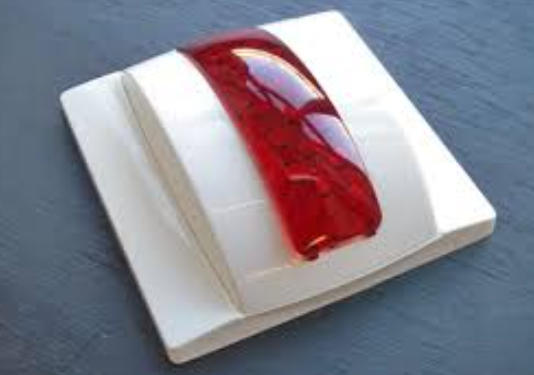
Transparent Vacuum Casting is a specialized vacuum casting technology that focuses on creating clear, defect-free parts using transparent casting materials. Unlike standard vacuum casting, this method prioritizes transparency—eliminating even the smallest air bubbles, impurities, or surface blemishes that could cloud the final part. It’s ideal for applications where visual clarity (e.g., light diffusion, product visibility) is as critical as structural integrity.
Below is a simplified process overview of how transparent vacuum casting works, highlighting key steps that ensure clarity:
| Step of Process | Purpose | Key Tool/Material |
|---|---|---|
| Master Pattern Design | Create a smooth, bubble-free prototype (often 3D-printed with high-resolution resin) | Transparent 3D Resin, CNC-Machined Acrylic |
| Silicone Mold Preparation | Make a reusable mold with ultra-smooth cavities to preserve transparency | High-Clear Silicone Rubber |
| Material Mixing & Degassing | Blend transparent resin and remove air bubbles (critical for clarity) | Vacuum Degassing Chamber, Transparent Casting Resin |
| Vacuum Casting | Inject degassed resin into the mold under vacuum to avoid trapped air | Industrial Vacuum Chamber |
| Curing & Demolding | Cure resin at controlled temperatures to maintain clarity; demold carefully to avoid scratches | Temperature-Controlled Oven, Non-Stick Mold Release |
| Precision Finishing | Polish surfaces to enhance transparency and remove any minor imperfections | Micro-Polishing Tools, Clear Coating |
The Transparent Vacuum Casting Process (Step-by-Step)
Creating clear parts with transparent vacuum casting requires careful attention to detail at every stage. Here’s a detailed breakdown of our process, optimized for transparency and precision:
Demolding & Finishing: The part is gently demolded to prevent scratches. We then polish the surface with micro-abrasives to enhance transparency and apply a clear protective coating if needed (e.g., for scratch resistance).
Master Pattern Creation: We start with a high-precision master pattern—usually 3D-printed with a transparent resin or machined from acrylic. The pattern must be completely smooth (no scratches or layers) to ensure the mold captures every detail without imperfections.
Silicone Mold Making: We pour high-clear silicone rubber over the master pattern and cure it in a controlled environment. The silicone is chosen for its ability to replicate fine details and maintain a smooth surface—key for preserving transparency in the final part.
Resin Preparation: We select the right transparent casting resin (based on your needs: flexibility, heat resistance) and mix it with hardeners. The mixture is then placed in a vacuum degassing chamber for 15–20 minutes to remove all air bubbles—even tiny bubbles would ruin clarity.
Vacuum Casting: The degassed resin is injected into the silicone mold, which is inside a vacuum chamber. The vacuum ensures the resin flows into every corner of the mold without trapping air, creating a bubble-free part.
Controlled Curing: The mold is placed in a temperature-controlled oven to cure the resin. Curing time (1–3 hours) and temperature (50–80°C) are adjusted based on the resin type to avoid warping or clouding.
Materials Used in Transparent Vacuum Casting
Choosing the right transparent casting materials is critical for achieving the desired transparency, strength, and performance. our shop offers a range of resins tailored to different industry needs:
| Material Type | Key Properties | Light Transmittance | Ideal Applications |
|---|---|---|---|
| General-Purpose Transparent Resin | Low cost, good clarity, easy to process | 90–92% | Prototypes, consumer goods (e.g., display cases) |
| High-Clarity Polyurethane (PU) Resin | Excellent transparency, impact-resistant, flexible options | 93–95% | Automotive lenses, electronics enclosures |
| Heat-Resistant Transparent Resin | Withstands high temperatures (120–180°C), clarity at heat | 88–91% | Lighting components (e.g., LED diffusers), industrial parts |
| Chemical-Resistant Transparent Resin | Resists oils, solvents, and chemicals; maintains clarity | 90–92% | Medical devices (e.g., fluid reservoirs), lab equipment |
| UV-Resistant Transparent Resin | Prevents yellowing from sunlight; long-term clarity | 91–93% | Outdoor lighting, automotive exterior parts |
Our team helps you select the best material based on your project’s requirements—whether you need transparency for light diffusion or chemical resistance for medical use.
Advantages of Transparent Vacuum Casting
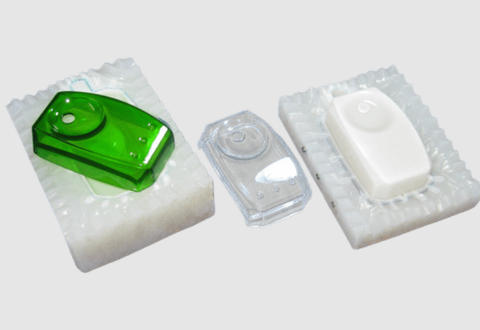
Transparent Vacuum Casting offers unique benefits over other manufacturing methods for clear parts—making it a top choice for prototypes and small-batch production:
Consistent Quality: Every part has the same transparency and dimensions, thanks to our controlled process and quality checks. This consistency is critical for industries like medical and electronics.
Superior Transparency: The vacuum degassing and casting process eliminates air bubbles and impurities, resulting in parts with 92–95% light transmittance—comparable to glass but lighter and more impact-resistant.
Cost-Effective: Unlike injection molding (which requires expensive metal tooling), transparent vacuum casting uses affordable silicone molds (reusable up to 30–50 times), reducing upfront costs for small batches (10–500 parts).
Fast Lead Times: Silicone molds are ready in 2–3 days, and parts can be produced in as little as 24 hours after mold creation—ideal for rapid prototyping or urgent projects.
Design Flexibility: We can create complex shapes (e.g., curved lenses, intricate enclosures) that are hard to achieve with machining. Adjusting designs between batches is easy—no need to retool.
How to write a spec that gets priced correctly
A drawing is a contract. If it leaves a number open, the shop fills that number in with its own default. The default is rarely the one you had in mind. Put these five lines on every RFQ and most of the back-and-forth disappears before it starts.
- A model and a drawing that agree
- Material by standard number
- Tolerance only where it mates
- Finish and the faces it applies to
- Quantity and required date
The point is not paperwork. Each line removes a decision the shop would otherwise make for you. A complete RFQ comes back priced. An incomplete one comes back guessed.
What actually drives the price
Buyers usually push on material because it is the line they can see. In practice the material is rarely the biggest number on a quote. These five lines decide most of it:
- process choice
- material
- tolerance band
- finish
- volume
Ask for the quote split by line. A supplier who cannot break it down is guessing, and you will pay for the guess. The line you can usually renegotiate is the tolerance band, not the raw material.
Problems you will meet, and the fix
Every process has a failure mode it prefers. The same four show up again and again on this kind of work, and none of them are mysteries once you know what to look for.
- A drawing that contradicts the model
- A tolerance with no datum
- A cosmetic callout with no approved sample
- A quote compared against a different scope
Catch the fault on the first part, not the hundredth. A first-article check costs an hour. A bad batch costs the whole order. Write the check into the purchase order so nobody has to remember it.
What to check on the first article
The first article is the cheapest inspection you will ever buy. Use it properly and the rest of the run becomes boring, which is exactly what you want.
- Every dimension on the drawing, with the measured value written beside it.
- The material certificate, matched to the heat or lot number on the parts.
- The finish against the sample you approved, under the same light.
- Fit against the mating part, assembled rather than measured.
- Packaging, because parts that arrive damaged were never in tolerance.
Check in this order: datums, then mating features, then cosmetic faces. If the datums are wrong, every number after them is noise. Keep the report on file. When a problem shows up in month six, that document is the only thing that tells you what changed.
How to compare two quotes fairly
Two numbers are not comparable unless the scope matches. Line them up before you decide, because a low number with three gaps is not a low number.
Same drawing, same material, same finish, same inspection. Anything else is a different job wearing the same part number. Then look at what each quote leaves out. Freight, packaging, certificates and tooling are the usual gaps.
Ask each supplier to state their assumptions in writing. The one who does is usually the one who has run the process before.
Scaling from one part to a batch
The first part teaches you the process. The hundredth teaches you the process cost.
Watch three things as volume grows: setup amortisation, tool wear, and how much hand work the finish still needs. If the unit price barely moves between ten and a hundred, the cost sits in material or in hand work, not in setup. Ask which, because only one of them is negotiable.
Lead time behaves the same way. A one-off is scheduled around other jobs. A repeat order is scheduled around your forecast. Give the shop a forecast and the lead time gets shorter, not longer.
How to read a supplier's quote
A quote is a short document with a long shadow. Four things in it decide whether the job runs smoothly, and only one of them is the price.
- The scope line. It should name the process, the material and the finish, not just the part.
- The tolerance basis. General tolerance or the drawing, and which standard it follows.
- The exclusions. Tooling, freight, certificates and inspection are the usual omissions.
- The validity date. Material prices move, and an open-ended quote is a promise nobody can keep.
Read the exclusions before you read the total. A quote that leaves out tooling is not cheaper. It is a quote for a different job.
What to send with the first order
The first order sets the pattern for every order after it. Send a complete package once and the shop files it, and the second order takes a fraction of the time.
- A STEP or native model plus a PDF drawing carrying the same revision letter.
- The material callout by standard number, not by trade name.
- The finish and the exact faces it applies to.
- Any test the part must pass: fit, seal, drop, salt spray, dielectric.
- A contact who can answer a question inside one working day.
Then write down what was agreed. An email that confirms the material, the finish and the date is worth more than a longer purchase order that leaves them open.
When this is the wrong choice
A good supplier tells you when the process does not fit. These are the cases where we say so.
- The volume is so low that setup costs more than the parts are worth.
- The tolerance is tighter than the process can hold without a second operation.
- The geometry cannot be made without a tool feature that will not pay back.
- The material you need is not available in the form the process requires.
- The schedule is shorter than the tooling or setup time, and nobody has said so yet.
None of these are refusals. They are reasons to look at a different route, and the earlier that conversation happens the cheaper it is. The most expensive mistake in manufacturing is a process chosen before the question was understood.
Planning the ramp from prototype to production
The gap between one good part and a thousand identical ones is a plan, not a machine. Three decisions close it.
First, freeze the design. Every change after tooling starts is a re-cut, and re-cuts are where schedules go. Second, decide the inspection level. A prototype is checked by eye; a production part is checked against a report. Third, agree the change process in writing, including who pays for it.
Write the ramp down as dates and owners, not as intentions. A ramp plan with three names and three dates is worth more than a page of good intentions.
What documentation to expect
Paperwork is not bureaucracy when a part fails at the customer. It is the only record of what was agreed. A normal shipment should carry four documents.
- A dimensional report covering every callout on the drawing.
- A material certificate traceable to the heat or lot number.
- A finish or coating certificate where the specification requires one.
- A packing list that matches the carton labels.
If a supplier cannot produce these on request, they are not running a controlled process. Ask for one sample set before you place the first order and you will know exactly what you are buying.
How to handle a change after the order
Changes happen. What matters is whether the change is priced, scheduled and recorded, or absorbed quietly and discovered later.
Send the change as a new revision, not as a note in an email. Ask for three answers in writing: what it costs, what it does to the date, and what happens to material or tooling already committed. Then decide.
A change without a revision number is a rumour. The shop will build what it has on file, and both sides will be right and unhappy at the same time.
Applications by Industry
Transparent Vacuum Casting is used across industries where transparency and precision are essential. Below are key applications by sector:
| Industry | Common Applications | Key Requirements Met |
|---|---|---|
| Automotive | Interior lighting diffusers, instrument cluster lenses, sensor covers | Heat resistance, impact resistance, clarity |
| Electronics | Display enclosures, LED light guides, camera lenses | Precision fit, scratch resistance, transparency |
| Medical | Fluid reservoirs, diagnostic device windows, surgical tool handles | Biocompatibility, chemical resistance, clarity for visibility |
| Lighting | LED bulb covers, decorative light diffusers, industrial lighting lenses | Light transmittance, UV resistance, durability |
| Consumer Goods | Cosmetic packaging, toy parts, clear display cases | Aesthetic appeal, affordability, impact resistance |
our shop understands industry-specific standards (e.g., ISO 13485 for medical, IATF 16949 for automotive) and ensures all parts comply with regulations—including biocompatibility testing for medical applications.
Our solution for Our Transparent Vacuum Casting Services
YiguProto runs custom manufacturing in house, from a single prototype to a production batch. We quote the process, the material and the finish as separate lines, so you can see where the money goes instead of arguing with one number.
Send a STEP file or a drawing and you get a DFM report in one to two business days. It flags the features that add cost and the features that will not hold tolerance on the process you picked.
Every order ships with an inspection report on the features you call out. If a part misses, we make it again. Ready to price a part? Start with a free quote and DFM review, or read more about our custom manufacturing. You can also talk to an engineer before you commit to a drawing.
FAQ about Our Transparent Vacuum Casting Services
How do you ensure transparency in vacuum casting parts?
We use three key steps: 1) Degassing the transparent resin for 15–20 minutes to remove all air bubbles; 2) Using high-clear silicone molds to replicate smooth surfaces; 3) Micro-polishing the final part to enhance light transmittance. We also test transmittance with a spectrophotometer—ensuring 92–95% clarity for most projects.
Can transparent vacuum casting parts be used outdoors?
Yes! We offer UV-resistant transparent resin that prevents yellowing and maintains clarity even after long-term sun exposure. For outdoor parts (e.g., lighting fixtures), we also apply a UV-protective coating to increase durability. These parts typically last 5+ years outdoors without losing transparency.
What is the minimum order quantity (MOQ) for transparent vacuum casting?
Our MOQ is just 1 part—making it ideal for prototyping. For production batches, we recommend 10–500 parts to maximize cost savings (since silicone molds are reusable up to 30–50 times). We also offer volume discounts for orders of 100+ parts.
What tolerance can you hold on Our Transparent Vacuum Casting Services?
The working default is ±0.1 mm as a working default. Tighter than that the process changes and so does the price, because every step tighter adds inspection time. Call out only the faces that mate with something else and leave the rest on the general tolerance.
Can Our Transparent Vacuum Casting Services be made in small quantities?
Yes, and small quantities are where a good supplier earns the next order. Setup dominates the price at low volume, so the cheapest route is usually the one with the fewest operations, not the cheapest material.
How do I compare two quotes fairly?
Match the scope first: same drawing, same material, same finish, same inspection. Then read the exclusions. Freight, tooling and certificates are the usual gaps, and a low number with three gaps is not a low number.
The short version
Our Transparent Vacuum Casting Services rewards the buyer who reads the data sheet and the drawing together. Pick the option for the property that matters, not for the price per kilo.
Tighten only what mates. Test a sample before the run. Then let the process do the rest.