
3D Printing
Is 3D Printing the Future of Shipbuilding?
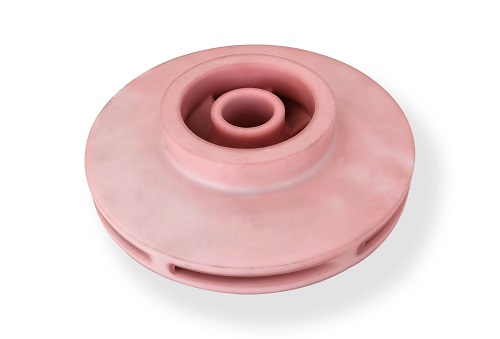
Imagine constructing a complex ship component not in a sprawling shipyard over many months, but in a matter of days, with minimal waste and unprecedented design freedom. This is the promise of 3D printing in maritime applications, a technology moving from prototype shops to the forefront of naval architecture and marine engineering.
Key takeaways
- At its core, 3D printing for ships transforms a digital model into a physical object by depositing material layer upon layer.
- The applications extend far beyond simple prototyping, offering solutions across the entire vessel lifecycle.
- The benefits of maritime 3D printing are substantial and address core industry inefficiencies.
- Adoption is not without hurdles, but practical strategies exist for each.
How Does 3D Printing Work for Marine Applications?
At its core, 3D printing for ships transforms a digital model into a physical object by depositing material layer upon layer. This fundamental shift from subtractive (cutting away) or formative (molding) methods unlocks new possibilities and requires a strategic approach to both process and material science.
What Are the Foundational Manufacturing Processes?
The maritime industry primarily utilizes three AM processes, each suited to different applications:
- Fused Deposition Modeling (FDM): This common process extrudes thermoplastic filaments through a heated nozzle. It’s ideal for conceptual prototypes, non-critical tooling, and custom interior parts like ductwork or brackets. Its strengths are low cost and material versatility, but parts may have lower strength and surface finish compared to other methods.
- Stereolithography (SLA) & Digital Light Processing (DLP): These processes use a laser or projector to cure liquid photopolymer resin into solid layers. They produce parts with exceptional detail and smooth surface finish, making them perfect for high-fidelity scale models, complex investment casting patterns for metal parts, and detailed fluid flow test models.
- Direct Metal Laser Sintering (DMLS): A high-power laser fuses fine metal powder particles. This is the go-to process for end-use, load-bearing components. It creates fully dense metal parts from alloys like maritime-grade aluminum, stainless steel, and nickel superalloys, suitable for custom impellers, heat exchangers, or structural brackets.
How Do You Select the Right Material for the Marine Environment?
Choosing a material isn’t just about strength; it’s about surviving a harsh, corrosive environment. The material must align with the intended function, printing process, and long-term exposure to saltwater, UV radiation, and mechanical stress.
Key Marine-Grade 3D Printing Materials:
| Material Class | Specific Materials | Key Properties | Ideal Marine Applications |
|---|---|---|---|
| Engineering Thermoplastics | ABS-Marine, ASA, Nylon (PA), PEEK | Good strength, UV resistance (ASA), chemical resistance | Ducting, housings, custom tools, non-structural interior parts |
| Photopolymer Resins | Tough, Durable, & Water-Washable Resins | High detail, smooth finish, various mechanical properties | Scale models, visual prototypes, casting patterns, fluid flow test parts |
| Metals | 316L Stainless Steel, AlSi10Mg, Ti-6Al-4V | Excellent strength-to-weight ratio, superior corrosion resistance, high temperature performance | Functional propulsion components, structural fittings, custom hardware, repair parts |
Pro Tip: For any part exposed to saltwater, post-processing is non-negotiable. This includes proper sealing of polymer parts and applying specialized marine-grade coatings or passivation treatments to metal parts to ensure long-term durability.
Where Is 3D Printing Making Waves in the Maritime Industry?
The applications extend far beyond simple prototyping, offering solutions across the entire vessel lifecycle.
Can It Accelerate Design and Validation?
Absolutely. Naval architects are using 3D printing to radically shorten the design feedback loop. Highly accurate, scaled hull models can be printed in days for tow tank testing, allowing for rapid iteration of hull forms to optimize for drag and stability. At the U.S. Naval Surface Warfare Center, Carderock Division, engineers have used large-format 3D printing to produce detailed scale models that capture over 95% of a ship’s external geometry and internal structure, slashing model production time by 70% and enabling more design variants to be tested within budget and timeline constraints.
How Is It Transforming On-Demand Manufacturing and Repair?
This is perhaps the most impactful near-term application. The ability to produce parts on-demand is a game-changer for obsolete parts and emergency repairs. Instead of waiting weeks for a foundry to produce a custom valve or pump housing, a digital file can be sent to a 3D metal printer on-site or at a regional service center. A prominent example is Wilhelmsen, a global maritime industry group, which has established a network of 3D printing hubs to produce certified spare parts for vessels, significantly reducing downtime and inventory costs for ship operators.
Is It Feasible for Direct Hull and Large Structure Fabrication?
For large structures, the technology is advancing rapidly through large-scale additive manufacturing (LSAM). These systems use pellet-fed extruders to deposit thermoplastics or composite materials, capable of printing objects measuring several meters. While printing a full ocean-going vessel in one piece remains a future vision, the technology is being used for:
- Customized hull sections for specialized workboats or yachts.
- Complex, integrated structures like one-piece deckhouses or internal ribs that would be costly to fabricate traditionally.
- Lightweight molds and plugs used in traditional composite lay-up processes, reducing the time and cost of mold-making by up to 80%.
What Are the Real Advantages Over Traditional Shipbuilding Methods?
The benefits of maritime 3D printing are substantial and address core industry inefficiencies.
Advantages of 3D Printing in Shipbuilding:
| Advantage | How It Manifests | Direct Industry Impact |
|---|---|---|
| Unprecedented Design Freedom | Enables organic, topology-optimized shapes that improve hydrodynamics or reduce weight without compromising strength. Parts can be consolidated from multiple assemblies into one. | Lighter, more fuel-efficient vessels. Simplified assembly with fewer parts and fasteners. |
| Massive Reduction in Waste | Additive process adds material only where needed, unlike subtractive machining which can remove over 70% of a raw block. | Lower material costs and a more sustainable manufacturing footprint. |
| Dramatically Shorter Lead Times | Digital tooling eliminates the need for physical molds, patterns, or dies. Complex parts go “from file to finished” in a fraction of the time. | Faster prototyping, quicker time-to-market for new designs, and reduced vessel downtime for repairs. |
| Cost-Effective Customization & Low-Volume Production | The cost of producing a one-off part is similar to the cost of producing the 100th, making it economically viable for customized components and small-batch spare parts. | Vessels can be more easily tailored to specific missions or owner preferences without prohibitive cost penalties. |
How to write a spec that gets priced correctly
A drawing is a contract. If it leaves a number open, the shop fills that number in with its own default. The default is rarely the one you had in mind. Put these five lines on every RFQ and most of the back-and-forth disappears before it starts.
- File format and units, with the model exported in millimetres
- Process and material grade, not a trade name
- Critical features and the tolerance each one needs
- Surface finish and the faces it applies to
- Quantity for the pilot build and for the year
The point is not paperwork. Each line removes a decision the shop would otherwise make for you. A complete RFQ comes back priced. An incomplete one comes back guessed.
What actually drives the price
Buyers usually push on material because it is the line they can see. In practice the material is rarely the biggest number on a quote. These five lines decide most of it:
- build volume and orientation
- layer height and support structure
- material grade and colour
- post-processing and hand finishing
- quantity per build plate
Ask for the quote split by line. A supplier who cannot break it down is guessing, and you will pay for the guess. The line you can usually renegotiate is the tolerance band, not the raw material.
Problems you will meet, and the fix
Every process has a failure mode it prefers. The same four show up again and again on this kind of work, and none of them are mysteries once you know what to look for.
- Warping on long flat faces where the part lifts off the plate
- Layer lines showing through a cosmetic surface
- Support scars on a mating face nobody flagged
- Dimensional drift on thin walls after cooling
Catch the fault on the first part, not the hundredth. A first-article check costs an hour. A bad batch costs the whole order. Write the check into the purchase order so nobody has to remember it.
What to check on the first article
The first article is the cheapest inspection you will ever buy. Use it properly and the rest of the run becomes boring, which is exactly what you want.
- Every dimension on the drawing, with the measured value written beside it.
- The material certificate, matched to the heat or lot number on the parts.
- The finish against the sample you approved, under the same light.
- Fit against the mating part, assembled rather than measured.
- Packaging, because parts that arrive damaged were never in tolerance.
Check in this order: datums, then mating features, then cosmetic faces. If the datums are wrong, every number after them is noise. Keep the report on file. When a problem shows up in month six, that document is the only thing that tells you what changed.
How to compare two quotes fairly
Two numbers are not comparable unless the scope matches. Line them up before you decide, because a low number with three gaps is not a low number.
Same drawing, same material, same finish, same inspection. Anything else is a different job wearing the same part number. Then look at what each quote leaves out. Freight, packaging, certificates and tooling are the usual gaps.
Ask each supplier to state their assumptions in writing. The one who does is usually the one who has run the process before.
Scaling from one part to a batch
The first part teaches you the process. The hundredth teaches you the process cost.
Watch three things as volume grows: setup amortisation, tool wear, and how much hand work the finish still needs. If the unit price barely moves between ten and a hundred, the cost sits in material or in hand work, not in setup. Ask which, because only one of them is negotiable.
Lead time behaves the same way. A one-off is scheduled around other jobs. A repeat order is scheduled around your forecast. Give the shop a forecast and the lead time gets shorter, not longer.
How to read a supplier's quote
A quote is a short document with a long shadow. Four things in it decide whether the job runs smoothly, and only one of them is the price.
- The scope line. It should name the process, the material and the finish, not just the part.
- The tolerance basis. General tolerance or the drawing, and which standard it follows.
- The exclusions. Tooling, freight, certificates and inspection are the usual omissions.
- The validity date. Material prices move, and an open-ended quote is a promise nobody can keep.
Read the exclusions before you read the total. A quote that leaves out tooling is not cheaper. It is a quote for a different job.
What to send with the first order
The first order sets the pattern for every order after it. Send a complete package once and the shop files it, and the second order takes a fraction of the time.
- A STEP or native model plus a PDF drawing carrying the same revision letter.
- The material callout by standard number, not by trade name.
- The finish and the exact faces it applies to.
- Any test the part must pass: fit, seal, drop, salt spray, dielectric.
- A contact who can answer a question inside one working day.
Then write down what was agreed. An email that confirms the material, the finish and the date is worth more than a longer purchase order that leaves them open.
When this is the wrong choice
A good supplier tells you when the process does not fit. These are the cases where we say so.
- The volume is so low that setup costs more than the parts are worth.
- The tolerance is tighter than the process can hold without a second operation.
- The geometry cannot be made without a tool feature that will not pay back.
- The material you need is not available in the form the process requires.
- The schedule is shorter than the tooling or setup time, and nobody has said so yet.
None of these are refusals. They are reasons to look at a different route, and the earlier that conversation happens the cheaper it is. The most expensive mistake in manufacturing is a process chosen before the question was understood.
What Are the Key Challenges and How Do We Solve Them?
Adoption is not without hurdles, but practical strategies exist for each.
How Do We Ensure Parts Survive at Sea?
The marine environment is the ultimate stress test. The primary concerns are long-term durability, UV degradation (for polymers), and saltwater corrosion.
- Solution: This is a materials and process certification challenge. It requires: Selecting materials with proven marine pedigrees (e.g., ASA over standard ABS for UV resistance). Implementing rigorous post-processing (thermal treatment for metals, sealing for polymers). Developing and adhering to industry-specific standards. Classification societies like ABS (American Bureau of Shipping) and DNV have released guidelines for additive manufacturing, providing a framework for certifying 3D-printed parts for marine use.
Is the Technology Cost-Effective and Fast Enough?
The high upfront cost of industrial-grade printers (especially for metal) and relatively slow print speeds for large volumes are often cited as barriers.
- Solution: A hybrid and strategic approach. Hybrid Manufacturing: Use 3D printing for the high-value, complex portions of a component and traditional methods for simpler, larger sections. For instance, 3D print a complex fluid-optimized impeller and mount it on a traditionally cast shaft. Focus on High-Value Applications: Prioritize 3D printing for parts where its advantages are overwhelming: complex geometry, part consolidation, or obsolete parts. The ROI is clear in these cases. Leverage Service Bureaus: Instead of a capital investment in equipment, partner with an experienced maritime-focused 3D printing service (like our shop) to access the technology and expertise without the upfront cost.
How Do We Navigate the Skills Gap?
Operating advanced AM systems and, more importantly, designing for additive manufacturing (DfAM) requires a new skill set not traditionally found in shipyards.
- Solution: Invest in training and collaboration. This means either upskilling existing naval architects and engineers in DfAM principles or partnering with specialized engineering firms that can bridge the gap between design intent and printable, functional parts.
3D printing is not a futuristic fantasy for shipbuilding; it is a practical, powerful tool solving real-world problems here and now. From enabling rapid design validation with perfect scale models to producing life-extending replacement parts on-demand and fabricating complex, optimized structures, additive manufacturing is injecting much-needed agility, efficiency, and innovation into the maritime sector. While challenges around material certification, cost, and skills persist, the trajectory is clear. By starting with targeted, high-value applications and leveraging growing industry expertise, shipbuilders, designers, and operators can harness this technology to build and maintain vessels that are lighter, more efficient, and more capable than ever before.
Our solution for 3D Printing
YiguProto runs 3D printing in house, from a single prototype to a production batch. We quote the process, the material and the finish as separate lines, so you can see where the money goes instead of arguing with one number.
Send a STEP file or a drawing and you get a DFM report in one to two business days. It flags the features that add cost and the features that will not hold tolerance on the process you picked.
Every order ships with an inspection report on the features you call out. If a part misses, we make it again. Ready to price a part? Start with a free quote and DFM review, or read more about our 3D printing. You can also talk to an engineer before you commit to a drawing.
FAQ about 3D Printing
Is there a minimum order quantity?
No hard minimum. One part is fine. What changes with volume is which costs dominate, so a single unit is priced mostly on setup and a thousand units are priced mostly on cycle time and material.
How long does a first article take?
Usually a few business days once the drawing is frozen, and longer if tooling is involved. The date we give you is the date we confirm in writing, not the date we hope for.
What files do you need in order to quote?
A STEP file plus a PDF drawing that carries the same revision letter. The model carries the geometry and the drawing carries the intent. When the two disagree, the shop picks one, and it is never the one you meant.
Can 3D Printing be made in small quantities?
Yes, and small quantities are where a good supplier earns the next order. Setup dominates the price at low volume, so the cheapest route is usually the one with the fewest operations, not the cheapest material.
How much does 3D Printing cost?
Price comes from five lines: material, machine or tool time, setup, finishing and inspection. The material itself is usually the smallest of them. Send a drawing and we will split the quote so you can see which line is doing the damage.
What is 3D Printing used for?
3D Printing turns up wherever the part has to do a real job at a predictable cost: brackets, housings, fixtures, covers and the fittings that hold them together. The honest test is whether the properties match the load and the environment, not whether the material is fashionable.
The short version
3D Printing rewards the buyer who reads the data sheet and the drawing together. Pick the option for the property that matters, not for the price per kilo.
Tighten only what mates. Test a sample before the run. Then let the process do the rest.