
Sheet Metal
Is Bending Molding the Smart Choice for Your Manufacturing Needs? A Data-Backed Guide
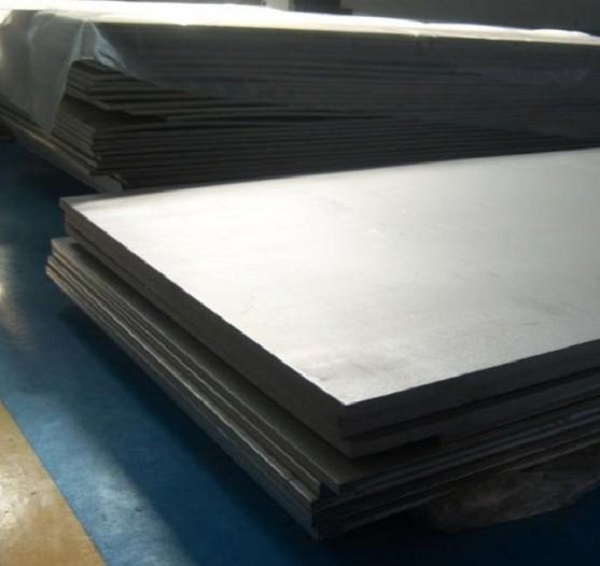
In the competitive world of manufacturing, choosing the right sheet metal processing technique can make or break your project’s budget and timeline. Bending molding has emerged as a go-to solution for good reason. It solves three major headaches manufacturers face daily: high startup costs, slow design changes, and material waste.
Why Does Bending Molding Cost So Much Less?
No expensive custom molds required
The biggest money-saver with bending molding is what you don’t pay for. Traditional methods like injection molding or die casting need custom molds that can cost (5,000 to)50,000 or more before you make a single part. Bending uses standard upper and lower dies, which cost just 10–15% of custom tooling. For small batches or prototypes, this difference matters enormously.
Material waste stays below 5%
Every manufacturing process loses some material. Bending keeps losses minimal because it reshapes metal rather than cutting it away. Typical material waste runs under 5%. Compare that to cutting-based methods that waste 10–15%, and the savings add up fast, especially with expensive metals like aluminum or copper.
Real cost comparison example
A medical startup needed 50 prototype brackets for a testing run. Going the injection molding route meant paying $12,000 for a mold upfront. They chose bending instead. Total cost for all 50 parts? Under $900. They saved over 90% on initial tooling and got parts in three days instead of six weeks.
What Metals Work Best With Bending Molding?
Wide material compatibility explained
Bending works with almost any ductile metal—meaning metals that stretch without cracking. This gives you freedom to match material properties to your project’s needs without changing processes.
| Material | Key Properties | Common Applications |
|---|---|---|
| Steel | High strength, low cost | Building brackets, truck frames |
| Aluminum | Lightweight, rust-proof | Phone cases, solar panel frames |
| Stainless Steel | Corrosion-resistant, clean look | Food equipment, medical tools |
| Copper | Excellent conductor | Electrical parts, bus bars |
| Titanium | Strong, body-safe | Surgical implants, aircraft parts |
Industry example with titanium
An orthopedic implant company uses bending to shape titanium sheets into hip replacement components. Titanium’s natural ductility allows tight curves without cracking, while its biocompatibility makes it safe for the human body. Attempting this with casting would cost four times more and require months of mold testing.
How Fast Can You Change Designs With Bending?
Quick iterations without new tooling
Product development moves fast. Bending keeps pace because design changes don’t require new molds. Want to adjust a bracket from 90 degrees to 120 degrees? You can do it in minutes by reprogramming the press brake. No waiting, no extra tooling invoices.
Real validation speed advantage
A headphone company tested three different earcup frame designs in one week using bending. They bent prototypes, tested comfort, tweaked angles, and bent again. By Friday, they had the winning design. Mold-based methods would have taken a month and cost $8,000 per iteration. They launched their product three months ahead of schedule.
Perfect for frequent product updates
Consumer electronics change yearly. Phone cases, laptop shells, and tablet stands all need regular updates. Bending lets manufacturers switch to new shapes without production delays or retooling costs. When next year’s model needs a different angle, you’re ready immediately.
Can Bending Keep Up With High Production Demands?
Speed numbers you can expect
Modern press brakes are built for speed. Basic machines handle 5–10 parts per minute for simple shapes. Advanced CNC press brakes push that to 15–20 parts per minute, even for parts with multiple bends. Unlike some techniques, bending speed doesn’t drop for larger parts—a 2-meter beam bends as fast as a 5-centimeter bracket.
Production efficiency case study
A furniture maker switched from welded frames to bent steel frames for office chairs. Using CNC press brakes, they now produce 200 frames per hour—double their old welding output. Monthly orders ship 30% faster, and overtime labor costs dropped 25%. The floor supervisor noted they now meet Friday deadlines without weekend work.
Size doesn’t slow you down
This matters more than you might think. Many forming methods slow considerably when parts get large. Bending maintains its pace regardless of part dimensions. A small electronics bracket and a construction beam take roughly the same cycle time.
How Precise Is Bending Molding Really?
Industry-standard tolerance levels
For parts that must fit perfectly, bending delivers. Standard tolerance is ±0.1mm, meeting requirements for most electronics, automotive, and aerospace applications. This consistency means every part matches—no mismatched brackets or ill-fitting components.
Defect rates stay under 1%
Consistent precision leads to fewer rejects. Bending typically achieves defect rates below 1%, compared to 3–5% for some alternative methods. Less scrap means lower costs and more reliable delivery schedules.
Aerospace precision example
An aerospace supplier bends aluminum supports for small aircraft wings. Each part holds a tolerance of 0.08mm— tighter than a human hair. Every support fits perfectly against the wing skin during assembly. Their defect rate sits at 0.3%, saving roughly $10,000 annually in rework labor and material.
What Makes Modern Press Brakes So Effective?
Computer control changes everything
Today’s CNC press brakes aren’t your grandfather’s sheet metal machines. They calculate bend sequences automatically, account for springback, and adjust pressure in real time. Operators load material, input the desired angle, and the machine handles the rest.
Key technological features
Modern machines include laser guiding systems that measure angles during bending and make micro-adjustments. Automatic tool changers swap dies in seconds for different part geometries. Backgauges position material within 0.01mm accuracy every cycle.
Labor skill requirements reduced
Older bending required years of experience to judge angles by eye. CNC controls now handle the complexity. New operators train in weeks rather than months, easing hiring pressure for growing shops.
How Does Bending Compare to Other Methods?
Quick comparison table
| Factor | Bending Molding | Injection Molding | Die Casting | CNC Cutting |
|---|---|---|---|---|
| Tooling cost | Low ($200–$2,000) | High ($5,000–$50,000) | High ($10,000+) | Low (no tools) |
| Per-part cost (low volume) | Low | Very high | High | Medium |
| Material waste | Under 5% | 5–10% | 10–15% | 15–30% |
| Design change speed | Minutes | Weeks | Weeks | Hours |
| Typical tolerance | ±0.1mm | ±0.2mm | ±0.15mm | ±0.05mm |
When each method makes sense
Bending wins for low to medium volumes (1–10,000 parts), frequent design changes, and quick turnaround needs. Injection molding becomes economical above 50,000 parts if the design is stable. CNC cutting works for complex 3D shapes but wastes more material.
What Are the Hidden Benefits Manufacturers Notice?
Reduced inventory pressure
Because bending allows fast production, you can make parts just in time rather than stockpiling. One electronics contract manufacturer cut warehouse space by 40% after switching to bending for enclosures. They now produce weekly batches based on orders rather than quarterly forecasts.
Lower shipping costs
Bent parts start as flat sheets, which ship efficiently. A container holds three times more flat sheets than pre-bent enclosures. A solar panel frame maker saves $15,000 yearly on freight by bending panels near the installation site rather than shipping finished frames.
Easier quality control
Simple process means fewer variables. Quality teams inspect material going in, check the first few parts, and spot-check throughout the run. One automotive supplier reduced QC labor by 30% after standardizing on bending for brackets.
Bending molding delivers clear advantages that address real manufacturing challenges. You save money by avoiding expensive molds and wasting less material. You gain flexibility to change designs quickly without penalty. You maintain high production speeds even for large parts. You achieve precision that meets strict industry standards. The data backs it up: lower tooling costs, faster iterations, and consistent quality. For manufacturers facing pressure to reduce costs, shorten timelines, and maintain quality, bending offers a practical, proven solution that works across industries and materials.
How to write a spec that gets priced correctly
A drawing is a contract. If it leaves a number open, the shop fills that number in with its own default. The default is rarely the one you had in mind. Put these five lines on every RFQ and most of the back-and-forth disappears before it starts.
- Flat pattern or STEP file plus a dimensioned drawing
- Material grade and thickness with the standard number
- Bend radii, K-factor and the direction of the grain
- Finish, masking and which faces stay bare
- Quantity and the assembly sequence
The point is not paperwork. Each line removes a decision the shop would otherwise make for you. A complete RFQ comes back priced. An incomplete one comes back guessed.
What actually drives the price
Buyers usually push on material because it is the line they can see. In practice the material is rarely the biggest number on a quote. These five lines decide most of it:
- blank size and nesting efficiency
- number of bends and weld joints
- material grade and thickness
- finish and masking
- batch quantity
Ask for the quote split by line. A supplier who cannot break it down is guessing, and you will pay for the guess. The line you can usually renegotiate is the tolerance band, not the raw material.
Problems you will meet, and the fix
Every process has a failure mode it prefers. The same four show up again and again on this kind of work, and none of them are mysteries once you know what to look for.
- Stretching at a bend that is tighter than the material allows
- Hole distortion when a hole sits too close to a bend line
- Weld draw on a visible face
- Springback that pulls a formed angle out of tolerance
Catch the fault on the first part, not the hundredth. A first-article check costs an hour. A bad batch costs the whole order. Write the check into the purchase order so nobody has to remember it.
What to check on the first article
The first article is the cheapest inspection you will ever buy. Use it properly and the rest of the run becomes boring, which is exactly what you want.
- Every dimension on the drawing, with the measured value written beside it.
- The material certificate, matched to the heat or lot number on the parts.
- The finish against the sample you approved, under the same light.
- Fit against the mating part, assembled rather than measured.
- Packaging, because parts that arrive damaged were never in tolerance.
Check in this order: datums, then mating features, then cosmetic faces. If the datums are wrong, every number after them is noise. Keep the report on file. When a problem shows up in month six, that document is the only thing that tells you what changed.
How to compare two quotes fairly
Two numbers are not comparable unless the scope matches. Line them up before you decide, because a low number with three gaps is not a low number.
Same drawing, same material, same finish, same inspection. Anything else is a different job wearing the same part number. Then look at what each quote leaves out. Freight, packaging, certificates and tooling are the usual gaps.
Ask each supplier to state their assumptions in writing. The one who does is usually the one who has run the process before.
Scaling from one part to a batch
The first part teaches you the process. The hundredth teaches you the process cost.
Watch three things as volume grows: setup amortisation, tool wear, and how much hand work the finish still needs. If the unit price barely moves between ten and a hundred, the cost sits in material or in hand work, not in setup. Ask which, because only one of them is negotiable.
Lead time behaves the same way. A one-off is scheduled around other jobs. A repeat order is scheduled around your forecast. Give the shop a forecast and the lead time gets shorter, not longer.
How to read a supplier's quote
A quote is a short document with a long shadow. Four things in it decide whether the job runs smoothly, and only one of them is the price.
- The scope line. It should name the process, the material and the finish, not just the part.
- The tolerance basis. General tolerance or the drawing, and which standard it follows.
- The exclusions. Tooling, freight, certificates and inspection are the usual omissions.
- The validity date. Material prices move, and an open-ended quote is a promise nobody can keep.
Read the exclusions before you read the total. A quote that leaves out tooling is not cheaper. It is a quote for a different job.
FAQ About Bending Molding Advantages
Is bending molding cost-effective for runs of 10,000 parts or more?
Yes. While tooling amortization favors molds at extremely high volumes, bending remains competitive for most production runs. A client making 20,000 electrical enclosures saved 18% using CNC bending versus die casting—they avoided $25,000 in mold costs and finished three weeks earlier. For volumes over 50,000, we help clients evaluate hybrid approaches, but bending often wins on total cost through 100,000 parts.
Can bending handle very thin materials like 0.2mm aluminum?
Absolutely. Modern press brakes use soft grippers and precise pressure control to bend thin sheets without marking or tearing. A microelectronics client bends 0.15mm aluminum shields for circuit boards, holding 0.05mm tolerance with zero defects. The key is proper machine setup, which experienced shops provide.
Does design flexibility mean I can create complex multi-angle parts?
Yes. Bending produces parts with up to 12 different angles in one setup, plus gentle curves using specialized dies. A lighting manufacturer creates curved aluminum fixtures with four distinct bend angles. They produce 80 units per hour and can modify the design within hours when architects request changes.
How quickly can I get prototype parts using bending?
Typically 2–5 days from file submission to finished parts. Since no tooling is required, production starts immediately after programming. A robotics startup received 30 bent aluminum chassis parts in three days, allowing them to assemble test units before a major investor demo.
What surface quality can I expect with bending?
Bending preserves the original material surface. Pre-finished sheets (powder coated, anodized, or polished) bend without damaging the finish when proper tooling and protective films are used. An architectural firm bends pre-anodized aluminum panels for building facades, maintaining consistent appearance across all panels.
Our solution for Bending Molding
YiguProto runs sheet metal fabrication in house, from a single prototype to a production batch. We quote the process, the material and the finish as separate lines, so you can see where the money goes instead of arguing with one number.
Send a STEP file or a drawing and you get a DFM report in one to two business days. It flags the features that add cost and the features that will not hold tolerance on the process you picked.
Every order ships with an inspection report on the features you call out. If a part misses, we make it again. Ready to price a part? Start with a free quote and DFM review, or read more about our sheet metal fabrication. You can also talk to an engineer before you commit to a drawing.
FAQ about Bending Molding
How do I compare two quotes fairly?
Match the scope first: same drawing, same material, same finish, same inspection. Then read the exclusions. Freight, tooling and certificates are the usual gaps, and a low number with three gaps is not a low number.
Does the process work for prototypes as well as production?
Yes, and that is usually the point. Running the prototype on the production process removes a whole class of surprises, because the part you test is made the same way as the part you sell.
What is Bending Molding used for?
Bending Molding turns up wherever the part has to do a real job at a predictable cost: brackets, housings, fixtures, covers and the fittings that hold them together. The honest test is whether the properties match the load and the environment, not whether the material is fashionable.
What should I check before approving the parts?
Datums first, then the features that mate, then the cosmetic faces. Ask for a dimensional report, a material certificate and a finish sample. A part can be inside every tolerance and still not fit, so assemble one before you sign.
What is the lead time for Bending Molding?
Expect 3 to 7 business days after drawing release. Tooling, material stock and the finishing queue all move that number, so we confirm the date in writing before the run starts rather than after.
What tolerance can you hold on Bending Molding?
The working default is ±0.2 mm on formed features, ±0.1 mm on laser-cut holes. Tighter than that the process changes and so does the price, because every step tighter adds inspection time. Call out only the faces that mate with something else and leave the rest on the general tolerance.
The short version
Bending Molding rewards the buyer who reads the data sheet and the drawing together. Pick the option for the property that matters, not for the price per kilo.
Tighten only what mates. Test a sample before the run. Then let the process do the rest.