
Rapid Prototyping
What Are the Key Advantages of Plastic for Prototypes?
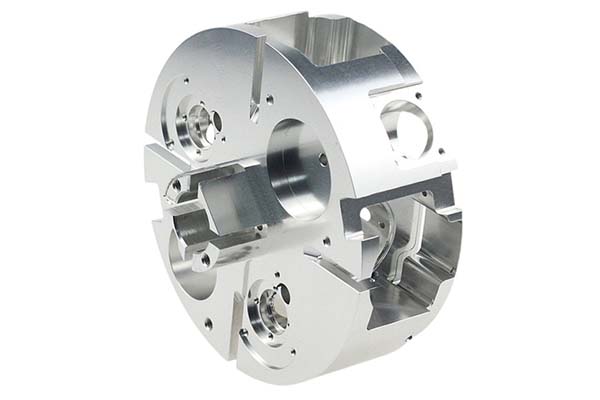
Plastic is the most common material for prototypes, and for good reason. It is cheap, easy to work with, and versatile enough to handle everything from quick concept models to functional test parts. Whether you choose PLA for a fast print, ABS for durability, or nylon for toughness, plastic delivers results that metal cannot match at the price. Startups use plastic to stretch their budgets.
Key takeaways
- Money spent on prototypes is money not spent on mold rework or production delays. Plastic keeps those costs low.
- Plastic’s physical properties make it forgiving. You can shape it, modify it, and finish it with basic tools.
- Plastic removes the constraints of traditional manufacturing. You can build shapes that would be impossible or prohibitively expensive in metal.
- Plastic is strong enough for most prototype tests. You do not always need the strength of metal.
Cost-Effectiveness: Ideal for Budget-Conscious Projects
Money spent on prototypes is money not spent on mold rework or production delays. Plastic keeps those costs low.
Material Cost Comparison
Plastic resins cost a fraction of metal stock. The difference adds up across multiple iterations.
| Material | Typical Cost per Kilogram |
|---|---|
| PLA | 15 to 30 CNY |
| ABS | 20 to 40 CNY |
| Nylon (PA12) | 150 to 400 CNY |
| Aluminum (6061) | 600 to 1,200 CNY |
| Stainless steel | 800 to 1,500 CNY |
Real savings example: A startup developing a smartwatch case needed ten prototypes for fit testing. ABS 3D prints cost 30 CNY each, total 300 CNY. Aluminum CNC prototypes would have cost 230 CNY each, total 2,300 CNY. Plastic saved 2,000 CNY and delivered the same dimensional data.
Machining and Tooling Cost
Plastic cuts faster than metal, reducing machine time. More importantly, plastic prototyping rarely requires molds.
- 3D printing: No tooling at all. Load the file and print.
- CNC machining: Plastic cuts at higher speeds with less tool wear. A plastic part might machine in one hour versus three hours for aluminum.
- Small batches: For one to one hundred units, plastic avoids the 10,000 to 100,000 CNY mold investment that metal production requires.
Easy Processability: Simplify Production and Adjustments
Plastic’s physical properties make it forgiving. You can shape it, modify it, and finish it with basic tools.
Compatibility with Prototyping Technologies
Plastic works with every common prototyping method, removing technical barriers.
| Process | Advantages for Plastic | Best Use Cases |
|---|---|---|
| FDM 3D printing | PLA and ABS melt at 190°C to 250°C, easy to print with basic machines | Quick concept models, basic functional parts |
| SLA 3D printing | Resin cures to smooth surfaces with 0.05mm detail | High-appearance prototypes, display models |
| CNC machining | Plastic’s softness reduces tool wear, allows faster cutting speeds | Precision parts, functional testing components |
Easy Post-Processing and Adjustments
Unlike metal, plastic lets you make changes by hand.
- Sanding: Smooth layer lines or rough surfaces with sandpaper from 100 to 1500 grit.
- Cutting: Trim excess material with a utility knife or hobby saw.
- Drilling and tapping: Add screw holes or threads without special tools. Plastic accepts fasteners without cracking.
- Heat shaping: Warm a plastic part with a heat gun and bend it to adjust fit. A lid that does not close can be reshaped in minutes.
Real example: A prototype enclosure lid was 1mm too small to close properly. Rather than reprint, the team warmed the edge with a heat gun, gently stretched it, and held it in place until cool. The modified lid fit perfectly and passed testing.
High Design Flexibility: Bring Complex Ideas to Life
Plastic removes the constraints of traditional manufacturing. You can build shapes that would be impossible or prohibitively expensive in metal.
Complex Structures
3D printing with plastic creates internal cavities, thin walls, and curved surfaces without molds or multiple operations.
- Thin walls: Plastic prints walls as thin as 0.5mm for lightweight parts.
- Internal features: Build hollow channels, lattice structures, or enclosed spaces in one piece.
- Organic shapes: Freeform curves and ergonomic contours print as easily as straight lines.
Real example: A portable water bottle needed internal baffles to prevent sloshing. The baffles created a complex internal geometry that would have required multiple parts and assembly in metal. A single plastic 3D print included all baffles in one piece.
Customizable Colors
Plastic accepts color throughout the material, not just as a surface coating.
- Filament colors: PLA and ABS come in dozens of colors, including glow-in-the-dark and color-changing varieties.
- Dyeing: Nylon parts absorb fabric dyes for consistent color without added thickness.
- Painting: Plastic accepts spray paint easily with proper surface preparation.
Real example: A children’s toy prototype needed bright, non-toxic colors to match safety standards. Printing in colored PLA eliminated painting, saving time and ensuring color consistency across multiple copies.
Fast Iterations
Short production cycles let you test more designs in less time.
- 3D printing: Most plastic parts print in 4 to 24 hours. You can have a new version the next day.
- CNC machining: Simple plastic parts machine in hours, not days.
- Compare to metal: A metal prototype might take one to two weeks, forcing you to wait between iterations.
Real example: A team designing a lamp shade printed three different shapes in three days. They tested each for light diffusion, chose the best, and printed a final version the same week. Metal prototypes would have taken three weeks for one version.
Moderate Physical Performance: Meet Basic Testing Needs
Plastic is strong enough for most prototype tests. You do not always need the strength of metal.
Strength and Toughness
Engineering plastics like ABS and nylon handle significant loads.
- Tensile strength: ABS reaches 40 MPa, nylon up to 70 MPa with glass filling.
- What this enables: Testing snap fits, hinge mechanisms, and parts that will see moderate force in use.
- Real example: A remote control prototype in ABS survived repeated button pressing and drop tests. The plastic was strong enough to validate the design before production.
Impact Resistance
Plastic bends rather than shatters. This matters for products that will be handled.
- Drop testing: A PLA prototype dropped from one meter onto a table rarely breaks. Cracks are usually repairable with glue.
- Ductility: Plastic absorbs impact energy, giving you data on how the design behaves under real-world abuse.
Heat Resistance
Engineering plastics handle temperatures that rule out standard resins.
- ABS: Heat deflection temperature 90°C to 110°C. Suitable for electronics enclosures that warm up during use.
- Nylon: Stable up to 120°C continuous, 180°C short-term. Works for parts near motors or in warm environments.
Real example: A LED bulb housing prototype in ABS was tested with the bulb running at full power. The housing reached 70°C and held its shape perfectly. A PLA version would have softened at that temperature.
How to write a spec that gets priced correctly
A drawing is a contract. If it leaves a number open, the shop fills that number in with its own default. The default is rarely the one you had in mind. Put these five lines on every RFQ and most of the back-and-forth disappears before it starts.
- A model you are willing to freeze for the build
- The question the prototype must answer
- Process and material that can answer it
- Tolerance on the features under test
- How many iterations you have budgeted
The point is not paperwork. Each line removes a decision the shop would otherwise make for you. A complete RFQ comes back priced. An incomplete one comes back guessed.
What actually drives the price
Buyers usually push on material because it is the line they can see. In practice the material is rarely the biggest number on a quote. These five lines decide most of it:
- process choice
- part size and feature count
- material
- finish and fit checks
- number of iterations
Ask for the quote split by line. A supplier who cannot break it down is guessing, and you will pay for the guess. The line you can usually renegotiate is the tolerance band, not the raw material.
Problems you will meet, and the fix
Every process has a failure mode it prefers. The same four show up again and again on this kind of work, and none of them are mysteries once you know what to look for.
- A prototype that is too good and hides a production problem
- A prototype that is too rough to test the real question
- Material chosen for speed rather than for the test
- No measurement plan, so the result is an opinion
Catch the fault on the first part, not the hundredth. A first-article check costs an hour. A bad batch costs the whole order. Write the check into the purchase order so nobody has to remember it.
What to check on the first article
The first article is the cheapest inspection you will ever buy. Use it properly and the rest of the run becomes boring, which is exactly what you want.
- Every dimension on the drawing, with the measured value written beside it.
- The material certificate, matched to the heat or lot number on the parts.
- The finish against the sample you approved, under the same light.
- Fit against the mating part, assembled rather than measured.
- Packaging, because parts that arrive damaged were never in tolerance.
Check in this order: datums, then mating features, then cosmetic faces. If the datums are wrong, every number after them is noise. Keep the report on file. When a problem shows up in month six, that document is the only thing that tells you what changed.
How to compare two quotes fairly
Two numbers are not comparable unless the scope matches. Line them up before you decide, because a low number with three gaps is not a low number.
Same drawing, same material, same finish, same inspection. Anything else is a different job wearing the same part number. Then look at what each quote leaves out. Freight, packaging, certificates and tooling are the usual gaps.
Ask each supplier to state their assumptions in writing. The one who does is usually the one who has run the process before.
Scaling from one part to a batch
The first part teaches you the process. The hundredth teaches you the process cost.
Watch three things as volume grows: setup amortisation, tool wear, and how much hand work the finish still needs. If the unit price barely moves between ten and a hundred, the cost sits in material or in hand work, not in setup. Ask which, because only one of them is negotiable.
Lead time behaves the same way. A one-off is scheduled around other jobs. A repeat order is scheduled around your forecast. Give the shop a forecast and the lead time gets shorter, not longer.
How to read a supplier's quote
A quote is a short document with a long shadow. Four things in it decide whether the job runs smoothly, and only one of them is the price.
- The scope line. It should name the process, the material and the finish, not just the part.
- The tolerance basis. General tolerance or the drawing, and which standard it follows.
- The exclusions. Tooling, freight, certificates and inspection are the usual omissions.
- The validity date. Material prices move, and an open-ended quote is a promise nobody can keep.
Read the exclusions before you read the total. A quote that leaves out tooling is not cheaper. It is a quote for a different job.
What to send with the first order
The first order sets the pattern for every order after it. Send a complete package once and the shop files it, and the second order takes a fraction of the time.
- A STEP or native model plus a PDF drawing carrying the same revision letter.
- The material callout by standard number, not by trade name.
- The finish and the exact faces it applies to.
- Any test the part must pass: fit, seal, drop, salt spray, dielectric.
- A contact who can answer a question inside one working day.
Then write down what was agreed. An email that confirms the material, the finish and the date is worth more than a longer purchase order that leaves them open.
When this is the wrong choice
A good supplier tells you when the process does not fit. These are the cases where we say so.
- The volume is so low that setup costs more than the parts are worth.
- The tolerance is tighter than the process can hold without a second operation.
- The geometry cannot be made without a tool feature that will not pay back.
- The material you need is not available in the form the process requires.
- The schedule is shorter than the tooling or setup time, and nobody has said so yet.
None of these are refusals. They are reasons to look at a different route, and the earlier that conversation happens the cheaper it is. The most expensive mistake in manufacturing is a process chosen before the question was understood.
Environmental Safety: Align with Sustainable Goals
Plastic prototypes avoid the environmental and health risks of some alternative materials.
Degradability
PLA is made from renewable resources like corn starch. It composts in industrial facilities within 180 to 360 days.
- Use case: Disposable food container prototypes, eco-friendly product demonstrations.
- Note: PLA requires industrial composting conditions. It does not degrade quickly in home compost or landfill.
Non-Toxicity
Food-grade and medical-grade plastics contain no harmful substances.
- FDA-compliant materials: PET, HDPE, and certain nylons are safe for food contact.
- Medical applications: ABS and nylon approved for surgical tool handles and device housings.
- No BPA: Standard prototyping plastics are BPA-free.
Real example: A dental tool handle prototype was printed in medical-grade nylon. Surgeons tested the grip and ergonomics, knowing the material was safe for temporary oral contact.
Non-Corrosiveness
Plastic does not rust or react with chemicals.
- Liquid contact: Test detergent bottles, chemical containers, or water bottles without worrying about corrosion.
- Long-term storage: Plastic prototypes stored for years show no degradation from humidity or air exposure.
Plastic’s advantages make it the default choice for most prototypes. It costs less than metal, processes faster, and accepts modifications with basic tools. Design freedom lets you build complex shapes impossible in other materials. Performance is sufficient for the vast majority of tests—strength, impact resistance, and heat handling cover most needs. And plastic aligns with safety and sustainability goals through degradable options and non-toxic grades. For startups iterating on a budget, engineers validating designs, or designers refining aesthetics, plastic delivers value that metal cannot match.
Our solution for Key Advantages
YiguProto runs rapid prototyping in house, from a single prototype to a production batch. We quote the process, the material and the finish as separate lines, so you can see where the money goes instead of arguing with one number.
Send a STEP file or a drawing and you get a DFM report in one to two business days. It flags the features that add cost and the features that will not hold tolerance on the process you picked.
Every order ships with an inspection report on the features you call out. If a part misses, we make it again. Ready to price a part? Start with a free quote and DFM review, or read more about our rapid prototyping. You can also talk to an engineer before you commit to a drawing.
FAQ about Key Advantages
Does the process work for prototypes as well as production?
Yes, and that is usually the point. Running the prototype on the production process removes a whole class of surprises, because the part you test is made the same way as the part you sell.
Is there a minimum order quantity?
No hard minimum. One part is fine. What changes with volume is which costs dominate, so a single unit is priced mostly on setup and a thousand units are priced mostly on cycle time and material.
What tolerance can you hold on Key Advantages?
The working default is ±0.1 mm on most processes, tighter after machining. Tighter than that the process changes and so does the price, because every step tighter adds inspection time. Call out only the faces that mate with something else and leave the rest on the general tolerance.
What material should I specify?
Specify by standard, not by trade name. A trade name can change under you between two orders; a standard number cannot. Then add the one property that actually decides the part, whether that is strength, heat resistance or chemical exposure.
How long does a first article take?
Usually a few business days once the drawing is frozen, and longer if tooling is involved. The date we give you is the date we confirm in writing, not the date we hope for.
What files do you need in order to quote?
A STEP file plus a PDF drawing that carries the same revision letter. The model carries the geometry and the drawing carries the intent. When the two disagree, the shop picks one, and it is never the one you meant.
The short version
Key Advantages rewards the buyer who reads the data sheet and the drawing together. Pick the option for the property that matters, not for the price per kilo.
Tighten only what mates. Test a sample before the run. Then let the process do the rest.