
Surface Treatment
What Is Case Hardening and Why Does It Matter for Metal Parts?
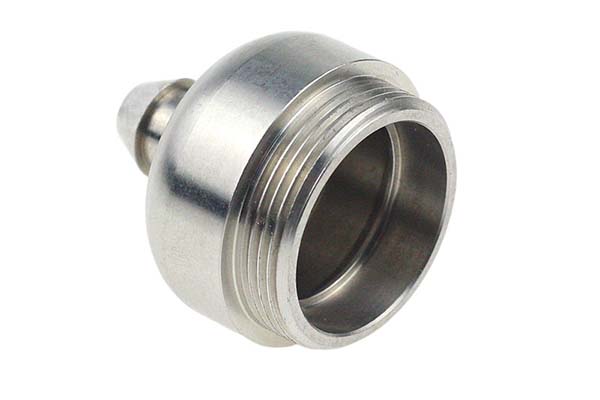
If you work with metal components that must withstand heavy use, you have likely faced a common engineering problem. How do you make a part hard enough to resist wear, yet tough enough to handle impacts? The answer often lies in case hardening. This essential heat treatment process creates a unique combination of properties in a single part.
Key takeaways
- Before diving into the technical details, it helps to understand the fundamental idea behind this process.
- To appreciate the precision of case hardening, it helps to look at what happens inside the metal. The magic occurs through a process called diffusion.
- There is no single “best” way to case harden a part. The right method depends on the material, the desired properties, and the part’s geometry.
- The widespread use of case hardening is no accident. It solves fundamental engineering problems that other processes cannot.
Understanding the Basics of Case Hardening
Before diving into the technical details, it helps to understand the fundamental idea behind this process. Case hardening is not about treating the whole metal piece uniformly. Instead, it selectively modifies the surface layer.
What Does the Process Actually Do?
At its core, case hardening is a surface modification technique. It changes the chemical makeup or the microstructure of the metal’s outer layer. For steel and iron—the most common materials—this usually means adding small elements like carbon or nitrogen to the surface. These elements diffuse into the metal at high temperatures. They form hard compounds within the metal’s crystal structure. The result is a part with two distinct zones:
- A hard, wear-resistant outer case.
- A softer, more flexible inner core.
Think of it like a hard candy with a soft center. The hard shell protects against abrasion. The soft core prevents the whole piece from shattering when dropped. Manufacturers can precisely control the thickness of this hardened shell, known as the case depth, to match exactly how the part will be used.
Why Not Just Harden the Entire Metal Piece?
This is a logical question. If hardness is good, why not make the whole part hard? There are two primary reasons, rooted in both performance and cost.
First, a part that is hard all the way through becomes brittle. It might resist scratching, but it will likely crack or break under a sudden impact or heavy load. In many real-world applications, like gears or shafts, parts face both friction and shock. They need a surface that withstands rubbing and a core that absorbs energy. Case hardening provides this perfect balance.
Second, it is often more efficient and economical. Treating only the surface requires less energy and time than heating and processing the entire volume of metal. For manufacturers producing thousands of parts, these savings add up quickly. It allows them to use cheaper, more machinable low-carbon steel and then harden just the surface where it counts.
How Does Case Hardening Work at a Molecular Level?
To appreciate the precision of case hardening, it helps to look at what happens inside the metal. The magic occurs through a process called diffusion. At high temperatures, atoms move more freely. When the metal surface is exposed to a source of carbon or nitrogen, these smaller atoms migrate into the metal’s crystal lattice.
For carbon-based methods, the added carbon atoms squeeze into the spaces between the iron atoms. When this carbon-enriched surface is then rapidly cooled, or quenched, it transforms into a microstructure called martensite. Martensite is an extremely hard but brittle form of steel. This is exactly what we want for the surface, but not for the core. The core, with its original lower carbon content, does not transform into martensite in the same way and remains tough.
The depth to which these elements penetrate, the case depth, is not accidental. It is controlled by three key factors:
- Time: How long the metal is exposed to the hardening elements.
- Temperature: The heat at which the diffusion process takes place.
- Concentration: The amount of carbon or nitrogen available at the surface.
By expertly balancing these variables, heat treatment specialists can create case depths from paper-thin layers to several millimeters thick, tailored for specific stresses.
What Are the Most Common Case Hardening Methods?
There is no single “best” way to case harden a part. The right method depends on the material, the desired properties, and the part’s geometry. Here are the three most widely used techniques in industry today.
Heating and Quenching: The Direct Approach
This is one of the oldest and most straightforward methods. It is sometimes called flame hardening or induction hardening. It works best on steels that already have a medium to high carbon content (about 0.3% to 0.6% carbon).
The process is simple in concept:
- Heat: An intense heat source, like an oxyacetylene flame or an induction coil, is applied to specific areas of the steel part. It rapidly raises the temperature of the surface to a critical point.
- Quench: Immediately after heating, the hot surface is sprayed or submerged in a coolant, such as water or oil. This rapid cooling transforms the heated surface into hard martensite.
Key considerations:
- Localized hardening: This method is excellent for hardening specific areas, like the teeth of a large gear, without affecting the rest of the part.
- Shallow case: The hardened layer is typically shallower compared to methods like carburizing.
- Material limit: It requires steel with enough initial carbon to become hard. Low-carbon steel will not work with this method alone.
A real-world example: A manufacturer of large construction equipment uses induction hardening on the teeth of excavator bucket teeth. This creates an extremely hard surface exactly where the digging occurs, while the rest of the tooth maintains toughness to withstand shock loads.
Nitriding: The Precision Choice
Nitriding is a different kind of case hardening process. Instead of carbon, it uses nitrogen as the hardening element. It also does not require a final quenching step, which is a major advantage for precision parts.
Here is how it works:
- Parts are placed in a furnace and heated to a moderate temperature, typically between 500°C and 600°C.
- A gas, usually ammonia, is introduced into the furnace. At these temperatures, the ammonia breaks apart, releasing nitrogen atoms.
- These nitrogen atoms diffuse into the steel surface. They react with alloying elements already in the steel, like chromium, molybdenum, or aluminum, to form extremely hard nitride compounds.
Why choose nitriding?
- Minimal distortion: Because there is no rapid quenching, parts maintain their shape and dimensions perfectly. This is critical for components with tight tolerances.
- Extreme hardness: Nitrided surfaces can be harder than those produced by carburizing.
- Heat resistance: The hardness is retained even if the part gets hot during operation, up to about 150°C.
A real-world example: A manufacturer of high-performance engine parts uses nitriding for valve stems. The process creates a hard, wear-resistant surface with almost no change to the precision-ground dimensions, ensuring a perfect seal in the engine.
Carburizing: The Workhorse for Deep Cases
Carburizing is the most widely used case hardening method, especially for low-carbon steels (with less than 0.2% carbon). These steels are cheap and easy to machine, but they cannot be hardened by heating and quenching alone. Carburizing fixes that by adding carbon to the surface.
The process involves:
- Carbon enrichment: Low-carbon steel parts are heated to a high temperature, typically between 850°C and 950°C, in an environment rich in carbon. This can be a gas (like methane), a liquid (molten salt), or a solid (charcoal paste).
- Diffusion: Carbon atoms from the environment diffuse into the steel surface, raising its carbon content significantly.
- Hardening: After carburizing, the parts are quenched. The high-carbon surface layer transforms into hard martensite, while the low-carbon core remains tough.
Key advantages:
- Deep cases: Carburizing can produce much deeper hardened layers than nitriding or flame hardening, sometimes several millimeters deep.
- Versatility: It is ideal for mass-producing tough, wear-resistant parts from economical materials.
- Combined properties: It offers an excellent balance of surface hardness for wear resistance and core toughness for impact strength.
A real-world example: An automotive supplier uses gas carburizing for truck transmission gears. The process creates a deep, hard case that can withstand years of meshing with other gears, while the tough core prevents the teeth from snapping off under heavy loads.
Quick Comparison of Methods
| Method | Hardening Element | Typical Case Depth | Distortion Risk | Best Material Fit | Primary Advantage |
|---|---|---|---|---|---|
| Heating & Quenching | Carbon (in steel) | Shallow (0.1-1 mm) | Moderate | Medium/High-carbon steel | Fast, localized hardening |
| Nitriding | Nitrogen | Very Shallow (0.02-0.5 mm) | Very Low | Alloy steels (Cr, Mo, Al) | Precision, extreme hardness |
| Carburizing | Added Carbon | Deep (0.5-3+ mm) | Low to Moderate | Low-carbon steel | Deep cases, great for wear |
What Are the Main Benefits of Using Case Hardening?
The widespread use of case hardening is no accident. It solves fundamental engineering problems that other processes cannot. Here are the key benefits it delivers.
Creating Superior Wear Resistance
The most obvious benefit is a dramatic increase in surface hardness. This hard outer layer acts as a shield against abrasion, friction, and galling. Parts like gears, bearings, and camshafts face constant contact with mating surfaces. A case-hardened surface can withstand this for millions of cycles, where an untreated part would wear out quickly. This directly translates to a longer service life for the component.
Maintaining a Tough, Impact-Resistant Core
Hardness alone is not enough. A part that is hard throughout is like glass—strong under compression but prone to shattering on impact. The soft, ductile core of a case-hardened part provides toughness. It can bend slightly and absorb the energy from a sudden shock or heavy load without breaking. This combination is vital for parts like drive shafts, axles, and hammer heads that must endure both wear and impact.
Enabling Cost-Effective Manufacturing
Case hardening allows manufacturers to be smart with materials. Instead of making an entire part from expensive, high-alloy steel, they can start with cheap, low-carbon steel. This material is easy to machine into complex shapes. After machining, they use case hardening to give the surface the high-performance properties needed. This “best of both worlds” approach significantly lowers material and machining costs, especially in high-volume production.
Improving Machinability and Final Performance
There is a direct conflict in metalworking. Hard materials are difficult and expensive to machine. Soft materials are easy to machine but lack wear resistance. Case hardening resolves this conflict perfectly. You can:
- Machine the part from soft steel to get precise dimensions and fine surface finishes easily.
- Then, apply case hardening to create the hard, durable surface required for the part’s function.
This sequence is essential for creating complex, high-precision components like firearm parts or intricate machinery components.
Where Are Case-Hardened Parts Typically Used?
You will find case-hardened components in almost every industry that uses machinery. Their unique properties make them ideal for specific, demanding roles.
- Automotive and Transportation: This is a massive user of case hardening. Transmission gears, differential gears, axles, camshafts, and piston pins all rely on this process to handle the combination of friction and shock loads found in vehicles.
- Heavy Machinery and Construction: Equipment like excavators, bulldozers, and cranes depend on case-hardened parts. Bucket teeth, track rollers, drive sprockets, and hydraulic cylinder pins must survive in abrasive, high-impact environments.
- Industrial Tooling: Tools need sharp, hard edges that won’t dull, but they also must not shatter. Drill bits, taps, dies, and cutting tools are often case-hardened. For example, a large tap used for threading holes in steel plates benefits from a hard surface to cut threads and a tough core to resist twisting forces.
- Firearms and Defense: Many critical firearm components are case-hardened. Gun barrels, bolts, and trigger mechanisms require hard surfaces to resist wear from moving parts and hot gases, but must remain tough to contain explosive pressures safely.
Case hardening is a vital metal treatment process that solves the classic engineering trade-off between hardness and toughness. By creating a part with a hard, wear-resistant surface and a soft, ductile core, it delivers performance that through-hardened or untreated metals simply cannot match. Whether through the precision of nitriding, the deep cases of carburizing, or the localized hardening of induction methods, this family of processes is essential for manufacturing durable, reliable components across automotive, heavy industry, and beyond. Understanding these methods allows you to specify the right treatment for your parts, ensuring they perform effectively and last longer in their intended application.
How to write a spec that gets priced correctly
A drawing is a contract. If it leaves a number open, the shop fills that number in with its own default. The default is rarely the one you had in mind. Put these five lines on every RFQ and most of the back-and-forth disappears before it starts.
- The finish by its standard, not by a colour name
- Which faces are cosmetic and which are functional
- Masking: threads, bores, electrical contacts
- Colour target and the light it will be judged under
- Any salt spray or adhesion test required
The point is not paperwork. Each line removes a decision the shop would otherwise make for you. A complete RFQ comes back priced. An incomplete one comes back guessed.
FAQ: Case Hardening
What is the main difference between case hardening and through hardening?
Case hardening hardens only the outer layer of the metal, leaving the core soft and tough. This provides wear resistance on the surface and impact resistance in the core. Through hardening heats and cools the entire part, making it uniformly hard but also more brittle and susceptible to cracking under shock loads.
How thick is the hardened layer on a typical case-hardened part?
The thickness, or case depth, varies significantly by method. Nitriding produces a very thin case, typically 0.02 to 0.5 mm. Carburizing can create much deeper cases, ranging from 0.5 mm to over 3 mm, depending on the time and temperature used. The required depth is determined by the part’s application and the stresses it will face.
Can any type of metal be case hardened?
No, case hardening is primarily effective on ferrous metals (steels and irons). The specific method depends on the alloy. Low-carbon steels are ideal for carburizing. Alloy steels containing chromium, molybdenum, or aluminum are best suited for nitriding. Heating and quenching requires steel with a medium to high carbon content already present.
Our solution for Case Hardening
YiguProto runs surface finishing in house, from a single prototype to a production batch. We quote the process, the material and the finish as separate lines, so you can see where the money goes instead of arguing with one number.
Send a STEP file or a drawing and you get a DFM report in one to two business days. It flags the features that add cost and the features that will not hold tolerance on the process you picked.
Every order ships with an inspection report on the features you call out. If a part misses, we make it again. Ready to price a part? Start with a free quote and DFM review, or read more about our surface finishing. You can also talk to an engineer before you commit to a drawing.
FAQ about Case Hardening
What is Case Hardening used for?
Case Hardening turns up wherever the part has to do a real job at a predictable cost: brackets, housings, fixtures, covers and the fittings that hold them together. The honest test is whether the properties match the load and the environment, not whether the material is fashionable.
What files do you need in order to quote?
A STEP file plus a PDF drawing that carries the same revision letter. The model carries the geometry and the drawing carries the intent. When the two disagree, the shop picks one, and it is never the one you meant.
Does the process work for prototypes as well as production?
Yes, and that is usually the point. Running the prototype on the production process removes a whole class of surprises, because the part you test is made the same way as the part you sell.
Can Case Hardening be made in small quantities?
Yes, and small quantities are where a good supplier earns the next order. Setup dominates the price at low volume, so the cheapest route is usually the one with the fewest operations, not the cheapest material.
How long does a first article take?
Usually a few business days once the drawing is frozen, and longer if tooling is involved. The date we give you is the date we confirm in writing, not the date we hope for.
How do I compare two quotes fairly?
Match the scope first: same drawing, same material, same finish, same inspection. Then read the exclusions. Freight, tooling and certificates are the usual gaps, and a low number with three gaps is not a low number.
The short version
Case Hardening rewards the buyer who reads the data sheet and the drawing together. Pick the option for the property that matters, not for the price per kilo.
Tighten only what mates. Test a sample before the run. Then let the process do the rest.