
Die Casting
What Are Commonly Used Die Casting Aluminum Alloys and How to Choose Them?
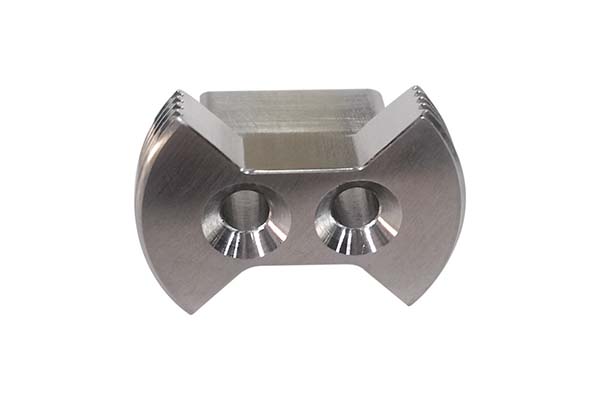
Commonly used die casting aluminum alloys power modern manufacturing. They combine lightweight at 2.7 g/cm³ , excellent castability , and versatile performance to meet diverse industrial needs. From automotive engine mounts to smartphone frames, these alloys enable mass production of complex, high-precision components via high-pressure die casting.
What Are the Key Types of Die Casting Aluminum Alloys?
ADC12: The workhorse alloy
ADC12 is the most commonly used die casting aluminum alloy, accounting for over 60% of global die casting applications. Its balanced properties make it ideal for high-volume production.
Composition: Base aluminum at ≥85%. Key alloying elements: silicon at 9.5-12%, copper at 1.5-3.5%. Trace elements: manganese ≤0.5%, magnesium ≤0.3%—some variants add these to boost strength.
Silicon improves fluidity—critical for filling thin-walled cavities. Copper enhances tensile strength. This strikes a balance between castability and mechanical performance.
Core characteristics:
- High fluidity: Easily fills complex mold cavities, even for parts with 0.5-1mm thin walls
- Good dimensional accuracy: Achieves ISO 8062 CT6-CT7 tolerance at ±0.1-0.2mm for small parts
- Moderate mechanical properties: Tensile strength 220-280 MPa, hardness 80-100 HB; elongation lower than pure aluminum at 3-5% versus 10-15%
Meets needs of most non-load-bearing and light-load components, where castability and cost-effectiveness matter more than ultra-high strength.
Typical applications:
- Automotive: Engine mounts, transmission housings, door handle brackets
- Electronics: Smartphone charger shells, router housings, LED heat sink bases
- Home appliances: Air conditioner compressor covers, washing machine control panels
Its versatility makes it the “go-to” alloy for manufacturers seeking balance of performance and affordability.
AL99.70 and AL99.70A: High-purity options
These alloys are part of the 1XXX series (industrial pure aluminum), used where high purity and specific physical properties are required.
| Feature | AL99.70 | AL99.70A | Impact |
|---|---|---|---|
| Purity | Al ≥99.70%, Si ≤0.10%, impurities ≤0.30% | Al ≥99.70%, Si ≤0.08%, impurities ≤0.25% | AL99.70A’s lower silicon and impurities reduce surface defects |
| Identification | Red vertical line | Red horizontal line | Visual distinction prevents mix-ups |
| Conductivity | 60-65% IACS | 63-68% IACS | Slightly better for AL99.70A |
| Strength | Tensile 90-120 MPa, elongation 12-15% | Same | Low strength but high ductility |
| Corrosion | Good from natural oxide layer | Better from fewer impurities | AL99.70A preferred for sensitive applications |
Core properties: High electrical conductivity at 60-68% IACS. Good corrosion resistance—natural oxide layer forms quickly. Low tensile strength at 90-120 MPa but high ductility with elongation 12-15%.
Suitable for parts where purity, conductivity, or corrosion resistance is prioritized over strength.
Typical applications:
- AL99.70: Low-voltage electrical connectors, decorative trim for furniture
- AL99.70A: High-precision electronic components like sensor housings, medical device casings (non-implantable), architectural decorative panels
AL99.70A is preferred for medical and electronic applications, where even trace impurities can affect performance or biocompatibility.
| Alloy | Key Strengths | Best Applications |
|---|---|---|
| ADC12 | Fluidity, strength, cost | Engine mounts, phone frames, appliance covers |
| AL99.70 | Conductivity, corrosion | Electrical connectors, decorative trim |
| AL99.70A | Purity, surface quality | Medical casings, precision sensors |
What Process Advantages Do These Alloys Offer?
High-pressure high-speed forming enables complexity
Process parameters: 2000-15,000 kPa pressure and 0.5-5 m/s filling speed inject molten aluminum into molds.
Outcome: Produces parts with intricate features—internal channels, micro-holes—that are hard to achieve with sand casting or CNC machining. An ADC12 automotive sensor housing with three internal holes of φ1mm each casts in one step—no post-drilling needed.
Efficiency: A single die casting machine completes 1000-3000 cycles per day for ADC12 parts, far outpacing sand casting at 100-200 parts daily.
Enhanced precision and surface finish
Dimensional accuracy: ADC12 achieves CT6-CT7 tolerance. AL99.70/AL99.70A with stricter process control reach CT5-CT6 at ±0.05-0.1mm. This reduces post-machining by 70-80% compared to sand casting.
Surface quality: High-pressure process delivers Ra 1.6-6.3μm for ADC12, and Ra 0.8-3.2μm for AL99.70A with optimized mold polishing. For many applications like electronic device shells, this eliminates additional grinding or polishing.
Improved material performance post-processing
Strength and hardness: As-cast ADC12 has moderate strength. Heat treatment like T6 boosts tensile strength by 15-20% to 250-320 MPa. AL99.70/AL99.70A can be cold-worked—rolling increases hardness by 30-40% from 25 HB to 35-38 HB.
Corrosion resistance: Both alloys benefit from surface treatments:
- Anodizing: Creates 10-20μm oxide layer. ADC12 withstands 48-hour salt spray; AL99.70A lasts 72+ hours
- Coating: Electroplating with nickel or chrome, or powder coating, enhances aesthetics and durability for decorative parts
| Advantage | ADC12 | AL99.70/AL99.70A |
|---|---|---|
| Precision | CT6-CT7 (±0.1-0.2mm) | CT5-CT6 (±0.05-0.1mm) |
| Surface finish | Ra 1.6-6.3μm | Ra 0.8-3.2μm |
| Post-machining reduction | 70-80% | 70-80% |
| Heat treat gain | 15-20% strength increase | Cold work: 30-40% hardness gain |
| Salt spray with anodizing | 48 hours | 72+ hours |
Where Are These Alloys Used?
Automotive
Components: Engine mounts, transmission housings, body structural parts, EV battery brackets.
Preferred alloy: ADC12 primary; AL99.70A for decorative trim.
Rationale: ADC12’s castability and cost-effectiveness meet high-volume automotive needs. AL99.70A’s corrosion resistance suits exterior trim.
Electronic appliances
Components: Device frames for smartphones and tablets, heat sinks, connectors, charger shells.
Preferred alloy: ADC12 for most components; AL99.70A for high-precision sensors.
Rationale: ADC12’s thin-wall capability fits miniaturized electronics. AL99.70A’s purity avoids signal interference in sensors.
Machinery and engineering
Components: Hydraulic valve bodies, pump housings, precision gearbox covers.
Preferred alloy: ADC12 primary; AL99.70 for low-pressure valves.
Rationale: ADC12’s dimensional accuracy ensures tight fits for hydraulic parts. AL99.70’s corrosion resistance suits fluid-handling applications.
Emerging fields (NEVs)
Components: Integrated battery housings, motor casings, charging port components.
Preferred alloy: ADC12 for structural parts; AL99.70A for high-conductivity connectors.
Rationale: ADC12’s strength supports battery weight. AL99.70A’s conductivity enhances charging efficiency.
| Industry | Components | Alloy | Rationale |
|---|---|---|---|
| Automotive | Engine mounts, brackets | ADC12 | Castability, cost |
| Automotive | Exterior trim | AL99.70A | Corrosion resistance |
| Electronics | Phone frames, heat sinks | ADC12 | Thin-wall capability |
| Electronics | Sensors | AL99.70A | Purity, no interference |
| Machinery | Valve bodies | ADC12 | Dimensional accuracy |
| NEVs | Battery housings | ADC12 | Strength |
| NEVs | Connectors | AL99.70A | Conductivity |
How Do You Choose the Right Alloy?
Step 1: Define core requirements
Mechanical needs: If part is load-bearing like an automotive engine bracket, ADC12’s higher strength at 220-280 MPa is better. For non-load-bearing parts like decorative trim, AL99.70/AL99.70A suffices.
Purity and corrosion resistance: For medical devices or coastal applications, AL99.70A’s low impurities and superior corrosion resistance are critical. For indoor electronics, ADC12 with anodizing is cost-effective.
Electrical/thermal conductivity: For heat sinks or electrical connectors, AL99.70/AL99.70A’s higher conductivity at 60-68% IACS outperforms ADC12 at 40-45% IACS.
Step 2: Consider process compatibility
Part complexity: ADC12’s high fluidity is ideal for complex, thin-walled parts. AL99.70/AL99.70A has lower fluidity—avoid them for parts with under 1mm walls or intricate cavities.
Production volume: For high-volume runs over 10,000 parts, ADC12’s lower cost and faster casting speed reduce per-unit expenses. For small batches under 1,000 parts, AL99.70/AL99.70A’s higher material cost is less impactful.
Step 3: Evaluate total cost
Material cost: ADC12 is 15-20% cheaper than AL99.70. AL99.70A is 5-10% more expensive than AL99.70 due to stricter purification.
Post-processing cost: AL99.70A requires less surface treatment—no extra polishing for decorative parts—which may offset higher material cost. ADC12 may need additional machining for high-precision features.
| Selection Factor | Choose ADC12 When | Choose AL99.70/AL99.70A When |
|---|---|---|
| Mechanical | Load-bearing >220 MPa needed | Non-load-bearing sufficient |
| Purity | Standard industrial | Medical, coastal, sensitive |
| Conductivity | <45% IACS acceptable | >60% IACS required |
| Complexity | Thin walls <1mm, intricate | Simple shapes, thicker walls |
| Volume | >10,000 parts | <1,000 parts |
| Cost focus | Lower material cost | Lower post-processing cost |
How to write a spec that gets priced correctly
A drawing is a contract. If it leaves a number open, the shop fills that number in with its own default. The default is rarely the one you had in mind. Put these five lines on every RFQ and most of the back-and-forth disappears before it starts.
- 3D model with the parting line marked
- Alloy grade and the standard it meets
- Wall thickness and draft on every face
- Machining allowance on the faces that will be cut
- Pressure tightness or porosity class
The point is not paperwork. Each line removes a decision the shop would otherwise make for you. A complete RFQ comes back priced. An incomplete one comes back guessed.
What actually drives the price
Buyers usually push on material because it is the line they can see. In practice the material is rarely the biggest number on a quote. These five lines decide most of it:
- die steel and cavity count
- part weight and wall section
- draft and slide count
- porosity requirement
- machining allowance
Ask for the quote split by line. A supplier who cannot break it down is guessing, and you will pay for the guess. The line you can usually renegotiate is the tolerance band, not the raw material.
Problems you will meet, and the fix
Every process has a failure mode it prefers. The same four show up again and again on this kind of work, and none of them are mysteries once you know what to look for.
- Cold shuts where two flow fronts meet
- Porosity that shows up only after machining
- Soldering on a hot spot in the die
- Shrinkage voids in a heavy section
Catch the fault on the first part, not the hundredth. A first-article check costs an hour. A bad batch costs the whole order. Write the check into the purchase order so nobody has to remember it.
What to check on the first article
The first article is the cheapest inspection you will ever buy. Use it properly and the rest of the run becomes boring, which is exactly what you want.
- Every dimension on the drawing, with the measured value written beside it.
- The material certificate, matched to the heat or lot number on the parts.
- The finish against the sample you approved, under the same light.
- Fit against the mating part, assembled rather than measured.
- Packaging, because parts that arrive damaged were never in tolerance.
Check in this order: datums, then mating features, then cosmetic faces. If the datums are wrong, every number after them is noise. Keep the report on file. When a problem shows up in month six, that document is the only thing that tells you what changed.
How to compare two quotes fairly
Two numbers are not comparable unless the scope matches. Line them up before you decide, because a low number with three gaps is not a low number.
Same drawing, same material, same finish, same inspection. Anything else is a different job wearing the same part number. Then look at what each quote leaves out. Freight, packaging, certificates and tooling are the usual gaps.
Ask each supplier to state their assumptions in writing. The one who does is usually the one who has run the process before.
Scaling from one part to a batch
The first part teaches you the process. The hundredth teaches you the process cost.
Watch three things as volume grows: setup amortisation, tool wear, and how much hand work the finish still needs. If the unit price barely moves between ten and a hundred, the cost sits in material or in hand work, not in setup. Ask which, because only one of them is negotiable.
Lead time behaves the same way. A one-off is scheduled around other jobs. A repeat order is scheduled around your forecast. Give the shop a forecast and the lead time gets shorter, not longer.
How to read a supplier's quote
A quote is a short document with a long shadow. Four things in it decide whether the job runs smoothly, and only one of them is the price.
- The scope line. It should name the process, the material and the finish, not just the part.
- The tolerance basis. General tolerance or the drawing, and which standard it follows.
- The exclusions. Tooling, freight, certificates and inspection are the usual omissions.
- The validity date. Material prices move, and an open-ended quote is a promise nobody can keep.
Read the exclusions before you read the total. A quote that leaves out tooling is not cheaper. It is a quote for a different job.
What to send with the first order
The first order sets the pattern for every order after it. Send a complete package once and the shop files it, and the second order takes a fraction of the time.
- A STEP or native model plus a PDF drawing carrying the same revision letter.
- The material callout by standard number, not by trade name.
- The finish and the exact faces it applies to.
- Any test the part must pass: fit, seal, drop, salt spray, dielectric.
- A contact who can answer a question inside one working day.
Then write down what was agreed. An email that confirms the material, the finish and the date is worth more than a longer purchase order that leaves them open.
Industry Experience: Alloy Selection in Action
An automotive supplier needed engine mounts at 50,000 units per year. ADC12 was the clear choice—castability for complex shapes, strength at 260 MPa, and cost 20% below alternatives. Parts passed all durability tests.
A medical device maker produced sensor housings where even trace impurities could affect readings. AL99.70A with 99.7% purity and 0.08% silicon max eliminated interference. Anodizing at 15μm passed 72-hour salt spray.
An EV manufacturer needed battery housings for structural support and connectors for high conductivity. They chose ADC12 for housings —strength at 280 MPa after T6—and AL99.70A for connectors —conductivity at 65% IACS. Hybrid approach optimized performance and cost.
Commonly used die casting aluminum alloys—ADC12, AL99.70, and AL99.70A—form the backbone of modern manufacturing. ADC12 dominates with its high fluidity, good strength at 220-280 MPa, and cost-effectiveness, serving automotive, electronics, and appliances. AL99.70 and AL99.70A deliver high purity, conductivity at 60-68% IACS, and corrosion resistance for medical, sensor, and decorative applications. Process advantages include complex shape capability, precision to ±0.05mm, and 70-80% less post-machining. Selection requires evaluating mechanical needs, purity requirements, conductivity demands, part complexity, production volume, and total cost. When matched correctly, these alloys deliver components that balance performance, quality, and economics.
How we can help
YiguProto runs die casting in house, from a single prototype to a production batch. We quote the process, the material and the finish as separate lines, so you can see where the money goes instead of arguing with one number.
Send a STEP file or a drawing and you get a DFM report in one to two business days. It flags the features that add cost and the features that will not hold tolerance on the process you picked.
Every order ships with an inspection report on the features you call out. If a part misses, we make it again. Ready to price a part? Start with a free quote and DFM review, or read more about our die casting. You can also talk to an engineer before you commit to a drawing.
Frequently asked questions
What files do you need in order to quote?
A STEP file plus a PDF drawing that carries the same revision letter. The model carries the geometry and the drawing carries the intent. When the two disagree, the shop picks one, and it is never the one you meant.
What should I check before approving the parts?
Datums first, then the features that mate, then the cosmetic faces. Ask for a dimensional report, a material certificate and a finish sample. A part can be inside every tolerance and still not fit, so assemble one before you sign.
What material should I specify?
Specify by standard, not by trade name. A trade name can change under you between two orders; a standard number cannot. Then add the one property that actually decides the part, whether that is strength, heat resistance or chemical exposure.
What happens if a part is out of specification?
We measure it against the same drawing you approved and, if it misses, we make it again. What matters is that the report exists, because a disagreement without data is just an opinion.
How long does a first article take?
Usually a few business days once the drawing is frozen, and longer if tooling is involved. The date we give you is the date we confirm in writing, not the date we hope for.
Is there a minimum order quantity?
No hard minimum. One part is fine. What changes with volume is which costs dominate, so a single unit is priced mostly on setup and a thousand units are priced mostly on cycle time and material.
The short version
Good parts reward the buyer who reads the data sheet and the drawing together. Pick the option for the property that matters, not for the price per kilo.
Tighten only what mates. Test a sample before the run. Then let the process do the rest.