
3D Printing
What Determines the Cost Per Gram of 3D Printed Aluminum?
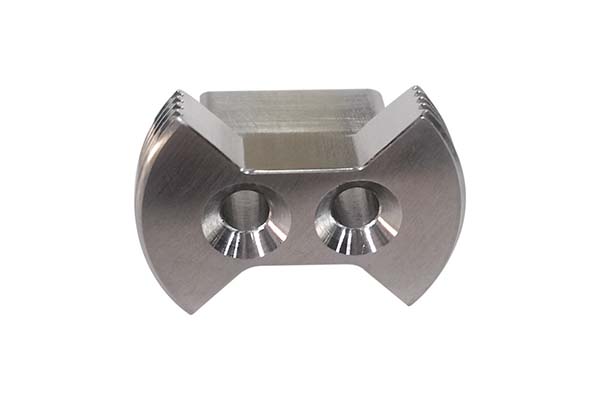
You’ve designed a sleek, lightweight aluminum component. It’s perfect for your application, but a looming question stops you: “How much will 3D printing this in aluminum actually cost per gram?” The answer is rarely a simple number. Unlike buying filament by the spool, the cost per gram for 3D printed aluminum is a complex equation influenced by technology choices, material science, and post-processing rigor.
Key takeaways
- Your choice of printing technology is the single largest factor determining the cost structure and final part properties.
- The “per gram” price quoted by a service bureau aggregates numerous underlying costs.
- Let’s translate these factors into practical estimates for a common part: a topology-optimized mounting bracket weighing 100 grams in AlSi10Mg.
- The value of 3D printed aluminum is rarely in cheaper per-part cost for simple shapes. Its advantage is system-level savings and performance.
What Are the Core Technologies for 3D Printing Aluminum?
Your choice of printing technology is the single largest factor determining the cost structure and final part properties. Each has a distinct economic and performance profile.
1. Selective Laser Melting (SLM) / Laser Powder Bed Fusion (LPBF)
This is the gold standard for high-integrity, complex aluminum parts. A high-power laser selectively melts fine metal powder layer by layer in an inert atmosphere.
- Cost Driver: High capital equipment cost ($250,000 – $1M+), expensive gas-atomized powders, slower build rates, and required expert operation.
- Value Proposition: Produces fully dense (>99.5%) parts with mechanical properties approaching or exceeding wrought material. Capable of complex internal channels, lattices, and topology-optimized geometries.
- Typical Cost Range: $5 – $25 per gram for the printed part, before post-processing. This wide range reflects part complexity, batch size, and machine utilization.
2. Binder Jetting (BJ)
In this two-step process, a print head deposits a liquid binder onto a powder bed to create a “green part.” This part is then sintered in a furnace to fuse the metal.
- Cost Driver: Lower machine cost than SLM, faster print speeds, and higher powder recyclability. Costs shift towards the debinding and sintering furnace cycles.
- Value Proposition: Excellent for higher-volume production of smaller, less geometrically complex parts. Can achieve good density but typically has slightly lower mechanical properties and more isotropic shrinkage than SLM.
- Typical Cost Range: $2 – $8 per gram for the sintered part. Economies of scale are more pronounced here.
3. Directed Energy Deposition (DED)
Often used for large-scale, near-net-shape parts or repair, DED feeds powder or wire into a melt pool created by a laser or electron beam.
- Cost Driver: Setup and programming for large parts, generally lower resolution.
- Value Proposition: Very high deposition rates for large structural components. Less relevant for small, intricate parts priced by the gram.
- Typical Cost Range: Often priced by the hour or by the part due to scale, making a per-gram comparison less useful.
Comparative Snapshot:
| Technology | Best For | Key Cost Per Gram Driver | Mechanical Properties (Typical) |
|---|---|---|---|
| SLM/LPBF | High-complexity, high-performance (aerospace brackets, heat exchangers) | Machine amortization, powder cost, inert gas, skilled labor. | Excellent. Near-fully dense, high strength. |
| Binder Jetting | Higher-volume, less complex (fluid fittings, housings, automotive components) | Sintering furnace time, powder/binder cost, volume scaling. | Good to Very Good. High density achievable, may have slight porosity. |
What Factors Beyond Technology Influence Cost Per Gram?
The “per gram” price quoted by a service bureau aggregates numerous underlying costs.
The Raw Material: Not All Aluminum Powder is Equal
- Powder Specifications: Gas-atomized, spherical powder with a tight particle size distribution (e.g., 15-45 μm for SLM) is essential for consistent flow and melting. This powder can cost $80 – $150 per kilogram for standard alloys like AlSi10Mg. Specialized or scandium-modified aerospace alloys can be significantly more.
- Powder Recyclability: In SLM, unused powder can be sieved and reused, but its oxygen content increases with each cycle, eventually requiring it to be refreshed with virgin powder. This lifecycle management is a baked-in material cost.
Part Geometry and Design Efficiency
This is where Design for Additive Manufacturing (DfAM) directly impacts your wallet.
- Build Volume Utilization: Machines have fixed operating costs. Nesting multiple parts in a single build to maximize the platform area drastically reduces the cost per part by spreading overhead.
- Support Structures: Aluminum requires extensive supports to manage heat and prevent warping. Support volume can often equal or exceed the part volume, doubling the material cost for that component. Supports also add significant post-processing labor for removal.
- Part Orientation & Height: A tall, thin part takes longer to print than a flat one of the same mass because of the increased number of layers. Build time (and thus machine cost) is often more tied to Z-height than to grams.
Post-Processing: The Hidden Cost Multiplier
A raw, printed aluminum part is not a finished component. Post-processing is mandatory and can add 50% to 300% to the base printing cost.
- Support Removal: Manual or CNC removal. For complex internal channels, this is a skilled, time-consuming task.
- Stress Relief & Heat Treatment (T6): Almost always required to relieve internal stresses and achieve desired mechanical properties. A batch process that adds cost but is essential for performance.
- CNC Machining: Critical interfaces (bolt holes, sealing surfaces) typically require CNC machining to achieve tight tolerances (e.g., ±0.025 mm) and fine surface finish. This is a hybrid manufacturing cost.
- Surface Finishing: Blasting, polishing, or anodizing for corrosion resistance and appearance.
Real-World Cost Scenarios: From Prototype to Production
Let’s translate these factors into practical estimates for a common part: a topology-optimized mounting bracket weighing 100 grams in AlSi10Mg.
| Scenario | Technology & Assumptions | Breakdown of Cost (Approx.) | Total Cost | Cost Per Gram |
|---|---|---|---|---|
| Single Prototype | SLM, one-off. Poor nest, full supports, basic machining. | Print: $15/gr = $1,500. Machining: $400. Heat Treat: $100. | $2,000 | $20/gr |
| Small Batch (10 pcs) | SLM, batched. Good nesting, shared setup costs. | Print: $10/gr = $1,000. Machining: $200/part. Heat Treat: $50/part. | $3,250 ($325/part) | $3.25/gr |
| Production Run (500 pcs) | Binder Jetting. Optimized for process, automated post-processing. | Print/Sinter: $4/gr = $400. Machining: $75/part. Heat Treat: $25/part. | $250,000 ($500/part) | $5/gr |
Key Insight: The cost per gram drops dramatically for SLM in small batches due to amortization, but for very high volumes, binder jetting’s process efficiency can make it more economical, even if the per-gram sintered cost is slightly higher, due to lower secondary processing costs.
How Does This Compare to Traditional Manufacturing?
The value of 3D printed aluminum is rarely in cheaper per-part cost for simple shapes. Its advantage is system-level savings and performance.
- vs. CNC Machining: For a solid block bracket, machining from billet might cost $150/part at volume. The 3D printed version at $500 seems expensive. However, if the printed bracket is 40% lighter (saving fuel in an aircraft) and consolidates 5 assembled parts into one (saving inventory, labor, and failure points), the total cost of ownership justifies the higher piece price.
- vs. Casting: While casting has a low per-part cost at high volume, it requires expensive tooling (molds) worth tens of thousands of dollars. 3D printing has near-zero tooling cost, making it ideal for prototypes, bridge production, and low-volume runs where the cost of tooling cannot be amortized.
Strategies to Reduce Your Cost Per Gram
- Design for the Process: Minimize supports, design self-supporting angles (>45°), and avoid unnecessary overhangs. Use lattice structures and topological optimization to remove non-critical mass.
- Plan for Batch Production: Even if you need parts over time, consolidating orders into a single build leverages machine amortization and reduces setup fees.
- Specify Requirements Realistically: Do all surfaces need a machined finish? Can you accept as-built surfaces on non-critical features? Clearly defining geometric tolerances and surface finish requirements prevents over-processing.
- Consider Hybrid Approaches: Use 3D printing to create the complex, near-net-shape core of a part, and use traditional machining for simple, high-tolerance features. This optimizes the cost-benefit of both worlds.
Asking for the cost per gram of 3D printed aluminum is a starting point, not an endpoint. The true cost is a sophisticated calculation that balances technology selection (SLM vs. Binder Jetting), design efficiency, post-processing needs, and order volume. While prices can range from $2 to over $25 per gram, the more critical metric is cost-per-function. For applications where weight savings, part consolidation, and performance in complex geometries deliver immense downstream value, 3D printed aluminum is not just cost-competitive—it’s indispensable. By understanding the drivers behind the price, you can engage with manufacturers effectively, optimize your designs for economy, and make a compelling business case for adopting this transformative technology.
How to write a spec that gets priced correctly
A drawing is a contract. If it leaves a number open, the shop fills that number in with its own default. The default is rarely the one you had in mind. Put these five lines on every RFQ and most of the back-and-forth disappears before it starts.
- File format and units, with the model exported in millimetres
- Process and material grade, not a trade name
- Critical features and the tolerance each one needs
- Surface finish and the faces it applies to
- Quantity for the pilot build and for the year
The point is not paperwork. Each line removes a decision the shop would otherwise make for you. A complete RFQ comes back priced. An incomplete one comes back guessed.
What actually drives the price
Buyers usually push on material because it is the line they can see. In practice the material is rarely the biggest number on a quote. These five lines decide most of it:
- build volume and orientation
- layer height and support structure
- material grade and colour
- post-processing and hand finishing
- quantity per build plate
Ask for the quote split by line. A supplier who cannot break it down is guessing, and you will pay for the guess. The line you can usually renegotiate is the tolerance band, not the raw material.
Problems you will meet, and the fix
Every process has a failure mode it prefers. The same four show up again and again on this kind of work, and none of them are mysteries once you know what to look for.
- Warping on long flat faces where the part lifts off the plate
- Layer lines showing through a cosmetic surface
- Support scars on a mating face nobody flagged
- Dimensional drift on thin walls after cooling
Catch the fault on the first part, not the hundredth. A first-article check costs an hour. A bad batch costs the whole order. Write the check into the purchase order so nobody has to remember it.
What to check on the first article
The first article is the cheapest inspection you will ever buy. Use it properly and the rest of the run becomes boring, which is exactly what you want.
- Every dimension on the drawing, with the measured value written beside it.
- The material certificate, matched to the heat or lot number on the parts.
- The finish against the sample you approved, under the same light.
- Fit against the mating part, assembled rather than measured.
- Packaging, because parts that arrive damaged were never in tolerance.
Check in this order: datums, then mating features, then cosmetic faces. If the datums are wrong, every number after them is noise. Keep the report on file. When a problem shows up in month six, that document is the only thing that tells you what changed.
How to compare two quotes fairly
Two numbers are not comparable unless the scope matches. Line them up before you decide, because a low number with three gaps is not a low number.
Same drawing, same material, same finish, same inspection. Anything else is a different job wearing the same part number. Then look at what each quote leaves out. Freight, packaging, certificates and tooling are the usual gaps.
Ask each supplier to state their assumptions in writing. The one who does is usually the one who has run the process before.
FAQ: Your 3D Printed Aluminum Cost Questions Answered
Q: Is the “cost per gram” inclusive of all post-processing like machining and anodizing?
A: Almost never. When a service bureau quotes a “per gram” price, it typically refers to the “print-to-plate” cost—the expense of printing the part, including material, machine time, and basic support removal. Critical post-processing steps like stress relief heat treatment, CNC machining of interfaces, and surface finishing (anodizing) are almost always quoted as separate line items. Always request a breakdown that distinguishes between printing and post-processing costs.
Q: Why is 3D printed aluminum so much more expensive than 3D printed plastic like Nylon or resin?
A: The differential stems from raw materials, energy, and equipment capital. Metal powders require expensive gas-atomization and are hazardous to handle. The printers themselves cost 10-100x more than industrial plastic printers and require inert gas chambers. The energy input needed to melt metal is orders of magnitude higher than for plastic. Finally, the mandatory post-processing chain for metal (heat treatment, machining) is far more complex and costly than for plastics.
Q: Can I get a meaningful quote just by sending the weight of my part?
A: No, this is a common pitfall. A service bureau needs the 3D CAD file (STEP or STL) to provide an accurate quote. The weight is just one factor. They must analyze the part’s orientation, support requirements, nesting potential, and surface area to estimate machine time and material use. A dense 100-gram cube is cheaper to produce than a delicate, sprawling 100-gram lattice structure due to differences in build time and support usage.
Q: Does using recycled aluminum powder significantly reduce cost?
A: It can offer modest savings, but with important caveats. In SLM processes, powder is reused, but after several cycles, its quality degrades (oxidized, satellited particles). Virgin powder must be blended in to maintain quality. Service bureaus manage this blend to ensure part integrity. While using a higher percentage of recycled powder reduces material cost, it is a managed, internal process, and the cost savings passed to the customer are usually marginal compared to other factors like design optimization.
Q: For a high-volume part (10,000+ units), will 3D printing ever be cheaper than die casting?
A: For simple, small aluminum parts, traditional die casting will almost always have a lower per-part cost at such high volumes due to its extreme speed. The break-even point where 3D printing becomes competitive is typically in the low hundreds to low thousands of parts, and only when the part has significant complexity that would require multi-slide molds or assembly in traditional methods. 3D printing’s value at high volume is in mass customization (making 10,000 unique parts) or in parts with embedded complexity (conformal cooling) that die casting cannot produce.
How we can help
YiguProto runs 3D printing in house, from a single prototype to a production batch. We quote the process, the material and the finish as separate lines, so you can see where the money goes instead of arguing with one number.
Send a STEP file or a drawing and you get a DFM report in one to two business days. It flags the features that add cost and the features that will not hold tolerance on the process you picked.
Every order ships with an inspection report on the features you call out. If a part misses, we make it again. Ready to price a part? Start with a free quote and DFM review, or read more about our 3D printing. You can also talk to an engineer before you commit to a drawing.
Frequently asked questions
What material should I specify?
Specify by standard, not by trade name. A trade name can change under you between two orders; a standard number cannot. Then add the one property that actually decides the part, whether that is strength, heat resistance or chemical exposure.
What happens if a part is out of specification?
We measure it against the same drawing you approved and, if it misses, we make it again. What matters is that the report exists, because a disagreement without data is just an opinion.
What files do you need in order to quote?
A STEP file plus a PDF drawing that carries the same revision letter. The model carries the geometry and the drawing carries the intent. When the two disagree, the shop picks one, and it is never the one you meant.
How long does a first article take?
Usually a few business days once the drawing is frozen, and longer if tooling is involved. The date we give you is the date we confirm in writing, not the date we hope for.
Is there a minimum order quantity?
No hard minimum. One part is fine. What changes with volume is which costs dominate, so a single unit is priced mostly on setup and a thousand units are priced mostly on cycle time and material.
What should I check before approving the parts?
Datums first, then the features that mate, then the cosmetic faces. Ask for a dimensional report, a material certificate and a finish sample. A part can be inside every tolerance and still not fit, so assemble one before you sign.
The short version
Good parts reward the buyer who reads the data sheet and the drawing together. Pick the option for the property that matters, not for the price per kilo.
Tighten only what mates. Test a sample before the run. Then let the process do the rest.