
Die Casting
What Determines the Cost of Aluminum Alloy Die Casting per Kilogram?
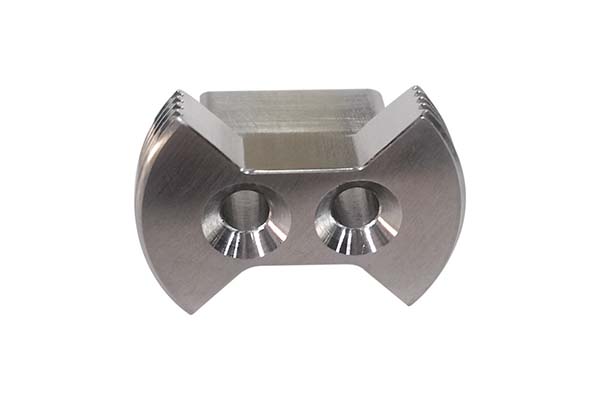
The cost of aluminum alloy die casting per kilogram is not a fixed number. It ranges from as low as ¥1.5/kg for simple standard parts to over ¥120/kg for highly complex precision components. This 80-fold difference comes from a mix of technical, production, and demand-related factors. Equipment size, part complexity, surface treatment, order volume—each shifts the final price.
What Are the Core Components of Die Casting Cost per Kilogram?
| Cost Component | Typical Proportion | Key Details | Industry Benchmarks |
|---|---|---|---|
| Raw material cost | 40-60% | (Alloy price + waste loss rate × alloy price) × part density | Waste loss rate: 8-15%—higher for complex thin-walled parts. Alloy prices: ADC12 ~¥22/kg, 6061 ~¥28/kg. ADC12 parts: ¥9-15/kg; 6061 parts: ¥12-20/kg |
| Processing cost | 20-35% | (Equipment hourly cost + labor cost) ÷ hourly output | Equipment cost includes depreciation over 8-10 years and energy—300-ton machine uses ~50kWh/hour. Labor depends on automation—fully automated lines need 1-2 workers. Small machines <300 tons: ¥3-8/kg; large >800 tons: ¥10-25/kg |
| Surface treatment cost | 5-20% | Billed by area or weight; varies by process complexity | Simple processes like natural oxidation: near zero. Sandblasting anodizing: ¥2-5/kg. Plating/spraying: ¥8-15/kg. Micro-arc oxidation: ¥10-20/kg |
| Mold amortization cost | 5-15% | (Mold cost + maintenance) ÷ total production quantity | Mold life: 50,000-100,000 shots for ADC12. Simple molds: ~¥5,000; complex: ~¥50,000+. Small batches <10k parts: ¥5-20/kg; large >100k parts: ¥1-3/kg |
What Key Factors Influence Cost per Kilogram?
Equipment tonnage sets the processing cost benchmark
Larger machines have higher depreciation and energy expenses.
| Machine Tonnage | Suitable Parts | Processing Cost per kg | Why |
|---|---|---|---|
| <300 tons | Small electronic parts—LED heat sinks, connector housings | ¥3-8 | Low energy use ~30kWh/hour; high output 100-200kg/hour |
| 300-800 tons | Auto parts—transmission housings, sensor brackets | ¥8-15 | Medium energy ~50kWh/hour; balanced output 50-100kg/hour |
| >800 tons | Large structural parts—EV battery housings, engine blocks | ¥15-25 | High energy ~80kWh/hour; low output 20-50kg/hour; specialized maintenance |
Part structural complexity multiplies processing costs
Complex designs require more time, labor, and specialized tools.
| Complexity Level | Design Features | Cost Multiplier vs Simple | Example Parts & Cost |
|---|---|---|---|
| Simple | Flat plates, no holes or undercuts, single parting line | 1.0× | Basic brackets: ¥1.5-5/kg |
| Medium | Sliders or cores 1-3, small holes, simple threads | 1.5-3.0× | Auto sensor housings: ¥30-60/kg |
| High | Multi-core linkage over 3, deep holes under 3mm, thin walls under 2mm, high-precision tolerances ±0.05mm | 3.0-8.0× | Drone mounts, phone middle frames: ¥60-120+/kg |
Surface treatment requirements add value and cost
Treatments enhance aesthetics or performance—some double the per-kilogram price.
| Surface Treatment | Purpose | Added Cost per kg | Suitable Applications |
|---|---|---|---|
| Natural oxidation | Basic corrosion resistance, no extra finish | ¥0-0.5 | Internal structural parts with no visibility |
| Sandblasting anodizing | Matte finish, improved scratch resistance | ¥2-5 | Visible auto parts like dashboard trim, consumer electronics |
| Micro-arc oxidation | Military-grade corrosion and heat resistance | ¥10-20 | High-performance parts—EV motor housings, aerospace components |
| Plating—chrome or nickel | Shiny finish, high wear resistance | ¥8-15 | Decorative parts—luxury car emblems, high-end appliance handles |
Order volume drives economies of scale
Large batches spread fixed costs across more kilograms.
| Order Volume | Cost Impact per kg | Reason | Example: Auto Transmission Housing Base Cost ¥12/kg |
|---|---|---|---|
| <10,000 pieces small batch | +¥5-20 | High mold amortization—¥50,000 mold ÷ 10,000 pieces = ¥5/piece; startup losses | ¥17-32/kg |
| 10,000-100,000 pieces medium batch | +¥1-5 | Balanced mold amortization; optimized production rhythm | ¥13-17/kg |
| >100,000 pieces large batch | +¥0.5-1 | Low mold amortization; bulk material discounts; high efficiency | ¥12.5-13/kg |
| Factor | Low End | High End | Impact Range |
|---|---|---|---|
| Equipment tonnage | <300 tons: ¥3-8 | >800 tons: ¥15-25 | ±¥10-20/kg |
| Complexity | Simple: ¥1.5-5 | High: ¥60-120 | ±¥50-100/kg |
| Surface treatment | Natural: ¥0-0.5 | Micro-arc: ¥10-20 | ±¥10-20/kg |
| Order volume | Large: +¥0.5-1 | Small: +¥5-20 | ±¥5-20/kg |
What Do Real-World Applications Cost?
| Industry | Part | Features | Cost per kg | Breakdown |
|---|---|---|---|---|
| Lighting | LED heat sink | Thin-walled fins 2mm, no surface treatment, 200-ton machine | ¥18-25 | Material: ¥10-12; Processing: ¥6-8; Mold amortization: ¥2-5 |
| Automotive | Transmission housing | Multi-layer oil channels, 500-ton machine, sandblasting anodizing | ¥45-60 | Material: ¥15-20; Processing: ¥15-20; Surface: ¥10-15; Mold: ¥5-10 |
| Consumer electronics | Phone middle frame | Thin walls 1.5mm, nano injection molding, mirror polishing | ¥80-120 | Material: ¥20-30; Processing: ¥40-60; Surface: ¥15-25; Mold: ¥5-10 |
| Aerospace | Drone mount | High-strength 6061, hollow design, micro-arc oxidation | ¥55-70 | Material: ¥25-30; Processing: ¥20-25; Surface: ¥10-15; Mold: ¥0.5-2 (large batch) |
How Do You Get an Accurate Quote and Reduce Costs?
Prepare information for quotes
Manufacturers need four key details to provide accurate per-kilogram cost:
3D drawings: Mark tolerances like ±0.1mm, wall thicknesses, and critical features like holes and threads.
Material specification: Specify alloy grade like ADC12 or 6061 and any certifications like RoHS or IATF 16949.
Annual volume: Estimated yearly production—50,000 pieces—to calculate mold amortization.
Surface treatment code: Reference standards like Anodize Type II or ISO 10074 to avoid ambiguity.
Cost reduction strategies
Cut costs without sacrificing quality using three methods:
Simplify design: Reduce number of sliders or cores—merge two holes into one. Increase wall thickness to ≥2mm—lowers processing difficulty.
Leverage integration: Merge multiple small parts into one integrated die-cast component. Reduces assembly and mold costs—replacing 3 brackets with 1 saves ¥5-10/kg.
Accept minor imperfections: For non-visible parts, skip expensive polishing. Allow minor burrs—avoids ¥2-5/kg in manual sanding costs.
Avoid low-price traps
Quotes below market averages—under ¥1.5/kg for simple parts—often hide shortcuts:
Material cutting: Using recycled aluminum with high impurity content reduces part strength by 20-30%.
Process skipping: Omitting heat treatment lowers tensile strength—risks part failure under load.
Low-quality release agents: Leaving residues that cause corrosion or adhesion issues.
How to write a spec that gets priced correctly
A drawing is a contract. If it leaves a number open, the shop fills that number in with its own default. The default is rarely the one you had in mind. Put these five lines on every RFQ and most of the back-and-forth disappears before it starts.
- 3D model with the parting line marked
- Alloy grade and the standard it meets
- Wall thickness and draft on every face
- Machining allowance on the faces that will be cut
- Pressure tightness or porosity class
The point is not paperwork. Each line removes a decision the shop would otherwise make for you. A complete RFQ comes back priced. An incomplete one comes back guessed.
What actually drives the price
Buyers usually push on material because it is the line they can see. In practice the material is rarely the biggest number on a quote. These five lines decide most of it:
- die steel and cavity count
- part weight and wall section
- draft and slide count
- porosity requirement
- machining allowance
Ask for the quote split by line. A supplier who cannot break it down is guessing, and you will pay for the guess. The line you can usually renegotiate is the tolerance band, not the raw material.
Problems you will meet, and the fix
Every process has a failure mode it prefers. The same four show up again and again on this kind of work, and none of them are mysteries once you know what to look for.
- Cold shuts where two flow fronts meet
- Porosity that shows up only after machining
- Soldering on a hot spot in the die
- Shrinkage voids in a heavy section
Catch the fault on the first part, not the hundredth. A first-article check costs an hour. A bad batch costs the whole order. Write the check into the purchase order so nobody has to remember it.
What to check on the first article
The first article is the cheapest inspection you will ever buy. Use it properly and the rest of the run becomes boring, which is exactly what you want.
- Every dimension on the drawing, with the measured value written beside it.
- The material certificate, matched to the heat or lot number on the parts.
- The finish against the sample you approved, under the same light.
- Fit against the mating part, assembled rather than measured.
- Packaging, because parts that arrive damaged were never in tolerance.
Check in this order: datums, then mating features, then cosmetic faces. If the datums are wrong, every number after them is noise. Keep the report on file. When a problem shows up in month six, that document is the only thing that tells you what changed.
How to compare two quotes fairly
Two numbers are not comparable unless the scope matches. Line them up before you decide, because a low number with three gaps is not a low number.
Same drawing, same material, same finish, same inspection. Anything else is a different job wearing the same part number. Then look at what each quote leaves out. Freight, packaging, certificates and tooling are the usual gaps.
Ask each supplier to state their assumptions in writing. The one who does is usually the one who has run the process before.
Scaling from one part to a batch
The first part teaches you the process. The hundredth teaches you the process cost.
Watch three things as volume grows: setup amortisation, tool wear, and how much hand work the finish still needs. If the unit price barely moves between ten and a hundred, the cost sits in material or in hand work, not in setup. Ask which, because only one of them is negotiable.
Lead time behaves the same way. A one-off is scheduled around other jobs. A repeat order is scheduled around your forecast. Give the shop a forecast and the lead time gets shorter, not longer.
How to read a supplier's quote
A quote is a short document with a long shadow. Four things in it decide whether the job runs smoothly, and only one of them is the price.
- The scope line. It should name the process, the material and the finish, not just the part.
- The tolerance basis. General tolerance or the drawing, and which standard it follows.
- The exclusions. Tooling, freight, certificates and inspection are the usual omissions.
- The validity date. Material prices move, and an open-ended quote is a promise nobody can keep.
Read the exclusions before you read the total. A quote that leaves out tooling is not cheaper. It is a quote for a different job.
What to send with the first order
The first order sets the pattern for every order after it. Send a complete package once and the shop files it, and the second order takes a fraction of the time.
- A STEP or native model plus a PDF drawing carrying the same revision letter.
- The material callout by standard number, not by trade name.
- The finish and the exact faces it applies to.
- Any test the part must pass: fit, seal, drop, salt spray, dielectric.
- A contact who can answer a question inside one working day.
Then write down what was agreed. An email that confirms the material, the finish and the date is worth more than a longer purchase order that leaves them open.
When this is the wrong choice
A good supplier tells you when the process does not fit. These are the cases where we say so.
- The volume is so low that setup costs more than the parts are worth.
- The tolerance is tighter than the process can hold without a second operation.
- The geometry cannot be made without a tool feature that will not pay back.
- The material you need is not available in the form the process requires.
- The schedule is shorter than the tooling or setup time, and nobody has said so yet.
None of these are refusals. They are reasons to look at a different route, and the earlier that conversation happens the cheaper it is. The most expensive mistake in manufacturing is a process chosen before the question was understood.
Planning the ramp from prototype to production
The gap between one good part and a thousand identical ones is a plan, not a machine. Three decisions close it.
First, freeze the design. Every change after tooling starts is a re-cut, and re-cuts are where schedules go. Second, decide the inspection level. A prototype is checked by eye; a production part is checked against a report. Third, agree the change process in writing, including who pays for it.
Write the ramp down as dates and owners, not as intentions. A ramp plan with three names and three dates is worth more than a page of good intentions.
What documentation to expect
Paperwork is not bureaucracy when a part fails at the customer. It is the only record of what was agreed. A normal shipment should carry four documents.
- A dimensional report covering every callout on the drawing.
- A material certificate traceable to the heat or lot number.
- A finish or coating certificate where the specification requires one.
- A packing list that matches the carton labels.
If a supplier cannot produce these on request, they are not running a controlled process. Ask for one sample set before you place the first order and you will know exactly what you are buying.
Industry Experience: Cost Drivers in Action
An automotive supplier needed 50,000 transmission housings per year. Initial quote was ¥55/kg. Analysis showed high processing cost from 800-ton machine. Switching to 500-ton machine with optimized gating reduced processing cost from ¥20 to ¥15/kg. Total cost dropped to ¥48/kg —saving ¥350,000 annually.
A consumer electronics company designed a phone frame with 1.2mm walls and 0.03mm tolerances. Quote came at ¥120/kg. Redesign increased walls to 1.5mm and loosened tolerances to 0.05mm —still functional but easier to cast. New quote: ¥90/kg. Savings: ¥300,000 on 10,000 units.
A lighting manufacturer needed 8,000 LED heat sinks per year. Low volume meant high mold amortization at ¥8/kg. Using a shared mold with another client cut amortization to ¥2/kg. Total cost dropped from ¥25 to ¥19/kg.
The cost of aluminum alloy die casting per kilogram is driven by four core components—raw material at 40-60%, processing at 20-35%, surface treatment at 5-20%, and mold amortization at 5-15%. Key factors shift these numbers: equipment tonnage from ¥3-8/kg for small machines to ¥15-25/kg for large; part complexity from ¥1.5-5/kg for simple to ¥60-120/kg for high; surface treatment from ¥0-0.5/kg for natural to ¥10-20/kg for micro-arc; order volume from +¥0.5-1/kg for large to +¥5-20/kg for small. Real-world examples range from ¥18-25/kg for LED heat sinks to ¥80-120/kg for phone frames. Accurate quotes require detailed specs—3D drawings, alloy, volume, treatment. Cost reduction strategies—simplify design, integrate parts, accept minor flaws—can save ¥5-10/kg. Avoid low-price traps that hide material or process shortcuts. With transparent cost breakdowns, manufacturers and buyers can make informed decisions.
How we can help
YiguProto runs die casting in house, from a single prototype to a production batch. We quote the process, the material and the finish as separate lines, so you can see where the money goes instead of arguing with one number.
Send a STEP file or a drawing and you get a DFM report in one to two business days. It flags the features that add cost and the features that will not hold tolerance on the process you picked.
Every order ships with an inspection report on the features you call out. If a part misses, we make it again. Ready to price a part? Start with a free quote and DFM review, or read more about our die casting. You can also talk to an engineer before you commit to a drawing.
Frequently asked questions
What happens if a part is out of specification?
We measure it against the same drawing you approved and, if it misses, we make it again. What matters is that the report exists, because a disagreement without data is just an opinion.
What should I check before approving the parts?
Datums first, then the features that mate, then the cosmetic faces. Ask for a dimensional report, a material certificate and a finish sample. A part can be inside every tolerance and still not fit, so assemble one before you sign.
Does the process work for prototypes as well as production?
Yes, and that is usually the point. Running the prototype on the production process removes a whole class of surprises, because the part you test is made the same way as the part you sell.
Is there a minimum order quantity?
No hard minimum. One part is fine. What changes with volume is which costs dominate, so a single unit is priced mostly on setup and a thousand units are priced mostly on cycle time and material.
How do I compare two quotes fairly?
Match the scope first: same drawing, same material, same finish, same inspection. Then read the exclusions. Freight, tooling and certificates are the usual gaps, and a low number with three gaps is not a low number.
What files do you need in order to quote?
A STEP file plus a PDF drawing that carries the same revision letter. The model carries the geometry and the drawing carries the intent. When the two disagree, the shop picks one, and it is never the one you meant.
The short version
Good parts reward the buyer who reads the data sheet and the drawing together. Pick the option for the property that matters, not for the price per kilo.
Tighten only what mates. Test a sample before the run. Then let the process do the rest.