
Die Casting
What Is Die Casting Aluminum Surface Treatment and How to Master It?
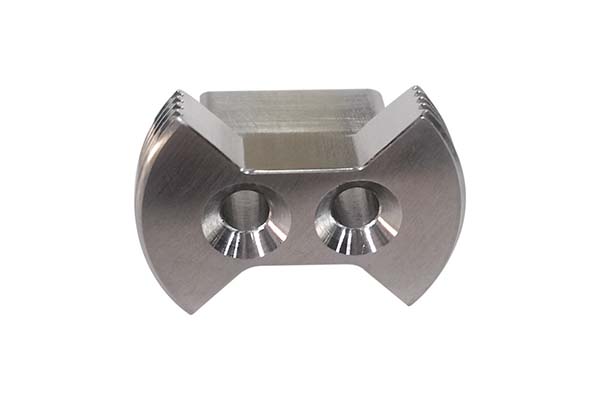
Die casting aluminum parts come out of the mold functional but unfinished. Their raw surfaces may have release agent residue, oxide layers, tiny pores, or rough spots that limit performance and appearance. Surface treatment fixes these issues. It protects against corrosion, adds decorative appeal, and enables specific functions like conductivity or insulation.
Why Is Pretreatment the Foundation of All Surface Treatments?
Pretreatment eliminates surface defects and contaminants. Skipping or rushing it guarantees coating peeling, uneven coloring, or poor corrosion resistance. Each step prepares the surface for what follows.
Degreasing
Purpose: Remove grease and release agent residue left from casting.
Methods: Solvent cleaning, alkaline degreasing, ultrasonic cleaning.
Key note: Choose based on contamination level. Ultrasonic for heavy grease, alkaline for light.
Oxide film removal
Purpose: Eliminate the natural thin oxide layer and slight surface metamorphism from casting.
Methods: Weak alkaline solution soaking.
Key note: Avoid strong alkalis—they etch the aluminum surface, creating new problems.
Sanding and descaling
Purpose: Clear embedded mold sand or dirt, especially from gate or overflow grooves.
Methods: Manual sanding, mechanical sanding.
Key note: Focus on areas with dense sand—these cause coating defects if missed.
Deburring and polishing
Purpose: Remove burrs at parting lines and smooth surfaces.
Methods: Manual polishing, mechanical grinding.
Key note: Over-polishing closes pores, hurting coating adhesion. Under-polishing leaves burr defects.
Sandblasting and shot blasting
Purpose: Improve surface roughness to boost coating adhesion.
Methods: Abrasive particle spraying with alumina or glass beads.
Key note: Uniform spraying is critical. Uneven roughness means uneven coating.
Special note for porosity
Use impregnation to fill tiny pores with resin or wax. This improves air tightness and is a must before dense treatments like electroplating.
| Pretreatment Step | Purpose | Common Methods | Key Note |
|---|---|---|---|
| Degreasing | Remove grease/residue | Solvent, alkaline, ultrasonic | Match method to contamination level |
| Oxide removal | Eliminate oxide layer | Weak alkaline soak | Avoid strong alkalis |
| Sanding/descaling | Clear embedded sand | Manual, mechanical | Focus on gate/overflow areas |
| Deburring/polishing | Smooth surfaces | Manual, mechanical | Don’t over-polish |
| Sandblasting | Improve adhesion | Alumina, glass beads | Ensure uniform spray |
| Impregnation | Seal pores | Resin, wax | Essential before electroplating |
What Protective Treatments Fit Your Corrosion Needs?
Chemical conversion film
Chemical reaction forms a thin protective film—chromate or phosphate.
Advantages: Low cost, simple process, good pre-coating base.
Limitations: Poor long-term corrosion resistance.
Best for: Short-term protection like temporary storage, or as pre-coating for spraying.
Anodizing
Electrochemical reaction generates a thick, porous alumina film.
Advantages: High hardness, wear-resistant, excellent corrosion resistance.
Limitations: Die castings’ high porosity causes film blistering. Dyeing effect is poor.
Best for: Parts needing high corrosion resistance—marine hardware, outdoor fixtures.
Electroplating
Electrolysis deposits metal layers like chrome or nickel on the surface.
Advantages: Dual benefits—corrosion resistance plus decoration. High hardness with chrome.
Limitations: Complex pretreatment. Strict control of chemical solutions needed to avoid pore defects.
Best for: Decorative-cum-protective parts—automotive trim, bathroom fixtures.
Spraying
Apply coatings—powder, liquid, or electrophoretic—on the surface.
Advantages: Rich colors, good coverage for complex shapes, powder coating is eco-friendly.
Limitations: High-temperature curing needs temperature control to prevent deformation.
Best for: Parts with complex shapes—electronic enclosures, kitchen appliances.
| Treatment | Advantages | Limitations | Best For |
|---|---|---|---|
| Chemical conversion | Low cost, simple | Poor long-term | Temporary storage, pre-coating |
| Anodizing | Hard, wear-resistant | Blistering on porous parts | Marine, outdoor fixtures |
| Electroplating | Decorative + protective | Complex pretreatment | Automotive trim, bathroom fixtures |
| Spraying | Rich colors, eco-friendly | Curing heat may deform | Electronics, appliances |
What Decorative and Functional Treatments Are Available?
Decorative treatments
Polished/brushed: Shiny polished or textured brushed surfaces—straight grain, studded grain. Mechanical grinding plus polishing. Requires high initial surface quality. Best for high-grade hardware like faucet handles or luxury electronic casings.
Sandblasting effect: Uniform matte surface from fine abrasive spraying. Cannot hide major surface defects. Best for parts needing low-gloss appearance like industrial control panels.
Anodizing plus coloring: Dyeing with organic dyes or electrolytic coloring (bronze, black) after sulfuric acid anodizing. Die castings’ porosity limits dyeing uniformity. Best for semi-decorative parts like medium-grade furniture hardware.
Vacuum coating (PVD): Deposits metal or ceramic films—gold, rose gold, titanium—via physical vapor deposition. Requires high-vacuum environment, ion sputtering, and highly smooth substrate surface. Best for high-end decorative parts like smartphone frames or luxury watch cases.
| Decorative Treatment | Effect | Key Process | Best For |
|---|---|---|---|
| Polished/brushed | Shiny or textured | Grinding + polishing | High-grade hardware |
| Sandblasting | Uniform matte | Fine abrasive spray | Low-gloss industrial parts |
| Anodizing + coloring | Dyed or electrolytic color | Anodizing → coloring → sealing | Semi-decorative hardware |
| Vacuum coating (PVD) | Metal/ceramic films | Vacuum + sputtering | Smartphone frames, luxury cases |
Functional treatments
Conductivity: Electroplating copper or silver, or conductive oxidation. Best for electronic connectors and electromagnetic shielding parts.
Insulation: Anodizing with thick film, or polyurethane insulating paint coating. Best for motor components and electronic insulation brackets.
Abrasion resistance: Hard anodizing at 20-50μm film thickness, PVD durable film, or wear-resistant spray coating. Best for moving parts like gears, cylinders, and pneumatic components.
| Functional Need | Treatment Method | Applications |
|---|---|---|
| Conductivity | Copper/silver plate, conductive oxidation | Connectors, shielding |
| Insulation | Thick anodizing, insulating paint | Motor components, brackets |
| Abrasion resistance | Hard anodizing, PVD, wear-resistant spray | Gears, cylinders, pneumatics |
What Four Factors Guide Your Choice?
1. Final requirements
Clarify priorities. Corrosion resistance? Outdoor parts need anodizing. Decoration? Luxury parts need PVD. Functionality? Connectors need conductive plating.
2. Material properties
Alloy composition and surface quality matter. ADC12 with high silicon content may affect electroplating uniformity. Porous surfaces require impregnation first.
3. Cost and environmental friendliness
Balance budget and regulations. Chrome plating has high cost and toxicity—being replaced by eco-friendly options like powder coating or PVD.
4. Production scale
Automated processes like electrophoresis and powder coating suit mass production. Manual polishing and PVD fit small-batch high-end products.
| Factor | Consideration |
|---|---|
| Requirements | Corrosion, decoration, or functionality? |
| Material | Alloy composition, porosity level |
| Cost/environment | Budget, regulations, eco-options |
| Scale | Mass production vs small batch |
How to write a spec that gets priced correctly
A drawing is a contract. If it leaves a number open, the shop fills that number in with its own default. The default is rarely the one you had in mind. Put these five lines on every RFQ and most of the back-and-forth disappears before it starts.
- 3D model with the parting line marked
- Alloy grade and the standard it meets
- Wall thickness and draft on every face
- Machining allowance on the faces that will be cut
- Pressure tightness or porosity class
The point is not paperwork. Each line removes a decision the shop would otherwise make for you. A complete RFQ comes back priced. An incomplete one comes back guessed.
What actually drives the price
Buyers usually push on material because it is the line they can see. In practice the material is rarely the biggest number on a quote. These five lines decide most of it:
- die steel and cavity count
- part weight and wall section
- draft and slide count
- porosity requirement
- machining allowance
Ask for the quote split by line. A supplier who cannot break it down is guessing, and you will pay for the guess. The line you can usually renegotiate is the tolerance band, not the raw material.
Problems you will meet, and the fix
Every process has a failure mode it prefers. The same four show up again and again on this kind of work, and none of them are mysteries once you know what to look for.
- Cold shuts where two flow fronts meet
- Porosity that shows up only after machining
- Soldering on a hot spot in the die
- Shrinkage voids in a heavy section
Catch the fault on the first part, not the hundredth. A first-article check costs an hour. A bad batch costs the whole order. Write the check into the purchase order so nobody has to remember it.
What to check on the first article
The first article is the cheapest inspection you will ever buy. Use it properly and the rest of the run becomes boring, which is exactly what you want.
- Every dimension on the drawing, with the measured value written beside it.
- The material certificate, matched to the heat or lot number on the parts.
- The finish against the sample you approved, under the same light.
- Fit against the mating part, assembled rather than measured.
- Packaging, because parts that arrive damaged were never in tolerance.
Check in this order: datums, then mating features, then cosmetic faces. If the datums are wrong, every number after them is noise. Keep the report on file. When a problem shows up in month six, that document is the only thing that tells you what changed.
How to compare two quotes fairly
Two numbers are not comparable unless the scope matches. Line them up before you decide, because a low number with three gaps is not a low number.
Same drawing, same material, same finish, same inspection. Anything else is a different job wearing the same part number. Then look at what each quote leaves out. Freight, packaging, certificates and tooling are the usual gaps.
Ask each supplier to state their assumptions in writing. The one who does is usually the one who has run the process before.
Scaling from one part to a batch
The first part teaches you the process. The hundredth teaches you the process cost.
Watch three things as volume grows: setup amortisation, tool wear, and how much hand work the finish still needs. If the unit price barely moves between ten and a hundred, the cost sits in material or in hand work, not in setup. Ask which, because only one of them is negotiable.
Lead time behaves the same way. A one-off is scheduled around other jobs. A repeat order is scheduled around your forecast. Give the shop a forecast and the lead time gets shorter, not longer.
How to read a supplier's quote
A quote is a short document with a long shadow. Four things in it decide whether the job runs smoothly, and only one of them is the price.
- The scope line. It should name the process, the material and the finish, not just the part.
- The tolerance basis. General tolerance or the drawing, and which standard it follows.
- The exclusions. Tooling, freight, certificates and inspection are the usual omissions.
- The validity date. Material prices move, and an open-ended quote is a promise nobody can keep.
Read the exclusions before you read the total. A quote that leaves out tooling is not cheaper. It is a quote for a different job.
What to send with the first order
The first order sets the pattern for every order after it. Send a complete package once and the shop files it, and the second order takes a fraction of the time.
- A STEP or native model plus a PDF drawing carrying the same revision letter.
- The material callout by standard number, not by trade name.
- The finish and the exact faces it applies to.
- Any test the part must pass: fit, seal, drop, salt spray, dielectric.
- A contact who can answer a question inside one working day.
Then write down what was agreed. An email that confirms the material, the finish and the date is worth more than a longer purchase order that leaves them open.
When this is the wrong choice
A good supplier tells you when the process does not fit. These are the cases where we say so.
- The volume is so low that setup costs more than the parts are worth.
- The tolerance is tighter than the process can hold without a second operation.
- The geometry cannot be made without a tool feature that will not pay back.
- The material you need is not available in the form the process requires.
- The schedule is shorter than the tooling or setup time, and nobody has said so yet.
None of these are refusals. They are reasons to look at a different route, and the earlier that conversation happens the cheaper it is. The most expensive mistake in manufacturing is a process chosen before the question was understood.
Planning the ramp from prototype to production
The gap between one good part and a thousand identical ones is a plan, not a machine. Three decisions close it.
First, freeze the design. Every change after tooling starts is a re-cut, and re-cuts are where schedules go. Second, decide the inspection level. A prototype is checked by eye; a production part is checked against a report. Third, agree the change process in writing, including who pays for it.
Write the ramp down as dates and owners, not as intentions. A ramp plan with three names and three dates is worth more than a page of good intentions.
Industry Experience: Surface Treatment in Action
An automotive supplier produced trim parts that peeled after six months. Investigation showed inadequate degreasing—release agent residue remained. Switching to ultrasonic cleaning before electroplating eliminated peeling. Parts now last 5+ years.
An electronics manufacturer needed smartphone frames with uniform color. Anodizing directly on porous ADC12 caused blotchy results. Adding impregnation to seal pores before anodizing achieved consistent dye uptake. Scrap dropped from 15% to 2%.
A marine hardware maker required parts that survived salt spray for 500 hours. Standard anodizing failed at 200 hours. Switching to hard anodizing at 40μm thickness with sealing passed 600 hours. No corrosion visible.
Mastering die casting aluminum surface treatment means understanding each step’s purpose and choosing methods that match your requirements. Pretreatment is the foundation—degreasing, oxide removal, sanding, deburring, sandblasting, and impregnation must be done right or subsequent coatings fail. Protective treatments range from chemical conversion for short-term needs to anodizing, electroplating, and spraying for long-term corrosion resistance. Decorative options include polishing, sandblasting, colored anodizing, and PVD for everything from matte industrial to high-gloss luxury finishes. Functional coatings deliver conductivity, insulation, or abrasion resistance. Choose based on final requirements, material properties, cost, and production scale. When matched correctly, surface treatment transforms raw castings into durable, beautiful, high-performance components.
Our solution for Die Casting Aluminum Surface Treatment
YiguProto runs die casting in house, from a single prototype to a production batch. We quote the process, the material and the finish as separate lines, so you can see where the money goes instead of arguing with one number.
Send a STEP file or a drawing and you get a DFM report in one to two business days. It flags the features that add cost and the features that will not hold tolerance on the process you picked.
Every order ships with an inspection report on the features you call out. If a part misses, we make it again. Ready to price a part? Start with a free quote and DFM review, or read more about our die casting. You can also talk to an engineer before you commit to a drawing.
FAQ about Die Casting Aluminum Surface Treatment
Is there a minimum order quantity?
No hard minimum. One part is fine. What changes with volume is which costs dominate, so a single unit is priced mostly on setup and a thousand units are priced mostly on cycle time and material.
Can Die Casting Aluminum Surface Treatment be made in small quantities?
Yes, and small quantities are where a good supplier earns the next order. Setup dominates the price at low volume, so the cheapest route is usually the one with the fewest operations, not the cheapest material.
What should I check before approving the parts?
Datums first, then the features that mate, then the cosmetic faces. Ask for a dimensional report, a material certificate and a finish sample. A part can be inside every tolerance and still not fit, so assemble one before you sign.
What is Die Casting Aluminum Surface Treatment used for?
Die Casting Aluminum Surface Treatment turns up wherever the part has to do a real job at a predictable cost: brackets, housings, fixtures, covers and the fittings that hold them together. The honest test is whether the properties match the load and the environment, not whether the material is fashionable.
Does the process work for prototypes as well as production?
Yes, and that is usually the point. Running the prototype on the production process removes a whole class of surprises, because the part you test is made the same way as the part you sell.
What tolerance can you hold on Die Casting Aluminum Surface Treatment?
The working default is ±0.1 mm on cast features, ±0.05 mm after machining. Tighter than that the process changes and so does the price, because every step tighter adds inspection time. Call out only the faces that mate with something else and leave the rest on the general tolerance.
The short version
Die Casting Aluminum Surface Treatment rewards the buyer who reads the data sheet and the drawing together. Pick the option for the property that matters, not for the price per kilo.
Tighten only what mates. Test a sample before the run. Then let the process do the rest.