
Die Casting
What Are Effective Die-Casting Flue Gas Treatment Methods, How to Choose?
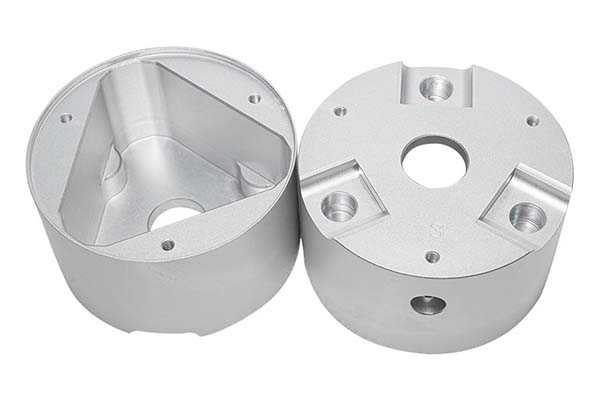
If you run a die-casting operation, you know that flue gas is more than just smoke. It is a complex mix of high-temperature gases, fine metal dust, oil mist, and volatile organic compounds. Release it untreated, and you face heavy fines—$50,000+ per year for non-compliant plants.
Key takeaways
- Before selecting a method, you need to understand what you are dealing with.
- No single technology handles everything. Each targets specific contaminants.
- The best approach is multi-stage treatment, tailored to your plant size, alloy, and pollutant levels.
- Die-casting flue gas is complex—high temperature, sticky particles, flammable components, and multiple pollutant types. Effective treatment requires:
What Makes Die-Casting Flue Gas So Difficult to Treat?
Before selecting a method, you need to understand what you are dealing with.
Complex Pollutant Composition
Die-casting flue gas contains four categories of harmful substances:
Particulate matter (PM): Metal oxide dust (Al₂O₃, ZnO) and carbon black from release agent residues. These particles are fine—60–80% are PM2.5—and sticky. A typical aluminum plant generates 5–10 kg of Al₂O₃ dust per ton of castings. Without proper treatment, this clogs filters in 1–2 weeks.
Gaseous pollutants:
- VOCs: Formaldehyde, acetone, benzene from release agent decomposition at 200–300°C. Concentrations range from 50–500 mg/m³ (higher for oil-based release agents).
- Acid gases: HCl, H₂S, NOx from fuel combustion and alloy reactions. Just 10 mg/m³ of HCl can cut fan lifespan by 50% through corrosion.
Oil mist: Mineral or synthetic oil cracking products from high-temperature metal contact. Oil mist coats filter media, reducing dust removal efficiency by 30–40% if not pre-removed.
Trace heavy metals: Lead, cadmium, zinc from alloy impurities. Even 0.1–1 mg/m³ can exceed EU REACH limits (e.g., lead max 0.01 mg/m³).
Extreme Physical Properties
Two traits make treatment even harder:
High temperature: Flue gas exits at 150–300°C (aluminum) or 250–400°C (magnesium). High temperatures destroy carbon-based adsorbents (like activated carbon) and damage organic filter bags. Cooling is required before core treatment.
Flammability: Magnesium die-casting flue gas contains flammable metal dust (Mg particles) and VOCs. A single spark from electrostatic discharge can trigger explosions. Explosion-proof design is mandatory for magnesium operations.
What Core Technologies Target Different Pollutants?
No single technology handles everything. Each targets specific contaminants.
| Technology | How It Works | Key Parameters | Targets | Pros | Cons |
|---|---|---|---|---|---|
| Cyclone dust collector | Centrifugal force separates large particles (≥10 μm) | Inlet velocity 15–25 m/s; efficiency 80–90% for PM10 | Large dust (Al₂O₃, ZnO ≥10 μm) | Low cost ($5,000–20,000); no filter media; high-temp resistant (400°C) | Poor for PM2.5 (<50%); needs weekly ash cleaning |
| Bag dust collector | High-temp filter bags (PTFE-coated) capture fine particles | Temp resistance 200–260°C; filtration velocity 0.8–1.2 m/min; efficiency 99.5%+ for PM2.5 | Fine PM, heavy metals | Highest dust removal; handles high concentrations (1000 mg/m³) | Bags need replacement every 6–12 months; oil mist clogs bags |
| Electrostatic dust removal (ESR) | High voltage (10–15 kV) ionizes gas, collects charged particles on electrodes | Collection efficiency 99% for PM2.5; gas velocity 1.0–1.5 m/s; power 0.1–0.3 kWh/1000 m³ | Fine dust, oil mist, heavy metals | No filter media; good for sticky particles | High initial cost ($50,000–200,000); acid corrodes electrodes |
| Regenerative thermal oxidizer (RTO) | Burns VOCs at 800–900°C to CO₂ and H₂O; recovers heat | Destruction efficiency 98%+; heat recovery 85–95%; cycle time 2–4 minutes | High-concentration VOCs (≥200 mg/m³) | Energy-saving (recovered heat preheats gas); no secondary pollution | Large footprint (50–100 m²); high startup cost ($200,000–1M) |
| Wet scrubber (spray tower) | Alkaline solution (NaOH, Ca(OH)₂) cools gas, neutralizes acids, captures oil mist | Cooling 300°C → 60°C; acid removal 90%+; oil mist removal 80–90% | Acid gases, oil mist, high-temp gas | Multi-functional; low cost ($10,000–50,000); explosion-proof | Generates wastewater; poor for dry dust (causes sludge) |
How Do You Combine Technologies for Different Scenarios?
The best approach is multi-stage treatment, tailored to your plant size, alloy, and pollutant levels.
Economical Solution (Small to Medium Enterprises)
Target: Small aluminum/zinc plants with low pollutants (VOCs under 100 mg/m³, PM under 200 mg/m³) and limited budgets ($50,000–150,000).
Process flow:
Cyclone dust collector → Wet scrubber (cooling + oil/acid removal) → Activated carbon adsorber (VOCs removal)
Advantages:
- Initial cost 30–50% lower than large systems
- Simple operation (1–2 workers can maintain)
- Annual maintenance $5,000–10,000
Results:
- PM ≤10 mg/m³
- VOCs ≤20 mg/m³
- Acid gases ≤5 mg/m³
Case study: A Guangdong auto parts plant with 5 million parts/year output was fined $80,000 for exceeding PM (25 mg/m³) and VOCs (60 mg/m³). After installing this system:
- PM dropped to 5–8 mg/m³
- VOCs to ≤15 mg/m³
- Avoided $80,000/year in fines
- Worker respiratory complaints fell 70%
Energy-Saving Efficient Solution (Large Enterprises)
Target: Large aluminum/copper plants (10,000+ tons/year) with high VOCs (≥200 mg/m³) and sustainability goals.
Process flow:
Electrostatic dust removal → Bag dust collector (double-stage dust removal) → RTO (VOCs destruction + waste heat recovery) → Wet scrubber (final acid removal)
Advantages:
- Energy self-sufficient (RTO waste heat heats factory or release agent)
- Meets strict standards (EU IED, EPA)
- Energy savings $15,000–30,000/year from waste heat
Results:
- PM ≤5 mg/m³
- VOCs ≤15 mg/m³
- Acid gases ≤2 mg/m³
Case study: A German zinc plant producing sanitary hardware had high ZnO smoke (100 mg/m³) causing equipment corrosion. After installing ESR + catalytic combustion (RCO):
- ZnO reduced to 0.1–0.2 mg/m³
- Recovered 5 tons/year of zinc dust reused in alloy production (saved $30,000/year)
- Corrosion reduced 80%; maintenance costs cut 30%
Explosion-Proof Solution (Magnesium Alloy Plants)
Target: Magnesium die-casting with flammable dust/VOCs and hazardous environments (Zone 21 dust explosion risk).
Process flow:
Wet scrubber (pre-cooling + dust capture, no sparks) → Explosion-proof RCO (catalytic combustion at 300–400°C) → Nitrogen protection system (prevents oxygen contact)
Advantages:
- Zero explosion risk (wet pre-treatment + nitrogen inerting)
- Low operating temperature (avoids magnesium ignition)
- Compact design
Results:
- PM ≤8 mg/m³
- VOCs ≤18 mg/m³
- No fire/explosion incidents
Cost impact: Explosion-proof components add 30% to initial cost ($250,000–800,000 total). Catalyst replacement every 2–3 years ($10,000–20,000). Nitrogen cost $5,000–8,000/year.
How Do You Choose the Right Method for Your Plant?
Use this four-step framework to avoid costly mistakes.
Step 1: Define Your Pollutant Baseline
Test your flue gas to get:
- PM concentration (especially PM2.5) and composition (metal oxide vs. carbon)
- VOC concentration and type (benzene series vs. aldehydes)
- Acid gas content (HCl, H₂S)
- Temperature at extraction point
- Alloy type (magnesium = explosion-proof required)
Step 2: Align with Budget and Scale
| Plant Size | Recommended Approach | Investment Range |
|---|---|---|
| Small (<50 employees) | Economical solution: cyclone + scrubber + carbon | $50,000–150,000 |
| Medium (50–200 employees) | Mid-range: bag filter + scrubber + optional RCO | $150,000–400,000 |
| Large (>200 employees) | Energy-efficient: ESR + bag + RTO + scrubber | $300,000–1,000,000+ |
Step 3: Prioritize Safety and Compliance
For magnesium casting:
- Mandate explosion-proof components
- Include nitrogen protection or wet pre-treatment
- Monitor dust concentration (keep under 30 g/m³—explosion limit for Mg)
For EU/US markets:
- Select technologies meeting IED or EPA standards
- RTO for VOCs destruction efficiency ≥98%
Step 4: Plan for Future Expansion
Choose modular systems that can scale:
- Add RTO chambers as production grows
- Increase filter bag capacity
- Avoid custom-built systems that are hard to modify
What Are Common Mistakes in Flue Gas Treatment?
Mistake 1: Skipping Source Reduction
Some plants spend $100,000+ on RTO but continue using oil-based release agents that generate high VOCs. Switching to water-based release agents cuts VOCs by 60–70% and reduces treatment load.
Mistake 2: Ignoring Pre-Cooling
High-temperature gas destroys bag filters and carbon adsorbers. Always include cooling (wet scrubber or heat exchanger) before fine treatment stages.
Mistake 3: One-Size-Fits-All Design
A system designed for aluminum will fail for magnesium. Magnesium requires explosion-proof components and lower operating temperatures. Match the system to your alloy.
Mistake 4: Forgetting Maintenance
Filters clog. Electrodes corrode. Catalysts degrade. Budget for annual maintenance: 5–10% of initial investment. Neglect maintenance, and performance drops 30–50% within months.
How to write a spec that gets priced correctly
A drawing is a contract. If it leaves a number open, the shop fills that number in with its own default. The default is rarely the one you had in mind. Put these five lines on every RFQ and most of the back-and-forth disappears before it starts.
- 3D model with the parting line marked
- Alloy grade and the standard it meets
- Wall thickness and draft on every face
- Machining allowance on the faces that will be cut
- Pressure tightness or porosity class
The point is not paperwork. Each line removes a decision the shop would otherwise make for you. A complete RFQ comes back priced. An incomplete one comes back guessed.
What actually drives the price
Buyers usually push on material because it is the line they can see. In practice the material is rarely the biggest number on a quote. These five lines decide most of it:
- die steel and cavity count
- part weight and wall section
- draft and slide count
- porosity requirement
- machining allowance
Ask for the quote split by line. A supplier who cannot break it down is guessing, and you will pay for the guess. The line you can usually renegotiate is the tolerance band, not the raw material.
Problems you will meet, and the fix
Every process has a failure mode it prefers. The same four show up again and again on this kind of work, and none of them are mysteries once you know what to look for.
- Cold shuts where two flow fronts meet
- Porosity that shows up only after machining
- Soldering on a hot spot in the die
- Shrinkage voids in a heavy section
Catch the fault on the first part, not the hundredth. A first-article check costs an hour. A bad batch costs the whole order. Write the check into the purchase order so nobody has to remember it.
What to check on the first article
The first article is the cheapest inspection you will ever buy. Use it properly and the rest of the run becomes boring, which is exactly what you want.
- Every dimension on the drawing, with the measured value written beside it.
- The material certificate, matched to the heat or lot number on the parts.
- The finish against the sample you approved, under the same light.
- Fit against the mating part, assembled rather than measured.
- Packaging, because parts that arrive damaged were never in tolerance.
Check in this order: datums, then mating features, then cosmetic faces. If the datums are wrong, every number after them is noise. Keep the report on file. When a problem shows up in month six, that document is the only thing that tells you what changed.
How to compare two quotes fairly
Two numbers are not comparable unless the scope matches. Line them up before you decide, because a low number with three gaps is not a low number.
Same drawing, same material, same finish, same inspection. Anything else is a different job wearing the same part number. Then look at what each quote leaves out. Freight, packaging, certificates and tooling are the usual gaps.
Ask each supplier to state their assumptions in writing. The one who does is usually the one who has run the process before.
Scaling from one part to a batch
The first part teaches you the process. The hundredth teaches you the process cost.
Watch three things as volume grows: setup amortisation, tool wear, and how much hand work the finish still needs. If the unit price barely moves between ten and a hundred, the cost sits in material or in hand work, not in setup. Ask which, because only one of them is negotiable.
Lead time behaves the same way. A one-off is scheduled around other jobs. A repeat order is scheduled around your forecast. Give the shop a forecast and the lead time gets shorter, not longer.
FAQ About Die-Casting Flue Gas Treatment
Can I use activated carbon alone to treat VOCs?
Only for very low concentrations (under 50 mg/m³). Activated carbon saturates quickly with high VOCs—replacement every 2–4 weeks becomes uneconomical. For high VOCs, use RTO or catalytic combustion.
How do I handle oil mist before bag filters?
Oil mist clogs bag filters instantly. Pre-treat with:
- Electrostatic precipitator (captures oil mist)
- Wet scrubber (washes oil out)
- Coalescing filters (for low concentrations)
What is the explosion limit for magnesium dust?
Magnesium dust explodes at concentrations above 30 g/m³ with ignition source present. Always keep levels below this. Use wet scrubbers (no sparks) and nitrogen inerting.
How often should I replace RTO ceramic heat exchangers?
Every 5–10 years, depending on thermal cycling and particulate loading. Annual inspection is critical—cracked ceramics reduce heat recovery efficiency by 20–30%.
Can recovered dust be recycled?
Yes—if kept pure. Zinc dust from electrostatic precipitators can be returned to alloy production. Aluminum oxide dust can be sold to refractory manufacturers. But mixed dust (with oil, carbon) becomes hazardous waste.
What is the payback period for an RTO system?
For large plants with high VOC concentrations (≥200 mg/m³), payback is 3–5 years through:
- Avoided fines
- Waste heat recovery savings
- Reduced maintenance on other equipment
For small plants, RTO rarely pays back—choose activated carbon or biological treatment instead.
Die-casting flue gas is complex—high temperature, sticky particles, flammable components, and multiple pollutant types. Effective treatment requires:
Understanding your pollutants: Test for PM, VOCs, acid gases, oil mist, and heavy metals. Know your alloy (aluminum vs. magnesium) and release agent (water-based vs. oil-based).
Matching technology to target: Cyclones for large dust, bag filters for fine PM, electrostatic for sticky particles, RTO for high VOCs, wet scrubbers for acid gases and cooling.
Combining in multi-stage systems: No single technology works alone. The right sequence handles each pollutant in turn.
Tailoring to your scenario:
- Small plants → economical (cyclone + scrubber + carbon)
- Large plants → energy-efficient (ESR + bag + RTO)
- Magnesium → explosion-proof (wet scrubber + low-temp oxidation + nitrogen)
Planning for the long term: Include maintenance, modular expansion, and source reduction (water-based release agents cut VOCs 60–70%).
The evidence is clear: one plant saved $80,000/year in fines and cut worker health complaints 70% with a simple cyclone+scrubber+carbon system. Another recovered $30,000/year in zinc dust from electrostatic precipitation. Flue gas treatment is not just compliance—it can be a source of savings and recovered value.
Treat it as an investment in your plant’s future, not an expense.
Our solution for Effective Die-Casting Flue Gas Treatment
YiguProto runs die casting in house, from a single prototype to a production batch. We quote the process, the material and the finish as separate lines, so you can see where the money goes instead of arguing with one number.
Send a STEP file or a drawing and you get a DFM report in one to two business days. It flags the features that add cost and the features that will not hold tolerance on the process you picked.
Every order ships with an inspection report on the features you call out. If a part misses, we make it again. Ready to price a part? Start with a free quote and DFM review, or read more about our die casting. You can also talk to an engineer before you commit to a drawing.
FAQ about Effective Die-Casting Flue Gas Treatment
What files do you need in order to quote?
A STEP file plus a PDF drawing that carries the same revision letter. The model carries the geometry and the drawing carries the intent. When the two disagree, the shop picks one, and it is never the one you meant.
Can Effective Die-Casting Flue Gas Treatment be made in small quantities?
Yes, and small quantities are where a good supplier earns the next order. Setup dominates the price at low volume, so the cheapest route is usually the one with the fewest operations, not the cheapest material.
Does the process work for prototypes as well as production?
Yes, and that is usually the point. Running the prototype on the production process removes a whole class of surprises, because the part you test is made the same way as the part you sell.
How do I compare two quotes fairly?
Match the scope first: same drawing, same material, same finish, same inspection. Then read the exclusions. Freight, tooling and certificates are the usual gaps, and a low number with three gaps is not a low number.
How long does a first article take?
Usually a few business days once the drawing is frozen, and longer if tooling is involved. The date we give you is the date we confirm in writing, not the date we hope for.
What should I check before approving the parts?
Datums first, then the features that mate, then the cosmetic faces. Ask for a dimensional report, a material certificate and a finish sample. A part can be inside every tolerance and still not fit, so assemble one before you sign.
The short version
Effective Die-Casting Flue Gas Treatment rewards the buyer who reads the data sheet and the drawing together. Pick the option for the property that matters, not for the price per kilo.
Tighten only what mates. Test a sample before the run. Then let the process do the rest.