
Die Casting
What Is Gas-Assisted Die Casting and How Does It Transform Manufacturing?
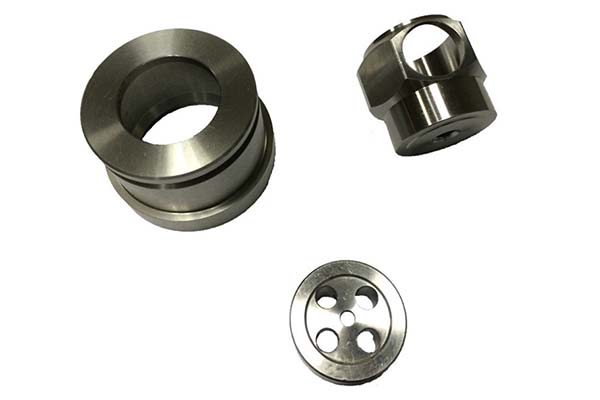
Gas-assisted die casting changes how metal parts are made. Instead of filling the entire mold with solid metal, it uses high-pressure gas to create hollow sections inside the casting. This simple shift delivers huge benefits—lighter parts, less material waste, and complex internal channels that were impossible before.
How Does Gas-Assisted Die Casting Work?
The basic principle
GADC starts like regular die casting—molten metal injects into the mold. But instead of filling completely, it only fills enough to form a solid outer shell, typically 2-5mm thick. Then high-pressure nitrogen gas (up to 500 bar) injects into the still-molten core. The gas pushes the liquid metal into a secondary cavity, leaving a hollow interior behind.
Think of it like blowing air into a balloon—except the “balloon” is metal, and it sets permanently as it cools.
The four stages
Stage 1: Partial filling—A measured amount of metal injects into the mold. Just enough to create the outer walls. Sensors track the flow and temperature.
Stage 2: Gas injection—At exactly the right moment, nitrogen gas blasts into the cavity. Timing is everything. Too early and gas mixes with metal, creating bubbles. Too late and metal solidifies, blocking the gas path.
Stage 3: Pressure holding—Gas pressure stays on, pushing metal into the overflow cavity and compressing the solidifying shell. This eliminates shrinkage and ensures dimensional accuracy.
Stage 4: Finishing—The part solidifies, the mold opens, and excess material from the overflow gets trimmed. Inside, a smooth hollow channel remains.
| Stage | What Happens | Critical Control |
|---|---|---|
| Partial fill | Metal forms outer shell | Measure exact volume |
| Gas injection | Nitrogen displaces liquid | Timing ±0.1 seconds |
| Pressure hold | Gas compresses shell | Maintain 50-500 bar |
| Finishing | Trim overflow, inspect | Check internal smoothness |
How it differs from traditional casting
Traditional die casting fills the whole cavity with solid metal. This uses more material and creates heavier parts. Internal features require removable cores that add cost and complexity.
GADC uses 10-40% less material by forming only the outer skin. Internal channels appear without cores. Gas pressure eliminates shrinkage porosity—a major defect in conventional parts.
Surface finish improves too. Traditional castings measure Ra 3.2-6.3 μm. GADC achieves Ra 1.6-3.2 μm, often eliminating secondary machining.
What Makes GADC Work Reliably?
Precision timing and control
GADC systems use sensors everywhere. Thermocouples monitor mold temperature continuously—holding 180-250°C for aluminum. Pressure sensors track gas and metal flow, adjusting valves in real time. Injection paths are mapped to ensure gas spreads evenly.
This control keeps defect rates below 2%, compared to 5-10% in conventional casting.
Modular system design
Modern GADC equipment uses interchangeable modules. The gas injection module delivers nitrogen at 50-500 bar, adjustable for different parts. Gate valve modules control metal flow to overflow cavities. Central control units integrate all data, supporting multiple injection points for complex parts.
This modularity means existing die casting machines can often be upgraded with GADC kits instead of buying entirely new equipment.
Works with common alloys
GADC handles the same materials you already use:
Aluminum alloys (ADC12, A380)—Most common. GADC reduces weight while maintaining strength. Perfect for automotive and aerospace.
Magnesium alloys (AZ91D)—Even lighter than aluminum. Gas pressure prevents magnesium’s tendency to form shrinkage defects.
Zinc alloys (ZAMAK 5)—For small precision parts. GADC enables walls down to 1mm without deformation.
What Problems Does GADC Solve?
Design freedom expands
Traditional casting cannot create complex internal passages without removable cores. Cores add cost, increase defect risk, and limit geometry. Complex parts often need multiple components assembled together.
GADC forms hollow channels directly with gas. An automotive motor housing that once required three separate parts—housing, cooling pipe, and bracket—now casts as one piece with integrated cooling ducts. Assembly steps drop by 70% and weld-related failures disappear.
Material costs drop
Traditional casting wastes 15-30% of metal on runners, overflow, and excess material. Cored molds cost more to design and maintain.
GADC cuts material use by 10-40% through hollowing. Mold costs drop 20-30% because no cores are needed. For 100,000 EV battery frames annually, material savings alone reach $200,000. Lighter parts also cut shipping costs by 15-25%.
Part performance improves
Solid castings cool unevenly, creating inconsistent properties. They lack built-in functional features.
GADC creates uniform metal shells with:
- 25-40% higher bending strength from optimized rib layouts
- 30-50% lower operating temperatures from integrated cooling channels
- Leak-proof internal passages with no core gaps
Quality and accuracy increase
Shrinkage holes and porosity plague traditional die casting. Rework and scrap add cost.
GADC gas pressure compresses the solidifying shell, eliminating shrinkage defects entirely. Surface roughness meets automotive and aerospace standards without secondary work. Dimensional accuracy holds ±0.1mm on parts up to 500mm long.
| Traditional Problem | GADC Solution | Improvement |
|---|---|---|
| Limited internal geometry | Gas-formed hollow channels | 70% fewer assembly steps |
| 15-30% material waste | 10-40% less metal used | $200k annual savings typical |
| Shrinkage porosity | Gas pressure eliminates voids | Defects below 2% |
| Poor heat management | Integrated cooling ducts | 30-50°C lower temps |
Where Does GADC Add the Most Value?
Electric vehicles
EVs live and die by weight. Every kilogram saved extends range. GADC delivers:
Motor housings with integrated cooling ducts—40% lower motor temperature, 50% longer life.
Battery pack frames that are 30% lighter while meeting crash safety standards (ISO 26262).
Structural frames with thin walls of 1.5-2mm, cutting weight by 25%.
Electronics
Devices need precise, heat-managing enclosures. GADC provides:
5G base station housings with integrated gas channels—3x faster heat dissipation than solid aluminum.
EV charger inverter modules with near-zero porosity—ensuring electrical insulation and no leakage.
Laptop chassis in magnesium alloy with 1mm walls—20% lighter than plastic, stronger, and better looking.
Aerospace
Aircraft parts must be light and ultra-strong. GADC enables:
Seat frames in aluminum-magnesium alloy—35% lighter than traditional steel.
Fluid control valves with perfectly smooth internal channels—critical for fuel and hydraulic systems.
Satellite components where every kilogram saved cuts launch costs by $10,000.
Industry Experience: GADC in Action
An automotive supplier struggled with motor housing failures. Traditional castings had porosity that weakened the structure and leaked coolant. They switched to GADC with integrated cooling channels. Porosity disappeared. Motor temperature dropped 40°C. Housings that failed after 50,000 hours now run past 100,000.
An electronics manufacturer needed thinner laptop bodies. Magnesium alloy with conventional casting hit limits at 1.5mm walls—thinner caused warping. GADC produced 1.0mm walls perfectly flat, cutting weight by 30% while maintaining strength. Their laptops became industry leaders in portability.
An aerospace contractor faced weight penalties on satellite components. Every gram mattered. GADC hollowed out structural brackets, removing 40% of material with no loss of strength. Launch cost savings paid for the entire GADC investment in one project.
How to write a spec that gets priced correctly
A drawing is a contract. If it leaves a number open, the shop fills that number in with its own default. The default is rarely the one you had in mind. Put these five lines on every RFQ and most of the back-and-forth disappears before it starts.
- 3D model with the parting line marked
- Alloy grade and the standard it meets
- Wall thickness and draft on every face
- Machining allowance on the faces that will be cut
- Pressure tightness or porosity class
The point is not paperwork. Each line removes a decision the shop would otherwise make for you. A complete RFQ comes back priced. An incomplete one comes back guessed.
What actually drives the price
Buyers usually push on material because it is the line they can see. In practice the material is rarely the biggest number on a quote. These five lines decide most of it:
- die steel and cavity count
- part weight and wall section
- draft and slide count
- porosity requirement
- machining allowance
Ask for the quote split by line. A supplier who cannot break it down is guessing, and you will pay for the guess. The line you can usually renegotiate is the tolerance band, not the raw material.
Problems you will meet, and the fix
Every process has a failure mode it prefers. The same four show up again and again on this kind of work, and none of them are mysteries once you know what to look for.
- Cold shuts where two flow fronts meet
- Porosity that shows up only after machining
- Soldering on a hot spot in the die
- Shrinkage voids in a heavy section
Catch the fault on the first part, not the hundredth. A first-article check costs an hour. A bad batch costs the whole order. Write the check into the purchase order so nobody has to remember it.
What to check on the first article
The first article is the cheapest inspection you will ever buy. Use it properly and the rest of the run becomes boring, which is exactly what you want.
- Every dimension on the drawing, with the measured value written beside it.
- The material certificate, matched to the heat or lot number on the parts.
- The finish against the sample you approved, under the same light.
- Fit against the mating part, assembled rather than measured.
- Packaging, because parts that arrive damaged were never in tolerance.
Check in this order: datums, then mating features, then cosmetic faces. If the datums are wrong, every number after them is noise. Keep the report on file. When a problem shows up in month six, that document is the only thing that tells you what changed.
How to compare two quotes fairly
Two numbers are not comparable unless the scope matches. Line them up before you decide, because a low number with three gaps is not a low number.
Same drawing, same material, same finish, same inspection. Anything else is a different job wearing the same part number. Then look at what each quote leaves out. Freight, packaging, certificates and tooling are the usual gaps.
Ask each supplier to state their assumptions in writing. The one who does is usually the one who has run the process before.
Scaling from one part to a batch
The first part teaches you the process. The hundredth teaches you the process cost.
Watch three things as volume grows: setup amortisation, tool wear, and how much hand work the finish still needs. If the unit price barely moves between ten and a hundred, the cost sits in material or in hand work, not in setup. Ask which, because only one of them is negotiable.
Lead time behaves the same way. A one-off is scheduled around other jobs. A repeat order is scheduled around your forecast. Give the shop a forecast and the lead time gets shorter, not longer.
How to read a supplier's quote
A quote is a short document with a long shadow. Four things in it decide whether the job runs smoothly, and only one of them is the price.
- The scope line. It should name the process, the material and the finish, not just the part.
- The tolerance basis. General tolerance or the drawing, and which standard it follows.
- The exclusions. Tooling, freight, certificates and inspection are the usual omissions.
- The validity date. Material prices move, and an open-ended quote is a promise nobody can keep.
Read the exclusions before you read the total. A quote that leaves out tooling is not cheaper. It is a quote for a different job.
What to send with the first order
The first order sets the pattern for every order after it. Send a complete package once and the shop files it, and the second order takes a fraction of the time.
- A STEP or native model plus a PDF drawing carrying the same revision letter.
- The material callout by standard number, not by trade name.
- The finish and the exact faces it applies to.
- Any test the part must pass: fit, seal, drop, salt spray, dielectric.
- A contact who can answer a question inside one working day.
Then write down what was agreed. An email that confirms the material, the finish and the date is worth more than a longer purchase order that leaves them open.
When this is the wrong choice
A good supplier tells you when the process does not fit. These are the cases where we say so.
- The volume is so low that setup costs more than the parts are worth.
- The tolerance is tighter than the process can hold without a second operation.
- The geometry cannot be made without a tool feature that will not pay back.
- The material you need is not available in the form the process requires.
- The schedule is shorter than the tooling or setup time, and nobody has said so yet.
None of these are refusals. They are reasons to look at a different route, and the earlier that conversation happens the cheaper it is. The most expensive mistake in manufacturing is a process chosen before the question was understood.
How Do You Implement GADC?
Start simple
Master GADC on straightforward parts first. Electronic housings or small brackets teach gas injection timing and pressure control without the complexity of large molds. Build experience before tackling motor housings or structural frames.
Use simulation
CAE simulation predicts gas flow and optimizes mold design before cutting steel. This cuts trial-and-error costs by 40% and gets production running faster. Simulate different gate locations, gas pressures, and timing scenarios to find the winning combination.
Consider retrofitting
New GADC machines cost significant money. For many shops, retrofitting existing die casting machines with modular GADC kits makes more sense. Gas injection modules, sensors, and control units can often be added to current equipment for a fraction of new machine cost.
Scale gradually
Once simple parts run reliably, move to medium complexity. Then to high-end components. Each step builds knowledge and confidence. The technology scales with your experience.
Gas-assisted die casting transforms manufacturing by solving problems traditional methods cannot touch. It cuts material use 10-40%, eliminates shrinkage defects, and creates complex internal channels impossible with conventional techniques. Electric vehicles get lighter frames and better-cooled motors. Electronics get thinner, stronger housings with integrated heat management. Aerospace gets weight savings worth thousands per kilogram. For manufacturers ready to move beyond traditional limits, GADC offers a clear path to better parts, lower costs, and competitive advantage.
Our solution for Gas-Assisted Die Casting
YiguProto runs die casting in house, from a single prototype to a production batch. We quote the process, the material and the finish as separate lines, so you can see where the money goes instead of arguing with one number.
Send a STEP file or a drawing and you get a DFM report in one to two business days. It flags the features that add cost and the features that will not hold tolerance on the process you picked.
Every order ships with an inspection report on the features you call out. If a part misses, we make it again. Ready to price a part? Start with a free quote and DFM review, or read more about our die casting. You can also talk to an engineer before you commit to a drawing.
FAQ about Gas-Assisted Die Casting
How much does Gas-Assisted Die Casting cost?
Price comes from five lines: material, machine or tool time, setup, finishing and inspection. The material itself is usually the smallest of them. Send a drawing and we will split the quote so you can see which line is doing the damage.
Is there a minimum order quantity?
No hard minimum. One part is fine. What changes with volume is which costs dominate, so a single unit is priced mostly on setup and a thousand units are priced mostly on cycle time and material.
What is Gas-Assisted Die Casting used for?
Gas-Assisted Die Casting turns up wherever the part has to do a real job at a predictable cost: brackets, housings, fixtures, covers and the fittings that hold them together. The honest test is whether the properties match the load and the environment, not whether the material is fashionable.
What happens if a part is out of specification?
We measure it against the same drawing you approved and, if it misses, we make it again. What matters is that the report exists, because a disagreement without data is just an opinion.
What files do you need in order to quote?
A STEP file plus a PDF drawing that carries the same revision letter. The model carries the geometry and the drawing carries the intent. When the two disagree, the shop picks one, and it is never the one you meant.
What should I check before approving the parts?
Datums first, then the features that mate, then the cosmetic faces. Ask for a dimensional report, a material certificate and a finish sample. A part can be inside every tolerance and still not fit, so assemble one before you sign.
The short version
Gas-Assisted Die Casting rewards the buyer who reads the data sheet and the drawing together. Pick the option for the property that matters, not for the price per kilo.
Tighten only what mates. Test a sample before the run. Then let the process do the rest.