
Die Casting
What Makes High-Pressure Die Casting a Go-To for Precision Metal Parts?
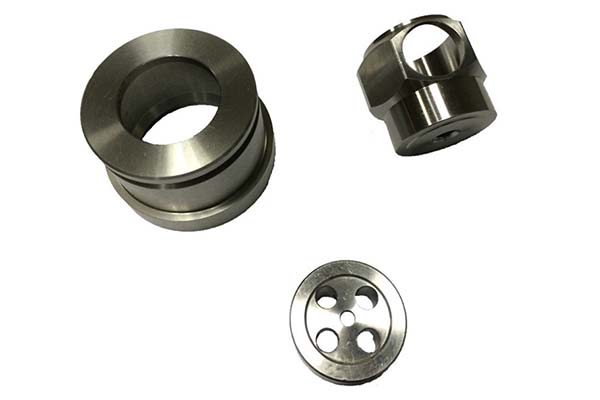
If you need to produce thousands of complex metal parts with tight tolerances, you have probably encountered high-pressure die casting (HPDC) . It is the process behind countless components you see every day—engine brackets, phone frames, LED heat sinks, zipper sliders. The reason is simple: HPDC balances precision, speed, and cost better than almost any other metal-forming method.
Key takeaways
- HPDC’s uniqueness comes from its “high-pressure, high-speed” filling mechanism. These traits define everything it can—and cannot—do.
- HPDC excels with non-ferrous alloys. Each has strengths for different applications.
- The bottom line: HPDC wins when you need high volume, complex geometry, and tight tolerances. Sand casting wins for low volume or huge parts.
- The part: Aluminum engine mounting bracket. Requirements: tensile strength ≥240 MPa, no porosity in mounting holes, 100,000 parts/year.
What Are the Core Characteristics of High-Pressure Die Casting?
HPDC’s uniqueness comes from its “high-pressure, high-speed” filling mechanism. These traits define everything it can—and cannot—do.
High-Pressure Injection
Typical pressure: 30–70 MPa. Peak can reach 100 MPa.
This immense force pushes molten metal into every tiny corner of the mold. Even features as thin as 0.5 mm fill completely. No gaps. No voids.
Real-world example: An aluminum automotive water pump housing must seal perfectly against coolant leaks. HPDC’s high pressure ensures the metal reaches every sealing surface, eliminating pathways for leakage.
High-Speed Filling
Filling speed: 0.5–120 m/s. Filling time: 0.01–0.2 seconds.
Metal moves faster than the eye can see. This speed prevents premature solidification—the metal fills the cavity while still fully liquid.
Real-world example: Zinc zipper sliders are produced at 10,000+ parts per hour. Each fills in milliseconds, solidifies instantly, and ejects ready for use. No other process comes close to this speed.
Precision Forming
Dimensional tolerance: IT8–IT10 (industry standard). Surface roughness: Ra 1.6–6.3 μm.
Parts come out of the mold ready to use. Secondary operations like grinding or polishing are reduced by 60%.
Real-world example: Magnesium laptop casings from HPDC meet assembly requirements as-cast. No straightening, no sanding, no extra steps. They go straight from the machine to the assembly line.
Which Materials Work Best in High-Pressure Die Casting?
HPDC excels with non-ferrous alloys. Each has strengths for different applications.
| Material | Key Properties | Typical Applications | Processing Notes |
|---|---|---|---|
| Aluminum alloys (Al-Si-Mg) | Lightweight (2.7 g/cm³); Strength 200–300 MPa; Good corrosion resistance | Auto engine brackets, wheel hubs, 5G device housings | Max temp 680°C—avoid overheating to prevent alloy segregation |
| Zinc alloys (Zn-Al-Cu) | Low melting point (380–420°C); Excellent castability; Great surface finish | Toy parts, hardware fittings, electronic shells | Fast water cooling improves hardness (HRC 8–12) |
| Magnesium alloys (Mg-Al-Zn) | Ultra-light (1.8 g/cm³); Highest strength-to-weight ratio | Aerospace brackets, laptop/tablet casings | Requires inert gas protection (SF₆) to prevent oxidation |
| Copper alloys (Cu-Zn-Si) | High thermal/electrical conductivity; Hardness HRC 15–20 | LED heat sinks, power supply components, electrical connectors | High melting point (900–1080°C) needs heat-resistant mold materials (H13 steel) |
Material Selection Tips
Choose aluminum for structural parts that need strength and corrosion resistance. Automotive and telecom applications are ideal.
Choose zinc for small, intricate parts where surface finish matters. Consumer goods and decorative hardware fit here.
Choose magnesium when weight is the priority. Aerospace and portable electronics benefit most.
Choose copper for thermal or electrical conductivity. Heat sinks and connectors are the sweet spot.
What Are the Pros and Cons of High-Pressure Die Casting?
Advantages: Why Choose HPDC?
High efficiency: Automated lines produce 500–10,000 parts per shift—3× faster than sand casting. For small parts like zipper sliders, rates exceed 10,000 per hour.
Low cost per part: Material utilization exceeds 95% (minimal waste). Reduced secondary processing cuts labor costs by 40%. At volumes above 50,000 parts, per-unit costs drop to pennies.
Stable quality: Dimensional consistency across batches is exceptional. Variation for small parts stays under ±0.05 mm. Every part matches the next.
Challenges: What Are the Limitations?
Surface defect risk: High-speed filling can trap air, creating porosity (tiny bubbles). Cold shuts (unfused metal layers) and oxidation inclusions also occur. These defects make most HPDC parts unsuitable for heat treatment—heating expands pores and causes cracking.
High mold costs: Complex molds run $50,000–500,000, with manufacturing cycles of 2–6 months. This makes HPDC uneconomical for small batches (under 10,000 parts).
Material limitations: Cannot process high-melting-point metals like steel or iron. Mold wear and energy costs become prohibitive.
How Do You Optimize High-Pressure Die Casting for Better Quality?
Mold Design Optimization
Add overflow grooves: Size them at 5–10% of part volume. They collect air and oxidation inclusions, reducing porosity by 70%.
Use variable-thickness gating: Thicker near the sprue, thinner near the part. This controls filling speed and avoids turbulence.
Example: An aluminum bracket with frequent porosity got overflow grooves at four locations. Scrap dropped from 15% to 3%.
Parameter Tuning
Adjust injection speed by wall thickness:
- Thick walls (>5 mm): 0.5–5 m/s (prevents shrinkage)
- Thin walls (<2 mm): 10–50 m/s (prevents incomplete filling)
Control mold temperature:
- Aluminum alloys: 150–250°C (prevents cold shuts)
- Zinc alloys: 100–180°C (reduces mold wear)
Post-Processing for Defect Repair
For small pores: Vacuum impregnation. Infiltrate with resin under 0.09 MPa vacuum. Seals leaks in pressure-bearing parts like hydraulic valve bodies.
For surface burrs: Robotic deburring. Accuracy ±0.1 mm, 2× faster than manual.
How Does HPDC Compare to Other Casting Processes?
| Factor | High-Pressure Die Casting | Low-Pressure Die Casting | Sand Casting |
|---|---|---|---|
| Cycle time | Seconds | Minutes | Hours |
| Surface finish | Ra 1.6–6.3 μm | Ra 6.3–12.5 μm | Ra 12.5–25 μm |
| Tolerance | IT8–IT10 | IT10–IT12 | IT12–IT15 |
| Material utilization | 95%+ | 85–90% | 50–70% |
| Mold cost | High ($50k–500k) | Medium ($20k–100k) | Low ($2k–20k) |
| Per-part cost at 100k units | Low ($0.50–2) | Medium ($2–5) | High ($5–15) |
| Best for | High volume, complex, precise | Medium volume, structural | Low volume, large, simple |
The bottom line: HPDC wins when you need high volume, complex geometry, and tight tolerances. Sand casting wins for low volume or huge parts. Low-pressure sits in the middle.
Real-World Case Study: Automotive Engine Bracket
The part: Aluminum engine mounting bracket. Requirements: tensile strength ≥240 MPa, no porosity in mounting holes, 100,000 parts/year.
The challenge: Initial HPDC trials had 12% scrap from porosity near holes.
The fixes:
- Added overflow grooves at hole locations (8% of part volume)
- Adjusted injection speed from 8 m/s to 4.5 m/s (reduced turbulence)
- Increased mold temperature from 180°C to 210°C (improved flow)
- Implemented X-ray sampling every 2 hours
The results:
- Scrap: 12% → 1.5%
- Cycle time unchanged (65 seconds)
- Tensile strength: 265 MPa (exceeds requirement)
- Annual savings: $180,000
How to write a spec that gets priced correctly
A drawing is a contract. If it leaves a number open, the shop fills that number in with its own default. The default is rarely the one you had in mind. Put these five lines on every RFQ and most of the back-and-forth disappears before it starts.
- 3D model with the parting line marked
- Alloy grade and the standard it meets
- Wall thickness and draft on every face
- Machining allowance on the faces that will be cut
- Pressure tightness or porosity class
The point is not paperwork. Each line removes a decision the shop would otherwise make for you. A complete RFQ comes back priced. An incomplete one comes back guessed.
What actually drives the price
Buyers usually push on material because it is the line they can see. In practice the material is rarely the biggest number on a quote. These five lines decide most of it:
- die steel and cavity count
- part weight and wall section
- draft and slide count
- porosity requirement
- machining allowance
Ask for the quote split by line. A supplier who cannot break it down is guessing, and you will pay for the guess. The line you can usually renegotiate is the tolerance band, not the raw material.
Problems you will meet, and the fix
Every process has a failure mode it prefers. The same four show up again and again on this kind of work, and none of them are mysteries once you know what to look for.
- Cold shuts where two flow fronts meet
- Porosity that shows up only after machining
- Soldering on a hot spot in the die
- Shrinkage voids in a heavy section
Catch the fault on the first part, not the hundredth. A first-article check costs an hour. A bad batch costs the whole order. Write the check into the purchase order so nobody has to remember it.
What to check on the first article
The first article is the cheapest inspection you will ever buy. Use it properly and the rest of the run becomes boring, which is exactly what you want.
- Every dimension on the drawing, with the measured value written beside it.
- The material certificate, matched to the heat or lot number on the parts.
- The finish against the sample you approved, under the same light.
- Fit against the mating part, assembled rather than measured.
- Packaging, because parts that arrive damaged were never in tolerance.
Check in this order: datums, then mating features, then cosmetic faces. If the datums are wrong, every number after them is noise. Keep the report on file. When a problem shows up in month six, that document is the only thing that tells you what changed.
How to compare two quotes fairly
Two numbers are not comparable unless the scope matches. Line them up before you decide, because a low number with three gaps is not a low number.
Same drawing, same material, same finish, same inspection. Anything else is a different job wearing the same part number. Then look at what each quote leaves out. Freight, packaging, certificates and tooling are the usual gaps.
Ask each supplier to state their assumptions in writing. The one who does is usually the one who has run the process before.
Scaling from one part to a batch
The first part teaches you the process. The hundredth teaches you the process cost.
Watch three things as volume grows: setup amortisation, tool wear, and how much hand work the finish still needs. If the unit price barely moves between ten and a hundred, the cost sits in material or in hand work, not in setup. Ask which, because only one of them is negotiable.
Lead time behaves the same way. A one-off is scheduled around other jobs. A repeat order is scheduled around your forecast. Give the shop a forecast and the lead time gets shorter, not longer.
How to read a supplier's quote
A quote is a short document with a long shadow. Four things in it decide whether the job runs smoothly, and only one of them is the price.
- The scope line. It should name the process, the material and the finish, not just the part.
- The tolerance basis. General tolerance or the drawing, and which standard it follows.
- The exclusions. Tooling, freight, certificates and inspection are the usual omissions.
- The validity date. Material prices move, and an open-ended quote is a promise nobody can keep.
Read the exclusions before you read the total. A quote that leaves out tooling is not cheaper. It is a quote for a different job.
What to send with the first order
The first order sets the pattern for every order after it. Send a complete package once and the shop files it, and the second order takes a fraction of the time.
- A STEP or native model plus a PDF drawing carrying the same revision letter.
- The material callout by standard number, not by trade name.
- The finish and the exact faces it applies to.
- Any test the part must pass: fit, seal, drop, salt spray, dielectric.
- A contact who can answer a question inside one working day.
Then write down what was agreed. An email that confirms the material, the finish and the date is worth more than a longer purchase order that leaves them open.
FAQ About High-Pressure Die Casting
Can HPDC parts be heat treated?
Generally, no. Internal porosity expands during heating, causing cracking or deformation. For parts requiring heat treatment, consider:
- Low-pressure die casting (less porosity)
- Special HPDC with vacuum assistance (porosity under 0.5%)
- Different alloys designed for heat treatment with strict process control
What is the minimum economical batch size for HPDC?
10,000–50,000 parts is the typical threshold. Below 10,000, mold costs dominate. For example, a $100,000 mold adds $10 per part at 10,000 units—often more than sand casting or machining. Above 50,000, per-part costs drop to $0.50–2, making HPDC the clear winner.
How do you inspect HPDC parts for internal defects?
Three main methods:
- X-ray inspection: Detects internal pores >0.1mm. Essential for safety parts like brake components.
- Hydrostatic testing: Applies 1.5× working pressure to check for leaks. Used for hydraulic and fluid-handling parts.
- Ultrasonic testing: Identifies near-surface defects (cold shuts, cracks) with ±0.02mm accuracy. Good for high-volume automated inspection.
Why do some HPDC parts have surface blisters?
Blisters occur when trapped gas expands—usually during post-processing heating (painting, welding) or if parts get too hot in service. Causes:
- Excessive injection speed (traps air)
- Poor venting (air can’t escape)
- Moisture in release agent (vaporizes during fill)
Solutions: Reduce speed, improve vents, dry release agent properly.
Can HPDC produce parts with undercuts or internal threads?
Yes—with movable cores. Cores slide into position before injection, then retract after solidification. This adds mold complexity and cost but enables features like threaded holes, snap-fit details, and internal cavities.
High-pressure die casting earns its place as a go-to process for precision metal parts through a unique combination of:
- Speed: Seconds per part, thousands per shift
- Precision: IT8–IT10 tolerances, Ra 1.6–6.3 μm surfaces
- Efficiency: 95%+ material utilization, minimal secondary work
- Versatility: Works with aluminum, zinc, magnesium, copper alloys
But it is not for every situation. The high mold costs require volume—typically over 10,000 parts—to make economic sense. The process cannot handle steel or iron. And internal porosity means heat treatment is rarely possible.
When the conditions are right, however, nothing beats HPDC. Automotive brackets, electronics housings, LED heat sinks, zipper sliders—these parts exist in the millions because HPDC makes them possible at costs other processes cannot touch.
The key is matching the process to your needs:
- High volume? HPDC wins.
- Complex geometry? HPDC handles it.
- Tight tolerances? HPDC delivers.
- Low volume or steel? Look elsewhere.
Get that match right, and HPDC will serve you well for millions of parts.
Our solution for Makes High-Pressure Die Casting
YiguProto runs die casting in house, from a single prototype to a production batch. We quote the process, the material and the finish as separate lines, so you can see where the money goes instead of arguing with one number.
Send a STEP file or a drawing and you get a DFM report in one to two business days. It flags the features that add cost and the features that will not hold tolerance on the process you picked.
Every order ships with an inspection report on the features you call out. If a part misses, we make it again. Ready to price a part? Start with a free quote and DFM review, or read more about our die casting. You can also talk to an engineer before you commit to a drawing.
FAQ about Makes High-Pressure Die Casting
Is there a minimum order quantity?
No hard minimum. One part is fine. What changes with volume is which costs dominate, so a single unit is priced mostly on setup and a thousand units are priced mostly on cycle time and material.
What is Makes High-Pressure Die Casting used for?
Makes High-Pressure Die Casting turns up wherever the part has to do a real job at a predictable cost: brackets, housings, fixtures, covers and the fittings that hold them together. The honest test is whether the properties match the load and the environment, not whether the material is fashionable.
How do I compare two quotes fairly?
Match the scope first: same drawing, same material, same finish, same inspection. Then read the exclusions. Freight, tooling and certificates are the usual gaps, and a low number with three gaps is not a low number.
What files do you need in order to quote?
A STEP file plus a PDF drawing that carries the same revision letter. The model carries the geometry and the drawing carries the intent. When the two disagree, the shop picks one, and it is never the one you meant.
How long does a first article take?
Usually a few business days once the drawing is frozen, and longer if tooling is involved. The date we give you is the date we confirm in writing, not the date we hope for.
What should I check before approving the parts?
Datums first, then the features that mate, then the cosmetic faces. Ask for a dimensional report, a material certificate and a finish sample. A part can be inside every tolerance and still not fit, so assemble one before you sign.
The short version
Makes High-Pressure Die Casting rewards the buyer who reads the data sheet and the drawing together. Pick the option for the property that matters, not for the price per kilo.
Tighten only what mates. Test a sample before the run. Then let the process do the rest.