
3D Printing
What Key Benefits Does Additive Manufacturing Bring to Your Business?
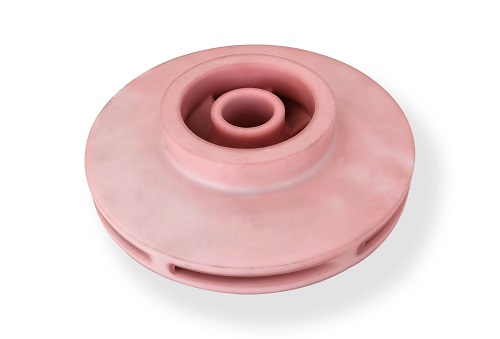
If you run a business—big or small—you’ve likely heard of additive manufacturing, or 3D printing as most people call it. But you might wonder if it’s just a trend or a real game-changer for your operations. This article breaks down the core benefits of additive manufacturing, using real examples, hard data, and practical insights you can use.
Key takeaways
- Additive manufacturing (AM) builds parts layer by layer from a digital design.
- Cost is top of mind for every business owner. AM saves money at every step of production—from prototyping to supply chains.
- In today’s fast business world, speed wins. AM cuts the time from design to physical part.
- Sustainability isn’t just a trend—it’s a business must. Customers and investors care about your environmental impact.
What Is Additive Manufacturing?
Additive manufacturing (AM) builds parts layer by layer from a digital design. It’s different from traditional methods like injection molding or machining. Those methods cut, shape, or mold materials—wasting extra material and limiting what you can make. AM only uses the material you need. This simple difference unlocks benefits that change how businesses design, produce, and deliver products. It’s not just for big tech firms; small shops, startups, and industries from medical to aerospace use it daily.
Does AM Offer Unmatched Design Freedom?
Can AM Make Complex Parts Easy?
One of AM’s biggest wins is its ability to turn tricky digital designs into real parts. Traditional methods struggle with complex shapes—like lattice structures, internal cavities, or organic curves. They need expensive molds or tools, which often make these designs too costly. AM eliminates that barrier. Engineers can focus on what works, not what’s easy to make.
Take GE Aviation, for example. They used AM to redesign a fuel nozzle for their LEAP engine. The old nozzle had 20 separate parts. The 3D-printed version is one piece with a complex internal lattice. This cut the part’s weight by 25% and boosted fuel efficiency by 15% (GE Aviation, 2024). Pilots and airlines save money on fuel, and GE sells more engines because of the upgrade.
In healthcare, Stryker uses 3D printing to make hip implants. These implants have porous surfaces that mimic natural bone. This helps the implant integrate better with the patient’s body. It cuts rejection risk and shortens recovery times by 30% (Stryker Annual Report, 2023). Patients get back to their lives faster, and hospitals reduce follow-up care costs.
Can AM Do Mass Customization?
Today’s customers want products made just for them. But traditional customization is expensive—it needs new tools or retooling, which costs thousands and takes weeks. AM makes customization cheap and easy, even for large production runs. You just adjust the digital design, and the printer does the rest.
Adidas’s Futurecraft 4D shoes are a great example. Customers scan their feet with an app. Adidas then 3D-prints a midsole that fits their foot perfectly. This level of customization is impossible with injection molding. Yet Adidas makes these shoes at scale—over 1 million pairs in 2024 (Adidas Sustainability Report, 2024). Customers love the fit, and Adidas stands out in a crowded shoe market.
Small businesses benefit too. A local jewelry maker near me uses AM to print custom rings. Before, they spent hours carving molds for each design. Now, they can print 10 custom rings in a day—no molds needed. Their sales are up 40% because they offer unique pieces at affordable prices.
Does AM Cut Costs for Your Business?
Cost is top of mind for every business owner. AM saves money at every step of production—from prototyping to supply chains. The Wohlers Report (2024) says AM can lower total manufacturing costs by 20-50% for most applications. Let’s break down where those savings come from.
No Tooling Costs—Really?
Traditional manufacturing needs expensive tools, molds, and dies. Even for small runs, these can cost tens of thousands of dollars. AM eliminates this upfront cost. That’s a game-changer for low-volume production, prototypes, or custom parts.
Take SME Manufacturing, a small automotive parts supplier. They needed 50 custom brackets for a prototype vehicle. With injection molding, the mold alone cost $20,000—making each bracket $400. With AM, there’s no mold cost. Each bracket cost just $50. They saved $17,500 on that one project (case study: SME Manufacturing, 2023). For small businesses, that savings can mean the difference between profit and loss.
Even large companies save big. Boeing used to spend $100,000 on molds for some small aerospace parts. Now they use AM for those parts. They cut tooling costs by 70% annually (Boeing Sustainability Report, 2024).
Does AM Reduce Material Waste?
Traditional subtractive methods (like machining) cut material from a solid block. For complex parts, this wastes 70-90% of the material. AM only uses what it needs—cutting waste to as little as 5% (ASTM International, 2023). For expensive materials, this savings is huge.
Boeing uses AM to make titanium brackets for its 787 Dreamliner. Titanium is costly—over $30 per pound. With traditional machining, each bracket wasted 80% of the titanium. AM cuts that waste to 10%. This saves Boeing over $3 million a year on titanium costs (Boeing Sustainability Report, 2024).
Even for cheap materials, less waste means lower disposal costs. A local plastic parts maker I work with switched to AM. They used to throw away 500 pounds of plastic scrap each month. Now they throw away just 50 pounds. Their disposal costs dropped by $800 a month—over $9,000 a year.
Can AM Lower Inventory Costs?
AM lets you print parts on demand. You don’t need to store hundreds of parts in a warehouse. This frees up capital and cuts storage costs. It also eliminates delays when parts break or are needed fast.
The U.S. Navy uses 3D printers on its ships. They print replacement parts—like valves or brackets—when they need them. Before, they stored hundreds of parts on each ship. Now, they carry a digital library of designs. This cut their inventory costs by 40% (U.S. Navy Logistics Report, 2023). It also avoids costly delays at sea—no more waiting weeks for parts to arrive.
For global businesses, on-demand printing cuts shipping costs too. A tech company I know used to ship parts from China to the U.S.—taking 4 weeks and costing $2,000 per shipment. Now they print parts in their U.S. office. Shipping costs are gone, and lead times are down to 2 days.
Does AM Speed Up Time-to-Market?
In today’s fast business world, speed wins. AM cuts the time from design to physical part. This helps you launch products faster, respond to customers quicker, and stay ahead of competitors.
Rapid Prototyping—Days or Weeks?
Prototyping is key to product development. Traditional prototyping takes weeks—waiting for molds or tooling. AM lets you print a prototype in 24-48 hours. This lets you test more ideas and iterate faster.
TechStart Innovations, a consumer electronics company, was developing a new smartphone case. They needed to test 5 designs. With injection molding, each prototype took 2-3 weeks. That would have taken 10-15 weeks total. With AM, they printed all 5 prototypes in 3 days. They cut the prototyping phase to less than a week (case study: TechStart Innovations, 2024). They launched their case 3 months earlier than planned and captured more market share.
Startups benefit most here. A startup I advised used AM to prototype their new kitchen gadget. They tested 12 designs in a month—something that would have taken 6 months with traditional methods. They found the perfect design fast and raised $500,000 in funding because they had a working prototype.
Shorter Lead Times for End Parts?
AM is fast even for end-part production. Traditional methods need weeks of setup before you can make parts. AM starts production as soon as the digital design is ready.
A medical device company needed 100 custom surgical tools. With traditional machining, they waited 4 weeks for tooling setup. With AM, they made all 100 tools in 5 days (Medical Device Innovation Report, 2023). Hospitals got the tools faster, and the company saved $10,000 in setup costs.
During the COVID-19 pandemic, AM was a lifesaver. Hospitals needed face shields and ventilator parts fast. 3D printers made these parts in days—when traditional factories took weeks (World Health Organization, 2022). This showed how AM can help businesses respond to emergencies and crises.
Does AM Boost Sustainability?
Sustainability isn’t just a trend—it’s a business must. Customers and investors care about your environmental impact. AM helps you cut your carbon footprint in three key ways: less waste, lower energy use, and localized production.
Less Waste, Fewer Landfills?
As we said earlier, AM produces far less waste than traditional methods. A furniture manufacturer used AM to make chair frames. With traditional cutting, they wasted 70% of the wood. With AM, waste is just 5%. Over a year, that saved 65 tons of wood from landfills (Furniture Industry Sustainability Report, 2024).
Many AM materials are biodegradable too. PLA, a plant-based plastic, is commonly used in 3D printing. It breaks down in landfills in 6 months—unlike traditional plastics that take hundreds of years. A local toy maker switched to PLA for their 3D-printed toys. Their customers love that the toys are eco-friendly, and their sales are up 25%.
Lower Energy Use?
AM uses less energy than traditional manufacturing—especially for small to medium runs. A UC Berkeley study found AM uses 40-60% less energy than injection molding for plastic parts (UC Berkeley, 2023). This is because AM only heats and uses the material it needs.
A toy manufacturer switched from injection molding to AM for small runs. Their energy use dropped by 50%. That cut their monthly utility bills by $2,000 (Toy Industry Association, 2024). Over a year, that’s $24,000 in savings—money they put back into their business.
Local Production Cuts Emissions?
AM lets you print parts locally. You don’t need to ship parts from overseas factories. This cuts transportation emissions drastically. A clothing brand used AM to make buttons and zippers in their U.S. stores. Before, they shipped these parts from Asia—generating 10,000 pounds of CO2 per shipment. Now, local printing cut their transportation emissions by 80% (Fashion Sustainability Index, 2023).
Local production also makes your supply chain more resilient. When shipping delays hit (like during the 2023 port strikes), businesses with AM could still make parts. A small auto repair shop near me uses AM to print replacement parts. During the strikes, they didn’t have to wait for parts—they printed them. Their revenue stayed steady while other shops lost money.
Does AM Improve Part Quality?
AM doesn’t just make parts faster and cheaper—it makes them better. You can control the layer-by-layer process to create parts with unique properties. This boosts performance, durability, and reliability.
Tailored Material Properties?
With AM, you can adjust a part’s material properties to meet your needs. In aerospace, engineers print parts with varying densities. Critical areas (like engine parts) are strong, while less critical areas are lightweight. Airbus used this to make a bracket for its A350 aircraft. The bracket is 30% lighter than the traditional version but just as strong. This improved the plane’s fuel efficiency by 5% (Airbus Technology Report, 2024).
In construction, 3D-printed concrete parts have internal channels. These channels improve insulation, cutting a building’s energy use by 20% (Construction Innovation Journal, 2023). A home builder used these parts to make eco-friendly homes. The homes sold 20% faster because of their lower energy bills.
Fewer Parts, Less Failure?
Traditional manufacturing often needs to assemble parts from multiple components. This increases failure risk—loose connections or wear and tear. AM makes parts as a single piece, eliminating assembly.
A robotics company used to assemble robot arms from 12 parts. The 3D-printed version is one piece. This cut mechanical failure risk by 40% and saved $15,000 a year in maintenance costs (Robotics Industry Review, 2024). Their customers are happier because the robots break down less often.
Another example: a bike manufacturer used AM to make a single-piece frame. Before, the frame had 5 parts held together by bolts. The 3D-printed frame is stronger and lighter. It also lasts 30% longer than the traditional frame. Bike shops report fewer returns and more repeat customers.
Additive manufacturing offers game-changing benefits for businesses of all sizes. It gives you unmatched design freedom to make complex, custom parts. It cuts costs by eliminating tooling, reducing waste, and lowering inventory. It speeds up time-to-market, helping you launch products faster and respond to customers. It boosts sustainability, which is key for today’s consumers and investors. And it improves part quality, making your products more durable and reliable.
The examples and data in this article show that AM isn’t just a trend. It’s a practical tool that solves real business problems. Whether you’re a small startup or a large corporation, AM can help you save money, innovate faster, and stand out from competitors. The key is to start small—test with prototypes or low-volume parts—and scale up as you see results. With AM, the possibilities for your business are endless.
How to write a spec that gets priced correctly
A drawing is a contract. If it leaves a number open, the shop fills that number in with its own default. The default is rarely the one you had in mind. Put these five lines on every RFQ and most of the back-and-forth disappears before it starts.
- File format and units, with the model exported in millimetres
- Process and material grade, not a trade name
- Critical features and the tolerance each one needs
- Surface finish and the faces it applies to
- Quantity for the pilot build and for the year
The point is not paperwork. Each line removes a decision the shop would otherwise make for you. A complete RFQ comes back priced. An incomplete one comes back guessed.
FAQ About AM Benefits
Is AM only good for small businesses? No—AM benefits all sizes. Large firms like GE and Boeing use it to cut costs and improve parts. Small businesses use it for custom production and rapid prototyping. A local bakery even uses AM to make custom cake toppers!
What materials can AM use? AM works with plastics (PLA, ABS), metals (titanium, aluminum), ceramics, and biodegradable materials. Most industries find the available materials cover their needs. Medical-grade plastics for implants and titanium for aerospace are common.
Are AM parts as strong as traditional parts? Yes—often stronger. 3D-printed titanium parts have a tensile strength of 900 MPa, vs. 860 MPa for traditional titanium (ASTM, 2024). Plastic parts can be reinforced with carbon fiber for extra strength.
How much does it cost to start with AM? Entry-level plastic printers cost $200-$500. Industrial metal printers cost $10,000-$500,000. Most small businesses recoup their investment in 6-12 months (Wohlers Report, 2024). Training is quick—most people learn basic AM in a few days.
Can AM help with sustainability in high-waste industries? Yes. Construction uses 3D-printed concrete that cuts waste by 50% (Construction Sustainability Report, 2024). Some companies use recycled materials in AM mixes, further reducing waste.
Our solution for Key Benefits
YiguProto runs 3D printing in house, from a single prototype to a production batch. We quote the process, the material and the finish as separate lines, so you can see where the money goes instead of arguing with one number.
Send a STEP file or a drawing and you get a DFM report in one to two business days. It flags the features that add cost and the features that will not hold tolerance on the process you picked.
Every order ships with an inspection report on the features you call out. If a part misses, we make it again. Ready to price a part? Start with a free quote and DFM review, or read more about our 3D printing. You can also talk to an engineer before you commit to a drawing.
FAQ about Key Benefits
What files do you need in order to quote?
A STEP file plus a PDF drawing that carries the same revision letter. The model carries the geometry and the drawing carries the intent. When the two disagree, the shop picks one, and it is never the one you meant.
Can Key Benefits be made in small quantities?
Yes, and small quantities are where a good supplier earns the next order. Setup dominates the price at low volume, so the cheapest route is usually the one with the fewest operations, not the cheapest material.
What is Key Benefits used for?
Key Benefits turns up wherever the part has to do a real job at a predictable cost: brackets, housings, fixtures, covers and the fittings that hold them together. The honest test is whether the properties match the load and the environment, not whether the material is fashionable.
What is the lead time for Key Benefits?
Expect 2 to 5 business days for a first batch. Tooling, material stock and the finishing queue all move that number, so we confirm the date in writing before the run starts rather than after.
What material should I specify?
Specify by standard, not by trade name. A trade name can change under you between two orders; a standard number cannot. Then add the one property that actually decides the part, whether that is strength, heat resistance or chemical exposure.
How do I compare two quotes fairly?
Match the scope first: same drawing, same material, same finish, same inspection. Then read the exclusions. Freight, tooling and certificates are the usual gaps, and a low number with three gaps is not a low number.
The short version
Key Benefits rewards the buyer who reads the data sheet and the drawing together. Pick the option for the property that matters, not for the price per kilo.
Tighten only what mates. Test a sample before the run. Then let the process do the rest.