
Die Casting
What Makes Stainless Steel Die Casting a Top Choice for High-Demand Parts?
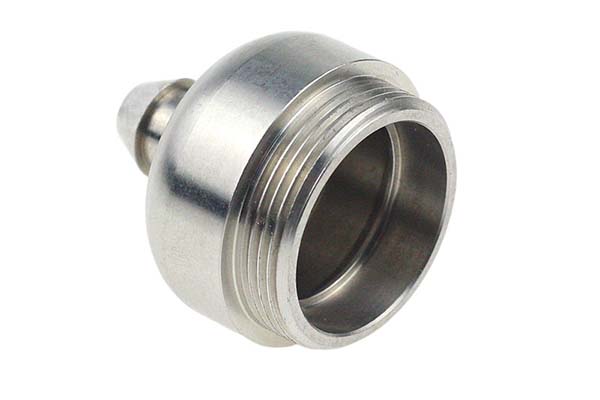
When you need parts that must withstand harsh environments, resist corrosion, and maintain precision under stress, stainless steel die casting is often the answer. From automotive exhaust components that face road salt and vibration to surgical instruments that require biocompatibility and exact dimensions, this process delivers.
Key takeaways
- Stainless steel die casting is a high-pressure metal-forming process that injects molten stainless steel into precision molds to create complex, high-performance parts.
- Compared to other methods, stainless steel die casting wins on precision, efficiency, and cost at volume.
- Stainless steel die casting is the top choice for high-demand parts because it delivers:
What Is Stainless Steel Die Casting?
Stainless steel die casting is a high-pressure metal-forming process that injects molten stainless steel into precision molds to create complex, high-performance parts.
How It Works
- Stainless steel (grades like 304, 316, 316L) is melted at 1,400–1,550°C in a ceramic-lined furnace to prevent contamination.
- The molten metal is injected into a precision steel mold at 50–150 MPa pressure and 0.5–5 m/s speed.
- The metal cools and solidifies rapidly—10–60 seconds depending on part thickness—under sustained pressure.
- The part is ejected and undergoes post-treatment (grinding, polishing, surface finishing).
- Quality inspection verifies dimensions, internal soundness, and mechanical properties.
The Core Principle: High-Pressure Filling
Unlike gravity casting, where metal flows slowly and can trap air, high-pressure injection:
- Eliminates gaps and porosity: Internal porosity under 2% (vs. 5–10% in sand casting)
- Achieves tight tolerances: ±0.1 mm for small parts, ±0.2 mm for larger components
- Produces smooth surfaces: Ra 1.6–6.3 μm as-cast, reducing post-machining
What Is the Step-by-Step Workflow?
| Stage | Key Actions | Critical Requirements |
|---|---|---|
| 1. Mold design & manufacturing | Design molds considering stainless steel shrinkage (1.5–2.5%). Manufacture from H13 tool steel. Integrate cooling channels. | Mold tolerance ±0.05 mm; cavity surface finish Ra <0.8 μm |
| 2. Material selection & pretreatment | Choose grade based on application (304, 316, 316L). Cut ingots, clean to remove oil/rust. | Material purity ≥99.5%; grade matches mechanical needs |
| 3. Melting & pouring | Heat in ceramic-lined furnace to 1,400–1,550°C. Monitor temperature strictly. Degas with argon. | Temperature control ±20°C; degassing reduces porosity |
| 4. Injection & forming | Inject at 50–150 MPa, 1–3 m/s. Apply holding pressure (30–80 MPa) during solidification. | Pressure stable; speed matched to part complexity |
| 5. Cooling & demolding | Use cooling channels (water/oil). Apply release agent. Open mold, eject part, trim sprues. | Cooling time matched to thickness (e.g., 15s for 5mm, 45s for 15mm); ejection force uniform |
| 6. Post-treatment & inspection | Grind, polish, deburr. Apply surface treatment (electroplating, passivation). Inspect dimensions (CMM), internal defects (X-ray), mechanical properties. | Plating thickness ≥10 μm; reject parts with deviation >±0.15 mm or internal cracks |
What Are the Key Advantages of Stainless Steel Die Casting?
Compared to other methods, stainless steel die casting wins on precision, efficiency, and cost at volume.
| Advantage | Stainless Steel Die Casting | Sand Casting | CNC Machining |
|---|---|---|---|
| Precision | ±0.1 mm tolerances; Ra 1.6–6.3 μm surface | ±0.5–1 mm; Ra 12.5–25 μm | ±0.01 mm possible, but slow |
| Efficiency | 30–60 parts/hour for small components | 5–10 parts/hour | 1–2 parts/hour for complex parts |
| Cost-effectiveness | Low per-unit cost at high volume (10,000+ parts); minimal post-machining | Low mold cost but high material waste (20–30%) | High material waste (50–70%); expensive for large runs |
| Material benefits | Leverages stainless steel’s corrosion resistance and strength; dense structure | Porous structure reduces corrosion resistance | Maintains properties but wastes material |
Real Cost Comparison: 10,000 Automotive Brackets
- Stainless steel die casting: $2.50 per part → $25,000 total. Minimal post-processing.
- Sand casting: $3.00 per part + $0.50 grinding → $35,000 total.
- CNC machining: $8.00 per part → $80,000 total (60% material waste).
Die casting saves $10,000–55,000 at 10,000 units.
Which Stainless Steel Grade Should You Choose?
| Grade | Key Properties | Ideal Applications |
|---|---|---|
| 304 | Good corrosion resistance (water, mild chemicals); tensile strength 515 MPa; cost-effective | Automotive trim, architectural railings, kitchen sink components |
| 316 | Excellent corrosion resistance (saltwater, acids); tensile strength 550 MPa; stable to 800°C | Marine hardware, surgical instruments, chemical processing equipment |
| 316L | Low carbon (<0.03% vs. 0.08% in 316); superior weldability; avoids carbide precipitation | Medical implants (orthopedic screws), food processing equipment |
| 430 | Magnetic; good formability; lower corrosion resistance than 304 | Decorative hardware, household appliance parts (oven doors) |
Selection Guide
Choose 304 for general corrosion resistance and cost savings. Most architectural and automotive trim uses 304.
Choose 316 for harsh environments—marine, chemical, or any salt exposure. Medical devices also use 316 for its biocompatibility.
Choose 316L when welding is required or for implantable medical devices. The low carbon content prevents corrosion at weld joints.
Choose 430 for decorative indoor parts where magnetism matters and corrosion risk is low.
Where Is Stainless Steel Die Casting Used?
Automotive Industry
Parts: Engine brackets, chassis components, exhaust flanges, sensor housings.
Why: Stainless steel resists vibration fatigue and road salt corrosion. A 316 die-cast exhaust flange lasts 5–7 years vs. 2–3 years for mild steel.
Example: An automotive supplier switched from welded mild steel to die-cast 316 for exhaust flanges. Part life tripled. Weight dropped 15%. Production time fell from 15 minutes to 90 seconds.
Medical Devices
Parts: Surgical forceps, scissors handles, dental abutments, diagnostic equipment housings.
Why: 316L offers biocompatibility (no toxic reactions) and can be sterilized repeatedly. Die casting delivers the precision required for instruments that must fit and function exactly.
Example: A surgical instrument manufacturer uses die-cast 316L for forceps handles. Dimensional consistency ensures every instrument meets specifications. Surface finish (Ra 1.6 μm) requires minimal polishing before use.
Architectural and Construction
Parts: Door handles, window frames, railings, curtain wall brackets.
Why: Stainless steel resists weather—rain, UV, temperature extremes. Die casting produces complex shapes (curved railings, decorative details) that are difficult to fabricate.
Example: A high-rise building specified die-cast 316 railing brackets. The parts withstand coastal salt spray, match the architect’s design exactly, and install faster than welded fabrications.
Electronics and Electrical
Parts: Heat sinks for power electronics, industrial controller housings, connector shells.
Why: Stainless steel provides thermal conductivity (15–20 W/(m·K)) and electromagnetic shielding. Die casting’s efficiency meets high-volume production needs.
Example: A power supply manufacturer uses die-cast 304 heat sinks. The as-cast surface (Ra 3.2 μm) dissipates heat effectively without additional finishing. Production: 50,000 units/month.
What Challenges Occur and How Do You Solve Them?
High Mold Wear
Cause: Stainless steel’s high melting point (1,400°C+) degrades mold surfaces.
Solution:
- Use H13 tool steel molds with TiAlN coatings—increases mold life 30–50%
- Control mold temperature at 200–250°C to reduce thermal shock
Result: Mold life extended from 50,000 to 75,000+ cycles.
Porosity in Parts
Cause: Trapped gas forms holes during solidification.
Solution:
- Degas molten metal with argon before injection
- Increase holding pressure to 80–100 MPa during solidification to compress gas bubbles
Result: Porosity drops from 3–5% to under 1%.
Difficult Demolding
Cause: Stainless steel adheres to mold surfaces at high temperature and pressure.
Solution:
- Apply high-temperature release agent (boron nitride-based)
- Design molds with 3–5° draft angle to ease ejection
Result: Sticking eliminated. Cycle times reduced 10%.
How to write a spec that gets priced correctly
A drawing is a contract. If it leaves a number open, the shop fills that number in with its own default. The default is rarely the one you had in mind. Put these five lines on every RFQ and most of the back-and-forth disappears before it starts.
- 3D model with the parting line marked
- Alloy grade and the standard it meets
- Wall thickness and draft on every face
- Machining allowance on the faces that will be cut
- Pressure tightness or porosity class
The point is not paperwork. Each line removes a decision the shop would otherwise make for you. A complete RFQ comes back priced. An incomplete one comes back guessed.
What actually drives the price
Buyers usually push on material because it is the line they can see. In practice the material is rarely the biggest number on a quote. These five lines decide most of it:
- die steel and cavity count
- part weight and wall section
- draft and slide count
- porosity requirement
- machining allowance
Ask for the quote split by line. A supplier who cannot break it down is guessing, and you will pay for the guess. The line you can usually renegotiate is the tolerance band, not the raw material.
Problems you will meet, and the fix
Every process has a failure mode it prefers. The same four show up again and again on this kind of work, and none of them are mysteries once you know what to look for.
- Cold shuts where two flow fronts meet
- Porosity that shows up only after machining
- Soldering on a hot spot in the die
- Shrinkage voids in a heavy section
Catch the fault on the first part, not the hundredth. A first-article check costs an hour. A bad batch costs the whole order. Write the check into the purchase order so nobody has to remember it.
What to check on the first article
The first article is the cheapest inspection you will ever buy. Use it properly and the rest of the run becomes boring, which is exactly what you want.
- Every dimension on the drawing, with the measured value written beside it.
- The material certificate, matched to the heat or lot number on the parts.
- The finish against the sample you approved, under the same light.
- Fit against the mating part, assembled rather than measured.
- Packaging, because parts that arrive damaged were never in tolerance.
Check in this order: datums, then mating features, then cosmetic faces. If the datums are wrong, every number after them is noise. Keep the report on file. When a problem shows up in month six, that document is the only thing that tells you what changed.
How to compare two quotes fairly
Two numbers are not comparable unless the scope matches. Line them up before you decide, because a low number with three gaps is not a low number.
Same drawing, same material, same finish, same inspection. Anything else is a different job wearing the same part number. Then look at what each quote leaves out. Freight, packaging, certificates and tooling are the usual gaps.
Ask each supplier to state their assumptions in writing. The one who does is usually the one who has run the process before.
Scaling from one part to a batch
The first part teaches you the process. The hundredth teaches you the process cost.
Watch three things as volume grows: setup amortisation, tool wear, and how much hand work the finish still needs. If the unit price barely moves between ten and a hundred, the cost sits in material or in hand work, not in setup. Ask which, because only one of them is negotiable.
Lead time behaves the same way. A one-off is scheduled around other jobs. A repeat order is scheduled around your forecast. Give the shop a forecast and the lead time gets shorter, not longer.
How to read a supplier's quote
A quote is a short document with a long shadow. Four things in it decide whether the job runs smoothly, and only one of them is the price.
- The scope line. It should name the process, the material and the finish, not just the part.
- The tolerance basis. General tolerance or the drawing, and which standard it follows.
- The exclusions. Tooling, freight, certificates and inspection are the usual omissions.
- The validity date. Material prices move, and an open-ended quote is a promise nobody can keep.
Read the exclusions before you read the total. A quote that leaves out tooling is not cheaper. It is a quote for a different job.
What to send with the first order
The first order sets the pattern for every order after it. Send a complete package once and the shop files it, and the second order takes a fraction of the time.
- A STEP or native model plus a PDF drawing carrying the same revision letter.
- The material callout by standard number, not by trade name.
- The finish and the exact faces it applies to.
- Any test the part must pass: fit, seal, drop, salt spray, dielectric.
- A contact who can answer a question inside one working day.
Then write down what was agreed. An email that confirms the material, the finish and the date is worth more than a longer purchase order that leaves them open.
FAQ About Stainless Steel Die Casting
Can stainless steel die casting produce thin-walled parts?
Yes—walls as thin as 1.5 mm are achievable (vs. 3 mm minimum for sand casting). The keys are high injection pressure (100–120 MPa) and fast cooling via mold channels to prevent premature freezing.
How long do molds last for stainless steel?
H13 tool steel molds last 50,000–100,000 cycles for 304/316 stainless steel. With TiAlN coatings, life extends to 120,000–150,000 cycles. Regular cleaning and re-coating every 20,000 cycles maximizes lifespan.
Is stainless steel die casting economical for low volumes?
No—it is rarely cost-effective for batches under 1,000 parts. Mold costs ($50,000–200,000) make per-unit prices prohibitive. For low volumes, consider CNC machining (simple parts) or investment casting (complex shapes). Stainless steel die casting shines at 10,000+ parts, where mold costs are spread across high volume.
What surface finish can I expect as-cast?
Ra 1.6–6.3 μm is standard. For comparison:
- Ra 1.6 μm = fine matte, suitable for medical instruments
- Ra 3.2 μm = typical as-cast for most applications
- Ra 6.3 μm = acceptable for hidden surfaces
If you need smoother, specify grinding, polishing, or electropolishing (can achieve Ra <0.4 μm).
Can die-cast stainless steel be welded?
Yes, especially 316L with its low carbon content. The dense structure of die-cast parts (porosity under 2%) welds reliably without the cracking issues seen in porous castings. Follow standard stainless steel welding procedures with appropriate filler metal.
Stainless steel die casting is the top choice for high-demand parts because it delivers:
- Material excellence: Corrosion resistance, strength, durability of stainless steel
- Process precision: ±0.1 mm tolerances, Ra 1.6–6.3 μm surfaces
- Production efficiency: 30–60 parts per hour, minimal post-processing
- Cost effectiveness: At volume (10,000+ parts), per-unit costs beat sand casting and machining
From automotive exhausts lasting 5–7 years to surgical instruments with exact dimensions, the applications prove the value. 304 for general use, 316 for harsh environments, 316L for medical and welding applications—the right grade matched to the right process delivers parts that perform.
Yes, challenges exist: mold wear, porosity, demolding difficulty. But proven solutions—coated molds, argon degassing, proper draft angles—address them effectively.
For demanding applications where failure is not an option, stainless steel die casting is not just a choice. It is the solution.
Our solution for Makes Stainless Steel Die Casting
YiguProto runs die casting in house, from a single prototype to a production batch. We quote the process, the material and the finish as separate lines, so you can see where the money goes instead of arguing with one number.
Send a STEP file or a drawing and you get a DFM report in one to two business days. It flags the features that add cost and the features that will not hold tolerance on the process you picked.
Every order ships with an inspection report on the features you call out. If a part misses, we make it again. Ready to price a part? Start with a free quote and DFM review, or read more about our die casting. You can also talk to an engineer before you commit to a drawing.
FAQ about Makes Stainless Steel Die Casting
How much does Makes Stainless Steel Die Casting cost?
Price comes from five lines: material, machine or tool time, setup, finishing and inspection. The material itself is usually the smallest of them. Send a drawing and we will split the quote so you can see which line is doing the damage.
What is Makes Stainless Steel Die Casting used for?
Makes Stainless Steel Die Casting turns up wherever the part has to do a real job at a predictable cost: brackets, housings, fixtures, covers and the fittings that hold them together. The honest test is whether the properties match the load and the environment, not whether the material is fashionable.
What tolerance can you hold on Makes Stainless Steel Die Casting?
The working default is ±0.1 mm on cast features, ±0.05 mm after machining. Tighter than that the process changes and so does the price, because every step tighter adds inspection time. Call out only the faces that mate with something else and leave the rest on the general tolerance.
Can Makes Stainless Steel Die Casting be made in small quantities?
Yes, and small quantities are where a good supplier earns the next order. Setup dominates the price at low volume, so the cheapest route is usually the one with the fewest operations, not the cheapest material.
What happens if a part is out of specification?
We measure it against the same drawing you approved and, if it misses, we make it again. What matters is that the report exists, because a disagreement without data is just an opinion.
How do I compare two quotes fairly?
Match the scope first: same drawing, same material, same finish, same inspection. Then read the exclusions. Freight, tooling and certificates are the usual gaps, and a low number with three gaps is not a low number.
The short version
Makes Stainless Steel Die Casting rewards the buyer who reads the data sheet and the drawing together. Pick the option for the property that matters, not for the price per kilo.
Tighten only what mates. Test a sample before the run. Then let the process do the rest.