
Rapid Prototyping
What Determines the Price of Prototypes and How to Estimate It?
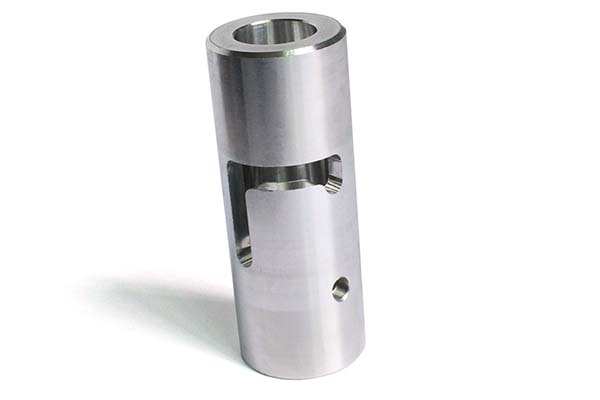
If you’ve ever requested quotes for prototypes, you’ve probably experienced the confusion. One supplier quotes 200 yuan. Another quotes 2,000 yuan for what seems like the same part. Why the huge difference? And how do you know if you’re paying too much? Prototype pricing isn’t random, but it can seem that way without understanding what drives costs.
How Much Do Different Prototypes Cost?
Price Ranges by Technology and Material
Before diving into cost factors, here’s what you can expect to pay for common prototype types:
| Prototype Type | Material/Process | Unit Price (CNY) | Typical Size/Weight | Best Applications |
|---|---|---|---|---|
| 3D Printing | PLA/ABS Plastic | 50 – 200 | 100-500g, small parts | Visual models, form testing |
| 3D Printing | Resin (SLA) | 200 – 800 | 50-300g, detailed | High-detail appearance prototypes |
| CNC Machining | Aluminum 6061 | 300 – 800 | Simple, 15cm cube | Functional parts, brackets |
| CNC Machining | Stainless Steel 304 | 800 – 2,000 | Complex, curved | Corrosion-resistant components |
| CNC Machining | Copper/Brass | 1,000 – 3,000 | Medium size | Electrical, decorative |
| Metal 3D Printing | Stainless Steel | 800 – 3,000 | 50-200g, complex | Intricate geometries |
| Metal 3D Printing | Titanium | 3,000 – 5,000+ | 30-150g | Medical, aerospace |
| Silicone Molding | Silicone + Resin | 100 – 500 | Same as master | 5-50 copies, no mold |
| Sheet Metal | Steel/Aluminum | 500 – 3,000 | Large, up to 50cm | Enclosures, chassis |
Real Case: A startup needed a prototype enclosure for a new sensor. They got quotes ranging from 600 to 2,800 yuan. The 600 yuan quote was for basic 3D printing—fine for visual approval but not strong enough for field testing. The 2,800 yuan quote included CNC aluminum with proper wall thickness. They chose the middle option: 1,200 yuan for CNC plastic, which gave them strength for testing without the metal cost.
Prototyping vs. Mass Production
When does it make sense to move from prototyping to production?
| Production Stage | Technology | Unit Price (CNY) | Minimum Order | Best For |
|---|---|---|---|---|
| Prototyping | CNC Machining | 300 – 2,000 | 1-10 pieces | Design iterations, testing |
| Prototyping | 3D Printing | 50 – 800 | 1-20 pieces | Quick validation |
| Mass Production | Injection Molding | 100 – 300 | 500+ pieces | High-volume plastic |
| Mass Production | Die Casting | 200 – 500 | 1,000+ pieces | High-volume metal |
The break-even point typically comes around 500-1,000 parts. Below that, prototyping methods are cheaper. Above that, production tooling pays off.
What Five Factors Drive Prototype Costs?
Factor 1: Material Cost
Raw material prices vary enormously, and this directly affects your prototype pricing.
| Material | Relative Cost | Typical Use |
|---|---|---|
| PLA/ABS Plastic | Low | Visual prototypes |
| Engineering Plastic (PC, Nylon) | Medium | Functional plastic parts |
| Aluminum 6061 | Low-Medium | General metal parts |
| Stainless Steel 304 | Medium | Corrosion-resistant parts |
| Brass/Copper | Medium-High | Electrical, decorative |
| Titanium | Very High | Medical, aerospace |
| Inconel | Extremely High | High-temperature applications |
Cost Impact Example:
- A 100g aluminum CNC part: 300-500 yuan
- Same part in stainless steel: 800-1,200 yuan
- Same part in titanium: 2,500-4,000 yuan
Saving Tip: Use aluminum instead of stainless for prototypes where corrosion resistance isn’t critical. Use plastic instead of metal for visual checks.
Factor 2: Process Complexity
How complicated your part is to make drives machining time—and time is money.
Complexity Levels:
| Complexity | Features | Relative Cost | Example |
|---|---|---|---|
| Simple | Basic shape, flat surfaces, standard holes | 1x | Bracket with drilled holes |
| Moderate | Pockets, ribs, curved surfaces | 2-3x | Housing with internal features |
| Complex | Thin walls, deep cavities, tight corners | 4-5x | Complex enclosure with snap-fits |
| Very Complex | 5-axis required, undercuts, internal channels | 8-10x | Aerospace bracket with organic shapes |
Real Case: Two parts of similar size: a simple cube with holes cost 300 yuan. A curved ergonomic handle with thin walls cost 1,500 yuan—5x more for the same material and quantity.
Saving Tip: Every unnecessary feature adds cost. Ask yourself: “Does this curve need to be curved? Does this pocket need to be this deep?”
Factor 3: Size and Precision
Larger parts use more material and take longer to machine. Tighter tolerances require more careful work.
Size Impact:
- Small (fits in palm): 300-800 yuan
- Medium (like a laptop): 800-2,000 yuan
- Large (like a shoebox): 2,000-5,000+ yuan
Precision Impact:
| Tolerance | Relative Cost | Best For |
|---|---|---|
| ±0.1mm (standard) | 1x | Most non-critical features |
| ±0.05mm (tight) | 1.5-2x | Mating surfaces, bearing fits |
| ±0.025mm (very tight) | 3-4x | Precision components |
| ±0.01mm (ultra-precision) | 8-10x | Optical, medical critical |
Example:
- A 100mm bracket with ±0.1mm tolerance: 500 yuan
- Same bracket with ±0.05mm tolerance: 800-900 yuan
- Same bracket with ±0.025mm tolerance: 1,500-2,000 yuan
Saving Tip: Only specify tight tolerances where absolutely necessary. For most features, ±0.1mm is fine and much cheaper.
Factor 4: Surface Treatment
How your prototype looks and feels adds cost:
| Treatment | Added Cost | Best For |
|---|---|---|
| As-machined | 0 (baseline) | Functional parts, internal |
| Basic sanding | +50-200 yuan | Smoothing tool marks |
| Painting (single color) | +200-500 yuan | Color matching |
| Anodizing (aluminum) | +200-400 yuan | Wear resistance, color |
| Polishing to mirror | +300-800 yuan | Decorative, optical |
| Electroplating | +500-1,500 yuan | Premium metallic finish |
| Silk screen printing | +100-300 yuan per color | Logos, labels |
Real Case: A CNC aluminum part cost 800 yuan base. Adding black anodizing increased it to 1,100 yuan. Adding laser-engraved logos added another 200 yuan. The fully finished prototype was 1,300 yuan—62% more than the raw machined part.
Saving Tip: For internal or non-visible surfaces, skip finishing. For prototypes that won’t be shown to customers, as-machined is often fine.
Factor 5: Quantity
Ordering multiple copies spreads setup costs:
| Quantity | Cost Per Part (Relative) | Total Cost |
|---|---|---|
| 1 piece | 100% (baseline) | 1,000 yuan |
| 5 pieces | 60-70% each | 3,000-3,500 yuan |
| 10 pieces | 45-55% each | 4,500-5,500 yuan |
| 20 pieces | 35-45% each | 7,000-9,000 yuan |
The Math:
- Setup cost (programming, fixturing) is fixed regardless of quantity
- Material and machining scale roughly linearly
- First part pays the setup; additional parts just pay for material and time
Saving Tip: If you need multiple iterations, order them together. Five prototypes for testing cost less than ordering one, testing, then ordering another, then another.
How Can You Reduce Prototype Costs?
Design Optimization Strategies
Simplify geometries: Every curve, pocket, and feature adds machining time. A cube costs less than an organic shape. A straight hole costs less than a threaded one.
Merge parts: If your design has three separate brackets that could be one integrated part, combine them. One complex part often costs less than three simple ones plus assembly.
Standardize features: Use common hole sizes, thread sizes, and corner radii. Special tools for odd sizes add setup time.
Avoid ultra-thin walls: Walls under 1mm require careful machining and often fail. Design for 1.5-2mm minimum where possible.
Real Case: A designer wanted decorative grooves on a prototype housing. Removing them (they weren’t functional) reduced machining time by 40% and cost from 2,000 to 1,200 yuan. The functional tests worked fine without the grooves.
Process and Supplier Selection
Match process to purpose:
- Visual check only? Use 3D printing (50-200 yuan)
- Need strength? Use CNC machining (300+ yuan)
- Need many copies? Consider silicone molding after one master
Choose suppliers wisely:
- Suppliers in manufacturing hubs (Shenzhen, Dongguan) often have lower costs
- Local suppliers may have higher rates but faster communication
- Balance price with delivery time—cheapest isn’t always best
Negotiate for batches: Many suppliers offer volume discounts even for small batches. Ask for pricing on 5 pieces even if you only need 1 now—you might order more later.
Quick Cost Estimation Formulas
For rough budgeting, use these rules of thumb:
3D Printing (PLA/ABS):
Cost ≈ (Weight in grams × 0.5 yuan/g) + 50 yuan setup
- 200g part ≈ (200 × 0.5) + 50 = 150 yuan
3D Printing (Resin):
Cost ≈ (Weight in grams × 2-3 yuan/g) + 100 yuan setup
- 100g part ≈ (100 × 2.5) + 100 = 350 yuan
CNC Machining (Aluminum):
Cost ≈ (Machining hours × 100-150 yuan/hour) + Material cost
- 3-hour part + 200 yuan material ≈ (3 × 120) + 200 = 560 yuan
CNC Machining (Stainless):
Cost ≈ (Machining hours × 150-200 yuan/hour) + Material cost
- 4-hour part + 300 yuan material ≈ (4 × 175) + 300 = 1,000 yuan
Sheet Metal:
Cost ≈ (Part area in dm² × 50-100 yuan/dm²) + Bends × 20-50 yuan
- 5dm² part with 4 bends ≈ (5 × 70) + (4 × 30) = 350 + 120 = 470 yuan
How Do You Get Accurate Quotes?
What to Provide Suppliers
3D CAD files are essential. STEP or IGES formats work best—they’re universal and preserve geometry.
Include in your request:
- Material specification (exact grade if known)
- Quantity needed
- Tolerance requirements (critical dimensions only)
- Surface finish requirements
- Deadline
- Any special instructions
What NOT to provide:
- Only 2D drawings (suppliers will guess at 3D geometry—bad idea)
- Vague material specs (“metal” instead of “6061 aluminum”)
- Missing tolerances (suppliers will use their own standards)
How to Evaluate Quotes
Get at least 2-3 quotes, but don’t automatically take the lowest:
Compare these factors:
- Price (obviously)
- Lead time (can you wait?)
- Communication (do they ask good questions?)
- Experience (do they understand your industry?)
- Hidden costs (shipping, taxes, setup fees)
Ask for a breakdown:
- Material cost
- Machining/labor cost
- Setup/programming cost
- Surface treatment cost
- Shipping
This breakdown helps you see where money goes and where you might cut.
Common Quote Mistakes
Mistake 1: Not specifying tolerances
Supplier assumes standard (±0.2mm), but you need tight (±0.05mm). Part comes back out of spec. Always note critical tolerances.
Mistake 2: Hiding complexity
Your CAD shows a simple exterior, but internal features make machining difficult. Supplier quotes based on exterior, then adds charges later. Be upfront about all features.
Mistake 3: Ignoring surface finish
You want a smooth, paintable surface. Supplier delivers as-machined with visible tool marks. Specify finish requirements clearly.
Real Case: A client ordered a CNC prototype and didn’t specify surface finish. The part came back with visible tool marks—fine for function but not for the investor presentation they’d scheduled. Rushing a polish job cost an extra 400 yuan and 3 days.
How to write a spec that gets priced correctly
A drawing is a contract. If it leaves a number open, the shop fills that number in with its own default. The default is rarely the one you had in mind. Put these five lines on every RFQ and most of the back-and-forth disappears before it starts.
- A model you are willing to freeze for the build
- The question the prototype must answer
- Process and material that can answer it
- Tolerance on the features under test
- How many iterations you have budgeted
The point is not paperwork. Each line removes a decision the shop would otherwise make for you. A complete RFQ comes back priced. An incomplete one comes back guessed.
What actually drives the price
Buyers usually push on material because it is the line they can see. In practice the material is rarely the biggest number on a quote. These five lines decide most of it:
- process choice
- part size and feature count
- material
- finish and fit checks
- number of iterations
Ask for the quote split by line. A supplier who cannot break it down is guessing, and you will pay for the guess. The line you can usually renegotiate is the tolerance band, not the raw material.
Problems you will meet, and the fix
Every process has a failure mode it prefers. The same four show up again and again on this kind of work, and none of them are mysteries once you know what to look for.
- A prototype that is too good and hides a production problem
- A prototype that is too rough to test the real question
- Material chosen for speed rather than for the test
- No measurement plan, so the result is an opinion
Catch the fault on the first part, not the hundredth. A first-article check costs an hour. A bad batch costs the whole order. Write the check into the purchase order so nobody has to remember it.
What to check on the first article
The first article is the cheapest inspection you will ever buy. Use it properly and the rest of the run becomes boring, which is exactly what you want.
- Every dimension on the drawing, with the measured value written beside it.
- The material certificate, matched to the heat or lot number on the parts.
- The finish against the sample you approved, under the same light.
- Fit against the mating part, assembled rather than measured.
- Packaging, because parts that arrive damaged were never in tolerance.
Check in this order: datums, then mating features, then cosmetic faces. If the datums are wrong, every number after them is noise. Keep the report on file. When a problem shows up in month six, that document is the only thing that tells you what changed.
What’s the Bottom Line on Prototype Pricing?
Summary of Cost Drivers
| Factor | Impact Range | How to Optimize |
|---|---|---|
| Material | 1x to 10x+ | Choose appropriate grade, not “best” |
| Complexity | 1x to 8x | Simplify, remove non-functional features |
| Size | 1x to 5x+ | Split large parts if possible |
| Precision | 1x to 8x | Only tighten critical dimensions |
| Finish | +0% to +100% | Skip finishes for non-visible parts |
| Quantity | 1x to 0.4x | Batch orders when possible |
When to Spend More
- Functional testing: Spend for proper materials and precision. A failed test from a weak prototype costs more than a good prototype.
- Customer presentation: Spend on surface finish. First impressions matter.
- Critical dimensions: Spend on tight tolerances where parts must fit.
When to Spend Less
- Internal components: Skip surface finish.
- Early iterations: Use 3D printing instead of CNC.
- Non-critical features: Loosen tolerances, simplify geometry.
Prototype pricing isn’t mysterious once you understand what drives costs. Material choice, complexity, size, precision, surface treatment, and quantity each add their own line items to the final quote.
The key takeaways from this guide:
- Match process to purpose—3D printing for form, CNC for function
- Simplify designs—every feature adds cost
- Specify only what matters—loose tolerances where possible
- Batch orders—multiple parts cost less per piece
- Get detailed quotes—understand where money goes
- Build relationships—good suppliers save money long-term
Remember that the cheapest prototype isn’t always the best value. A slightly more expensive prototype that accurately represents your production part can save thousands in redesign costs later. Balance cost against your goals: validation, presentation, or testing.
Whether you’re making your first prototype or your fiftieth, understanding these cost factors puts you in control. You’ll know when to spend and when to save, and you’ll never be surprised by a quote again.
How we can help
YiguProto runs rapid prototyping in house, from a single prototype to a production batch. We quote the process, the material and the finish as separate lines, so you can see where the money goes instead of arguing with one number.
Send a STEP file or a drawing and you get a DFM report in one to two business days. It flags the features that add cost and the features that will not hold tolerance on the process you picked.
Every order ships with an inspection report on the features you call out. If a part misses, we make it again. Ready to price a part? Start with a free quote and DFM review, or read more about our rapid prototyping. You can also talk to an engineer before you commit to a drawing.
Frequently asked questions
Does the process work for prototypes as well as production?
Yes, and that is usually the point. Running the prototype on the production process removes a whole class of surprises, because the part you test is made the same way as the part you sell.
What happens if a part is out of specification?
We measure it against the same drawing you approved and, if it misses, we make it again. What matters is that the report exists, because a disagreement without data is just an opinion.
Is there a minimum order quantity?
No hard minimum. One part is fine. What changes with volume is which costs dominate, so a single unit is priced mostly on setup and a thousand units are priced mostly on cycle time and material.
What material should I specify?
Specify by standard, not by trade name. A trade name can change under you between two orders; a standard number cannot. Then add the one property that actually decides the part, whether that is strength, heat resistance or chemical exposure.
What should I check before approving the parts?
Datums first, then the features that mate, then the cosmetic faces. Ask for a dimensional report, a material certificate and a finish sample. A part can be inside every tolerance and still not fit, so assemble one before you sign.
How long does a first article take?
Usually a few business days once the drawing is frozen, and longer if tooling is involved. The date we give you is the date we confirm in writing, not the date we hope for.
The short version
Good parts reward the buyer who reads the data sheet and the drawing together. Pick the option for the property that matters, not for the price per kilo.
Tighten only what mates. Test a sample before the run. Then let the process do the rest.