
Metal Materials
What Is Thickness of 16 Gauge Metal Across Different Materials?
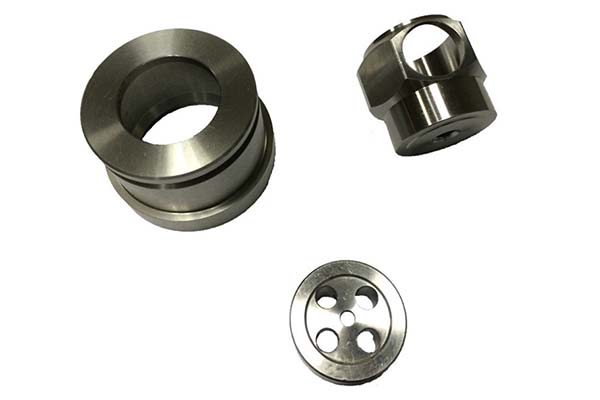
Whether you are working on a construction project, an automotive repair, or a DIY craft, understanding the thickness of 16 gauge metal is essential for success. The gauge system follows an inverse rule: higher numbers mean thinner materials.
What Is the Exact Thickness of 16 Gauge Metal?
The most critical information for any project is the precise thickness measurement. Below is a comprehensive table comparing thickness (in both inches and millimeters) for four widely used metals, along with their key properties and typical applications.
| Metal Type | Thickness (Inches) | Thickness (Millimeters) | Key Material Properties | Primary Applications |
|---|---|---|---|---|
| Standard Steel | ~0.0598” | 1.519 mm | High strength, durability | Structural frames, load-bearing beams |
| Galvanized Steel | ~0.0603” | 1.613 mm | Corrosion-resistant (zinc-coated) | Outdoor roofing, fencing, HVAC ducts |
| Stainless Steel | ~0.059” | 1.588 mm | Rust-proof, chemical resistance | Food processing equipment, medical tools |
| Aluminum | ~0.062” | 1.57 mm | Lightweight, high strength-to-weight ratio | Aerospace parts, automotive panels, DIY decor |
- Galvanized Steel is the thickest of the four (0.0603”), thanks to its zinc coating, which adds a thin protective layer.
- Standard Steel is the thinnest among steel variants (0.0598”), but it still offers superior strength for structural tasks.
- Aluminum has a slightly thicker profile than stainless steel (0.062” vs. 0.059”) but is significantly lighter, making it ideal for weight-sensitive projects.
Why Does 16 Gauge Thickness Vary by Metal?
You might wonder: if 16 gauge is a “standard,” why do thicknesses differ? The answer lies in material-specific properties and manufacturing goals.
Material Density and Strength
Metals have varying densities, which affect how manufacturers roll and shape them to meet 16 gauge specifications.
- Steel is dense and strong. To achieve the required strength for 16 gauge applications like structural support, manufacturers roll steel to a thinner profile (0.0598”). A thicker steel sheet would be over-engineered and unnecessarily heavy.
- Aluminum is less dense and naturally weaker than steel. To compensate, manufacturers make 16 gauge aluminum slightly thicker (0.062”). This ensures it still meets strength requirements for applications like automotive panels without adding excess weight.
Coating and Surface Treatments
Some metals require coatings to enhance performance, which adds to their overall thickness.
- Galvanized steel starts as standard steel but is dipped in molten zinc to create a corrosion-resistant layer. This zinc coating adds approximately 0.0005” to the thickness, increasing it from 0.0598” (standard steel) to 0.0603”. Without this coating, 16 gauge galvanized steel would match standard steel’s thickness, but it would lack the rust resistance needed for outdoor use.
Industry Standards
Different industries set unique standards for 16 gauge thickness to align with their specific needs.
- The construction industry prioritizes consistency in standard steel (0.0598”) to ensure structural safety across buildings.
- The food processing industry requires stainless steel (0.059”) to be thin enough for easy cleaning but thick enough to resist dents and chemical damage.
How Do You Choose the Right 16 Gauge Metal?
Understanding thickness variations is not just academic—it directly impacts project success. Use this step-by-step guide to select the right 16 gauge metal.
Step 1: Define Your Project’s Core Needs
Start by asking three key questions:
- Will the metal be exposed to moisture (e.g., outdoor fencing)?
- Is weight a concern (e.g., aerospace parts)?
- Does it need to bear heavy loads (e.g., structural beams)?
Step 2: Match Needs to Metal Properties
Use this checklist to align your project with the right 16 gauge metal:
| Project Requirement | Best 16 Gauge Metal Choice | Reasoning |
|---|---|---|
| Outdoor/High-Moisture Use | Galvanized Steel | Zinc coating prevents rust; 0.0603” thickness ensures durability. |
| Lightweight but Strong | Aluminum | 0.062” thickness balances strength and weight; ideal for portable projects. |
| Corrosion-Resistant (Indoor) | Stainless Steel | 0.059” thickness resists chemicals and rust (e.g., kitchen equipment). |
| Heavy Load-Bearing | Standard Steel | 0.0598” thickness offers maximum strength for structural tasks. |
Real-World Scenario: If you are building a DIY outdoor garden bed, 16 gauge galvanized steel is the best choice. Its 0.0603” thickness is strong enough to hold soil and plants, while the zinc coating prevents rust from rain and moisture. Choosing aluminum would be too weak for heavy soil, and standard steel would rust quickly—leading to a short-lived project.
How Do You Accurately Measure 16 Gauge Metal Thickness?
Even with standard specifications, it is critical to verify thickness before starting a project. Manufacturing tolerances can cause small variations.
Best Tools for Measuring
| Tool Type | Best For | Accuracy Range | How to Use |
|---|---|---|---|
| Micrometer | Thin metals (e.g., aluminum) | ±0.0001” | Place the metal between the anvil and spindle; rotate the thimble for a tight fit. |
| Digital Calipers | All metals | ±0.001” | Clamp the jaws around the metal; read the digital display. |
| Thickness Gauge | Sheet metals (e.g., steel) | ±0.0005” | Use the flat probe to press against the metal; read the dial. |
Tips to Avoid Measurement Errors
- Calibrate Tools First: Micrometers and calipers need regular calibration every 6 months to ensure accuracy.
- Measure Multiple Points: Metal sheets can have slight thickness variations. Take 3–5 measurements across the surface and average them.
- Account for Coatings: If measuring galvanized steel, the 0.0603” thickness includes the zinc coating. Do not subtract it—the coating is part of the metal’s functional thickness.
16 gauge metal is one of the most versatile options for balancing strength, workability, and cost. However, its thickness is not universal. Standard steel measures 0.0598” (1.519 mm) and is ideal for structural tasks. Galvanized steel is slightly thicker at 0.0603” (1.613 mm) due to its protective zinc coating, making it perfect for outdoor applications. Stainless steel comes in at 0.059” (1.588 mm), offering rust-proof performance for food and medical equipment. Aluminum is the thickest at 0.062” (1.57 mm), leveraging its lightweight properties for weight-sensitive projects. These variations exist because manufacturers adjust thickness based on material density, the need for protective coatings, and specific industry requirements. By matching the metal’s properties to your project’s needs—and verifying thickness with calibrated tools—you can ensure a successful, durable outcome.
FAQ About 16 Gauge Metal
Is 16 gauge metal thicker than 18 gauge metal?
Yes. The gauge system follows an inverse relationship: higher gauge numbers mean thinner metal. For example, 16 gauge standard steel is 0.0598” thick, while 18 gauge standard steel is approximately 0.0478” thick. This makes 16 gauge about 25% thicker.
Can 16 gauge aluminum be used for outdoor projects?
Yes, but with caveats. 16 gauge aluminum (0.062”) is lightweight and naturally corrosion-resistant because it forms a protective oxide layer. However, it is less strong than galvanized steel. It is best suited for lightweight outdoor projects like decorative planters rather than heavy-duty tasks like fencing.
Why is 16 gauge stainless steel thinner than 16 gauge aluminum?
Stainless steel is denser and stronger than aluminum. To achieve the same functional strength for 16 gauge applications, stainless steel only needs a thinner profile (0.059”). Aluminum, being less dense, requires a slightly thicker profile (0.062”) to compensate. This ensures both metals meet the performance standards expected of 16 gauge.
Does the zinc coating on galvanized steel affect its thickness measurement?
Yes, the zinc coating adds approximately 0.0005” to the overall thickness. The standard measurement of 0.0603” for 16 gauge galvanized steel includes this coating. When measuring, you should account for the full thickness, as the coating is an integral part of the material’s corrosion resistance and durability.
How to write a spec that gets priced correctly
A drawing is a contract. If it leaves a number open, the shop fills that number in with its own default. The default is rarely the one you had in mind. Put these five lines on every RFQ and most of the back-and-forth disappears before it starts.
- Alloy designation and the standard behind it
- Temper or heat treatment condition
- Mechanical properties you actually need
- Mill certificate and traceability requirement
- Finish and the faces it applies to
The point is not paperwork. Each line removes a decision the shop would otherwise make for you. A complete RFQ comes back priced. An incomplete one comes back guessed.
What actually drives the price
Buyers usually push on material because it is the line they can see. In practice the material is rarely the biggest number on a quote. These five lines decide most of it:
- alloy grade and mill availability
- stock size versus finished size
- heat treatment and testing
- machinability
- certification
Ask for the quote split by line. A supplier who cannot break it down is guessing, and you will pay for the guess. The line you can usually renegotiate is the tolerance band, not the raw material.
Problems you will meet, and the fix
Every process has a failure mode it prefers. The same four show up again and again on this kind of work, and none of them are mysteries once you know what to look for.
- Substituting a similar grade without telling anyone
- Hardness that varies across a single bar
- Corrosion in a weld heat-affected zone
- Distortion after heat treatment on a thin part
Catch the fault on the first part, not the hundredth. A first-article check costs an hour. A bad batch costs the whole order. Write the check into the purchase order so nobody has to remember it.
What to check on the first article
The first article is the cheapest inspection you will ever buy. Use it properly and the rest of the run becomes boring, which is exactly what you want.
- Every dimension on the drawing, with the measured value written beside it.
- The material certificate, matched to the heat or lot number on the parts.
- The finish against the sample you approved, under the same light.
- Fit against the mating part, assembled rather than measured.
- Packaging, because parts that arrive damaged were never in tolerance.
Check in this order: datums, then mating features, then cosmetic faces. If the datums are wrong, every number after them is noise. Keep the report on file. When a problem shows up in month six, that document is the only thing that tells you what changed.
How to compare two quotes fairly
Two numbers are not comparable unless the scope matches. Line them up before you decide, because a low number with three gaps is not a low number.
Same drawing, same material, same finish, same inspection. Anything else is a different job wearing the same part number. Then look at what each quote leaves out. Freight, packaging, certificates and tooling are the usual gaps.
Ask each supplier to state their assumptions in writing. The one who does is usually the one who has run the process before.
Scaling from one part to a batch
The first part teaches you the process. The hundredth teaches you the process cost.
Watch three things as volume grows: setup amortisation, tool wear, and how much hand work the finish still needs. If the unit price barely moves between ten and a hundred, the cost sits in material or in hand work, not in setup. Ask which, because only one of them is negotiable.
Lead time behaves the same way. A one-off is scheduled around other jobs. A repeat order is scheduled around your forecast. Give the shop a forecast and the lead time gets shorter, not longer.
How to read a supplier's quote
A quote is a short document with a long shadow. Four things in it decide whether the job runs smoothly, and only one of them is the price.
- The scope line. It should name the process, the material and the finish, not just the part.
- The tolerance basis. General tolerance or the drawing, and which standard it follows.
- The exclusions. Tooling, freight, certificates and inspection are the usual omissions.
- The validity date. Material prices move, and an open-ended quote is a promise nobody can keep.
Read the exclusions before you read the total. A quote that leaves out tooling is not cheaper. It is a quote for a different job.
What to send with the first order
The first order sets the pattern for every order after it. Send a complete package once and the shop files it, and the second order takes a fraction of the time.
- A STEP or native model plus a PDF drawing carrying the same revision letter.
- The material callout by standard number, not by trade name.
- The finish and the exact faces it applies to.
- Any test the part must pass: fit, seal, drop, salt spray, dielectric.
- A contact who can answer a question inside one working day.
Then write down what was agreed. An email that confirms the material, the finish and the date is worth more than a longer purchase order that leaves them open.
When this is the wrong choice
A good supplier tells you when the process does not fit. These are the cases where we say so.
- The volume is so low that setup costs more than the parts are worth.
- The tolerance is tighter than the process can hold without a second operation.
- The geometry cannot be made without a tool feature that will not pay back.
- The material you need is not available in the form the process requires.
- The schedule is shorter than the tooling or setup time, and nobody has said so yet.
None of these are refusals. They are reasons to look at a different route, and the earlier that conversation happens the cheaper it is. The most expensive mistake in manufacturing is a process chosen before the question was understood.
Planning the ramp from prototype to production
The gap between one good part and a thousand identical ones is a plan, not a machine. Three decisions close it.
First, freeze the design. Every change after tooling starts is a re-cut, and re-cuts are where schedules go. Second, decide the inspection level. A prototype is checked by eye; a production part is checked against a report. Third, agree the change process in writing, including who pays for it.
Write the ramp down as dates and owners, not as intentions. A ramp plan with three names and three dates is worth more than a page of good intentions.
How we can help
YiguProto runs metal sourcing and machining in house, from a single prototype to a production batch. We quote the process, the material and the finish as separate lines, so you can see where the money goes instead of arguing with one number.
Send a STEP file or a drawing and you get a DFM report in one to two business days. It flags the features that add cost and the features that will not hold tolerance on the process you picked.
Every order ships with an inspection report on the features you call out. If a part misses, we make it again. Ready to price a part? Start with a free quote and DFM review, or read more about our metal sourcing and machining. You can also talk to an engineer before you commit to a drawing.
Frequently asked questions
Is there a minimum order quantity?
No hard minimum. One part is fine. What changes with volume is which costs dominate, so a single unit is priced mostly on setup and a thousand units are priced mostly on cycle time and material.
What happens if a part is out of specification?
We measure it against the same drawing you approved and, if it misses, we make it again. What matters is that the report exists, because a disagreement without data is just an opinion.
What material should I specify?
Specify by standard, not by trade name. A trade name can change under you between two orders; a standard number cannot. Then add the one property that actually decides the part, whether that is strength, heat resistance or chemical exposure.
How do I compare two quotes fairly?
Match the scope first: same drawing, same material, same finish, same inspection. Then read the exclusions. Freight, tooling and certificates are the usual gaps, and a low number with three gaps is not a low number.
What files do you need in order to quote?
A STEP file plus a PDF drawing that carries the same revision letter. The model carries the geometry and the drawing carries the intent. When the two disagree, the shop picks one, and it is never the one you meant.
How long does a first article take?
Usually a few business days once the drawing is frozen, and longer if tooling is involved. The date we give you is the date we confirm in writing, not the date we hope for.
The short version
Good parts reward the buyer who reads the data sheet and the drawing together. Pick the option for the property that matters, not for the price per kilo.
Tighten only what mates. Test a sample before the run. Then let the process do the rest.