
Rapid Prototyping
What Are the Main Types of Prototypes, and How to Choose the Right One?
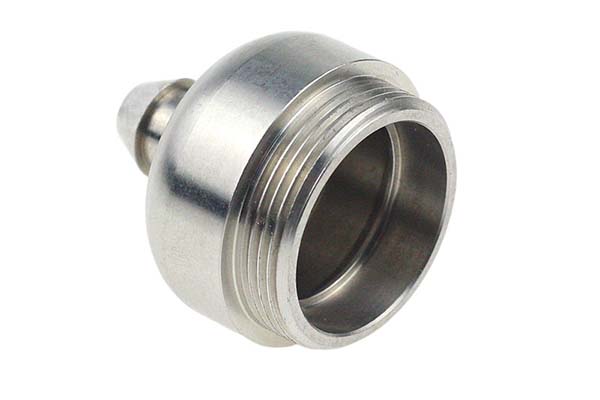
Prototypes come in many forms. Some are rough models made in hours to check a shape. Others are precise replicas machined from metal to test load-bearing capacity. Choosing the wrong type wastes time and money. A detailed appearance model tells you nothing about structural strength. A functional prototype made for testing cannot be thrown together by hand.
Key takeaways
- How a prototype is made determines its precision, cost, and lead time. This is often the first decision point.
- The material of a prototype determines its strength, appearance, and how closely it matches the final product.
- Prototypes are designed to validate specific aspects of a product. Matching function to prototype type saves money.
- Where you are in the development process determines what you need from a prototype.
Classification by Production Process
How a prototype is made determines its precision, cost, and lead time. This is often the first decision point.
3D Printing Prototype
3D printing builds parts layer by layer from digital files. It is the fastest way to get a physical model.
- Core characteristics: Handles complex shapes like internal cavities and curved surfaces. Materials include PLA, ABS, resin, and nylon. Cost is low, typically 50 to 500 CNY per part. Lead time is 4 to 24 hours.
- Production flow: Export CAD to STL format. Set layer thickness between 0.1mm and 0.2mm. Choose infill from 10% to 30%. Print using FDM for basic plastics or SLA for smooth resin parts. Remove supports and sand layer lines.
- Best applications: Consumer electronics like earbud shells. Action figures with intricate details. Anatomical models for medical training.
- Key advantages: No mold required. Ideal for one to ten units. Captures fine features down to 0.5mm.
CNC Machining Prototype
CNC machining cuts parts from solid blocks using computer-controlled tools. It delivers the highest precision.
- Core characteristics: Tolerances of ±0.05mm. Surface finish Ra 1.6 to 3.2μm. Materials include metals like aluminum alloy and copper, and rigid plastics like POM and acrylic. Cost ranges from 200 to 2,000 CNY per part. Lead time is one to three days.
- Production flow: Convert 3D models to G-code using CAM software. Secure material blocks to the machine bed. Machine with cutting depths of 0.1mm to 0.5mm per pass. Sand or polish to remove tool marks.
- Best applications: Mechanical parts like gears and shafts. Automotive brackets and sensor housings. Precision connectors for electronics.
- Key advantages: Durable for functional testing. Uses production materials, giving valid performance data.
Silicone Duplicate Prototype
Silicone duplication casts parts in flexible molds made from a master prototype. It is ideal for small batches.
- Core characteristics: Materials are PU resin, epoxy, or soft TPU. Batch sizes up to fifty units. Cost per copy drops to 50 to 150 CNY. Lead time is three to five days including mold making.
- Production flow: Create a high-quality master prototype by CNC or 3D printing. Pour liquid silicone around the master to form a mold. Cure the mold at 25°C to 80°C for 4 to 24 hours. Inject resin and demold after curing.
- Best applications: Soft parts like keychains and phone cases. Small-batch trial production of twenty to fifty units. Parts needing uniform texture like rubber grips.
- Key advantages: Low per-unit cost for batches. Preserves master details without loss of texture or dimension.
Handmade Prototype
Handmade prototypes are shaped manually by skilled technicians. They offer maximum flexibility for artistic work.
- Core characteristics: Materials include wood, clay, and oil clay. Quality depends on technician skill. Cost is low in materials but labor-intensive. Lead time is one to seven days.
- Production flow: Select materials. Shape manually with carving knives, sandpaper, or molds. Finish with paint or polish as needed.
- Best applications: Sculptures and film props. Early-stage concept models. Artisanal products like hand-carved toys.
- Key advantages: No specialized equipment needed. Easy to modify on the spot by hand.
Classification by Material
The material of a prototype determines its strength, appearance, and how closely it matches the final product.
Plastic Prototype
Plastic is the most common prototype material. It is lightweight, easy to process, and low cost.
- Materials: ABS, PC, POM, acrylic, PLA.
- Core features: Density 0.9 to 1.2 g/cm³. Supports surface treatments like spraying, electroplating, and silk screening. Cost 50 to 500 CNY per unit.
- Best applications: Consumer products like toy shells and laptop housings. Parts needing corrosion resistance like acrylic display cases. Non-load-bearing components.
- Limitations: Lower strength than metal. Some plastics like PLA deform above 60°C.
Metal Prototype
Metal prototypes are used when strength, heat resistance, or production material matching is critical.
- Materials: Aluminum alloy (6061, 7075), stainless steel (304, 316), copper.
- Core features: Tensile strength 200 to 300 MPa for aluminum. Excellent heat and corrosion resistance. Cost 500 to 3,000 CNY per unit.
- Best applications: Load-bearing components like automotive suspension brackets. Precision equipment like copper electrical connectors. Industrial machinery parts.
- Limitations: Heavy, with density 2.7 to 8.9 g/cm³. Longer production time due to complex toolpaths.
Soft Rubber Prototype
Soft prototypes simulate flexible parts that need to bend, stretch, or provide grip.
- Materials: TPU, silicone, soft PVC.
- Core features: Shore A hardness 20 to 50. Good elasticity, recovering shape after compression. Cost 100 to 600 CNY per unit.
- Best applications: Grips for tools and handlebars. Sealing rings for waterproof devices. Soft toy parts like doll limbs.
- Limitations: Low rigidity, not for structural components. May degrade over time in sunlight or oil.
Resin Prototype
Resin prototypes offer smooth surfaces and optical clarity for parts where appearance matters.
- Materials: Epoxy resin, polyurethane resin.
- Core features: Light transmittance 80% to 90% for clear grades. Smooth as-printed surface from SLA. Cost 150 to 800 CNY per unit.
- Best applications: Imitation glass like lamp shades. Transparent medical models. High-gloss decorative parts.
- Limitations: Brittle, prone to cracking under impact. Some resins warp above 80°C.
Classification by Function
Prototypes are designed to validate specific aspects of a product. Matching function to prototype type saves money.
Appearance Prototype
Appearance prototypes focus on how the product looks. Internal structure can be simplified.
- Core objective: Verify shape, color, texture, and assembly effect.
- Key characteristics: Surface treatment is critical. Internal features may be hollowed out to save cost. Tolerances loose at ±0.5mm.
- Best applications: Smartphone back covers. Automotive headlight casings. Appliance control panels.
- Validation methods: Visual inspection for color and texture. Stakeholder feedback on aesthetics.
Structural Prototype
Structural prototypes test how parts fit together and whether moving parts work.
- Core objective: Validate assembly logic, mobility, and stability.
- Key characteristics: Exact dimensions required, typically ±0.1mm. May include hinges, buckles, and simple mechanical features. No electronics needed.
- Best applications: Robot joint mechanisms. Medical device handles. Folding furniture.
- Validation methods: Fit checks for interference. Mobility testing through repeated cycles. Load testing with weights.
Functional Prototype
Functional prototypes integrate working features to prove the product performs as intended.
- Core objective: Validate core functions like circuitry, hydraulics, or optics.
- Key characteristics: Includes electronic modules, sensors, or mechanical systems. Close to finished product form. High precision on functional features, often ±0.05mm.
- Best applications: Smart speakers with voice recognition. Hydraulic valve prototypes. Optical lens holders.
- Validation methods: Functional testing under real conditions. Environmental testing for temperature and humidity effects.
Classification by Use
Where you are in the development process determines what you need from a prototype.
Design Verification Prototype
Early in development, you need to confirm basic design direction.
- Core function: Confirm appearance design, size ratios, and basic interaction.
- Key features: Fast production, often by 3D printing or hand methods. Low cost with simplified structure. Easy to modify for iteration.
- Applicable stage: Early design, after 2D drawings but before structural finalization.
Assembly Verification Prototype
Once the design is more complete, you need to check how parts go together.
- Core function: Test fit between parts, screw hole positions, and snap features.
- Key features: Parts are split to simulate production assembly. No surface treatment needed. Focus is on fit, not appearance.
- Applicable stage: Mid-development, after structural design but before functional testing.
Mass Production Test Prototype
Before committing to full production, you must validate the manufacturing process.
- Core function: Confirm that production processes like injection molding or stamping will work.
- Key features: Uses same materials and processes as mass production. Precision matches production standards. Batch of 10 to 50 units to test consistency.
- Applicable stage: Late development, just before opening production molds.
Special Types of Prototypes
Some products need prototypes with specific properties like transparency or heat resistance.
Transparent Prototype
For products that must transmit light or show internal components.
- Materials: Acrylic, PC, clear resin.
- Core features: Light transmittance 89% to 92%. Polishing enhances clarity.
- Best applications: Lamp shades. Display cases. Medical fluid containers.
High-Temperature Resistant Prototype
For parts exposed to heat in normal use.
- Materials: PA nylon (150°C to 200°C), stainless steel (500°C+).
- Core features: No deformation or performance loss at temperature.
- Best applications: Automotive engine parts. Industrial oven components. Aerospace hardware.
Simulation Prototype
For products that need to feel like the real thing.
- Materials: Silicone, foam, soft rubber.
- Core features: Simulates soft touch. Flexible and compressible.
- Best applications: Doll skin. Medical training models. Headphone ear tips.
How to write a spec that gets priced correctly
A drawing is a contract. If it leaves a number open, the shop fills that number in with its own default. The default is rarely the one you had in mind. Put these five lines on every RFQ and most of the back-and-forth disappears before it starts.
- A model you are willing to freeze for the build
- The question the prototype must answer
- Process and material that can answer it
- Tolerance on the features under test
- How many iterations you have budgeted
The point is not paperwork. Each line removes a decision the shop would otherwise make for you. A complete RFQ comes back priced. An incomplete one comes back guessed.
What actually drives the price
Buyers usually push on material because it is the line they can see. In practice the material is rarely the biggest number on a quote. These five lines decide most of it:
- process choice
- part size and feature count
- material
- finish and fit checks
- number of iterations
Ask for the quote split by line. A supplier who cannot break it down is guessing, and you will pay for the guess. The line you can usually renegotiate is the tolerance band, not the raw material.
Problems you will meet, and the fix
Every process has a failure mode it prefers. The same four show up again and again on this kind of work, and none of them are mysteries once you know what to look for.
- A prototype that is too good and hides a production problem
- A prototype that is too rough to test the real question
- Material chosen for speed rather than for the test
- No measurement plan, so the result is an opinion
Catch the fault on the first part, not the hundredth. A first-article check costs an hour. A bad batch costs the whole order. Write the check into the purchase order so nobody has to remember it.
What to check on the first article
The first article is the cheapest inspection you will ever buy. Use it properly and the rest of the run becomes boring, which is exactly what you want.
- Every dimension on the drawing, with the measured value written beside it.
- The material certificate, matched to the heat or lot number on the parts.
- The finish against the sample you approved, under the same light.
- Fit against the mating part, assembled rather than measured.
- Packaging, because parts that arrive damaged were never in tolerance.
Check in this order: datums, then mating features, then cosmetic faces. If the datums are wrong, every number after them is noise. Keep the report on file. When a problem shows up in month six, that document is the only thing that tells you what changed.
How to compare two quotes fairly
Two numbers are not comparable unless the scope matches. Line them up before you decide, because a low number with three gaps is not a low number.
Same drawing, same material, same finish, same inspection. Anything else is a different job wearing the same part number. Then look at what each quote leaves out. Freight, packaging, certificates and tooling are the usual gaps.
Ask each supplier to state their assumptions in writing. The one who does is usually the one who has run the process before.
How to Choose the Right Type of Prototype?
Use these guidelines to match prototype type to your specific situation.
By Development Goal
| Goal | Recommended Type | Example |
|---|---|---|
| Appearance validation | 3D printing prototype (resin) with painting | Resin smartphone case sprayed to test color |
| Structural testing | CNC machining prototype (metal or plastic) | Aluminum drone frame for load testing |
| Small-batch production trial | Silicone duplicate prototype | Thirty toy car shells from one master |
By Budget
| Budget Range | Recommended Type | Reason |
|---|---|---|
| Low (50-500 CNY) | 3D printing or handmade | No mold fees, low material cost |
| Medium (500-2,000 CNY) | CNC plastic or silicone duplicate | Balance of precision and cost |
| High (2,000+ CNY) | CNC metal or mass production test | Ensures production compatibility |
By Timeline
| Timeline | Recommended Type | Lead Time |
|---|---|---|
| Urgent (1-2 days) | 3D printing (FDM or SLA) | 4-24 hours |
| Normal (3-7 days) | Silicone duplicate or CNC plastic | 3-5 days |
| No rush (1-2 weeks) | CNC metal or mass production test | 5-14 days |
Choosing the right prototype type saves time, money, and frustration. Start by identifying your goal: appearance verification, structural testing, functional validation, or production feasibility. Then consider your budget and timeline. For quick looks at shape and color, use 3D printing. For parts that must bear loads or match production materials, use CNC machining. For small batches of identical parts, silicone duplication offers the best value. Match materials to requirements—plastic for lightweight and low cost, metal for strength and heat resistance, soft materials for flexibility, and resin for clarity. By aligning prototype type with your development stage and objectives, you get reliable data to move forward with confidence.
Our solution for Main Types
YiguProto runs rapid prototyping in house, from a single prototype to a production batch. We quote the process, the material and the finish as separate lines, so you can see where the money goes instead of arguing with one number.
Send a STEP file or a drawing and you get a DFM report in one to two business days. It flags the features that add cost and the features that will not hold tolerance on the process you picked.
Every order ships with an inspection report on the features you call out. If a part misses, we make it again. Ready to price a part? Start with a free quote and DFM review, or read more about our rapid prototyping. You can also talk to an engineer before you commit to a drawing.
FAQ about Main Types
What should I check before approving the parts?
Datums first, then the features that mate, then the cosmetic faces. Ask for a dimensional report, a material certificate and a finish sample. A part can be inside every tolerance and still not fit, so assemble one before you sign.
What is Main Types used for?
Main Types turns up wherever the part has to do a real job at a predictable cost: brackets, housings, fixtures, covers and the fittings that hold them together. The honest test is whether the properties match the load and the environment, not whether the material is fashionable.
What happens if a part is out of specification?
We measure it against the same drawing you approved and, if it misses, we make it again. What matters is that the report exists, because a disagreement without data is just an opinion.
What is the lead time for Main Types?
Expect 3 to 7 business days for a first article. Tooling, material stock and the finishing queue all move that number, so we confirm the date in writing before the run starts rather than after.
What material should I specify?
Specify by standard, not by trade name. A trade name can change under you between two orders; a standard number cannot. Then add the one property that actually decides the part, whether that is strength, heat resistance or chemical exposure.
Can Main Types be made in small quantities?
Yes, and small quantities are where a good supplier earns the next order. Setup dominates the price at low volume, so the cheapest route is usually the one with the fewest operations, not the cheapest material.
The short version
Main Types rewards the buyer who reads the data sheet and the drawing together. Pick the option for the property that matters, not for the price per kilo.
Tighten only what mates. Test a sample before the run. Then let the process do the rest.