
Rapid Prototyping
Why Is Plastic Prototype Cheaper and How to Maximize This Advantage?
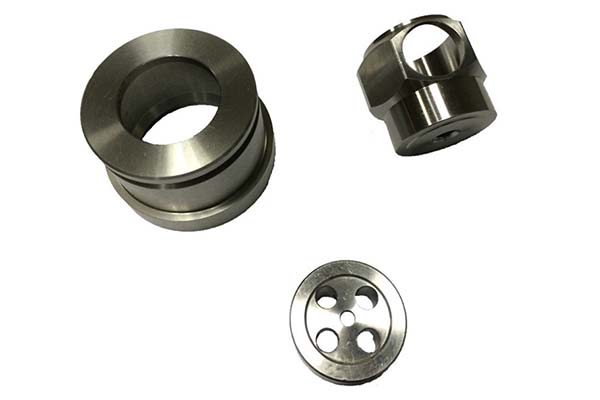
Plastic prototypes are often the smart first step in product development. They cost significantly less than metal prototypes—typically 30% to 70% cheaper. This affordability lets you test designs, check appearance, and validate fit without spending your entire budget. But the savings go beyond just material prices. Faster machining, simpler surface finishing, and flexible small-batch options all add up.
Key takeaways
- Four main factors drive down the cost of plastic prototypes. Understanding each one helps you make smarter decisions from the start.
- The table below shows real cost differences across common prototype scenarios.
- Smart design decisions can reduce costs further without hurting quality. Here are proven strategies from years of prototyping work.
- Different goals call for different processes. Match the method to what you are trying to learn.
Core Reasons Why Plastic Prototype Is Cheaper
Four main factors drive down the cost of plastic prototypes. Understanding each one helps you make smarter decisions from the start.
Lower Raw Material Costs
Plastic materials like ABS, PP, and PC have much lower base prices than metals. This difference adds up quickly, especially for larger parts.
- ABS plastic: ~15 to 25 CNY per kilogram
- PP plastic: ~10 to 20 CNY per kilogram
- Aluminum alloy (6061): ~20 to 30 CNY per kilogram
- Stainless steel (304): ~80 to 100 CNY per kilogram
Real cost example: A 500-gram prototype in ABS costs about 10 CNY for material. The same part in stainless steel costs 45 CNY. That is more than four times higher for material alone. For a batch of ten parts, the material saving of 350 CNY can pay for additional design iterations.
Faster and More Efficient Processing
Plastics are softer than metals. This means machines cut through them faster, tools last longer, and energy costs stay lower.
- CNC machining time: A simple ABS part might take one hour. The same part in aluminum takes two hours. That doubles your machine time cost.
- Tool wear: Cutting tools for plastics last two to three times longer. You avoid frequent tool changes and the associated downtime.
- 3D printing speed: Resin and plastic filaments print much faster than metal powders. A resin prototype can finish in four hours versus twelve hours for metal printing.
Case study: A product team needed a complex curved prototype. ABS CNC machining took two hours at 80 CNY per hour, total 160 CNY. Aluminum machining took four hours at 100 CNY per hour, total 400 CNY. The plastic option saved 240 CNY and delivered the part one day earlier.
Simpler Surface Treatment Requirements
Metal prototypes often need expensive surface finishes. Plastic parts usually require basic treatments or none at all.
- Plastic finishing options: Sanding costs 50 to 100 CNY per piece. Oil spraying costs 100 to 200 CNY per piece.
- Metal finishing costs: Anodization runs 500 to 1,500 CNY per piece. Electroplating can go from 500 to 2,000 CNY per piece.
Practical example: An external shell prototype in ABS with oil spraying costs 150 CNY. The same shell in aluminum with anodization costs 600 CNY. That is 450 CNY saved on appearance alone.
Flexible Batch Options for Small Quantities
Plastic prototyping offers multiple ways to produce small batches without expensive tooling.
- 3D printing: Perfect for one to five pieces. No setup fees, no minimum order.
- Silicone duplication: Ideal for five to fifty pieces. You make one master prototype, then cast copies in silicone molds. Unit cost drops to one-third of CNC machining.
- Metal limitations: Small batches of metal parts often require die casting with mold fees of 2,000 to 8,000 CNY. That upfront cost kills the budget for early-stage testing.
Cost comparison: Ten pieces of a simple shell:
- ABS silicone duplicate: 500 CNY for the master plus 10 × 40 CNY = 900 CNY total
- Aluminum die casting: 8,000 CNY mold fee plus 10 × 80 CNY = 8,800 CNY total
The plastic approach saves 7,900 CNY, or nearly 90%.
How Much Cheaper Are Plastic Prototypes Compared to Metal?
The table below shows real cost differences across common prototype scenarios. These numbers come from actual project data in Shenzhen and Dongguan manufacturing clusters.
| Prototype Scenario | Plastic Prototype (ABS/PP/PC) | Metal Prototype (Aluminum/Stainless) | Cost Difference |
|---|---|---|---|
| Simple appearance model (1 piece, 10cm×8cm×5cm) | CNC machining + sanding: 300-500 CNY | CNC machining + sanding: 800-1,200 CNY | Plastic is 50-60% cheaper |
| Complex structural part (5 pieces, internal holes) | 3D printing (resin): 5 × 200 CNY = 1,000 CNY | CNC machining (aluminum): 5 × 500 CNY = 2,500 CNY | Plastic is 60% cheaper |
| Small-batch functional parts (20 pieces, non-load-bearing) | Silicone duplicate: 500 CNY (master) + 20 × 40 CNY = 1,300 CNY | Die casting: 5,000 CNY (mold) + 20 × 70 CNY = 6,400 CNY | Plastic is 80% cheaper |
| High-precision prototype (1 piece, ±0.05mm) | CNC machining (PC): 800-1,200 CNY | CNC machining (stainless): 2,000-3,000 CNY | Plastic is 60-65% cheaper |
What Design Choices Make Plastic Prototypes Even Cheaper?
Smart design decisions can reduce costs further without hurting quality. Here are proven strategies from years of prototyping work.
Simplify Your Geometry
Every complex feature adds machining time. Removing non-functional elements saves money.
- Avoid thin walls: Walls thinner than 0.5mm require special tooling and slow speeds. Increase thickness to 1mm for standard machining.
- Reduce deep cavities: Cavities deeper than 8mm need longer tools and multiple passes. Shallower designs cut time by 20% to 30%.
- Eliminate unnecessary curves: A prototype with one curved surface costs 300 CNY. A flat version costs 200 CNY. That is 33% saved on a simple change.
Relax Tolerances Where Possible
Tight tolerances drive up cost. Only specify them where absolutely needed.
- Standard tolerance (±0.1mm to ±0.2mm): Works for most cosmetic and assembly fit checks.
- High precision (±0.05mm): Needed only for parts that mate with other components.
- Cost impact: A prototype with ±0.05mm tolerance costs 500 CNY. Relaxing to ±0.1mm drops it to 350 CNY. That is 30% saved.
Skip Decorative Details for Early Iterations
Initial tests do not need logos, textures, or branding.
- Laser engraving: Adds 50 to 100 CNY per piece.
- Texture patterns: Require extra EDM work or special tooling.
- Smart approach: Save these features for final validation prototypes. Early rounds only need basic geometry.
Which Process Gives the Best Cost for Your Needs?
Different goals call for different processes. Match the method to what you are trying to learn.
| Your Goal | Recommended Process | Why It Works | Typical Cost |
|---|---|---|---|
| Lowest cost appearance check | 3D printing with PLA | PLA filament is cheap (~10 CNY per 100g). Prints fast with minimal labor. | 100g prototype: 80-120 CNY |
| Durable functional test | CNC machining with ABS | ABS is tougher than PLA. Machines faster than PC or engineering plastics. | Simple part: 200-400 CNY |
| Small batch (5-50 pieces) | Silicone duplicate with ABS master | No repeated CNC programming. Unit cost drops with quantity. | 5 pieces: 500 CNY total |
| Complex internal structures | 3D printing with SLA resin | Resin prints intricate shapes without extra cost. | Complex part: 300-500 CNY |
How Can Supplier Choices Cut Costs Further?
Where and how you buy matters as much as what you make.
Choose Cluster Suppliers
Factories in Shenzhen, Dongguan, and Suzhou specialize in prototypes. Competition keeps prices low.
- Price difference: A CNC ABS prototype costs 300 CNY in Shenzhen versus 360 CNY in other cities.
- Lead time: Cluster suppliers stock common materials. They start machining the same day you order.
- Quality: Mature supply chains mean experienced workers and better machines.
Combine Multiple Orders
If you need several prototypes, bundle them into one purchase.
- Discount range: Suppliers often give 10% to 15% off for combined orders.
- Example: Three prototypes ordered separately cost 3 × 300 CNY = 900 CNY. Combined, they might cost 800 CNY total. That is 100 CNY saved.
Be Honest About Your Budget
Tell suppliers your target price upfront. They can suggest alternatives.
- Material substitution: If you ask for a 300 CNY prototype, they might recommend ABS instead of PC.
- Process adjustment: Sanding might replace polishing to meet your number.
- Result: You get a usable prototype at your price point.
How to write a spec that gets priced correctly
A drawing is a contract. If it leaves a number open, the shop fills that number in with its own default. The default is rarely the one you had in mind. Put these five lines on every RFQ and most of the back-and-forth disappears before it starts.
- A model you are willing to freeze for the build
- The question the prototype must answer
- Process and material that can answer it
- Tolerance on the features under test
- How many iterations you have budgeted
The point is not paperwork. Each line removes a decision the shop would otherwise make for you. A complete RFQ comes back priced. An incomplete one comes back guessed.
What actually drives the price
Buyers usually push on material because it is the line they can see. In practice the material is rarely the biggest number on a quote. These five lines decide most of it:
- process choice
- part size and feature count
- material
- finish and fit checks
- number of iterations
Ask for the quote split by line. A supplier who cannot break it down is guessing, and you will pay for the guess. The line you can usually renegotiate is the tolerance band, not the raw material.
Problems you will meet, and the fix
Every process has a failure mode it prefers. The same four show up again and again on this kind of work, and none of them are mysteries once you know what to look for.
- A prototype that is too good and hides a production problem
- A prototype that is too rough to test the real question
- Material chosen for speed rather than for the test
- No measurement plan, so the result is an opinion
Catch the fault on the first part, not the hundredth. A first-article check costs an hour. A bad batch costs the whole order. Write the check into the purchase order so nobody has to remember it.
What to check on the first article
The first article is the cheapest inspection you will ever buy. Use it properly and the rest of the run becomes boring, which is exactly what you want.
- Every dimension on the drawing, with the measured value written beside it.
- The material certificate, matched to the heat or lot number on the parts.
- The finish against the sample you approved, under the same light.
- Fit against the mating part, assembled rather than measured.
- Packaging, because parts that arrive damaged were never in tolerance.
Check in this order: datums, then mating features, then cosmetic faces. If the datums are wrong, every number after them is noise. Keep the report on file. When a problem shows up in month six, that document is the only thing that tells you what changed.
How to compare two quotes fairly
Two numbers are not comparable unless the scope matches. Line them up before you decide, because a low number with three gaps is not a low number.
Same drawing, same material, same finish, same inspection. Anything else is a different job wearing the same part number. Then look at what each quote leaves out. Freight, packaging, certificates and tooling are the usual gaps.
Ask each supplier to state their assumptions in writing. The one who does is usually the one who has run the process before.
Scaling from one part to a batch
The first part teaches you the process. The hundredth teaches you the process cost.
Watch three things as volume grows: setup amortisation, tool wear, and how much hand work the finish still needs. If the unit price barely moves between ten and a hundred, the cost sits in material or in hand work, not in setup. Ask which, because only one of them is negotiable.
Lead time behaves the same way. A one-off is scheduled around other jobs. A repeat order is scheduled around your forecast. Give the shop a forecast and the lead time gets shorter, not longer.
How to read a supplier's quote
A quote is a short document with a long shadow. Four things in it decide whether the job runs smoothly, and only one of them is the price.
- The scope line. It should name the process, the material and the finish, not just the part.
- The tolerance basis. General tolerance or the drawing, and which standard it follows.
- The exclusions. Tooling, freight, certificates and inspection are the usual omissions.
- The validity date. Material prices move, and an open-ended quote is a promise nobody can keep.
Read the exclusions before you read the total. A quote that leaves out tooling is not cheaper. It is a quote for a different job.
What Quality Risks Should You Watch For?
Saving money means nothing if the prototype fails its purpose. Avoid these common traps.
Material Substitution Risks
Some suppliers use recycled plastics to cut costs. Recycled material looks similar but performs poorly.
- Signs of recycled ABS: Brittle, breaks when bent slightly, inconsistent color.
- Protection: Ask for material certificates. Request a small test piece first.
- Cost of failure: A broken prototype during testing means starting over. That wastes time and money.
Wrong Material for the Application
Cheap materials can give you misleading test results.
- Heat resistance: PLA deforms above 60°C. If your part needs to work at 80°C, you must use PC or ABS.
- Impact strength: PP handles drops better than ABS. Choose based on real use.
- Example: A client tested a PLA enclosure for an electronics project. The part warped during heat testing. They had to redo everything in PC, losing two weeks.
Process Quality Checks
Inspect every prototype when it arrives.
- CNC parts: Check edges for burrs. Measure wall thickness at multiple points.
- 3D printed parts: Look for gaps between layers. Test surface smoothness with your finger.
- Surface treatment: For oil-sprayed parts, scratch lightly with a fingernail. Paint should not peel.
Plastic prototypes deliver real cost advantages because of cheaper materials, faster processing, simpler finishes, and flexible small-batch options. These savings let you test more ideas, iterate faster, and reach a better final design. To maximize the benefit, match your process to your goal—use PLA 3D printing for quick appearance checks, CNC ABS for durable functional tests, and silicone duplication for small batches. Choose suppliers in manufacturing clusters like Shenzhen, combine orders when possible, and always verify material quality. By following these strategies, you keep costs low without compromising the valuable learning that prototypes provide.
Our solution for Plastic Prototype Cheaper
YiguProto runs rapid prototyping in house, from a single prototype to a production batch. We quote the process, the material and the finish as separate lines, so you can see where the money goes instead of arguing with one number.
Send a STEP file or a drawing and you get a DFM report in one to two business days. It flags the features that add cost and the features that will not hold tolerance on the process you picked.
Every order ships with an inspection report on the features you call out. If a part misses, we make it again. Ready to price a part? Start with a free quote and DFM review, or read more about our rapid prototyping. You can also talk to an engineer before you commit to a drawing.
FAQ about Plastic Prototype Cheaper
Can Plastic Prototype Cheaper be made in small quantities?
Yes, and small quantities are where a good supplier earns the next order. Setup dominates the price at low volume, so the cheapest route is usually the one with the fewest operations, not the cheapest material.
What files do you need in order to quote?
A STEP file plus a PDF drawing that carries the same revision letter. The model carries the geometry and the drawing carries the intent. When the two disagree, the shop picks one, and it is never the one you meant.
What happens if a part is out of specification?
We measure it against the same drawing you approved and, if it misses, we make it again. What matters is that the report exists, because a disagreement without data is just an opinion.
What should I check before approving the parts?
Datums first, then the features that mate, then the cosmetic faces. Ask for a dimensional report, a material certificate and a finish sample. A part can be inside every tolerance and still not fit, so assemble one before you sign.
Is there a minimum order quantity?
No hard minimum. One part is fine. What changes with volume is which costs dominate, so a single unit is priced mostly on setup and a thousand units are priced mostly on cycle time and material.
How much does Plastic Prototype Cheaper cost?
Price comes from five lines: material, machine or tool time, setup, finishing and inspection. The material itself is usually the smallest of them. Send a drawing and we will split the quote so you can see which line is doing the damage.
The short version
Plastic Prototype Cheaper rewards the buyer who reads the data sheet and the drawing together. Pick the option for the property that matters, not for the price per kilo.
Tighten only what mates. Test a sample before the run. Then let the process do the rest.