
3D Printing
Is 3D Printing Silicone the Future of Custom Manufacturing?
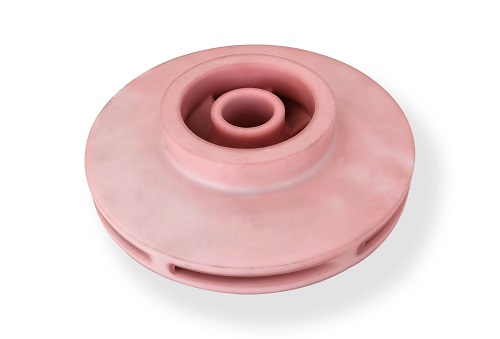
Silicone is a wonder material. It bends, stretches, and lasts in harsh places. For years, making custom silicone parts was slow and costly. It needed molds. Now, 3D printing changes this. It builds parts layer by layer. This guide explains how 3D printing silicone works. We will look at its uses in health care and industry. We will cover its limits and bright future. You will learn if it is right for your project.
What Makes Silicone So Special?
Why Is It a Unique Material?
Silicone is not a normal plastic. It is a synthetic polymer with a silica base. This gives it special traits that other materials lack.
Its elasticity is top-tier. It can stretch over 500% and bounce back. It stays flexible in very cold or hot conditions. This range is from -60°C to over 230°C.
It also has great chemical stability. It resists water, oils, and many chemicals. It does not break down easily outdoors. This makes it last long.
For medical uses, its biocompatibility is key. Approved grades are safe for skin contact and even inside the body. They do not cause bad reactions.
How Does 3D Printing Compare to Molding?
For decades, molding was the only way to make silicone parts. It works for making thousands of the same item. But it has big downsides for custom work.
- High Start Cost: A single steel mold can cost from $5,000 to $20,000. This price is too high for a prototype or a small batch.
- Long Lead Time: Making the mold can take several weeks. This slows down the whole project.
- Design Limits: Molds cannot make parts with locked-in shapes or complex inner channels. The part must be simple to remove from the mold.
3D printing silicone solves these issues. It builds the part directly from a digital file. There is no mold cost. Designs can be changed fast. It allows for shapes that are impossible to mold.
How Does 3D Printing Silicone Work?
What Are the Main Methods?
Printing silicone is tricky. It is thick and sticky. Special techniques are needed. Two methods are most common today.
Liquid Deposition Modeling (LDM) is like a precise glue gun. A pump pushes liquid silicone paste out of a nozzle. The paste is UV-cured or heat-cured right away to harden each layer. It is good for softer, elastic parts.
Drop-on-Demand Jetting (DOD) is like an inkjet printer for silicone. Tiny droplets of liquid silicone are jetted onto a build plate. A UV light instantly cures each droplet. This allows for very fine details and smooth surfaces.
Comparison of 3D Printing Silicone Methods
| Feature | Liquid Deposition Modeling (LDM) | Drop-on-Demand Jetting (DOD) |
|---|---|---|
| How It Works | Extrudes a continuous bead of material | Jets thousands of tiny droplets |
| Best For | Softer parts, seals, gaskets, large items | High-detail parts, medical devices, thin walls |
| Surface Finish | Good, with visible layers | Excellent, very smooth |
| Speed | Medium | Fast for small, detailed parts |
| Cost of Machine | Medium to High | Very High |
Are There Other Ways to Get Silicone Parts?
Yes, hybrid methods exist. They mix 3D printing with old techniques.
One way is to 3D print a mold. You make a mold from a cheap plastic using a normal 3D printer. Then, you pour liquid silicone into it. This is great for making 50-500 parts. It is cheaper than a steel mold. It is faster for mid-sized runs.
Another way is to use silicone-like materials. Flexible plastics like TPU can be printed on common FDM printers. They feel like silicone but are not as strong or stable. Use them for looks, not for critical function.
Where Is It Used Today?
How Is It Changing Medical Care?
The medical field benefits hugely from 3D printing silicone. Custom care is the main gain.
Patient-Specific Implants are a big step. For example, a clinic in Europe makes custom breast implants for cancer patients. They use a 3D scan to design the perfect shape and size. The printed silicone feels more natural. Patient comfort is much higher than with standard options.
Advanced Surgical Tools are also made. Surgeons now use soft robotic tools printed in one piece. These tools can grip delicate tissue without harm. They allow for new, less invasive surgeries. This cuts patient recovery time.
Why Do Industries Rely on It?
In factories, machines need parts that can handle stress. 3D printing silicone makes this easier.
Custom seals and gaskets are vital. A car maker prints special seals for electric car batteries. The seals must keep out water and handle heat. Printed silicone works better than cut rubber. It fits perfectly every time.
It also allows for complex damping parts. A company made custom shock pads for a food packaging machine. The pads reduce vibration and noise. The machine runs smoother and breaks down less.
What Are the Key Challenges?
Is the Material Easy to Print?
The biggest issue is silicone’s high viscosity. It is thick and does not flow easily. This can clog nozzles. To fix this, printers need special systems. They use high pressure and heated nozzles to make the silicone flow right. Not all printers can do this.
Are There Enough Materials?
Choice is still limited. Most printers use only one or two types of silicone paste. These pastes are made by few companies. This can limit performance options. However, new pastes are coming. Some now offer higher heat resistance. Others are made for better stretch.
How Strong Are the Printed Parts?
A common doubt is about strength. The good news: a well-printed part is very strong. The bond between layers is key. With modern curing methods, the part is homogeneous. Its strength is close to molded silicone. For critical uses, tests like tensile strength and tear resistance are done to prove it works.
What Does the Future Hold?
Will New Materials Emerge?
Yes, research is active. We will see specialty silicones soon. Some will be for very high temperatures, over 300°C. Others will be bioactive for healing. There is also work with recycled silicone to cut waste and cost.
How Will Printers Improve?
Printers will get faster and more precise. Multi-nozzle systems will cut print time. Better software will control the flow and cure with more accuracy. This will reduce errors. Printers may also mix soft silicone with hard plastics in one job. This will make complex devices in one step.
When Will It Become Common?
The cost is still high but is falling. As more companies adopt it, prices for machines and materials will drop. It will not replace molding for millions of parts. But for custom, low-volume, and complex parts, it will become the standard choice. It enables digital warehousing. Instead of keeping many parts in stock, a company can print what it needs, when it needs it.
3D printing silicone is a powerful tool. It turns digital designs into real, functional parts. It breaks the limits of mold-based making. It offers unmatched freedom for design. From life-saving medical devices to tough industrial parts, its impact is growing. The technology still has hurdles. But its path is clear. It is moving from a niche method to a core part of modern making. For anyone needing custom, high-performance elastic parts, it is a solution worth exploring now.
How to write a spec that gets priced correctly
A drawing is a contract. If it leaves a number open, the shop fills that number in with its own default. The default is rarely the one you had in mind. Put these five lines on every RFQ and most of the back-and-forth disappears before it starts.
- File format and units, with the model exported in millimetres
- Process and material grade, not a trade name
- Critical features and the tolerance each one needs
- Surface finish and the faces it applies to
- Quantity for the pilot build and for the year
The point is not paperwork. Each line removes a decision the shop would otherwise make for you. A complete RFQ comes back priced. An incomplete one comes back guessed.
What actually drives the price
Buyers usually push on material because it is the line they can see. In practice the material is rarely the biggest number on a quote. These five lines decide most of it:
- build volume and orientation
- layer height and support structure
- material grade and colour
- post-processing and hand finishing
- quantity per build plate
Ask for the quote split by line. A supplier who cannot break it down is guessing, and you will pay for the guess. The line you can usually renegotiate is the tolerance band, not the raw material.
Problems you will meet, and the fix
Every process has a failure mode it prefers. The same four show up again and again on this kind of work, and none of them are mysteries once you know what to look for.
- Warping on long flat faces where the part lifts off the plate
- Layer lines showing through a cosmetic surface
- Support scars on a mating face nobody flagged
- Dimensional drift on thin walls after cooling
Catch the fault on the first part, not the hundredth. A first-article check costs an hour. A bad batch costs the whole order. Write the check into the purchase order so nobody has to remember it.
What to check on the first article
The first article is the cheapest inspection you will ever buy. Use it properly and the rest of the run becomes boring, which is exactly what you want.
- Every dimension on the drawing, with the measured value written beside it.
- The material certificate, matched to the heat or lot number on the parts.
- The finish against the sample you approved, under the same light.
- Fit against the mating part, assembled rather than measured.
- Packaging, because parts that arrive damaged were never in tolerance.
Check in this order: datums, then mating features, then cosmetic faces. If the datums are wrong, every number after them is noise. Keep the report on file. When a problem shows up in month six, that document is the only thing that tells you what changed.
How to compare two quotes fairly
Two numbers are not comparable unless the scope matches. Line them up before you decide, because a low number with three gaps is not a low number.
Same drawing, same material, same finish, same inspection. Anything else is a different job wearing the same part number. Then look at what each quote leaves out. Freight, packaging, certificates and tooling are the usual gaps.
Ask each supplier to state their assumptions in writing. The one who does is usually the one who has run the process before.
Scaling from one part to a batch
The first part teaches you the process. The hundredth teaches you the process cost.
Watch three things as volume grows: setup amortisation, tool wear, and how much hand work the finish still needs. If the unit price barely moves between ten and a hundred, the cost sits in material or in hand work, not in setup. Ask which, because only one of them is negotiable.
Lead time behaves the same way. A one-off is scheduled around other jobs. A repeat order is scheduled around your forecast. Give the shop a forecast and the lead time gets shorter, not longer.
How to read a supplier's quote
A quote is a short document with a long shadow. Four things in it decide whether the job runs smoothly, and only one of them is the price.
- The scope line. It should name the process, the material and the finish, not just the part.
- The tolerance basis. General tolerance or the drawing, and which standard it follows.
- The exclusions. Tooling, freight, certificates and inspection are the usual omissions.
- The validity date. Material prices move, and an open-ended quote is a promise nobody can keep.
Read the exclusions before you read the total. A quote that leaves out tooling is not cheaper. It is a quote for a different job.
What to send with the first order
The first order sets the pattern for every order after it. Send a complete package once and the shop files it, and the second order takes a fraction of the time.
- A STEP or native model plus a PDF drawing carrying the same revision letter.
- The material callout by standard number, not by trade name.
- The finish and the exact faces it applies to.
- Any test the part must pass: fit, seal, drop, salt spray, dielectric.
- A contact who can answer a question inside one working day.
Then write down what was agreed. An email that confirms the material, the finish and the date is worth more than a longer purchase order that leaves them open.
When this is the wrong choice
A good supplier tells you when the process does not fit. These are the cases where we say so.
- The volume is so low that setup costs more than the parts are worth.
- The tolerance is tighter than the process can hold without a second operation.
- The geometry cannot be made without a tool feature that will not pay back.
- The material you need is not available in the form the process requires.
- The schedule is shorter than the tooling or setup time, and nobody has said so yet.
None of these are refusals. They are reasons to look at a different route, and the earlier that conversation happens the cheaper it is. The most expensive mistake in manufacturing is a process chosen before the question was understood.
Planning the ramp from prototype to production
The gap between one good part and a thousand identical ones is a plan, not a machine. Three decisions close it.
First, freeze the design. Every change after tooling starts is a re-cut, and re-cuts are where schedules go. Second, decide the inspection level. A prototype is checked by eye; a production part is checked against a report. Third, agree the change process in writing, including who pays for it.
Write the ramp down as dates and owners, not as intentions. A ramp plan with three names and three dates is worth more than a page of good intentions.
Our solution for 3D Printing Silicone
YiguProto runs 3D printing in house, from a single prototype to a production batch. We quote the process, the material and the finish as separate lines, so you can see where the money goes instead of arguing with one number.
Send a STEP file or a drawing and you get a DFM report in one to two business days. It flags the features that add cost and the features that will not hold tolerance on the process you picked.
Every order ships with an inspection report on the features you call out. If a part misses, we make it again. Ready to price a part? Start with a free quote and DFM review, or read more about our 3D printing. You can also talk to an engineer before you commit to a drawing.
FAQ about 3D Printing Silicone
Does the process work for prototypes as well as production?
Yes, and that is usually the point. Running the prototype on the production process removes a whole class of surprises, because the part you test is made the same way as the part you sell.
Can 3D Printing Silicone be made in small quantities?
Yes, and small quantities are where a good supplier earns the next order. Setup dominates the price at low volume, so the cheapest route is usually the one with the fewest operations, not the cheapest material.
What is 3D Printing Silicone used for?
3D Printing Silicone turns up wherever the part has to do a real job at a predictable cost: brackets, housings, fixtures, covers and the fittings that hold them together. The honest test is whether the properties match the load and the environment, not whether the material is fashionable.
How long does a first article take?
Usually a few business days once the drawing is frozen, and longer if tooling is involved. The date we give you is the date we confirm in writing, not the date we hope for.
How much does 3D Printing Silicone cost?
Price comes from five lines: material, machine or tool time, setup, finishing and inspection. The material itself is usually the smallest of them. Send a drawing and we will split the quote so you can see which line is doing the damage.
What files do you need in order to quote?
A STEP file plus a PDF drawing that carries the same revision letter. The model carries the geometry and the drawing carries the intent. When the two disagree, the shop picks one, and it is never the one you meant.
The short version
3D Printing Silicone rewards the buyer who reads the data sheet and the drawing together. Pick the option for the property that matters, not for the price per kilo.
Tighten only what mates. Test a sample before the run. Then let the process do the rest.