
3D Printing
3D Printing Technology Comparison: MJF vs. SLS – Which Suits Your Project?
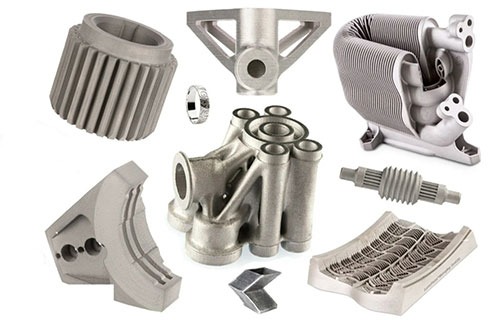
If you’re in product design, industrial manufacturing, or prototyping, choosing between HP Multi-Jet Fusion (MJF) and Selective Laser Sintering (SLS) 3D printing technologies can feel overwhelming. Both excel at printing with polymers and elastomers, create complex parts without supports, and deliver durable results—but their differences in materials, speed, cost, and part quality make them better for specific tasks.
Key takeaways
- Before diving into differences, let’s highlight what MJF and SLS have in common—these are the reasons both are top choices for polymer 3D printing:
- To help you decide, let’s break down their differences across 7 critical factors: materials, speed, part quality, cost, recyclability, size, and surface finish.
- Use this simple checklist to pick the right technology for your project:
What Are MJF and SLS 3D Printing Technologies?
First, let’s start with the basics. Both MJF and SLS are powder-based 3D printing technologies—they use fine plastic or elastomer powders to build parts layer by layer. The key difference lies in how they melt (sinter) the powder to form solid layers.
HP Multi-Jet Fusion (MJF) 3D Printing
MJF (HP Nylon Multi-Jet Fusion) is a newer technology, commercialized in 2017. Here’s how it works:
- The printer spreads a thin layer of powder (usually nylon) onto a build platform.
- It heats the powder to near-sintering temperature (just below melting point).
- An inkjet array sprays two liquids: a melting agent (on areas that need to become solid) to boost infrared light absorption, and a refiner agent (on part edges) for sharpness.
- An infrared light source scans the entire layer, sintering only the areas with melting agent.
- The platform lowers, a new powder layer is added, and the process repeats until the part is done.
MJF’s claim to fame? It’s fast—especially for high-volume production—and produces consistent parts with smooth surfaces.
Selective Laser Sintering (SLS) 3D Printing
SLS (Selective Laser Sintering) is a more established technology, patented in 1997. Its process is straightforward:
- A thin layer of powder is spread onto the build platform.
- A high-power CO₂ laser scans the layer, sintering the powder into the shape of the part’s cross-section (from a 3D CAD model).
- The platform lowers, a new powder layer is added, and the laser sinters again.
- This repeats until the part is fully formed.
SLS is loved for its material versatility—you can print with everything from nylon to glass-filled polymers—making it ideal for custom or specialized parts.
Key Similarities Between MJF and SLS
Before diving into differences, let’s highlight what MJF and SLS have in common—these are the reasons both are top choices for polymer 3D printing:
- Powder-based: Both use thermoplastic or elastomer powders, so there’s no need for support structures (unlike FDM or SLA). This lets you print complex geometries like hollow parts or interlocking components.
- Layer-by-layer building: Both build parts one thin layer at a time, ensuring precision for detailed designs.
- Durable end parts: Parts from both technologies are strong enough for functional use (e.g., gears, brackets) or prototypes that mimic final products.
- Thermoplastic focus: Both mainly use materials like nylon (PA 11, PA 12) and TPU (thermoplastic polyurethane), though SLS has more options.
Example: A medical device maker could use either MJF or SLS to print a custom nylon surgical tool handle—both would create a strong, sterilizable part without supports.
MJF vs. SLS: Detailed Comparison
To help you decide, let’s break down their differences across 7 critical factors: materials, speed, part quality, cost, recyclability, size, and surface finish. We’ll use tables and real data for clarity.
1. Material Options
Material choice often dictates which technology you use. SLS has a huge edge here, thanks to its longer history.
| Technology | Available Materials | Key Notes |
| MJF | PA 11 (nylon), PA 12 (nylon), TPU (elastomer) | Limited options—only a few materials are certified for MJF (mostly HP-branded powders). |
| SLS | PA 11, PA 12, PA 12 Glass-Filled, PEBA 2301 3D (flexible), Alumide (aluminum-filled), TPU | Wide range—great for parts that need extra strength (glass-filled), flexibility (PEBA), or metal-like properties (Alumide). |
Real-World Case: An aerospace company needs a lightweight, heat-resistant part. They choose SLS with PA 12 Glass-Filled (which SLS supports) because MJF doesn’t offer glass-filled materials—this part can withstand high temperatures in aircraft engines.
2. Processing Time
Time matters, especially for production runs. MJF is faster, but the gap narrows for single parts.
| Scenario | MJF | SLS |
| Single part | ~Same time as SLS (e.g., 2 hours for a small bracket). | ~Same time as MJF. |
| High-volume production | Much faster. Can print 50+ small parts simultaneously (e.g., 100 phone cases in 8 hours). | Slower. Prints fewer parts at once (e.g., 100 phone cases in 12 hours). |
| Total process (print + cooling) | Faster. MJF has a detachable build platform—parts cool outside the printer while the next job starts. | Slower. Parts must cool inside the printer (takes extra hours), delaying the next run. |
Example: A consumer electronics brand needs 500 custom nylon headphone earcups. They use MJF—total time is 30 hours, vs. 45 hours with SLS. This lets them launch their product 1 week earlier.
3. Part Quality: Accuracy, Strength, and Finish
Both make high-quality parts, but there are subtle differences that matter for specific projects.
Dimensional Accuracy & Resolution
| Technology | Feature Resolution | Max Part Size | Min Feature Size |
| MJF | Very high (sharp edges), but slightly lower than SLS. | 380 x 284 x 380 mm (about the size of a small microwave). | 0.5 mm (can print tiny details like thin ribs). |
| SLS | Slightly better (finer details). | 600 x 350 x 560 mm (about the size of a large cooler). | 0.6 mm (still precise, but not as small as MJF). |
Note: Both can warp if printing large flat surfaces—designers avoid this by adding ribs or curves.
Mechanical Performance
Here’s how MJF and SLS parts compare in strength and durability (using PA 12, the most common material for both):
| Performance Metric | MJF (PA 12) | SLS (PA 12) |
| Tensile Strength (resistance to pulling) | 1700 MPa (X/Y), 1800 MPa (Z) | 1650 MPa (X/Y), 1650 MPa (Z) |
| Tensile Modulus (stiffness) | 48 MPa (X/Y), 48 MPa (Z) | 48 MPa (X/Y), 42 MPa (Z) |
| Elongation at Break (how much it stretches before breaking) | 20% (X/Y), 15% (Z) | 18% (X/Y), 24% (Z) |
| Melting Point | 187°C | 176°C |
What this means: MJF parts are stiffer and stronger in the Z-direction (layer height), while SLS parts are more flexible (higher elongation at break). For example, a SLS-printed TPU gasket would stretch more than an MJF-printed one—great for seals that need to flex.
Surface Finish
| Technology | Surface Texture | Color |
| MJF | Grainy but slightly smoother (like fine sandpaper). | Gray or black (from the dark melting agent)—hard to dye other colors. |
| SLS | Grainy (coarser than MJF). | White or gray—easily dyed to any color (red, blue, black, etc.). |
Case: A toy company wants colorful action figure parts. They choose SLS—they print white parts, then dye them bright red or blue. MJF’s dark parts wouldn’t work for their design.
4. Cost
Cost depends on production volume. For small runs, they’re similar—but MJF shines at scale.
| Production Volume | MJF Cost | SLS Cost |
| Single part | ~Same as SLS (e.g., €15 for a small nylon bracket). | ~Same as MJF. |
| High-volume (1000+ parts) | Lower—MJF prints more parts at once, so per-part cost drops to €8–€10. | Higher—per-part cost stays around €12–€14. |
| Material cost | Slightly higher (MJF-specific powders are often proprietary). | Lower (SLS powders are more widely available from multiple suppliers). |
5. Powder Recyclability
Waste reduction is key for sustainability. MJF is more efficient here.
| Technology | Powder Recovery Rate | Notes |
| MJF | Up to 80% | Unused powder can be mixed with new powder for future prints, cutting waste. |
| SLS | 30%–50% | More powder is contaminated during printing, so less can be recycled. |
Example: A sustainable packaging company chooses MJF—recycling 80% of their powder saves them €500/month on material costs, compared to SLS’s 40% recovery.
How to write a spec that gets priced correctly
A drawing is a contract. If it leaves a number open, the shop fills that number in with its own default. The default is rarely the one you had in mind. Put these five lines on every RFQ and most of the back-and-forth disappears before it starts.
- File format and units, with the model exported in millimetres
- Process and material grade, not a trade name
- Critical features and the tolerance each one needs
- Surface finish and the faces it applies to
- Quantity for the pilot build and for the year
The point is not paperwork. Each line removes a decision the shop would otherwise make for you. A complete RFQ comes back priced. An incomplete one comes back guessed.
What actually drives the price
Buyers usually push on material because it is the line they can see. In practice the material is rarely the biggest number on a quote. These five lines decide most of it:
- build volume and orientation
- layer height and support structure
- material grade and colour
- post-processing and hand finishing
- quantity per build plate
Ask for the quote split by line. A supplier who cannot break it down is guessing, and you will pay for the guess. The line you can usually renegotiate is the tolerance band, not the raw material.
Problems you will meet, and the fix
Every process has a failure mode it prefers. The same four show up again and again on this kind of work, and none of them are mysteries once you know what to look for.
- Warping on long flat faces where the part lifts off the plate
- Layer lines showing through a cosmetic surface
- Support scars on a mating face nobody flagged
- Dimensional drift on thin walls after cooling
Catch the fault on the first part, not the hundredth. A first-article check costs an hour. A bad batch costs the whole order. Write the check into the purchase order so nobody has to remember it.
What to check on the first article
The first article is the cheapest inspection you will ever buy. Use it properly and the rest of the run becomes boring, which is exactly what you want.
- Every dimension on the drawing, with the measured value written beside it.
- The material certificate, matched to the heat or lot number on the parts.
- The finish against the sample you approved, under the same light.
- Fit against the mating part, assembled rather than measured.
- Packaging, because parts that arrive damaged were never in tolerance.
Check in this order: datums, then mating features, then cosmetic faces. If the datums are wrong, every number after them is noise. Keep the report on file. When a problem shows up in month six, that document is the only thing that tells you what changed.
How to compare two quotes fairly
Two numbers are not comparable unless the scope matches. Line them up before you decide, because a low number with three gaps is not a low number.
Same drawing, same material, same finish, same inspection. Anything else is a different job wearing the same part number. Then look at what each quote leaves out. Freight, packaging, certificates and tooling are the usual gaps.
Ask each supplier to state their assumptions in writing. The one who does is usually the one who has run the process before.
Scaling from one part to a batch
The first part teaches you the process. The hundredth teaches you the process cost.
Watch three things as volume grows: setup amortisation, tool wear, and how much hand work the finish still needs. If the unit price barely moves between ten and a hundred, the cost sits in material or in hand work, not in setup. Ask which, because only one of them is negotiable.
Lead time behaves the same way. A one-off is scheduled around other jobs. A repeat order is scheduled around your forecast. Give the shop a forecast and the lead time gets shorter, not longer.
How to read a supplier's quote
A quote is a short document with a long shadow. Four things in it decide whether the job runs smoothly, and only one of them is the price.
- The scope line. It should name the process, the material and the finish, not just the part.
- The tolerance basis. General tolerance or the drawing, and which standard it follows.
- The exclusions. Tooling, freight, certificates and inspection are the usual omissions.
- The validity date. Material prices move, and an open-ended quote is a promise nobody can keep.
Read the exclusions before you read the total. A quote that leaves out tooling is not cheaper. It is a quote for a different job.
What to send with the first order
The first order sets the pattern for every order after it. Send a complete package once and the shop files it, and the second order takes a fraction of the time.
- A STEP or native model plus a PDF drawing carrying the same revision letter.
- The material callout by standard number, not by trade name.
- The finish and the exact faces it applies to.
- Any test the part must pass: fit, seal, drop, salt spray, dielectric.
- A contact who can answer a question inside one working day.
Then write down what was agreed. An email that confirms the material, the finish and the date is worth more than a longer purchase order that leaves them open.
When this is the wrong choice
A good supplier tells you when the process does not fit. These are the cases where we say so.
- The volume is so low that setup costs more than the parts are worth.
- The tolerance is tighter than the process can hold without a second operation.
- The geometry cannot be made without a tool feature that will not pay back.
- The material you need is not available in the form the process requires.
- The schedule is shorter than the tooling or setup time, and nobody has said so yet.
None of these are refusals. They are reasons to look at a different route, and the earlier that conversation happens the cheaper it is. The most expensive mistake in manufacturing is a process chosen before the question was understood.
How to Choose Between MJF and SLS
Use this simple checklist to pick the right technology for your project:
| Choose MJF if… | Choose SLS if… |
| You need high-volume production (100+ parts). | You need specialized materials (glass-filled, PEBA, Alumide). |
| Speed is critical (tight deadlines). | You want to dye parts custom colors. |
| You need small, detailed parts (0.5mm features). | You need large parts (over 380mm in any dimension). |
| Sustainability (high powder recyclability) is a priority. | You need flexible parts (higher elongation at break). |
Our solution for 3D Printing Technology Comparison: MJF
YiguProto runs 3D printing in house, from a single prototype to a production batch. We quote the process, the material and the finish as separate lines, so you can see where the money goes instead of arguing with one number.
Send a STEP file or a drawing and you get a DFM report in one to two business days. It flags the features that add cost and the features that will not hold tolerance on the process you picked.
Every order ships with an inspection report on the features you call out. If a part misses, we make it again. Ready to price a part? Start with a free quote and DFM review, or read more about our 3D printing. You can also talk to an engineer before you commit to a drawing.
FAQ about 3D Printing Technology Comparison: MJF
What files do you need in order to quote?
A STEP file plus a PDF drawing that carries the same revision letter. The model carries the geometry and the drawing carries the intent. When the two disagree, the shop picks one, and it is never the one you meant.
Is there a minimum order quantity?
No hard minimum. One part is fine. What changes with volume is which costs dominate, so a single unit is priced mostly on setup and a thousand units are priced mostly on cycle time and material.
Can 3D Printing Technology Comparison: MJF be made in small quantities?
Yes, and small quantities are where a good supplier earns the next order. Setup dominates the price at low volume, so the cheapest route is usually the one with the fewest operations, not the cheapest material.
What should I check before approving the parts?
Datums first, then the features that mate, then the cosmetic faces. Ask for a dimensional report, a material certificate and a finish sample. A part can be inside every tolerance and still not fit, so assemble one before you sign.
Does the process work for prototypes as well as production?
Yes, and that is usually the point. Running the prototype on the production process removes a whole class of surprises, because the part you test is made the same way as the part you sell.
What tolerance can you hold on 3D Printing Technology Comparison: MJF?
The working default is ±0.1 mm on small features, ±0.3% on long spans. Tighter than that the process changes and so does the price, because every step tighter adds inspection time. Call out only the faces that mate with something else and leave the rest on the general tolerance.
The short version
3D Printing Technology Comparison: MJF rewards the buyer who reads the data sheet and the drawing together. Pick the option for the property that matters, not for the price per kilo.
Tighten only what mates. Test a sample before the run. Then let the process do the rest.