
Rapid Prototyping
Are Aluminum Alloy Prototypes Expensive? A Complete Cost Analysis
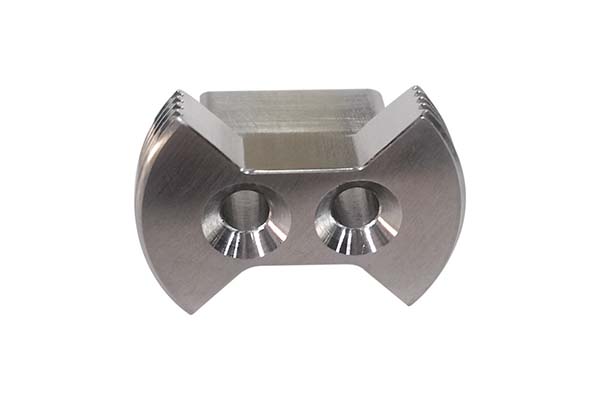
Are aluminum alloy prototypes expensive? The short answer is yes, compared to plastic ones. But the longer, more useful answer depends on what you are trying to achieve. An aluminum prototype costs more upfront, but it can save you money by catching design flaws early, especially for parts that need strength, heat resistance, or a premium look.
Key takeaways
- The price gap between aluminum and plastic prototypes comes down to four main factors. Understanding these helps you see where your money goes.
- Not all aluminum prototypes cost the same. Six key factors determine the final price.
- Aluminum prototypes are not always the right choice. But in specific situations, they deliver value that plastic cannot match.
- Several strategies lower costs without compromising the benefits of aluminum.
Why Do Aluminum Alloy Prototypes Cost More Than Plastic Ones?
The price gap between aluminum and plastic prototypes comes down to four main factors. Understanding these helps you see where your money goes.
Raw Material Costs Are Higher
Aluminum alloy costs more than common 3D printing plastics. This difference adds up for every part you make.
- Aluminum alloy (6061): 20 to 30 CNY per kilogram
- PLA plastic: 5 to 10 CNY per kilogram
- ABS plastic: 10 to 20 CNY per kilogram
Real impact: A one-kilogram prototype in aluminum costs about 25 CNY for material. The same part in PLA costs 8 CNY. That is three times higher for material alone.
Processing Creates Material Waste
CNC machining is a subtractive process. You start with a solid block and cut away what you do not need.
- Waste percentage: Aluminum prototypes generate 15% to 30% material waste.
- Plastic 3D printing: Adds material only where needed. Waste is under 5%.
- Cost effect: You pay for the raw block, not just the final part. A 500-gram finished part might need a one-kilogram block. Half the material ends up as chips.
Equipment and Labor Costs Are Higher
CNC machines cost more to buy and run than plastic 3D printers.
- Machine cost: A professional CNC machining center runs 500,000 to 2,000,000 CNY. An industrial FDM 3D printer costs 10,000 to 200,000 CNY.
- Programming time: A complex aluminum part needs two to four hours of CNC programming. A plastic part for 3D printing needs minimal setup.
- Machining time: Aluminum cuts slower than plastic. A one-hour plastic job becomes two to three hours for aluminum.
Surface Treatment Adds Extra Steps
Most aluminum prototypes need finishing to prevent corrosion and improve appearance.
- Sandblasting: 80 to 200 CNY per piece
- Anodization: 200 to 500 CNY per piece
- Polishing: 100 to 300 CNY per piece
Total effect: A simple aluminum bracket might cost:
- Material: 30 CNY
- Machining: 400 CNY
- Surface treatment: 200 CNY
- Total: 630 CNY
The same bracket in ABS plastic with basic sanding: 250 CNY.
What Factors Drive Aluminum Prototype Costs?
Not all aluminum prototypes cost the same. Six key factors determine the final price.
Processing Method Choice
The way you make the part sets the baseline cost.
| Processing Method | Typical Cost per Piece (1-10 pieces) | Best For |
|---|---|---|
| CNC machining | 800 – 3,000 CNY | Complex parts with tight tolerances, threaded holes, flat surfaces |
| Metal 3D printing | 2,000 – 8,000 CNY | Parts with internal lattice structures or organic shapes |
| Sheet metal fabrication | 500 – 1,500 CNY | Thin-walled enclosures, brackets, covers |
| Die casting | Not cost-effective for small batches | High-volume production only |
Case example: A client needed five aluminum housings with internal threads and mounting bosses. CNC machining cost 1,200 CNY per piece and took five days. Metal 3D printing quotes came in at 3,500 CNY per piece with longer lead times. CNC was clearly the right choice.
Part Complexity and Precision
More complex designs require more machine time and skilled labor.
- Simple bracket (±0.1mm tolerance): 600 CNY
- Housing with multiple pockets and holes (±0.05mm tolerance): 1,800 CNY
- Medical device component with thin walls and internal channels (±0.02mm tolerance): 3,500 CNY
Why complexity costs: Each feature adds programming time. Deep cavities need special long tools running at slower speeds. Tight tolerances require multiple inspection steps. A part that needs five different setups on a 5-axis CNC machine costs more than one machined in two setups.
Quantity and Batch Size
Aluminum prototypes do not benefit much from larger quantities. CNC machines cut one part at a time.
| Quantity | Cost per Piece (Aluminum CNC) | Cost per Piece (Plastic Injection Molding) |
|---|---|---|
| 1 piece | 1,500 CNY | 300 CNY (3D printed) |
| 10 pieces | 1,200 CNY | 80 CNY (molded, includes tooling amortization) |
| 50 pieces | 900 CNY | 30 CNY (molded) |
| 100 pieces | 750 CNY | 20 CNY (molded) |
Key insight: Plastic injection molding spreads the mold cost across thousands of parts, so unit price drops sharply. Aluminum CNC machining has no mold to amortize, so the per-piece price stays relatively flat.
Surface Treatment Requirements
Different finishes add different costs.
- As-machined: No extra cost, but surface shows tool marks.
- Sandblasted: Adds 100 to 200 CNY, gives uniform matte finish.
- Anodized (clear): Adds 200 to 400 CNY, provides corrosion protection.
- Anodized (colored): Adds 300 to 500 CNY, adds branding or aesthetic value.
- Polished and anodized: Adds 400 to 700 CNY, creates mirror-like finish.
Practical tip: A client wanted red anodized enclosures for a consumer product. We suggested sandblasting followed by clear anodization for internal surfaces, saving 150 CNY per piece without affecting visible areas.
Material Grade Selection
Not all aluminum alloys cost the same.
| Alloy | Cost per kg | Key Properties | Typical Use |
|---|---|---|---|
| 6061 | 25 CNY | Good strength, excellent machinability | General mechanical parts, housings |
| 6063 | 28 CNY | Better for extrusion, good finish | Architectural parts, trim |
| 7075 | 80 CNY | Very high strength, harder to machine | Aerospace components, high-stress parts |
| 2024 | 70 CNY | High strength, good fatigue resistance | Structural parts |
Rule of thumb: Use 6061 aluminum for 90% of prototypes. It machines well, costs less, and meets most requirements. Only upgrade to 7075 if you need the extra strength.
Supplier Location and Expertise
Where you buy matters as much as what you buy.
- Shenzhen/Dongguan cluster: 800 to 1,500 CNY for typical CNC aluminum part.
- Other Chinese cities: 1,000 to 1,800 CNY for same part.
- Western suppliers: 3,000 to 6,000 CNY equivalent.
Why cluster suppliers cost less: They specialize in prototypes, stock common materials, and have experienced programmers. Competition keeps prices down. A Shenzhen shop might machine your part in two hours while a general shop elsewhere takes four hours.
When Is an Aluminum Prototype Worth the Higher Cost?
Aluminum prototypes are not always the right choice. But in specific situations, they deliver value that plastic cannot match.
Testing Mechanical Performance
Plastic deforms under load. Aluminum holds its shape.
- Tensile strength: 6061 aluminum offers 276 MPa. ABS plastic offers 40 MPa. That is nearly seven times stronger.
- Heat resistance: Aluminum withstands temperatures up to 400°C. PLA softens at 60°C.
- Real example: A client testing a bicycle brake lever used an aluminum prototype. It revealed a stress concentration point that would have caused failure in production. A plastic prototype would have flexed and masked the issue, leading to costly recalls later.
Validating Assembly with Metal Components
If your final product uses metal parts, test with metal prototypes.
- Screw threads: Aluminum threads behave differently than plastic threads. Torque testing on an aluminum prototype confirms you have enough engagement.
- Thermal expansion: In a LED lighting assembly, aluminum and plastic expand at different rates. Testing with an aluminum housing ensures the lens stays attached at operating temperature.
- Electromagnetic interference: Aluminum shields electronics. A plastic prototype cannot verify that your enclosure blocks interference effectively.
Achieving Premium Aesthetics
Some products need the look and feel of metal.
- Consumer electronics: High-end headphones, smartphone cases, and audio equipment use anodized aluminum for its premium appearance.
- Automotive interiors: Knobs, trim pieces, and bezels in cars use aluminum for the tactile experience.
- Brand perception: A prototype that looks and feels like the final product helps secure funding or early customer commitments.
Case study: A startup developing a luxury smartwatch needed investor buy-in. They spent 8,000 CNY on five machined and anodized aluminum prototypes. The prototypes looked production-ready and helped close a 2 million CNY investment round.
Identifying Manufacturing Issues Early
Aluminum prototypes reveal problems that plastic hides.
- Draft angles: If your design needs draft for die casting, an aluminum CNC prototype can confirm you have enough.
- Wall thickness: Thin sections that work in plastic might crack in aluminum. Testing catches this before tooling.
- Finishing interactions: Anodization highlights surface imperfections. Better to see them on a prototype than on production parts.
How to write a spec that gets priced correctly
A drawing is a contract. If it leaves a number open, the shop fills that number in with its own default. The default is rarely the one you had in mind. Put these five lines on every RFQ and most of the back-and-forth disappears before it starts.
- A model you are willing to freeze for the build
- The question the prototype must answer
- Process and material that can answer it
- Tolerance on the features under test
- How many iterations you have budgeted
The point is not paperwork. Each line removes a decision the shop would otherwise make for you. A complete RFQ comes back priced. An incomplete one comes back guessed.
What actually drives the price
Buyers usually push on material because it is the line they can see. In practice the material is rarely the biggest number on a quote. These five lines decide most of it:
- process choice
- part size and feature count
- material
- finish and fit checks
- number of iterations
Ask for the quote split by line. A supplier who cannot break it down is guessing, and you will pay for the guess. The line you can usually renegotiate is the tolerance band, not the raw material.
Problems you will meet, and the fix
Every process has a failure mode it prefers. The same four show up again and again on this kind of work, and none of them are mysteries once you know what to look for.
- A prototype that is too good and hides a production problem
- A prototype that is too rough to test the real question
- Material chosen for speed rather than for the test
- No measurement plan, so the result is an opinion
Catch the fault on the first part, not the hundredth. A first-article check costs an hour. A bad batch costs the whole order. Write the check into the purchase order so nobody has to remember it.
What to check on the first article
The first article is the cheapest inspection you will ever buy. Use it properly and the rest of the run becomes boring, which is exactly what you want.
- Every dimension on the drawing, with the measured value written beside it.
- The material certificate, matched to the heat or lot number on the parts.
- The finish against the sample you approved, under the same light.
- Fit against the mating part, assembled rather than measured.
- Packaging, because parts that arrive damaged were never in tolerance.
Check in this order: datums, then mating features, then cosmetic faces. If the datums are wrong, every number after them is noise. Keep the report on file. When a problem shows up in month six, that document is the only thing that tells you what changed.
How Can You Reduce Aluminum Prototype Costs?
Several strategies lower costs without compromising the benefits of aluminum.
Optimize Your Design
Small design changes save machining time.
- Simplify curves: Replace complex freeform surfaces with simple radii where possible. A part with one curved face costs 20% less than one with three curved faces.
- Reduce deep cavities: Cavities deeper than 20mm need special tools. Keep depths under 15mm to use standard tooling.
- Avoid thin walls: Walls thinner than 1mm require slow speeds and careful fixturing. Aim for 1.5mm or more.
- Standardize hole sizes: Using common drill sizes means fewer tool changes. One client saved 12% by changing all holes to metric standard sizes.
Choose the Right Alloy
Do not over-specify the material.
- Use 6061 for most parts: It machines easily, costs less, and meets typical requirements.
- Reserve 7075 for high stress: Only upgrade if your FEA analysis shows 6061 is insufficient.
- Consider 6063 for cosmetic parts: It anodizes to a slightly better finish than 6061.
Limit Surface Treatment
Apply finishes only where they matter.
- Internal surfaces: Leave them as-machined or just sandblasted.
- Hidden features: Do not anodize threads or mounting faces unless corrosion is a concern.
- Selective finishing: Mask areas that do not need treatment. A client saved 300 CNY per part by only anodizing the visible exterior of an enclosure.
Combine Multiple Parts
If your assembly has several components, machine them from one block.
- Integrated design: Combine three brackets into one complex part. Machining time increases, but assembly and fixturing costs disappear.
- Example: A robotics company needed four mounting points around a central hub. Machining one integrated part cost 2,200 CNY. Machining four separate brackets and welding them cost 3,800 CNY plus assembly labor.
Work with Experienced Suppliers
Specialized shops optimize for prototype efficiency.
- Programming expertise: Experienced programmers choose efficient tool paths. A good shop machines your part in 20% less time than a general shop.
- Material knowledge: They stock common alloys and suggest substitutions when your specified material is unavailable or overkill.
- Process advice: They might suggest sheet metal fabrication instead of CNC for thin-walled parts, cutting cost by 40%.
Are aluminum alloy prototypes expensive? Compared to plastic, yes. A typical aluminum prototype costs three to five times more than an equivalent plastic part. But that comparison misses the point. Aluminum prototypes deliver value that plastic cannot: real mechanical testing, accurate assembly validation, premium aesthetics, and early identification of manufacturing issues. The key is matching the prototype to your needs. If you are testing form and fit for a low-stress part, start with plastic. If you need to verify strength, heat resistance, or metal assembly, invest in aluminum. And when you do choose aluminum, control costs by optimizing your design, selecting the right alloy, limiting surface treatment, and working with specialized suppliers. Used wisely, aluminum prototypes are not expensive—they are a smart investment in getting your product right before mass production.
Our solution for Aluminum Alloy Prototypes Expensive
YiguProto runs rapid prototyping in house, from a single prototype to a production batch. We quote the process, the material and the finish as separate lines, so you can see where the money goes instead of arguing with one number.
Send a STEP file or a drawing and you get a DFM report in one to two business days. It flags the features that add cost and the features that will not hold tolerance on the process you picked.
Every order ships with an inspection report on the features you call out. If a part misses, we make it again. Ready to price a part? Start with a free quote and DFM review, or read more about our rapid prototyping. You can also talk to an engineer before you commit to a drawing.
FAQ about Aluminum Alloy Prototypes Expensive
Can Aluminum Alloy Prototypes Expensive be made in small quantities?
Yes, and small quantities are where a good supplier earns the next order. Setup dominates the price at low volume, so the cheapest route is usually the one with the fewest operations, not the cheapest material.
Does the process work for prototypes as well as production?
Yes, and that is usually the point. Running the prototype on the production process removes a whole class of surprises, because the part you test is made the same way as the part you sell.
What material should I specify?
Specify by standard, not by trade name. A trade name can change under you between two orders; a standard number cannot. Then add the one property that actually decides the part, whether that is strength, heat resistance or chemical exposure.
What is Aluminum Alloy Prototypes Expensive used for?
Aluminum Alloy Prototypes Expensive turns up wherever the part has to do a real job at a predictable cost: brackets, housings, fixtures, covers and the fittings that hold them together. The honest test is whether the properties match the load and the environment, not whether the material is fashionable.
Is there a minimum order quantity?
No hard minimum. One part is fine. What changes with volume is which costs dominate, so a single unit is priced mostly on setup and a thousand units are priced mostly on cycle time and material.
How much does Aluminum Alloy Prototypes Expensive cost?
Price comes from five lines: material, machine or tool time, setup, finishing and inspection. The material itself is usually the smallest of them. Send a drawing and we will split the quote so you can see which line is doing the damage.
The short version
Aluminum Alloy Prototypes Expensive rewards the buyer who reads the data sheet and the drawing together. Pick the option for the property that matters, not for the price per kilo.
Tighten only what mates. Test a sample before the run. Then let the process do the rest.