
3D Printing
What Is Big Metal Additive Manufacturing, and How Does It Help Industries?
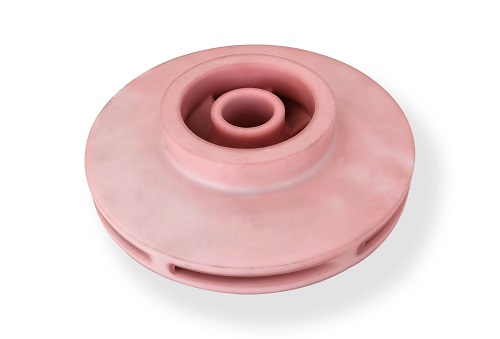
If you work in aerospace, automotive, or heavy machinery, you’ve likely wondered how to make large metal parts faster, cheaper, and with less waste. Big metal additive manufacturing—also called large-format metal 3D printing—answers that need. It builds full-scale, high-strength metal parts (often over 1 meter) layer by layer, instead of cutting them from solid blocks.
Key takeaways
- To grasp big metal additive, start with the basics of manufacturing methods.
- Not all big metal additive systems work the same. Three methods dominate the industry. Each has pros, cons, and ideal uses.
- Industries aren’t switching to big metal additive just because it’s new. It solves real, long-standing problems.
- Big metal additive isn’t one-size-fits-all. Different industries use it to solve unique challenges. Below’s how major sectors apply it today.
What Is Big Metal Additive?
To grasp big metal additive, start with the basics of manufacturing methods. Traditional metal work—like forging or machining—uses subtractive manufacturing. It takes a large metal billet and cuts away material to make the part. This wastes a lot of metal and limits design options.
Big metal additive is the opposite: additive manufacturing. It uses metal powders, wires, or sheets. A high-energy source (laser, electron beam, or arc) melts the material. It deposits the material layer by layer to build the part from scratch.
How Is It Different?
The key difference is size. Most desktop metal 3D printers max out at parts the size of a shoebox. Big metal systems handle build volumes up to 5m x 3m x 2m (from companies like Relativity Space or GE Additive).
Another difference is use case. Small-scale additive makes tiny, precise parts (e.g., medical implants). Big metal additive makes large, strong parts for industries that need them—aerospace, energy, and marine.
What Tech Powers It?
Not all big metal additive systems work the same. Three methods dominate the industry. Each has pros, cons, and ideal uses. Below is a breakdown of each, with real examples.
Direct Energy Deposition (DED)
DED is the most popular method for large parts. It uses a nozzle to feed metal powder or wire into a high-energy beam. The beam melts the material and deposits it onto a build plate.
DED is fast. It can also repair existing large parts—like cracked turbine blades. This saves companies millions compared to replacing the part entirely.
Example: Siemens Energy uses DED to repair gas turbine components. These parts weigh over 1,000 kg. Repairing them with DED cuts costs by 40% and extends the part’s life by 30%.
Powder Bed Fusion (PBF)
Traditional PBF is used for small parts. It spreads a thin layer of powder and melts it with a laser. Large-format PBF systems (like EOS’s M 400-4) scale this up.
PBF is less common than DED for big parts. Why? Powder beds for large parts are hard to keep uniform. But PBF offers better precision for detailed large parts—like satellite structures.
Example: NASA uses large-format PBF to make satellite components. These parts are 1.5 meters wide and need tight tolerances. PBF ensures every detail is precise, which is critical for space missions.
Wire Arc Additive (WAAM)
WAAM is the cheapest and fastest big metal method. It uses a standard welding arc to melt metal wire. It’s perfect for ultra-large, less complex parts—like construction beams or oil rig components.
Data Point: In 2024, a UK team used WAAM to build a 6-meter bridge support beam. It took just 3 days—compared to 2 weeks with traditional welding. The beam used 25% less metal and cost 30% less.
Tech Comparison Table
| Tech Method | Speed | Precision | Cost | Ideal Use |
|---|---|---|---|---|
| DED | Fast | Medium | Medium | Turbine parts, repairs |
| PBF | Slow | High | High | Satellite structures |
| WAAM | Very Fast | Low | Low | Bridge beams, oil rigs |
Why Adopt This Tech?
Industries aren’t switching to big metal additive just because it’s new. It solves real, long-standing problems. Below are the top reasons, with data and case studies to back them up.
Less Waste, Lower Costs
Traditional subtractive manufacturing for large parts generates up to 70% waste. For example, making an aircraft wing spar from an aluminum billet might cut away 1,500 kg to get a 300 kg part.
Big metal additive uses only the material needed. It cuts waste to less than 10%. This saves money on raw materials and waste disposal.
Case Study: Boeing used big metal additive for a 2-meter structural part in its 787 Dreamliner. Before, the part needed 12 components (machined and welded) and generated 800 kg of waste. With additive, Boeing makes it in one piece. Waste dropped by 90%, and it saves $300,000 per aircraft.
Faster Lead Times
Traditional methods for large parts (like custom turbine casings) take 6–12 months. They need custom molds or forging dies, which add time.
Big metal additive eliminates tooling. Lead times drop to 2–4 months. This helps companies meet deadlines and reduce downtime.
Data Point: A 2025 AMUG report found 78% of companies using big metal additive cut lead times by 30% or more. One heavy machinery maker reduced the time to make a 1.8-meter excavator arm from 5 months to 6 weeks.
More Design Freedom
Traditional manufacturing limits design. You can’t make parts with internal channels, hollow sections, or organic shapes without expensive secondary work.
Big metal additive lets engineers create topologically optimized parts. These parts are lighter, stronger, and tailored to their exact function. They have no unnecessary material.
Example: GE Renewable Energy redesigned a wind turbine hub with big metal additive. The original was 1.2 meters wide, weighed 800 kg, and had 10 welded parts. The additive version is 20% lighter (640 kg), made in one piece, and has internal cooling channels. It lasts 15% longer because there are no welds (a common failure point).
Who Uses This Tech?
Big metal additive isn’t one-size-fits-all. Different industries use it to solve unique challenges. Below’s how major sectors apply it today.
Aerospace and Defense
This is the largest adopter. It needs lightweight, high-strength parts for aircraft and rockets. Common uses include rocket components, aircraft structural parts, and military vehicle parts.
Example: Relativity Space’s Terran R rocket uses 3D-printed engines and fuel tanks. These parts are 3 meters tall. They’re 40% lighter than traditional parts and cut production time by 60%.
Authority Source: NASA’s Marshall Space Flight Center makes 2.4-meter rocket nozzles with big metal additive. The agency says these parts withstand extreme launch heat better and are 40% lighter.
Energy Sector
The energy industry uses big metal additive for two key needs: corrosion-resistant parts (oil and gas) and large complex parts (renewables).
- Offshore oil rig valves (made from corrosion-resistant Inconel)
- Wind turbine hubs and nacelle components
- Nuclear reactor parts (fewer joints mean fewer leaks)
Heavy Machinery
Companies making trucks, excavators, or construction equipment use big metal additive for custom or low-volume parts. It cuts costs and lead times.
Examples: Excavator arms optimized for strength and weight; truck frame rails made in one piece (instead of 5–6 welded sections); custom factory tooling made in days instead of weeks.
Construction
Construction is an emerging user. Big metal additive makes large, durable structures faster and with less material. In 2024, a Dutch company used WAAM to build a 10-meter steel bridge. It took 2 weeks (vs. 2 months traditional) and used 35% less steel.
How to write a spec that gets priced correctly
A drawing is a contract. If it leaves a number open, the shop fills that number in with its own default. The default is rarely the one you had in mind. Put these five lines on every RFQ and most of the back-and-forth disappears before it starts.
- File format and units, with the model exported in millimetres
- Process and material grade, not a trade name
- Critical features and the tolerance each one needs
- Surface finish and the faces it applies to
- Quantity for the pilot build and for the year
The point is not paperwork. Each line removes a decision the shop would otherwise make for you. A complete RFQ comes back priced. An incomplete one comes back guessed.
What actually drives the price
Buyers usually push on material because it is the line they can see. In practice the material is rarely the biggest number on a quote. These five lines decide most of it:
- build volume and orientation
- layer height and support structure
- material grade and colour
- post-processing and hand finishing
- quantity per build plate
Ask for the quote split by line. A supplier who cannot break it down is guessing, and you will pay for the guess. The line you can usually renegotiate is the tolerance band, not the raw material.
Problems you will meet, and the fix
Every process has a failure mode it prefers. The same four show up again and again on this kind of work, and none of them are mysteries once you know what to look for.
- Warping on long flat faces where the part lifts off the plate
- Layer lines showing through a cosmetic surface
- Support scars on a mating face nobody flagged
- Dimensional drift on thin walls after cooling
Catch the fault on the first part, not the hundredth. A first-article check costs an hour. A bad batch costs the whole order. Write the check into the purchase order so nobody has to remember it.
What to check on the first article
The first article is the cheapest inspection you will ever buy. Use it properly and the rest of the run becomes boring, which is exactly what you want.
- Every dimension on the drawing, with the measured value written beside it.
- The material certificate, matched to the heat or lot number on the parts.
- The finish against the sample you approved, under the same light.
- Fit against the mating part, assembled rather than measured.
- Packaging, because parts that arrive damaged were never in tolerance.
Check in this order: datums, then mating features, then cosmetic faces. If the datums are wrong, every number after them is noise. Keep the report on file. When a problem shows up in month six, that document is the only thing that tells you what changed.
How to compare two quotes fairly
Two numbers are not comparable unless the scope matches. Line them up before you decide, because a low number with three gaps is not a low number.
Same drawing, same material, same finish, same inspection. Anything else is a different job wearing the same part number. Then look at what each quote leaves out. Freight, packaging, certificates and tooling are the usual gaps.
Ask each supplier to state their assumptions in writing. The one who does is usually the one who has run the process before.
Scaling from one part to a batch
The first part teaches you the process. The hundredth teaches you the process cost.
Watch three things as volume grows: setup amortisation, tool wear, and how much hand work the finish still needs. If the unit price barely moves between ten and a hundred, the cost sits in material or in hand work, not in setup. Ask which, because only one of them is negotiable.
Lead time behaves the same way. A one-off is scheduled around other jobs. A repeat order is scheduled around your forecast. Give the shop a forecast and the lead time gets shorter, not longer.
How to read a supplier's quote
A quote is a short document with a long shadow. Four things in it decide whether the job runs smoothly, and only one of them is the price.
- The scope line. It should name the process, the material and the finish, not just the part.
- The tolerance basis. General tolerance or the drawing, and which standard it follows.
- The exclusions. Tooling, freight, certificates and inspection are the usual omissions.
- The validity date. Material prices move, and an open-ended quote is a promise nobody can keep.
Read the exclusions before you read the total. A quote that leaves out tooling is not cheaper. It is a quote for a different job.
What to send with the first order
The first order sets the pattern for every order after it. Send a complete package once and the shop files it, and the second order takes a fraction of the time.
- A STEP or native model plus a PDF drawing carrying the same revision letter.
- The material callout by standard number, not by trade name.
- The finish and the exact faces it applies to.
- Any test the part must pass: fit, seal, drop, salt spray, dielectric.
- A contact who can answer a question inside one working day.
Then write down what was agreed. An email that confirms the material, the finish and the date is worth more than a longer purchase order that leaves them open.
What Challenges Exist?
Big metal additive has many benefits, but it’s not perfect. Below are the top challenges and practical solutions to overcome them.
High Initial Costs
Big metal systems cost $500,000 to $5 million. Metal materials are 2–3x more expensive than traditional stock. This is a barrier for small to mid-sized companies.
Solutions: Use additive service bureaus (like Proto Labs or 3D Systems) to outsource printing. This avoids upfront costs. Larger companies can lease equipment or use “pay-per-part” models (offered by GE Additive).
Quality Control Issues
Large metal parts need to meet strict standards (e.g., ASTM for aerospace, API for oil and gas). Ensuring every layer of a 2-meter part is uniform and defect-free is hard.
Solutions: Use advanced monitoring tools. In-process cameras, thermal sensors, or AI software (like Sigma Labs’ PrintRite3D) track printing in real time. They detect defects as they happen. Work with certification bodies early (e.g., AS9100 for aerospace has additive guidelines).
Material Limitations
Not all metals work well with big metal additive. Common materials: aluminum, titanium, stainless steel, Inconel. Exotic alloys (hafnium, tungsten) are hard to print—they need extreme heat.
Solutions: Partner with suppliers to develop custom alloys. BASF and EOS launched AlSi10Mg+, an aluminum alloy optimized for large PBF. It’s 15% stronger than standard aluminum and prints with fewer defects.
Post-Processing Needs
Most big metal parts need post-processing: machining, heat treatment, or painting. For large parts, this adds time and cost.
Solutions: Integrate post-processing into design. Use self-supporting structures to cut support material. Some systems (like DMG MORI’s LASERTEC 65 3D) combine printing and machining in one machine. This cuts post-processing time by 40%.
Big metal additive manufacturing is changing how industries make large metal parts. It cuts waste, speeds up production, and lets engineers design better parts. It’s not a “future tech”—it’s a tool companies use today to stay competitive.
The tech has challenges, but solutions exist. From outsourcing to advanced monitoring tools, companies of all sizes can adopt it. Whether you’re in aerospace, energy, or heavy machinery, big metal additive can transform your production—saving time, money, and resources.
As materials and systems improve, the possibilities will grow. Now is the time to explore how big metal additive can work for your business.
Our solution for Big Metal Additive Manufacturing
YiguProto runs 3D printing in house, from a single prototype to a production batch. We quote the process, the material and the finish as separate lines, so you can see where the money goes instead of arguing with one number.
Send a STEP file or a drawing and you get a DFM report in one to two business days. It flags the features that add cost and the features that will not hold tolerance on the process you picked.
Every order ships with an inspection report on the features you call out. If a part misses, we make it again. Ready to price a part? Start with a free quote and DFM review, or read more about our 3D printing. You can also talk to an engineer before you commit to a drawing.
FAQ about Big Metal Additive Manufacturing
What should I check before approving the parts?
Datums first, then the features that mate, then the cosmetic faces. Ask for a dimensional report, a material certificate and a finish sample. A part can be inside every tolerance and still not fit, so assemble one before you sign.
How much does Big Metal Additive Manufacturing cost?
Price comes from five lines: material, machine or tool time, setup, finishing and inspection. The material itself is usually the smallest of them. Send a drawing and we will split the quote so you can see which line is doing the damage.
How long does a first article take?
Usually a few business days once the drawing is frozen, and longer if tooling is involved. The date we give you is the date we confirm in writing, not the date we hope for.
What happens if a part is out of specification?
We measure it against the same drawing you approved and, if it misses, we make it again. What matters is that the report exists, because a disagreement without data is just an opinion.
What files do you need in order to quote?
A STEP file plus a PDF drawing that carries the same revision letter. The model carries the geometry and the drawing carries the intent. When the two disagree, the shop picks one, and it is never the one you meant.
Is there a minimum order quantity?
No hard minimum. One part is fine. What changes with volume is which costs dominate, so a single unit is priced mostly on setup and a thousand units are priced mostly on cycle time and material.
The short version
Big Metal Additive Manufacturing rewards the buyer who reads the data sheet and the drawing together. Pick the option for the property that matters, not for the price per kilo.
Tighten only what mates. Test a sample before the run. Then let the process do the rest.