
Rapid Prototyping
How to Choose Right Prototype Design Company: The Complete Guide
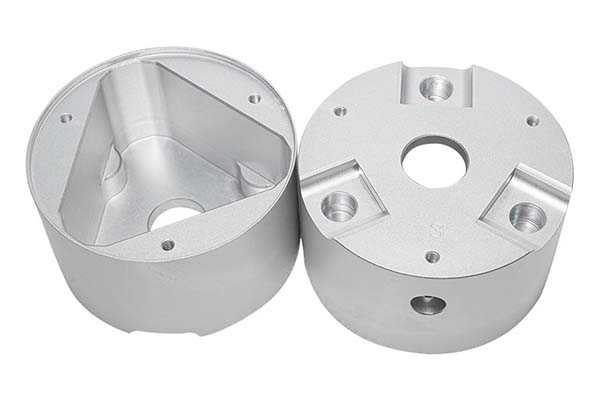
Turning a great idea into a real product ready for market is one of the biggest challenges any inventor faces. The process is complicated, full of technical problems and critical decisions. One of the most important choices you will make is picking the right prototype design company. This decision directly affects how long your project takes, how much it costs, and how good your final product will be.
Key takeaways
- Hiring a prototype design company is not about finding someone to do a job for you. It is about choosing a strategic partner.
- To systematically evaluate and compare potential firms, we use a proven method built on five pillars.
- To help you dig deeper than a company’s sales pitch, use this interview script during your evaluation calls.
- Learning from other people’s mistakes is far less expensive than making them yourself. We have seen hundreds of hardware projects succeed and fail.
Why Your Choice Matters
Hiring a prototype design company is not about finding someone to do a job for you. It is about choosing a strategic partner. The long-term effects of this choice are huge, often deciding whether your product launch succeeds or fails. Understanding how important this decision is will change how you think about it—from just looking for a service to finding a team that becomes part of your company.
The Path to Success
A great prototype design company makes everything better. They bring experience from different fields that reduces risks in your project and finds opportunities you might have missed. With the right partner, you can expect:
- Smoother development with clear goals and deadlines
- Creative solutions to tough engineering problems
- A focus on making your product easy to manufacture from the beginning
- Faster time to market, giving you an advantage over competitors
- A strong, reliable, and attractive product that users will love
- Safe handling and protection of your ideas and designs
The Path to Failure
On the other hand, a bad partnership can be disastrous. According to CB Insights, while 35% of startups fail because there is no market need for their product, many also fail because of poor product design and execution. A bad design firm contributes directly to this. The risks include:
- Constantly going over budget with surprise fees
- Missing deadlines that hurt your launch plans
- A prototype that does not work properly or cannot be mass-produced
- Poor communication that leads to frustration and wasted time
- Potential loss or mishandling of your ideas and designs
- A final product that does not meet user expectations and market needs
The 5 Pillar Framework
To systematically evaluate and compare potential firms, we use a proven method built on five pillars. Any good prototype design company must show excellence in all these key areas. This framework will be your assessment tool, making sure you cover all important aspects before making a commitment.
Pillar 1: Core Services
A physical product combines many different engineering skills. A truly integrated firm has deep, in-house expertise in all four critical areas, making sure they work together smoothly rather than separately.
Industrial design (ID): This is the art and science of user experience. ID focuses on how the product looks, feels, and works for users. It is the look and feel that connects with users emotionally and makes them want the product. A great industrial designer makes sure the product is not only beautiful but also easy and comfortable to use.
Mechanical engineering (ME): This is the physics of the product. ME deals with structure, moving parts, materials, and housings. It is the bones and muscles that make sure the product is strong, reliable, and can handle real-world use. Mechanical engineers solve problems related to durability, assembly, and heat management.
Electrical engineering (EE): This covers the product’s circuits, component selection, power management, and sensor integration. EE is the nervous system that brings the device to life. This team designs circuit boards and makes sure all electronic parts work together.
Firmware and software: This is the code that runs directly on the hardware, controlling how it behaves and enabling its features. Firmware is the brain that makes the product smart. It reads sensor data, controls motors, manages power, and communicates with other devices or the internet.
A key sign of a firm’s ability is how these teams work together. Ask how they solve conflicts, for example, when the desired look clashes with a mechanical or electronic requirement. Their answer will show how mature their integrated process is.
Pillar 2: Portfolio Review
A company’s portfolio is more than just pretty pictures. It is proof of what they can do. When reviewing it, you must look past the surface and analyze it for evidence of relevant problem-solving.
Look for the following:
Relevance: Do they have real experience in your product’s category? Whether it is consumer electronics, medical devices, IoT hardware, or robotics, experience in your specific sector is very valuable. It means they already understand the unique challenges, user expectations, and regulatory hurdles of your market.
Complexity: Have they successfully delivered products with similar technical complexity? Look for projects that involved complicated mechanisms, sophisticated electronics, or challenging material requirements like yours. A firm that has only designed simple plastic cases may not be ready for a complex, multi-board IoT device.
Problem-solving: Do their case studies tell a story? A great case study explains the initial challenge, describes the development process, and details the final outcome. It should highlight specific problems they encountered and the clever solutions they created. Vague project descriptions are a warning sign.
Success metrics: What happened after the prototype was built? Look for evidence of real-world success. Did the product successfully launch into the market? Did it win design or industry awards? Are there positive user reviews? This shows their ability to design products that are not just technically sound but also commercially successful.
Pillar 3: DFM Expertise
Design for Manufacturability (DFM) is the practice of designing a product so that it can be produced efficiently, reliably, and cost-effectively at scale. This is arguably the most important value a high-quality prototype design company provides. A beautiful, functional prototype that cannot be mass-produced within your target cost is a complete failure.
DFM is not something you think about later. It must be part of the design process from the very beginning. Signs of real DFM expertise include:
Early material and process selection: They discuss manufacturing methods and material choices during the initial concept and design phases, not after the prototype is complete.
Tolerance and assembly analysis: They perform analyses to make sure parts will fit together correctly every time on a high-volume assembly line.
Supplier collaboration: They have established relationships with manufacturers and involve them in the design process to get early feedback on feasibility and cost.
A prototype is not the final goal. A manufacturable product is. A partner that does not understand manufacturing is setting you up for a painful and expensive redesign for manufacturing phase later. The key question to ask any potential firm is: “Can you show me a specific example of a design change you made on a past project to improve manufacturability and reduce unit cost?” Their ability to answer this question in detail is a strong sign of their DFM skills.
Pillar 4: Fabrication Models
Once a design is ready for prototyping, it needs to be built. Firms typically follow one of two models for this: in-house fabrication or a managed network of external partners. Neither model is automatically better, but one may be a better fit for your specific project needs. The important factor is how well the company manages the process, not just what machines they own.
| Feature | In-House Fabrication | Managed Outsourced Network |
|---|---|---|
| Speed for iterations | Very fast. Direct access for quick-turn parts | Slower. Depends on partner queue and shipping |
| Cost | Can be higher due to overhead | Can be more cost-effective using specialized vendors |
| Quality control | Direct and immediate. Hands-on control | Requires robust QC process. Relies on partner standards |
| Range of capabilities | Limited to in-house machines and materials | Virtually unlimited. Access to any process or material |
| Scalability to production | Poor. Lab machines not suitable for mass production | Excellent. Network often includes production-level partners |
For early-stage projects requiring rapid, frequent changes, a firm with in-house 3D printing and CNC capabilities can be a significant advantage. For projects that require specialized processes like injection molding, metal stamping, or complex finishes, or are closer to production, a firm with a well-vetted and managed outsourced network offers greater flexibility and a smoother path to scale.
Pillar 5: Project Management
Exceptional engineering talent becomes useless with poor project management and weak communication. This pillar is the connective tissue that holds the entire development process together, ensuring that progress is steady, transparent, and aligned with your goals.
Signs of a professional project management system include:
A single point of contact: You should be assigned a dedicated project manager who is your primary contact. This person is responsible for the project’s success, manages the internal team, and communicates progress to you.
Regular, scheduled updates: The firm should have a clear and consistent schedule for communication, such as weekly status reports, bi-weekly sprint reviews, and standing meetings. You should never have to wonder about the status of your project.
Transparent tools: Look for the use of modern project management software like Jira, Asana, or a custom client portal. Ideally, you will have some level of access to see tasks, timelines, and progress for yourself.
Clear milestone definitions: Before the project begins, the proposal or statement of work should clearly define the phases, gates, and specific deliverables for each stage. You should know exactly what to expect and when.
A lack of a defined process is a warning sign of future chaos.
The 20 Essential Questions
To help you dig deeper than a company’s sales pitch, use this interview script during your evaluation calls. These questions are organized by the five pillars and are designed to reveal a firm’s true process, expertise, and culture.
On Core Services
- Our product involves [describe a specific technical challenge]. Can you walk me through a similar project you have completed?
Why it matters: This tests for direct, relevant experience beyond a simple portfolio image. - Who from your team would be assigned to my project? Can we review the backgrounds of the lead ID, ME, and EE?
Why it matters: You are hiring the team, not just the company. You need to know who is actually doing the work. - How do your industrial design and engineering teams resolve creative or technical differences?
Why it matters: This reveals their internal collaboration process and whether they have a structured way to balance form and function. - For firmware development, what is your process for code documentation and version control?
Why it matters: This shows their professionalism and ensures you receive well-documented, maintainable code, not a black box.
On Portfolio and Case Studies
- This project in your portfolio is similar to our vision. Can you tell me what the biggest unexpected challenge was and how you solved it?
Why it matters: This moves beyond the success story and tests for genuine problem-solving skills and transparency. - What was the ultimate outcome of that project? Did it go to mass production?
Why it matters: This helps you distinguish between firms that make looks-like prototypes versus firms that design commercially successful products. - Can you provide a reference from a client on a project of similar complexity?
Why it matters: A confident firm with happy clients will not hesitate. This is a powerful validation step. - How do you measure the success of a design engagement?
Why it matters: Their answer reveals what they value. Is it just delivering a prototype, or is it your product’s market success?
On DFM Expertise
- At what specific stage in your process do you begin DFM analysis?
Why it matters: The only correct answer is from the beginning or during the concept phase. DFM as a final step is a major red flag. - Can you provide an example where you modified a design to reduce the cost of goods sold? What was the change and the impact?
Why it matters: This is a direct test of their ability to think commercially and design for profitability. - What is your relationship with contract manufacturers? Do you help with the transition to a manufacturer?
Why it matters: A good partner provides a warm handoff to manufacturing, ensuring a smooth transition from prototype to production. - Can we speak with one of your manufacturing partners to understand your collaboration process?
Why it matters: This is an advanced due diligence step that shows you are serious and tests the strength of their claimed partnerships.
On Fabrication Models
- What prototyping and fabrication equipment do you have in-house?
Why it matters: This helps you understand their capabilities for rapid, early-stage iteration. - For processes you do not have in-house, what is your process for vetting and managing external suppliers?
Why it matters: If they use a network, their management process is everything. It shows how they ensure quality and timeliness. - How do you handle quality control for parts made by external partners?
Why it matters: This reveals their commitment to quality. Do they just trust the vendor, or do they have their own inspection process? - For a quick design change, what is the typical turnaround time to get a new part in hand?
Why it matters: This gives you a practical sense of their speed and agility during the crucial iteration phase.
On Project Management
- What project management software do you use, and will we have access to it?
Why it matters: This is a direct question about transparency. A no or a vague answer is a concern. - What is the cadence for project updates, and what format do they take?
Why it matters: This sets clear expectations for communication from the very beginning. - What happens when there is an unexpected delay or a design change request from our side? What does your change order process look like?
Why it matters: Problems are inevitable. A professional firm has a clear, fair process for handling them. - Who will be our day-to-day point of contact, and what is their technical background?
Why it matters: A project manager with a technical background can communicate more effectively and solve problems faster.
7 Red Flags to Watch For
Learning from other people’s mistakes is far less expensive than making them yourself. We have seen hundreds of hardware projects succeed and fail. The failures often share common warning signs that you can see early in the process if you know what to look for.
1. The Vague Quote
A proposal that is overly simple, with a single price and a vague description of design and prototyping, is a huge red flag. A professional proposal is detailed, with clear phases, specific deliverables for each phase, and associated costs. If the quote lacks this detail, you will face surprise charges later.
2. No Hard Questions
A great partner will immediately start stress-testing your idea. They will ask tough questions about your target user, your cost goals, and your core assumptions. A firm that simply nods and says they can build whatever you ask without any pushback is a sign of inexperience or indifference. They are acting as an order-taker, not a partner.
3. The Yes Man
If a firm agrees to every feature, an impossibly fast timeline, and an unrealistically low budget, they are either lying to get the contract or they do not understand the project’s complexity. An honest partner will tell you what is and is not possible upfront.
4. No Clear Process
If you ask, “Can you walk me through your project management process?” and you get a vague, rambling answer, run. They should be able to clearly explain how they manage tasks, communicate with clients, and handle milestones. A lack of a defined system means you can expect missed deadlines and constant confusion.
5. Renders, Not Products
Stunning 3D renderings are easy to create. They prove nothing about a firm’s engineering capabilities. Dig through their portfolio and look for photos and videos of real, physical, working products. Better yet, look for products that are currently for sale. A portfolio heavy on computer-generated images suggests they are stronger at marketing than engineering.
6. They Own Design Files
This is a non-negotiable red flag. You are paying the firm to create intellectual property for your company. The final design files—CAD, schematics, Gerber files, source code—must belong to you. Some firms try to include clauses stating they retain ownership, effectively holding your product hostage. Clarify IP ownership in writing before signing anything.
7. Poor Early Communication
The sales and quoting process is a preview of what it will be like to work with the firm. Are they responsive to your emails? Are their answers clear and professional? Do they follow up when they say they will? If they are disorganized or slow before you have paid them, that behavior will only get worse once the project is underway.
Your Partner Is Your Product’s First Investor
You are now equipped with a strong framework to analyze and select the right prototype design company. The 5-pillar evaluation system provides a structured approach, the 20 questions give you the tools to dig deep, and the 7 red flags act as your early warning system.
Remember, this is not a simple transaction. The firm you choose is investing its most valuable assets—time, expertise, and reputation—into your vision. In return, you are trusting them with your money and your dream. Think of them as your product’s very first investor and partner. By using this guide, you can move forward with the confidence needed to find a team that will not just build your prototype, but will champion your product’s journey from concept to commercial success. Choose a partner, not just a provider.
How we can help
YiguProto runs rapid prototyping in house, from a single prototype to a production batch. We quote the process, the material and the finish as separate lines, so you can see where the money goes instead of arguing with one number.
Send a STEP file or a drawing and you get a DFM report in one to two business days. It flags the features that add cost and the features that will not hold tolerance on the process you picked.
Every order ships with an inspection report on the features you call out. If a part misses, we make it again. Ready to price a part? Start with a free quote and DFM review, or read more about our rapid prototyping. You can also talk to an engineer before you commit to a drawing.
Frequently asked questions
What files do you need in order to quote?
A STEP file plus a PDF drawing that carries the same revision letter. The model carries the geometry and the drawing carries the intent. When the two disagree, the shop picks one, and it is never the one you meant.
What should I check before approving the parts?
Datums first, then the features that mate, then the cosmetic faces. Ask for a dimensional report, a material certificate and a finish sample. A part can be inside every tolerance and still not fit, so assemble one before you sign.
How do I compare two quotes fairly?
Match the scope first: same drawing, same material, same finish, same inspection. Then read the exclusions. Freight, tooling and certificates are the usual gaps, and a low number with three gaps is not a low number.
What happens if a part is out of specification?
We measure it against the same drawing you approved and, if it misses, we make it again. What matters is that the report exists, because a disagreement without data is just an opinion.
How long does a first article take?
Usually a few business days once the drawing is frozen, and longer if tooling is involved. The date we give you is the date we confirm in writing, not the date we hope for.
Does the process work for prototypes as well as production?
Yes, and that is usually the point. Running the prototype on the production process removes a whole class of surprises, because the part you test is made the same way as the part you sell.
The short version
Good parts reward the buyer who reads the data sheet and the drawing together. Pick the option for the property that matters, not for the price per kilo.
Tighten only what mates. Test a sample before the run. Then let the process do the rest.