
Industry Applications
Is Die Casting in China the Right Choice for Your Manufacturing Needs?
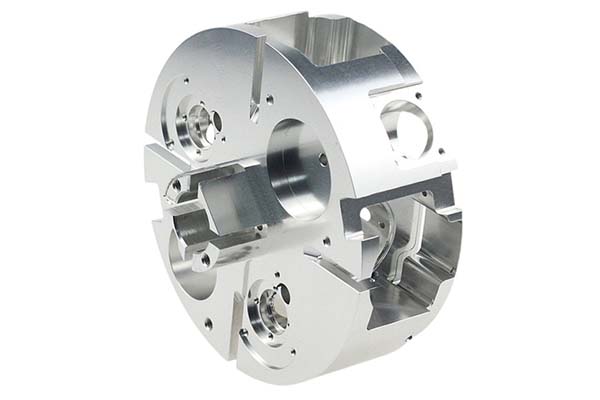
If you are searching for die casting services in China, you are likely looking for a reliable manufacturing partner that balances quality, cost, and efficiency. China has emerged as a global leader in die casting, supplying industries from automotive to electronics with precision components at competitive prices.
Key takeaways
- Die casting is a manufacturing process where molten metal—usually aluminum, zinc, or magnesium—is forced into a reusable mold called a die under high pressure.
- Real-World Example: A Chinese die caster worked with a European electronics brand to switch from plastic to aluminum die casting for smartphone chargers.
- Mold Design and Fabrication: Engineers use CAD software to design the die, typically made of high-grade steel to withstand high pressure and heat.
- Check Certifications: Look for ISO 9001, IATF 16949 for automotive, and ISO 14001 for environmental management.
What Is Die Casting and Why Does China Excel at It?
Die casting is a manufacturing process where molten metal—usually aluminum, zinc, or magnesium—is forced into a reusable mold called a die under high pressure. Once cooled, the metal solidifies into the desired shape, making it ideal for producing high-volume, complex parts with tight tolerances.
China’s dominance in die casting results from decades of investment in technology, infrastructure, and talent:
Scale: Chinese die casting factories often operate 24/7, with production lines capable of churning out millions of parts monthly. A leading factory in Guangdong Province specializes in automotive aluminum die casting and produces over 500,000 engine components per month—meeting the demands of global car brands like Tesla and Volkswagen.
Technology Adoption: Over 80% of top Chinese die casting companies now use computer-aided design (CAD) and computer-aided manufacturing (CAM) software to optimize mold designs and reduce defects. Many also have automated production lines with robots handling tasks like part removal and quality checks to improve consistency.
Material Access: China is one of the world’s largest producers of aluminum accounting for ~60% of global output and zinc. This proximity to raw materials cuts down on transportation costs and ensures a steady supply—crucial for long-term production runs.
What Key Materials Are Used in Chinese Die Casting?
| Material | Common Uses | Key Advantages | Typical Cost (USD/kg) |
|---|---|---|---|
| Aluminum | Automotive parts, electronics housings | Lightweight (1/3 the weight of steel), high strength-to-weight ratio, corrosion-resistant | $2.50–$4.00 |
| Zinc | Small components like zippers, toys, connectors | Low melting point, high precision, excellent surface finish | $3.00–$5.50 |
| Magnesium | Aerospace parts, laptop casings | Even lighter than aluminum, high stiffness | $4.50–$7.00 |
Real-World Example: A Chinese die caster worked with a European electronics brand to switch from plastic to aluminum die casting for smartphone chargers. The aluminum parts were more durable, heat-resistant, and could be produced at a lower cost—saving the brand 15% per unit—thanks to China’s efficient aluminum supply chain.
How Does the Chinese Die Casting Process Work?
Mold Design and Fabrication: Engineers use CAD software to design the die, typically made of high-grade steel to withstand high pressure and heat. This takes 2–6 weeks. Top Chinese suppliers often test molds with 3D printing prototypes first to catch design flaws early.
Metal Melting: The chosen metal like aluminum alloy is melted in a furnace at temperatures between 600°C for zinc and 700°C for aluminum. Chinese factories use energy-efficient furnaces to reduce costs and minimize environmental impact.
Injection: The molten metal is injected into the die under high pressure of 2,000–15,000 psi. This ensures the metal fills every detail of the mold, even for complex shapes like automotive sensor housings.
Cooling and Demolding: The die is cooled with water channels for 10–60 seconds depending on part size. A robot or worker then removes the solidified part from the die.
Finishing: Parts may go through trimming to remove excess metal, polishing, or coating such as powder coating for corrosion resistance. Many Chinese factories offer in-house finishing to streamline production.
Quality Control: Every batch is tested for defects using tools like X-rays to check for internal cracks and coordinate-measuring machines (CMMs) to verify dimensions. Reputable suppliers provide QC reports with every order.
Why Do Businesses Worldwide Choose Chinese Die Casting Suppliers?
Cost Competitiveness Without Sacrificing Quality
Chinese suppliers offer lower prices due to economies of scale, lower labor costs compared to Western countries, and access to cheap raw materials. A zinc die casting part costing $2.00 to produce in the U.S. might cost $1.20–$1.50 in China. Many Chinese factories meet international standards like ISO 9001 for quality management and IATF 16949 for automotive-specific quality.
Fast Turnaround Times
China’s robust supply chain means shorter lead times. A standard die casting order from mold approval to delivery can take 4–8 weeks in China, compared to 8–12 weeks in Europe. This is critical for businesses launching new products or needing to restock quickly. A U.S. startup needed 100,000 aluminum brackets for a new appliance line; their Chinese supplier delivered the order in 5 weeks—2 weeks faster than their previous U.S.-based vendor.
Customization Capabilities
Chinese die casters excel at creating custom parts for niche industries. Whether you need a tiny zinc connector for medical devices or a large aluminum chassis for solar panels, suppliers adjust processes to meet your specs. One Chinese factory developed a custom magnesium die casting process for a drone manufacturer, reducing the part weight by 30% while maintaining strength.
How to Choose the Right Die Casting Supplier in China?
Check Certifications: Look for ISO 9001, IATF 16949 for automotive, and ISO 14001 for environmental management. These certifications prove the supplier follows global best practices.
Ask for a Factory Tour or Virtual Tour: A reputable supplier lets you visit their facility or shows a live video to see equipment, QC processes, and working conditions. Avoid suppliers who refuse to share factory details.
Request Samples and References: Ask for a sample of your part to test quality. Request references from other international clients—ideally in your industry. A supplier that works with big brands like Apple or BMW is often more reliable.
Clarify Communication: Ensure the supplier has English-speaking staff to avoid misunderstandings. Agree on communication channels like email or WeChat and response times.
Negotiate Terms: Discuss lead times, minimum order quantities, payment terms such as 30% deposit, 70% before delivery, and warranty policies. Most Chinese suppliers are flexible—don’t hesitate to ask for adjustments.
What Trends Are Shaping the Future of Die Casting in China?
Shift to Electric Vehicles
As the world moves to EVs, demand for large aluminum die casting parts like battery housings and chassis is soaring. Chinese suppliers invest heavily in “giga-casting” technology—using massive machines to produce single-piece EV chassis, reducing weight and assembly costs. BYD, China’s largest EV maker, uses giga-casting to produce chassis parts for its Han EV model, and many suppliers now offer this service to international EV brands.
Sustainability
The Chinese government pushes for greener manufacturing, so die casters adopt eco-friendly practices: using recycled aluminum which uses 95% less energy than producing new aluminum, installing solar panels to power factories, and reducing water waste. By 2025, over 50% of Chinese die casting factories are expected to use 100% recycled aluminum for certain parts.
Smart Manufacturing
AI and IoT integrate into die casting processes. Some factories use AI to monitor furnace temperatures and predict mold failures, reducing downtime by 20%. IoT sensors track parts through the production line, making it easier to trace defects back to specific steps.
China’s die casting industry, accounting for over 60% of global production, serves automotive, electronics, aerospace, and consumer goods sectors with aluminum, zinc, and magnesium parts. With 4–8 week lead times, costs 20–40% lower than Western countries, and certifications including ISO 9001 and IATF 16949, Chinese suppliers deliver quality and efficiency. The process involves mold design in 2–6 weeks, injection pressures of 2,000–15,000 psi, and rigorous QC using X-rays and CMMs. Choosing the right partner means checking certifications, requesting samples, and clarifying communication. With trends toward giga-casting for EVs, sustainability with 95% less energy recycled aluminum, and smart manufacturing, die casting in China remains a strategic choice for global businesses.
How to write a spec that gets priced correctly
A drawing is a contract. If it leaves a number open, the shop fills that number in with its own default. The default is rarely the one you had in mind. Put these five lines on every RFQ and most of the back-and-forth disappears before it starts.
- The application and the environment it runs in
- The standard the part must meet
- Process and material that can meet it
- Inspection and documentation package
- Volume and ramp schedule
The point is not paperwork. Each line removes a decision the shop would otherwise make for you. A complete RFQ comes back priced. An incomplete one comes back guessed.
What actually drives the price
Buyers usually push on material because it is the line they can see. In practice the material is rarely the biggest number on a quote. These five lines decide most of it:
- process selection
- material and certification
- tolerance band
- inspection and documentation
- volume
Ask for the quote split by line. A supplier who cannot break it down is guessing, and you will pay for the guess. The line you can usually renegotiate is the tolerance band, not the raw material.
Problems you will meet, and the fix
Every process has a failure mode it prefers. The same four show up again and again on this kind of work, and none of them are mysteries once you know what to look for.
- A consumer-grade process chosen for an industrial duty
- Documentation that arrives after the parts
- A tolerance tighter than the application needs
- No plan for the second source
Catch the fault on the first part, not the hundredth. A first-article check costs an hour. A bad batch costs the whole order. Write the check into the purchase order so nobody has to remember it.
What to check on the first article
The first article is the cheapest inspection you will ever buy. Use it properly and the rest of the run becomes boring, which is exactly what you want.
- Every dimension on the drawing, with the measured value written beside it.
- The material certificate, matched to the heat or lot number on the parts.
- The finish against the sample you approved, under the same light.
- Fit against the mating part, assembled rather than measured.
- Packaging, because parts that arrive damaged were never in tolerance.
Check in this order: datums, then mating features, then cosmetic faces. If the datums are wrong, every number after them is noise. Keep the report on file. When a problem shows up in month six, that document is the only thing that tells you what changed.
How to compare two quotes fairly
Two numbers are not comparable unless the scope matches. Line them up before you decide, because a low number with three gaps is not a low number.
Same drawing, same material, same finish, same inspection. Anything else is a different job wearing the same part number. Then look at what each quote leaves out. Freight, packaging, certificates and tooling are the usual gaps.
Ask each supplier to state their assumptions in writing. The one who does is usually the one who has run the process before.
Scaling from one part to a batch
The first part teaches you the process. The hundredth teaches you the process cost.
Watch three things as volume grows: setup amortisation, tool wear, and how much hand work the finish still needs. If the unit price barely moves between ten and a hundred, the cost sits in material or in hand work, not in setup. Ask which, because only one of them is negotiable.
Lead time behaves the same way. A one-off is scheduled around other jobs. A repeat order is scheduled around your forecast. Give the shop a forecast and the lead time gets shorter, not longer.
How to read a supplier's quote
A quote is a short document with a long shadow. Four things in it decide whether the job runs smoothly, and only one of them is the price.
- The scope line. It should name the process, the material and the finish, not just the part.
- The tolerance basis. General tolerance or the drawing, and which standard it follows.
- The exclusions. Tooling, freight, certificates and inspection are the usual omissions.
- The validity date. Material prices move, and an open-ended quote is a promise nobody can keep.
Read the exclusions before you read the total. A quote that leaves out tooling is not cheaper. It is a quote for a different job.
What to send with the first order
The first order sets the pattern for every order after it. Send a complete package once and the shop files it, and the second order takes a fraction of the time.
- A STEP or native model plus a PDF drawing carrying the same revision letter.
- The material callout by standard number, not by trade name.
- The finish and the exact faces it applies to.
- Any test the part must pass: fit, seal, drop, salt spray, dielectric.
- A contact who can answer a question inside one working day.
Then write down what was agreed. An email that confirms the material, the finish and the date is worth more than a longer purchase order that leaves them open.
FAQ About Die Casting China
What’s the minimum order quantity for Chinese die casting suppliers?
MOQs vary by supplier and part size. For small parts like zinc connectors, MOQs might be 10,000 units. For larger parts like aluminum EV components, MOQs could be 1,000 units. Many suppliers offer lower MOQs for prototypes or small-batch orders.
How long does it take to make a die in China?
A standard mold takes 2–6 weeks to fabricate. Complex molds with intricate details or large sizes might take 8–12 weeks. Some suppliers offer “express” mold services for urgent orders in 1–2 weeks at a premium.
Are Chinese die casting parts compliant with international standards?
Yes—most reputable suppliers meet ISO 9001, IATF 16949 for automotive, and RoHS for electronics. Always ask for test reports or certifications to confirm compliance with your industry’s standards.
What’s the typical payment term for Chinese die casting suppliers?
The most common term is 30% deposit upfront to start mold fabrication and 70% before shipment. Some suppliers may offer net-30 terms for long-term clients with good credit.
Can Chinese suppliers handle post-production processes like painting or assembly?
Yes—many offer one-stop services including painting, powder coating, CNC machining, and assembly. This saves time and money by eliminating the need to work with multiple vendors.
Our solution for Die Casting
YiguProto runs contract manufacturing in house, from a single prototype to a production batch. We quote the process, the material and the finish as separate lines, so you can see where the money goes instead of arguing with one number.
Send a STEP file or a drawing and you get a DFM report in one to two business days. It flags the features that add cost and the features that will not hold tolerance on the process you picked.
Every order ships with an inspection report on the features you call out. If a part misses, we make it again. Ready to price a part? Start with a free quote and DFM review, or read more about our contract manufacturing. You can also talk to an engineer before you commit to a drawing.
FAQ about Die Casting
What is the lead time for Die Casting?
Expect 5 to 20 business days depending on process and volume. Tooling, material stock and the finishing queue all move that number, so we confirm the date in writing before the run starts rather than after.
How do I compare two quotes fairly?
Match the scope first: same drawing, same material, same finish, same inspection. Then read the exclusions. Freight, tooling and certificates are the usual gaps, and a low number with three gaps is not a low number.
How long does a first article take?
Usually a few business days once the drawing is frozen, and longer if tooling is involved. The date we give you is the date we confirm in writing, not the date we hope for.
What material should I specify?
Specify by standard, not by trade name. A trade name can change under you between two orders; a standard number cannot. Then add the one property that actually decides the part, whether that is strength, heat resistance or chemical exposure.
Does the process work for prototypes as well as production?
Yes, and that is usually the point. Running the prototype on the production process removes a whole class of surprises, because the part you test is made the same way as the part you sell.
What is Die Casting used for?
Die Casting turns up wherever the part has to do a real job at a predictable cost: brackets, housings, fixtures, covers and the fittings that hold them together. The honest test is whether the properties match the load and the environment, not whether the material is fashionable.
The short version
Die Casting rewards the buyer who reads the data sheet and the drawing together. Pick the option for the property that matters, not for the price per kilo.
Tighten only what mates. Test a sample before the run. Then let the process do the rest.