
Blogs
Direct Metal Laser Sintering (DMLS) 3D Printing Services
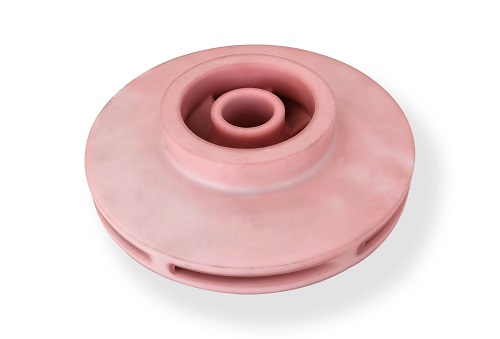
Unlock the future of manufacturing with Direct Metal Laser Sintering (DMLS) 3D Printing—the core of Metal Additive Manufacturing that turns complex designs into high-quality metal parts.
Key takeaways
- At our shop we leverage DMLS to offer a range of capabilities tailored to your needs.
- Direct Metal Laser Sintering (DMLS) is a cutting-edge Metal Additive Manufacturing technology, often categorized under Selective Laser Sintering and Metal Powder Fusion.
- The Laser Sintering Process of DMLS is a precise, automated workflow that transforms digital files into metal parts.
- DMLS works with a wide range of metals, each chosen for its unique properties to suit specific industry needs.

Our Capabilities: Delivering Precision and Customization
At our shop we leverage DMLS to offer a range of capabilities tailored to your needs. Our focus is on turning your ideas into tangible, high-performance parts, supported by the following strengths:
| Capability | Key Features | Applications |
| Precision DMLS Printing | Dimensional accuracy up to ±0.05mm, ideal for tight-tolerance components | Medical devices, aerospace parts |
| Custom Metal Parts | Tailored designs for unique industry needs, from small brackets to large assemblies | Automotive tooling, industrial machinery |
| High-Quality Manufacturing | ISO 9001-certified processes, 99.9% part density for enhanced durability | Defense components, energy equipment |
| Complex Geometries | Ability to print internal channels, lattice structures, and organic shapes | Robotics components, consumer goods |
| Rapid Prototyping Services | Turnaround times as fast as 3 days for functional prototypes | Product development, design iterations |
| Industrial Grade Solutions | Compatible with high-performance metals for harsh environments | Aerospace engines, oil and gas equipment |
We also offer Advanced Metal Printing options and Customized Solutions to scale production from small batches to large volumes, ensuring every part meets High-Tolerance Parts standards.
What Is DMLS 3D Printing?

Direct Metal Laser Sintering (DMLS) is a cutting-edge Metal Additive Manufacturing technology, often categorized under Selective Laser Sintering and Metal Powder Fusion. Unlike traditional manufacturing, it uses a high-powered laser to sinter (heat and fuse) fine Metal Powders in a layer-by-layer manner—known as Layer-by-Layer Fabrication—to create 3D objects directly from digital designs.
As a key part of Industrial 3D Printing and Digital Manufacturing, DMLS eliminates the need for molds or tooling, making it ideal for both Rapid Prototyping and end-use part production. At its core, Metal Sintering Technology enables the creation of intricate geometries that would be impossible with conventional methods, revolutionizing how industries approach manufacturing.
Process: How DMLS Works Step-by-Step
The Laser Sintering Process of DMLS is a precise, automated workflow that transforms digital files into metal parts. Here’s a breakdown of the key steps:
- Digital Design Preparation: Start with a 3D CAD model (e.g., STL file). Our team optimizes the design for DMLS, adding support structures if needed to ensure stability during printing.
- Powder Bed Setup: A thin layer of Metal Powders (e.g., stainless steel, titanium) is spread evenly across the build platform of the DMLS machine—this is the foundation of Metal Powder Layering.
- Laser Sintering: A high-powered laser (typically fiber laser) melts and fuses the powder in specific areas, following the CAD design. This Layer-by-Layer Construction repeats, with each new layer (50-100μm thick) added on top of the previous one.
- Build Completion: Once printing ends, the build platform cools. The part is then removed from the excess powder, which can be recycled for future use (boosting material efficiency).
- Post-Processing: Post-Processing Techniques like machining, polishing, or heat treatment refine the part’s surface and mechanical properties.
- Quality Control: Every part undergoes Quality Control in DMLS, including dimensional checks and material testing, to ensure it meets specifications.
This Additive Manufacturing Process bridges Digital Design to Production seamlessly, with Laser Melting at its core to create dense, strong parts.
Materials: High-Performance Metals for DMLS
DMLS works with a wide range of metals, each chosen for its unique properties to suit specific industry needs. Below is a table of common 3D Printing Materials used in our DMLS processes:
| Material Type | Key Alloys/Variants | Mechanical Properties (Typical) | Primary Industries |
| Stainless Steel | 316L, 17-4 PH | Tensile Strength: 550-1200 MPa; Corrosion Resistance | Medical, Food Processing, Marine |
| Titanium Alloys | Ti-6Al-4V, Ti-6Al-4V ELI | Tensile Strength: 860-950 MPa; Biocompatibility | Medical (implants), Aerospace |
| Aluminum Alloys | AlSi10Mg | Tensile Strength: 300-350 MPa; Lightweight (2.7 g/cm³) | Automotive, Electronics |
| Cobalt Chrome | CoCrMo | Tensile Strength: 1250 MPa; Wear Resistance | Medical (dental, orthopedics), Aerospace |
| Nickel Alloys | Inconel 718, Hastelloy X | Tensile Strength: 1200-1400 MPa; High-Temperature Resistance | Aerospace (engines), Energy |
| Copper Alloys | CuCrZr | Thermal Conductivity: 330 W/mK; Electrical Conductivity | Electronics, Heat Exchangers |
| Precious Metals | Gold (Au), Silver (Ag) | High Conductivity; Aesthetic Appeal | Jewelry, Electronics (high-end) |
| Super Alloys | Waspaloy, René 41 | Tensile Strength: 1300 MPa; Resistance to Oxidation | Aerospace, Defense |
We also offer Composite Materials for specialized applications, such as metal matrix composites (MMCs) for enhanced strength.
Surface Treatment: Enhancing Part Performance
After DMLS printing, Surface Treatment is critical to improve part functionality, durability, and appearance. Our team offers a full suite of treatment options:
| Treatment Type | Purpose | Benefits | Typical Applications |
| Surface Finishing | Smooth rough surfaces | Reduced friction, improved aesthetics | Consumer goods, medical devices |
| Heat Treatment | Strengthen or soften material | Enhanced hardness, reduced internal stress | Aerospace parts, tooling |
| Machining | Achieve tight tolerances | Dimensional accuracy, smooth edges | Automotive components, aerospace |
| Polishing | Create a glossy finish | Improved appearance, easier cleaning | Medical implants, consumer goods |
| Coating | Add protective layer | Corrosion resistance, wear resistance | Marine parts, oil and gas equipment |
| Anodizing | Form oxide layer on aluminum | Enhanced durability, color customization | Electronics, automotive trim |
| Plating | Add metal layer (e.g., nickel, chrome) | Improved conductivity, aesthetic appeal | Electronics, jewelry |
| Sandblasting | Create matte texture | Uniform surface, improved adhesion for coatings | Industrial machinery, tooling |
| Painting | Add color and protection | UV resistance, chemical resistance | Consumer goods, outdoor equipment |
| Surface Hardening | Increase surface strength | Resistance to wear and impact | Gear parts, defense components |
Tolerances: Ensuring Precision in Every Part
Tolerances are a cornerstone of DMLS, as they define how closely a part matches its design specifications. Our DMLS processes deliver High Precision Tolerances and Tight Tolerances to meet the strictest industry standards.

| Tolerance Aspect | Our Capability | Industry Standard | Measurement Method |
| Dimensional Accuracy | ±0.05mm for parts up to 100mm; ±0.1mm for parts 100-200mm | ±0.1mm (average) | Coordinate Measuring Machine (CMM) |
| Tolerance Levels | Up to IT8 (ISO standard) for critical features | IT10-IT12 (average) | Optical Comparator |
| Precision Engineering | Consistent layer height (50-100μm) | 100-200μm (average) | Laser Profilometer |
| Tolerance Testing | 100% inspection for critical parts; random sampling for others | 50% inspection (average) | Digital Calipers, Micrometers |
We prioritize Quality Control and Quality Assurance at every stage, using advanced measurement tools to verify tolerances. This ensures parts perform reliably in applications like medical devices (where precision saves lives) and aerospace (where even small deviations can cause failures).
Applications Industry: Where DMLS Makes a Difference
DMLS is used across a wide range of industries, thanks to its versatility and performance. Below are key sectors and their DMLS applications:
| Industry | Key Applications | Materials Used | Benefits Realized |
| Aerospace | Engine components, brackets, fuel nozzles | Titanium Alloys, Nickel Alloys | Reduced weight (saves fuel), complex designs |
| Automotive | Custom tooling, lightweight parts, prototypes | Aluminum Alloys, Stainless Steel | Faster prototyping, improved fuel efficiency |
| Medical Devices | Hip implants, dental crowns, surgical instruments | Titanium Alloys, Cobalt Chrome | Biocompatibility, custom fit for patients |
| Industrial Manufacturing | Gear parts, pumps, valves | Stainless Steel, Nickel Alloys | Durability, resistance to harsh conditions |
| Electronics | Heat sinks, conductive parts | Copper Alloys, Aluminum Alloys | High thermal conductivity, lightweight |
| Defense | Weapon components, armor parts | Titanium Alloys, Stainless Steel | Strength, resistance to corrosion |
| Tooling | Injection molds, dies | Stainless Steel, Cobalt Chrome | Longer tool life, complex mold designs |
| Energy | Turbine parts, oil and gas components | Nickel Alloys, Stainless Steel | High-temperature resistance, durability |
| Robotics | Lightweight joints, custom components | Aluminum Alloys, Titanium Alloys | Improved robot agility, precision |

Case Study 3: Automotive Tooling
- Client: A major automotive brand
- Challenge: Need a custom injection mold for a new car part, with a 2-week deadline (traditional mold making takes 6 weeks).
- Solution: Used DMLS with Stainless Steel to print the mold. Added cooling channels to reduce part cycle time.
- Results:
- Mold delivered in 10 days
- 20% faster part cycle time (from 60s to 48s)
- Mold lasted 10,000 cycles (meets automotive standards)
Testimonial: “DMLS saved our project—we met the launch deadline and reduced costs by 30%.” – Automotive Manufacturing Director
Case Studies: Real-World Success with DMLS
Our DMLS solutions have helped clients across industries solve complex manufacturing challenges. Here are three standout Case Studies:
Case Study 1: Aerospace Fuel Nozzle
- Client: A leading aerospace manufacturer
- Challenge: Need a lightweight, complex fuel nozzle to improve engine efficiency. Traditional casting could not create the internal channels required.
- Solution: Used DMLS with Titanium Alloys to print the nozzle, incorporating intricate internal channels.
- Results:
- 30% weight reduction (saves 500kg of fuel per aircraft annually)
- 60% faster production time (from 8 weeks to 3 weeks)
- 99.9% part density, meeting aerospace standards
- Testimonial: “DMLS transformed our fuel nozzle design—we now have a part that’s lighter, stronger, and cheaper to produce.” – Aerospace Client Engineer
Case Study 2: Medical Hip Implant
- Client: A medical device company
- Challenge: Create custom hip implants that fit patients perfectly, reducing post-surgery complications.
- Solution: Used DMLS with Titanium Alloys (biocompatible) to print implants based on patient CT scans. Added a porous surface for better bone integration.
- Results:
- 100% custom fit for each patient
- 40% reduction in post-surgery recovery time
- 0% implant rejection rate (over 500 patients)
- Testimonial: “DMLS has allowed us to provide personalized care to patients—something traditional manufacturing could never do.” – Medical Device Product Manager
How to write a spec that gets priced correctly
A drawing is a contract. If it leaves a number open, the shop fills that number in with its own default. The default is rarely the one you had in mind. Put these five lines on every RFQ and most of the back-and-forth disappears before it starts.
- A model and a drawing that agree
- Material by standard number
- Tolerance only where it mates
- Finish and the faces it applies to
- Quantity and required date
The point is not paperwork. Each line removes a decision the shop would otherwise make for you. A complete RFQ comes back priced. An incomplete one comes back guessed.
What actually drives the price
Buyers usually push on material because it is the line they can see. In practice the material is rarely the biggest number on a quote. These five lines decide most of it:
- process choice
- material
- tolerance band
- finish
- volume
Ask for the quote split by line. A supplier who cannot break it down is guessing, and you will pay for the guess. The line you can usually renegotiate is the tolerance band, not the raw material.
Problems you will meet, and the fix
Every process has a failure mode it prefers. The same four show up again and again on this kind of work, and none of them are mysteries once you know what to look for.
- A drawing that contradicts the model
- A tolerance with no datum
- A cosmetic callout with no approved sample
- A quote compared against a different scope
Catch the fault on the first part, not the hundredth. A first-article check costs an hour. A bad batch costs the whole order. Write the check into the purchase order so nobody has to remember it.
What to check on the first article
The first article is the cheapest inspection you will ever buy. Use it properly and the rest of the run becomes boring, which is exactly what you want.
- Every dimension on the drawing, with the measured value written beside it.
- The material certificate, matched to the heat or lot number on the parts.
- The finish against the sample you approved, under the same light.
- Fit against the mating part, assembled rather than measured.
- Packaging, because parts that arrive damaged were never in tolerance.
Check in this order: datums, then mating features, then cosmetic faces. If the datums are wrong, every number after them is noise. Keep the report on file. When a problem shows up in month six, that document is the only thing that tells you what changed.
How to compare two quotes fairly
Two numbers are not comparable unless the scope matches. Line them up before you decide, because a low number with three gaps is not a low number.
Same drawing, same material, same finish, same inspection. Anything else is a different job wearing the same part number. Then look at what each quote leaves out. Freight, packaging, certificates and tooling are the usual gaps.
Ask each supplier to state their assumptions in writing. The one who does is usually the one who has run the process before.
Scaling from one part to a batch
The first part teaches you the process. The hundredth teaches you the process cost.
Watch three things as volume grows: setup amortisation, tool wear, and how much hand work the finish still needs. If the unit price barely moves between ten and a hundred, the cost sits in material or in hand work, not in setup. Ask which, because only one of them is negotiable.
Lead time behaves the same way. A one-off is scheduled around other jobs. A repeat order is scheduled around your forecast. Give the shop a forecast and the lead time gets shorter, not longer.
How to read a supplier's quote
A quote is a short document with a long shadow. Four things in it decide whether the job runs smoothly, and only one of them is the price.
- The scope line. It should name the process, the material and the finish, not just the part.
- The tolerance basis. General tolerance or the drawing, and which standard it follows.
- The exclusions. Tooling, freight, certificates and inspection are the usual omissions.
- The validity date. Material prices move, and an open-ended quote is a promise nobody can keep.
Read the exclusions before you read the total. A quote that leaves out tooling is not cheaper. It is a quote for a different job.
What to send with the first order
The first order sets the pattern for every order after it. Send a complete package once and the shop files it, and the second order takes a fraction of the time.
- A STEP or native model plus a PDF drawing carrying the same revision letter.
- The material callout by standard number, not by trade name.
- The finish and the exact faces it applies to.
- Any test the part must pass: fit, seal, drop, salt spray, dielectric.
- A contact who can answer a question inside one working day.
Then write down what was agreed. An email that confirms the material, the finish and the date is worth more than a longer purchase order that leaves them open.
FAQ about Direct Metal Laser Sintering (DMLS) 3D Printing
Our solution for Direct Metal Laser Sintering (DMLS)
YiguProto runs custom manufacturing in house, from a single prototype to a production batch. We quote the process, the material and the finish as separate lines, so you can see where the money goes instead of arguing with one number.
Send a STEP file or a drawing and you get a DFM report in one to two business days. It flags the features that add cost and the features that will not hold tolerance on the process you picked.
Every order ships with an inspection report on the features you call out. If a part misses, we make it again. Ready to price a part? Start with a free quote and DFM review, or read more about our custom manufacturing. You can also talk to an engineer before you commit to a drawing.
FAQ about Direct Metal Laser Sintering (DMLS)
What is Direct Metal Laser Sintering (DMLS) 3D Printing?
DMLS is an additive manufacturing technology that builds parts by using a laser to selectively sinter metal powder layer by layer. It is widely used in industries such as aerospace, automotive, and medical, allowing for the production of complex metal parts with high precision and strength. The process starts with a 3D model, which is then sliced into layers. The laser melts the metal powder in the specified areas to form the part, layer by layer, until the final object is complete.
What are the advantages of DMLS 3D Printing?
There are several advantages. First, it can create highly complex geometries that are difficult or impossible to achieve with traditional manufacturing methods. This allows for the design of parts with intricate internal structures and optimized weight. Second, it offers excellent mechanical properties, as the sintered metal parts are dense and strong. Third, it reduces material waste compared to subtractive manufacturing processes, since only the required amount of metal powder is used. Additionally, it enables faster prototyping and production, as parts can be built directly from digital models without the need for tooling.
What types of materials can be used in DMLS 3D Printing?
A variety of metal materials are suitable for DMLS. Commonly used materials include stainless steel, titanium alloys, aluminum alloys, and nickel-based super-alloys. These materials are chosen based on the specific requirements of the application, such as strength, corrosion resistance, and temperature resistance. For example, titanium alloys are often used in aerospace applications due to their high strength-to-weight ratio and excellent corrosion resistance, while stainless steel is popular for its durability and ease of use in various industrial applications.
What tolerance can you hold on Direct Metal Laser Sintering (DMLS)?
The working default is ±0.1 mm as a working default. Tighter than that the process changes and so does the price, because every step tighter adds inspection time. Call out only the faces that mate with something else and leave the rest on the general tolerance.
How do I compare two quotes fairly?
Match the scope first: same drawing, same material, same finish, same inspection. Then read the exclusions. Freight, tooling and certificates are the usual gaps, and a low number with three gaps is not a low number.
Is there a minimum order quantity?
No hard minimum. One part is fine. What changes with volume is which costs dominate, so a single unit is priced mostly on setup and a thousand units are priced mostly on cycle time and material.
The short version
Direct Metal Laser Sintering (DMLS) rewards the buyer who reads the data sheet and the drawing together. Pick the option for the property that matters, not for the price per kilo.
Tighten only what mates. Test a sample before the run. Then let the process do the rest.