
Blogs
Our Engineering Plastics Injection Molding Services
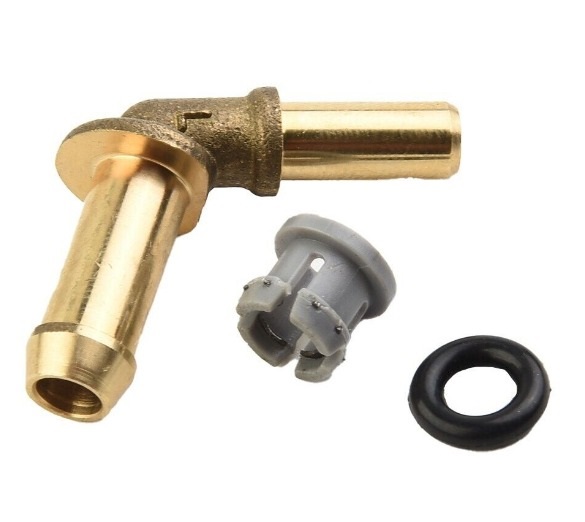
Our Engineering Plastics Injection Molding Services, explained the way we would explain it across a table: what it is good at, what it costs you, and the details that keep the part out of the scrap bin.
Key takeaways
- Unlock the full potential of your products with our premium engineering-plastics injection molding services.
- We offer a comprehensive range of engineering-plastics injection molding capabilities to meet the demands of diverse industries—from micro-components to large structural parts.
- Engineering-plastics injection molding is a specialized manufacturing process focused on creating high-performance, load-bearing parts using advanced thermoplastics—known as engineering plastics.
- The engineering plastic injection cycle is a precise, data-driven sequence optimized for high-performance materials.
Our Engineering Plastics Injection Molding Services
Unlock the full potential of your products with our premium engineering-plastics injection molding services. We specialize in high-performance polymer molding for automotive, medical, aerospace, and electronics—delivering precision technical thermoplastics molding with multi-shot capability, clean-room standards, and global supply reliability.
Partner with experts in engineering resin injection to turn complex designs into durable, high-strength components that outperform traditional materials.

Our Engineering Plastics Molding Capabilities
We offer a comprehensive range of engineering-plastics injection molding capabilities to meet the demands of diverse industries—from micro-components to large structural parts. Below is a detailed breakdown of our core strengths:
| Capability | Key Features | Typical Applications |
| Multi-Shot Engineering Molding | 2–4 shot cycles; bonds different materials (e.g., PC + TPE); reduces assembly steps by 40% | Power-tool grips, automotive interior trims, consumer electronics casings |
| Insert/Over-Molding Technical Resins | Integrates metal inserts (threads, pins) or over-molds soft-touch materials; enhances functionality | Electrical connectors, medical device handles, industrial gear hubs |
| High-Tolerance Molding | Achieves ±0.02–0.05 mm tolerance; supported by in-line laser measurement | LCP 5G connectors, POM precision gears, aerospace sensor housings |
| Clean-Room Molding | Class 8 (100,000) clean rooms; ISO 13485 compliant; particle-free processing | Medical devices (dialysis components, surgical tools), pharmaceutical packaging |
| Micro Molding Engineering | Produces parts as small as 0.1 mm; maintains precision at micro-scale | Miniature sensors, micro-electrical contacts, hearing aid components |
| Large-Part Engineering Molding | Molds parts up to 2 meters in length; uses 1,000+ ton presses | Automotive radiator tanks, industrial pump housings, lighting fixtures |
| Gas-Assist Molding | Injects nitrogen gas to create hollow sections; reduces material use by 25% | Large structural parts (automotive door panels), thick-walled components |
| Global Engineering Supply | Warehouses in 6 regions (NA, EU, APAC, MEA, SA, Oceania); 2–5 day delivery | Multi-national automotive/electronics brands, global medical device firms |
Our in-mold assembly further streamlines production—combining multiple parts into one during molding to cut lead times and costs.
What Is Engineering Plastics Injection Molding?

Engineering-plastics injection molding is a specialized manufacturing process focused on creating high-performance, load-bearing parts using advanced thermoplastics—known as engineering plastics. Unlike commodity plastics (e.g., polyethylene), these technical thermoplastics molding materials offer superior mechanical, thermal, and chemical properties, making them ideal for structural and critical applications.
At its core, engineering resin injection transforms raw polymer pellets (often reinforced with fibers or additives) into precision parts via high-pressure injection into custom molds. Our advanced polymer service simplifies this technology for clients: we explain how structural plastic molding differs from standard injection molding—emphasizing its focus on dimensional accuracy, thermal stability, and long-term performance in harsh environments (e.g., automotive under-hood heat or medical sterilization).
Key terms in engineering-grade injection include:
- Technical Thermoplastics: Polymers designed for high-performance (e.g., PA, PC, PEEK) rather than basic uses.
- Structural Molding: Creating parts that bear loads, resist stress, or function in critical systems.
Precision Engineering: Achieving tight tolerances (down to ±0.05 mm) for fit-and-function reliability.
The Engineering Plastics Injection Molding Process
The engineering plastic injection cycle is a precise, data-driven sequence optimized for high-performance materials. Below is a step-by-step overview, with critical parameters that ensure part quality:
Step 1: Material Preparation
We start with high-grade engineering resins (e.g., PA 66, PEEK) that undergo drying engineering resins (8–24 hours at 80–120°C) to remove moisture—critical for avoiding defects like bubbles in hygroscopic materials (e.g., PC, PA).
Step 2: Injection
Resin is melted and injected into the mold using:
- High-Pressure Molding: 1,500–3,000 bar pressure (vs. 500–1,000 bar for commodity plastics) to fill complex cavities.
- Hot-Runner System: Maintains resin temperature (180–400°C, depending on material) for consistent flow; reduces waste by 30% vs. cold runners.
- Sequential Valve Gating: Controls flow into multiple cavities; ensures uniform filling for large or multi-cavity parts.
Step 3: Processing & Monitoring
We use scientific molding process principles to optimize every stage:
- Cavity Pressure Monitoring: Real-time sensors track pressure (±0.1 bar accuracy) to detect variations and reduce defects (99.7% defect-free rate).
- Fiber-Orientation Control: Adjusts injection speed to align glass/carbon fibers; enhances part strength by up to 20%.
- Residence Time Control: Limits resin exposure to heat (3–5 minutes) to prevent degradation (critical for high-temperature resins like PEEK).
Step 4: Cooling & Demolding
Molds are cooled to 40–80°C (material-dependent) to ensure low-warpage molding—critical for parts requiring tight dimensional stability (e.g., automotive sensors). Demolding uses robotic arms for precision, especially in clean-room environments.
Engineering Plastics Materials: Options for Every Application
The right engineering resin injection material is key to performance. We offer a full range of high-performance polymers, each tailored to specific industry needs:
| Material Type | Key Properties | Typical Grades | Ideal Applications |
| Nylon (PA) | High tensile strength (60–90 MPa); impact-resistant; heat-resistant (up to 150°C) | PA 6, PA 66, PA 46, PA 12; glass-filled (30–50%) | Automotive radiator tanks, industrial gears, electrical connectors |
| Polycarbonate (PC) | Transparent (90% light transmission); shatter-resistant; heat-resistant (up to 130°C) | Unfilled, PC+ABS blends | Headlamp bezels, lighting optics, consumer electronics casings |
| Acetal (POM) | Low friction (0.2 coefficient); high rigidity; dimensionally stable | Homopolymer, copolymer | Precision gears, fluid-handling components, door locks |
| Polyphenylene Sulfide (PPS) | Extreme heat resistance (up to 200°C); chemical-resistant; flame-retardant | Unfilled, glass-filled (40%) | Automotive thermostat housings, electrical switchgear, industrial pumps |
| PEEK/PEK | Ultra-high heat resistance (up to 260°C); biocompatible; chemical-resistant | 10–30% carbon-fiber reinforced | Medical implants, aerospace components, high-temperature sensors |
| LCP (Liquid Crystal Polymer) | High flow; ultra-low warpage; heat-resistant (up to 300°C) | Unfilled, glass-reinforced | 5G connectors (0.2 mm pitch), micro-electronics, optical components |
| PSU/PES/PEI | Sterilizable; chemical-resistant; heat-resistant (up to 180°C) | Medical-grade, food-contact | Dialysis manifolds, pharmaceutical equipment, food-processing parts |

All materials meet global standards: ISO 10993 (medical), IATF 16949 (automotive), and FDA 21 CFR 177 (food-contact).
Key Advantages of Engineering Plastics Injection Molding
Engineering-plastics injection molding offers unmatched benefits over traditional materials (metal, commodity plastics) and processes. Here’s how it delivers value:
| Advantage | Performance Metric | Why It Matters |
| High Strength-to-Weight | 50–70% lighter than steel; same strength (e.g., PA66+GF50 = 150 MPa tensile strength) | Reduces fuel consumption (automotive) or device weight (aerospace/medical) |
| Thermal Stability | Continuous use temp: -40°C to 260°C (varies by material; PEEK = up to 260°C) | Withstands harsh environments (automotive under-hood, industrial ovens) |
| Chemical Resistance | Unaffected by oils, fuels, acids, and sterilization (e.g., PPS resists engine oil) | Longer part life; no corrosion (vs. metal) |
| Dimensional Accuracy | Tolerances as tight as ±0.02 mm; shrinkage < 0.5% (e.g., LCP parts) | Consistent fit; no assembly issues (critical for electronics/medical) |
| Creep Resistance | Maintains shape under long-term load (e.g., POM gears show < 1% creep after 1,000 hours) | Reliable performance in structural applications (gears, brackets) |
| Recyclable Thermoplastics | 70–90% of scrap material is recyclable; closed-loop systems reduce waste | Sustainable; cuts material costs by 15% |
Industry Applications of Engineering Plastics Injection Molding
Our engineering-plastics injection molding services support critical applications across industries, leveraging material versatility and precision:
- Automotive: Automotive under-hood parts (PA66+GF50 radiator tanks, PPS thermostat housings) that withstand heat and chemicals; interior trims (multi-shot ABS/PC grips) for comfort.
- Electronics: Electrical connectors (LCP 0.2 pitch for 5G), EMI-shielded PC enclosures, and consumer electronics casings (PC+ABS) that balance durability and aesthetics.
- Medical: Medical devices (PSU dialysis manifolds, PEEK surgical tools) made in clean rooms; biocompatible materials meet ISO 10993.
- Aerospace: Aerospace interiors (flame-retardant PA parts) and sensor housings (high-tolerance POM) that meet strict weight and safety standards.
- Industrial: Industrial gears (POM with ±0.05 mm tolerance), fluid-handling pumps (chemical-resistant PPS), and power-tool housings (impact-resistant PA).
- Lighting: Lighting optics (transparent PC) with high light transmission and UV stability for outdoor use.

How to write a spec that gets priced correctly
A drawing is a contract. If it leaves a number open, the shop fills that number in with its own default. The default is rarely the one you had in mind. Put these five lines on every RFQ and most of the back-and-forth disappears before it starts.
- A model and a drawing that agree
- Material by standard number
- Tolerance only where it mates
- Finish and the faces it applies to
- Quantity and required date
The point is not paperwork. Each line removes a decision the shop would otherwise make for you. A complete RFQ comes back priced. An incomplete one comes back guessed.
What actually drives the price
Buyers usually push on material because it is the line they can see. In practice the material is rarely the biggest number on a quote. These five lines decide most of it:
- process choice
- material
- tolerance band
- finish
- volume
Ask for the quote split by line. A supplier who cannot break it down is guessing, and you will pay for the guess. The line you can usually renegotiate is the tolerance band, not the raw material.
Problems you will meet, and the fix
Every process has a failure mode it prefers. The same four show up again and again on this kind of work, and none of them are mysteries once you know what to look for.
- A drawing that contradicts the model
- A tolerance with no datum
- A cosmetic callout with no approved sample
- A quote compared against a different scope
Catch the fault on the first part, not the hundredth. A first-article check costs an hour. A bad batch costs the whole order. Write the check into the purchase order so nobody has to remember it.
What to check on the first article
The first article is the cheapest inspection you will ever buy. Use it properly and the rest of the run becomes boring, which is exactly what you want.
- Every dimension on the drawing, with the measured value written beside it.
- The material certificate, matched to the heat or lot number on the parts.
- The finish against the sample you approved, under the same light.
- Fit against the mating part, assembled rather than measured.
- Packaging, because parts that arrive damaged were never in tolerance.
Check in this order: datums, then mating features, then cosmetic faces. If the datums are wrong, every number after them is noise. Keep the report on file. When a problem shows up in month six, that document is the only thing that tells you what changed.
How to compare two quotes fairly
Two numbers are not comparable unless the scope matches. Line them up before you decide, because a low number with three gaps is not a low number.
Same drawing, same material, same finish, same inspection. Anything else is a different job wearing the same part number. Then look at what each quote leaves out. Freight, packaging, certificates and tooling are the usual gaps.
Ask each supplier to state their assumptions in writing. The one who does is usually the one who has run the process before.
Scaling from one part to a batch
The first part teaches you the process. The hundredth teaches you the process cost.
Watch three things as volume grows: setup amortisation, tool wear, and how much hand work the finish still needs. If the unit price barely moves between ten and a hundred, the cost sits in material or in hand work, not in setup. Ask which, because only one of them is negotiable.
Lead time behaves the same way. A one-off is scheduled around other jobs. A repeat order is scheduled around your forecast. Give the shop a forecast and the lead time gets shorter, not longer.
How to read a supplier's quote
A quote is a short document with a long shadow. Four things in it decide whether the job runs smoothly, and only one of them is the price.
- The scope line. It should name the process, the material and the finish, not just the part.
- The tolerance basis. General tolerance or the drawing, and which standard it follows.
- The exclusions. Tooling, freight, certificates and inspection are the usual omissions.
- The validity date. Material prices move, and an open-ended quote is a promise nobody can keep.
Read the exclusions before you read the total. A quote that leaves out tooling is not cheaper. It is a quote for a different job.
What to send with the first order
The first order sets the pattern for every order after it. Send a complete package once and the shop files it, and the second order takes a fraction of the time.
- A STEP or native model plus a PDF drawing carrying the same revision letter.
- The material callout by standard number, not by trade name.
- The finish and the exact faces it applies to.
- Any test the part must pass: fit, seal, drop, salt spray, dielectric.
- A contact who can answer a question inside one working day.
Then write down what was agreed. An email that confirms the material, the finish and the date is worth more than a longer purchase order that leaves them open.
When this is the wrong choice
A good supplier tells you when the process does not fit. These are the cases where we say so.
- The volume is so low that setup costs more than the parts are worth.
- The tolerance is tighter than the process can hold without a second operation.
- The geometry cannot be made without a tool feature that will not pay back.
- The material you need is not available in the form the process requires.
- The schedule is shorter than the tooling or setup time, and nobody has said so yet.
None of these are refusals. They are reasons to look at a different route, and the earlier that conversation happens the cheaper it is. The most expensive mistake in manufacturing is a process chosen before the question was understood.
Case Studies: Success with Engineering Plastics Molding
Our clients trust us to solve complex challenges with engineering-plastics injection molding. Here are 3 standout projects:
Case 1: High-Temperature Automotive Radiator Tank
- Challenge: A global automaker needed a lightweight alternative to metal for radiator tanks—required heat resistance (120°C), pressure resistance (1.5 bar), and compatibility with coolant.
- Solution: Used PA66+GF50 resin; optimized hot-runner system and cavity pressure monitoring to prevent warpage; integrated metal inserts via insert molding engineering plastics.
- Result: Part weight reduced by 40% vs. metal; 99.9% defect-free rate; 1 million units delivered annually (global roll-out); cost cut by 25%.
Case 2: 5G LCP Connector for Electronics
- Challenge: A telecom firm needed LCP connector with 0.2 mm pitch (ultra-fine) for 5G devices—required ultra-low warpage and high dimensional stability.
- Solution: Used 30% glass-reinforced LCP; implemented fiber-orientation control and high-tolerance molding (±0.02 mm); validated with CAE mold-flow simulation.
- Result: Connector passed 5G signal tests; warpage < 0.01 mm; 500k units delivered in 8 weeks; client’s device launch accelerated by 1 month.
Our solution for Our Engineering Plastics Injection Molding
YiguProto runs custom manufacturing in house, from a single prototype to a production batch. We quote the process, the material and the finish as separate lines, so you can see where the money goes instead of arguing with one number.
Send a STEP file or a drawing and you get a DFM report in one to two business days. It flags the features that add cost and the features that will not hold tolerance on the process you picked.
Every order ships with an inspection report on the features you call out. If a part misses, we make it again. Ready to price a part? Start with a free quote and DFM review, or read more about our custom manufacturing. You can also talk to an engineer before you commit to a drawing.
FAQ about Our Engineering Plastics Injection Molding
Can engineering plastics replace metal in structural applications?
Yes. High-performance engineering plastics (e.g., PA66+GF50, PEEK) offer strength-to-weight ratios comparable to steel while being 40–70% lighter. They resist corrosion and require less assembly (via insert molding), making them ideal for automotive, aerospace, and industrial structural parts (e.g., radiator tanks, gears).
How do you ensure quality for medical-grade engineering plastic parts?
We use ISO 13485-certified processes, including Class 8 clean-room molding, biocompatible materials (meets ISO 10993), and in-line inspection (laser measurement for tolerances). All parts undergo sterility testing (autoclave, EtO) and traceability (laser etching) to meet FDA and global medical standards.
What’s the lead time for custom engineering plastics injection molding?
For prototypes: 10–14 days (via rapid tooling). For mass production: 4–6 weeks (includes mold design, testing, and first run). Our in-house tool-room and 24/7 lines reduce lead times by 30% vs. competitors—critical for time-sensitive launches (e.g., 5G devices, automotive model years).
How do I compare two quotes fairly?
Match the scope first: same drawing, same material, same finish, same inspection. Then read the exclusions. Freight, tooling and certificates are the usual gaps, and a low number with three gaps is not a low number.
Is there a minimum order quantity?
No hard minimum. One part is fine. What changes with volume is which costs dominate, so a single unit is priced mostly on setup and a thousand units are priced mostly on cycle time and material.
Can Our Engineering Plastics Injection Molding be made in small quantities?
Yes, and small quantities are where a good supplier earns the next order. Setup dominates the price at low volume, so the cheapest route is usually the one with the fewest operations, not the cheapest material.
The short version
Our Engineering Plastics Injection Molding rewards the buyer who reads the data sheet and the drawing together. Pick the option for the property that matters, not for the price per kilo.
Tighten only what mates. Test a sample before the run. Then let the process do the rest.