
3D Printing
Why Choose HP Multi Jet Fusion for Your Nylon Parts?
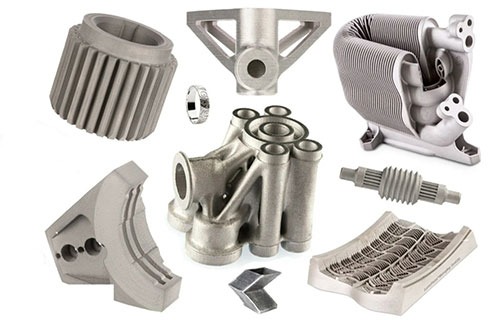
If you need strong, functional nylon parts that bridge the gap between prototyping and production, HP Multi Jet Fusion (MJF) demands your attention. It is not just another 3D printer; it’s a distinct manufacturing process that redefines expectations for speed, consistency, and cost-effectiveness in polymer additive manufacturing.
Key takeaways
- Understanding the step-by-step process reveals why MJF parts have their unique properties.
- MJF is optimized for a focused portfolio of thermoplastic powders, primarily from the polyamide (nylon) family.
- MJF shines in specific areas that solve common manufacturing pain points.
- HP Multi Jet Fusion is not a general-purpose 3D printer; it is a targeted production tool for polymer parts.
How Does MJF Work?
Understanding the step-by-step process reveals why MJF parts have their unique properties. It’s a powder bed fusion technology, but with a clever twist that enables its speed.
- Powder Layering: A fine layer of nylon powder (typically PA12) is spread across a heated build platform. The layer is precise, usually 80 microns thick.
- Agent Jetting: This is the key. A carriage with inkjet-style print heads passes over the powder bed. It deposits two liquid agents: A Fusing Agent is printed onto the cross-section of the part. This fluid absorbs infrared energy. A Detailing Agent is printed around the edges of the part. It moderates fusing, creating sharp, accurate boundaries.
- Infrared Energy Fusion: An infrared heating element passes over the entire bed. Where the fusing agent was deposited, the powder absorbs energy and melts (sinters), fusing together. The detailing agent prevents the edges from overheating and fusing, ensuring crisp detail.
- Layer Cycling: The build platform drops, a new powder layer is applied, and the process repeats thousands of times until the part is complete.
- Cooling and Recovery: The entire “cake” of fused parts surrounded by loose powder cools in a controlled manner to prevent warping. The parts are then removed, and the unsintered powder is collected. A high percentage (typically >70%) is sieved and blended with fresh powder for reuse, minimizing waste.
This area-wide printing of agents, followed by whole-layer fusing, is what makes MJF significantly faster than point-laser systems like SLS for full build volumes.
What Materials Can You Use?
MJF is optimized for a focused portfolio of thermoplastic powders, primarily from the polyamide (nylon) family. This specialization ensures deep process understanding and consistent results.
| Material | Key Properties | Ideal Applications |
|---|---|---|
| PA12 (Nylon 12) | The workhorse. Excellent mechanical strength, chemical resistance, and good flexibility. Balanced properties. | Functional prototypes, ducting, enclosures, snap-fits, low-volume end-use parts. |
| PA11 (Nylon 11) | Derived from renewable castor oil. Higher elongation at break (impact resistance) and better UV/weather stability than PA12. | Automotive components, sports equipment, parts for outdoor use. |
| TPU (Thermoplastic Polyurethane) | A flexible, elastomeric material. Offers good tear strength, elasticity, and energy absorption. | Gaskets, seals, grips, dampers, wearable device components. |
| PA12 with Glass Beads (GB) | A composite. Offers increased stiffness, dimensional stability, and a smoother surface finish. Reduced weight. | Stiff housings, fixtures, and tools where minimal flex is critical. |
| PA12 with Carbon Fiber (CF) | Stiffest option. Provides enhanced strength-to-weight ratio and thermal conductivity. More brittle than plain PA12. | Lightweight structural components, heat sinks, brackets. |
A Key Limitation: The material palette, while excellent for engineering, is limited compared to FDM’s vast filament library. You cannot print ABS, PLA, or PETG on an MJF machine.
What Are the Key Advantages?
MJF shines in specific areas that solve common manufacturing pain points.
Is Part Quality Consistent and Isotropic?
Yes. This is a major strength. Unlike FDM, where strength depends on print orientation, MJF produces functionally isotropic parts. Their mechanical properties are nearly uniform in all directions because each layer is fused uniformly by the IR energy. This predictability is critical for engineering applications.
How Fast Is It Really?
For full build volumes, MJF is one of the fastest polymer 3D printing technologies. Because it jets fusing agent across an entire layer at once and then fuses it with a single pass of the IR lamp, its build speed is not tied to part complexity or the number of parts in the build. A build chamber packed with 100 identical brackets takes roughly the same time as one packed with 100 different, complex parts. This makes it exceptionally efficient for batch production.
What About Surface Finish and Detail?
MJF parts have a uniform, slightly grainy matte finish directly from the printer, superior to the layered look of FDM but not as smooth as SLA. Fine details are captured very well. A major benefit is no need for dedicated support structures. The surrounding loose powder supports overhangs and complex geometries, which simplifies design and eliminates the labor of support removal.
Is It Cost-Effective?
The economics are compelling, especially at mid-range volumes (tens to hundreds of parts).
- No Tooling: Like all 3D printing, it avoids the high cost of injection molding tools.
- High Reuse Rate: The >70% powder reuse drastically reduces material cost per part.
- Batch Efficiency: The ability to nest many parts densely in a single build maximizes machine time and spreads fixed costs.
For a run of 50-200 parts, MJF often provides the lowest total cost compared to SLS, FDM, or CNC machining for the same nylon material.
What Are the Limitations and Considerations?
To make an informed choice, you must understand MJF’s boundaries.
- Build Volume Constraint: The standard build chamber is 380 x 284 x 380 mm (15 x 11.2 x 15 in). Parts larger than this must be designed in segments.
- Material-Limited Color: While “Color Jet Fusion” technology exists for full-color parts, standard MJF produces parts in the color of the raw powder (typically black, white, or gray). Post-processing dyeing is an option.
- Post-Processing Requirement: All MJF parts require media blasting (e.g., with glass beads) to remove the sintered powder cake. For a smoother finish, additional processes like vibratory tumbling or dyeing add time and cost.
- Surface Texture: The as-printed surface has a characteristic granular texture. It is not suitable for high-gloss aesthetic applications without significant finishing.
How Does MJF Compare to Other Technologies?
| Factor | HP MJF | Selective Laser Sintering (SLS) | Fused Deposition Modeling (FDM) | Injection Molding |
|---|---|---|---|---|
| Best For | Functional prototypes & low-volume production. | Functional prototypes, complex geometries. | Concept models, simple functional parts. | High-volume mass production. |
| Speed (Full Build) | Very Fast (area-wise fusing). | Slow (point laser). | Medium. | Extremely Fast (after tooling). |
| Part Strength | Isotropic, excellent. | Isotropic, excellent. | Anisotropic, good. | Isotropic, excellent. |
| Surface Finish | Uniform matte, slightly grainy. | Uniform matte, slightly grainy. | Visible layer lines. | Smooth, mold finish. |
| Support Structures | None (powder supports). | None (powber supports). | Required. | N/A (mold defines shape). |
| Material Choice | Limited to engineered nylons/TPU. | Limited to engineered nylons/TPU. | Very wide range. | Extremely wide range. |
| Cost Driver | Machine time, material reuse. | Machine time, material reuse. | Machine time, material. | High initial tooling cost. |
When Should You Choose MJF?
Use this decision framework to see if MJF fits your project.
Choose MJF when:
- You need 10 to 10,000 units of a nylon part (the “sweet spot” between prototype and mass production).
- Part consistency and isotropic strength are critical for function.
- Your design has complex geometries, internal channels, or living hinges that would be expensive to machine.
- You need fast turnaround on a batch of parts without tooling lead time.
- Sustainability and material efficiency are priorities due to high powder reuse.
Consider an alternative when:
- You need only 1-2 prototypes for form/fit (FDM or SLA may be faster/cheaper).
- You require a material MJF doesn’t offer (e.g., ABS, PC, PLA).
- You need ultra-smooth, transparent, or high-gloss finishes straight from the printer (SLA).
- Your production volume is in the hundreds of thousands (injection molding).
- Part size exceeds the MJF build volume.
Case Study: Automotive Cooling Duct
An electric vehicle startup needed a custom air cooling duct for a battery pack. The part had complex internal baffling for airflow management. They needed 150 units for initial vehicle builds.
- Injection Molding: Tooling cost was $45,000 with a 12-week lead time – prohibitive for their timeline and budget.
- FDM: Could not produce the isotropic strength needed to withstand under-hood vibration and heat cycling.
- MJF Solution: They printed the ducts in PA12. The batch was completed in 5 days at a fraction of the mold cost. The parts were strong, heat-resistant, and functional, allowing them to launch on schedule.
How to write a spec that gets priced correctly
A drawing is a contract. If it leaves a number open, the shop fills that number in with its own default. The default is rarely the one you had in mind. Put these five lines on every RFQ and most of the back-and-forth disappears before it starts.
- File format and units, with the model exported in millimetres
- Process and material grade, not a trade name
- Critical features and the tolerance each one needs
- Surface finish and the faces it applies to
- Quantity for the pilot build and for the year
The point is not paperwork. Each line removes a decision the shop would otherwise make for you. A complete RFQ comes back priced. An incomplete one comes back guessed.
What actually drives the price
Buyers usually push on material because it is the line they can see. In practice the material is rarely the biggest number on a quote. These five lines decide most of it:
- build volume and orientation
- layer height and support structure
- material grade and colour
- post-processing and hand finishing
- quantity per build plate
Ask for the quote split by line. A supplier who cannot break it down is guessing, and you will pay for the guess. The line you can usually renegotiate is the tolerance band, not the raw material.
Problems you will meet, and the fix
Every process has a failure mode it prefers. The same four show up again and again on this kind of work, and none of them are mysteries once you know what to look for.
- Warping on long flat faces where the part lifts off the plate
- Layer lines showing through a cosmetic surface
- Support scars on a mating face nobody flagged
- Dimensional drift on thin walls after cooling
Catch the fault on the first part, not the hundredth. A first-article check costs an hour. A bad batch costs the whole order. Write the check into the purchase order so nobody has to remember it.
What to check on the first article
The first article is the cheapest inspection you will ever buy. Use it properly and the rest of the run becomes boring, which is exactly what you want.
- Every dimension on the drawing, with the measured value written beside it.
- The material certificate, matched to the heat or lot number on the parts.
- The finish against the sample you approved, under the same light.
- Fit against the mating part, assembled rather than measured.
- Packaging, because parts that arrive damaged were never in tolerance.
Check in this order: datums, then mating features, then cosmetic faces. If the datums are wrong, every number after them is noise. Keep the report on file. When a problem shows up in month six, that document is the only thing that tells you what changed.
How to compare two quotes fairly
Two numbers are not comparable unless the scope matches. Line them up before you decide, because a low number with three gaps is not a low number.
Same drawing, same material, same finish, same inspection. Anything else is a different job wearing the same part number. Then look at what each quote leaves out. Freight, packaging, certificates and tooling are the usual gaps.
Ask each supplier to state their assumptions in writing. The one who does is usually the one who has run the process before.
Scaling from one part to a batch
The first part teaches you the process. The hundredth teaches you the process cost.
Watch three things as volume grows: setup amortisation, tool wear, and how much hand work the finish still needs. If the unit price barely moves between ten and a hundred, the cost sits in material or in hand work, not in setup. Ask which, because only one of them is negotiable.
Lead time behaves the same way. A one-off is scheduled around other jobs. A repeat order is scheduled around your forecast. Give the shop a forecast and the lead time gets shorter, not longer.
How to read a supplier's quote
A quote is a short document with a long shadow. Four things in it decide whether the job runs smoothly, and only one of them is the price.
- The scope line. It should name the process, the material and the finish, not just the part.
- The tolerance basis. General tolerance or the drawing, and which standard it follows.
- The exclusions. Tooling, freight, certificates and inspection are the usual omissions.
- The validity date. Material prices move, and an open-ended quote is a promise nobody can keep.
Read the exclusions before you read the total. A quote that leaves out tooling is not cheaper. It is a quote for a different job.
What to send with the first order
The first order sets the pattern for every order after it. Send a complete package once and the shop files it, and the second order takes a fraction of the time.
- A STEP or native model plus a PDF drawing carrying the same revision letter.
- The material callout by standard number, not by trade name.
- The finish and the exact faces it applies to.
- Any test the part must pass: fit, seal, drop, salt spray, dielectric.
- A contact who can answer a question inside one working day.
Then write down what was agreed. An email that confirms the material, the finish and the date is worth more than a longer purchase order that leaves them open.
What Does the Future Hold?
MJF is a platform technology. Future developments will likely expand its material ecosystem to include flame-retardant, biocompatible, and high-temperature polymers. As printers become faster and larger, MJF will continue to encroach on traditional manufacturing domains for an ever-wider range of short-run, complex polymer parts.
HP Multi Jet Fusion is not a general-purpose 3D printer; it is a targeted production tool for polymer parts. Its unique combination of speed, isotropic mechanical properties, and batch production economics makes it unparalleled for applications that demand more than a prototype but less than full-scale mass production. By understanding its strengths in material efficiency, design freedom, and consistent quality, engineers and product managers can strategically deploy MJF to accelerate product development, enable customization, and streamline low-volume manufacturing. When your project calls for durable, functional nylon components, MJF is often the most intelligent bridge from digital design to physical reality.
Our solution for Choose HP Multi Jet Fusion
YiguProto runs 3D printing in house, from a single prototype to a production batch. We quote the process, the material and the finish as separate lines, so you can see where the money goes instead of arguing with one number.
Send a STEP file or a drawing and you get a DFM report in one to two business days. It flags the features that add cost and the features that will not hold tolerance on the process you picked.
Every order ships with an inspection report on the features you call out. If a part misses, we make it again. Ready to price a part? Start with a free quote and DFM review, or read more about our 3D printing. You can also talk to an engineer before you commit to a drawing.
FAQ about Choose HP Multi Jet Fusion
What should I check before approving the parts?
Datums first, then the features that mate, then the cosmetic faces. Ask for a dimensional report, a material certificate and a finish sample. A part can be inside every tolerance and still not fit, so assemble one before you sign.
What is the lead time for Choose HP Multi Jet Fusion?
Expect 2 to 5 business days for a first batch. Tooling, material stock and the finishing queue all move that number, so we confirm the date in writing before the run starts rather than after.
What is Choose HP Multi Jet Fusion used for?
Choose HP Multi Jet Fusion turns up wherever the part has to do a real job at a predictable cost: brackets, housings, fixtures, covers and the fittings that hold them together. The honest test is whether the properties match the load and the environment, not whether the material is fashionable.
How do I compare two quotes fairly?
Match the scope first: same drawing, same material, same finish, same inspection. Then read the exclusions. Freight, tooling and certificates are the usual gaps, and a low number with three gaps is not a low number.
How much does Choose HP Multi Jet Fusion cost?
Price comes from five lines: material, machine or tool time, setup, finishing and inspection. The material itself is usually the smallest of them. Send a drawing and we will split the quote so you can see which line is doing the damage.
How long does a first article take?
Usually a few business days once the drawing is frozen, and longer if tooling is involved. The date we give you is the date we confirm in writing, not the date we hope for.
The short version
Choose HP Multi Jet Fusion rewards the buyer who reads the data sheet and the drawing together. Pick the option for the property that matters, not for the price per kilo.
Tighten only what mates. Test a sample before the run. Then let the process do the rest.