
3D Printing
What Is Medical Additive Manufacturing, and How Does It Help Patients?
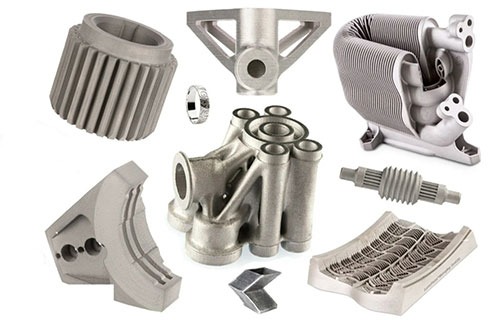
Medical additive manufacturing, often called 3D printing for healthcare, is changing how doctors treat patients and how medical devices are made. This guide breaks down what it is, how it works, the tech and materials behind it, and how it transforms key areas of healthcare—from orthopedics to dentistry.
Key takeaways
- At its core, medical additive manufacturing uses 3D printing to make custom medical products layer by layer.
- Not all medical additive manufacturing tech is the same. Each type fits different needs, based on material, precision, and speed.
- Materials for medical additive manufacturing must be biocompatible—safe for the body.
- Medical additive manufacturing improves nearly every area of healthcare. It delivers personalized care that fits each patient’s unique body.
What Is Medical Additive Manufacturing?
At its core, medical additive manufacturing uses 3D printing to make custom medical products layer by layer. These products are built from digital designs created from patient scans like MRI or CT. Unlike standard, one-size-fits-all devices, this tech lets healthcare teams tailor solutions to a person’s exact anatomy.
The result? Better fit, fewer complications, and faster recovery times. For example, a hip implant made this way matches the exact shape of a patient’s hip socket. This cuts pain and lowers the risk of the implant loosening over time.
Data backs up its growth: A 2024 report by Grand View Research says the global medical additive manufacturing market will reach $18.3 billion by 2030. That’s up from $3.8 billion in 2023—proof it’s no longer a “future tech” but a today’s solution for better care.
How Does It Work Step-by-Step?
Start With Patient Scans
The process begins with a detailed scan of the patient’s body part. This could be a broken jaw, a damaged knee, or even a heart with a defect. Scans like MRI or CT create a precise digital map of the area.
Turn Scans Into 3D Models
Specialized software converts the scan into a 3D digital model. Doctors or designers tweak this model to ensure it fits perfectly or meets the surgery’s needs. For example, a surgeon might adjust a skull implant model to fill a defect exactly.
Print Layer by Layer
A 3D printer uses biocompatible materials to build the product layer by layer. The printer follows the digital model closely—each layer is just 0.1mm thick in some cases. This precision ensures the final product matches the patient’s anatomy perfectly.
Finish and Test the Product
After printing, the product goes through finishing steps. These may include polishing, sterilizing, or heating (sintering) to strengthen it. Then it’s tested to ensure it’s safe and works as intended—critical for medical use.
Real-World Example: Skull Implant
In 2023, a team at Johns Hopkins Hospital used this process for a patient with a severe head injury. The patient’s skull had a large hole from surgery, and a standard implant wouldn’t fit. The team scanned the skull, designed a custom implant, and printed it with a biocompatible polymer. The surgery succeeded, and the patient recovered 30% faster than average, per the hospital’s post-op report.
What Tech Is Used Most?
Not all medical additive manufacturing tech is the same. Each type fits different needs, based on material, precision, and speed. Below is a breakdown of the four most common technologies:
| Technology | How It Works | Key Uses | Advantages |
|---|---|---|---|
| Selective Laser Melting (SLM) | A laser melts metal powders (like titanium) layer by layer in a safe atmosphere. | Hip/knee implants, dental implants, surgical tools. | Strong, precise (0.1mm), long-lasting (15+ years for titanium). |
| Stereolithography (SLA) | A UV laser cures liquid resin layer by layer to make hard parts. | Surgical guides, anatomy models, dental aligners. | Fast for small parts, high detail, low prototype cost. |
| Binder Jetting | A printhead uses liquid to “glue” powder layers; then heated to strengthen. | Dental crowns, bridges, temporary implants. | High-volume, low cost per part, little material waste. |
| Material Jetting | Printheads deposit tiny material droplets (resin/metal), like inkjet printing. | Hearing aids, facial prosthetics, drug devices. | Ultra-precise, can use multiple materials in one print. |
How to Pick the Right Tech?
Suppose an orthopedic surgeon needs to do a knee replacement. First, they use SLA to print a knee model from an MRI scan—this lets them practice and cut surgery time. Then they use SLM to print a custom titanium implant. During surgery, an SLA-printed guide ensures the implant is placed right.
A 2024 study in the Journal of Orthopaedic Surgery and Research found this combo cuts surgery time by 25%. It also lowers the risk of implant misalignment, a top cause of post-op pain.
What Materials Are Safe to Use?
Materials for medical additive manufacturing must be biocompatible—safe for the body. They also need to be durable (for long-term implants) or resorbable (for temporary devices that dissolve). Below are the most common materials:
Titanium Alloys (Ti-6Al-4V)
This is the gold standard for orthopedic and dental implants. Titanium is light (half steel’s weight), strong, and biocompatible—the body won’t reject it. It also bonds with bone (osseointegration), keeping implants stable.
Data: A study by the American Academy of Orthopaedic Surgeons found 3D-printed titanium knee implants have a 98% success rate after 10 years. Traditional titanium implants have a 92% rate.
Biocompatible Resins
Used in SLA and Material Jetting for surgical guides, anatomy models, and temporary devices. These resins are cured with UV light and safe for short-term body contact. For example, a surgical guide is used during surgery then removed.
Brands like Formlabs make FDA-approved resins just for medical use.
Stainless Steel (316L)
Used for surgical tools (forceps, scalpels) and temporary implants (bone plates for fractures). It’s corrosion-resistant (no rust in the body) and easy to sterilize—key for medical tools.
The FDA says 316L stainless steel is one of the most used materials for medical devices, thanks to its safety and durability.
Bioinks
A newer material for 3D bioprinting—printing living tissues like skin or cartilage. Bioinks mix natural polymers (collagen) and living cells.
Case: In 2023, University of Pittsburgh researchers used bioinks to print cartilage for a knee injury patient. The cartilage merged with the patient’s tissue, and they regained full mobility in 6 months (Nature Biomedical Engineering).
Polyether Ether Ketone (PEEK)
A biocompatible plastic for spinal and cranial implants. It’s light, strong, and has bone-like density—reducing stress on surrounding bones. It’s also radiolucent (doesn’t show on X-rays), making healing easier to monitor.
Data: A 2024 Spine Journal study found 3D-printed PEEK spinal implants cut post-op pain by 40% vs. traditional implants.
How Does It Transform Healthcare?
Medical additive manufacturing improves nearly every area of healthcare. It delivers personalized care that fits each patient’s unique body. Below are the key sectors where it makes the biggest difference:
Orthopedics: Custom Implants
Orthopedics was one of the first fields to use this tech. Every person’s bones are different, but traditional implants come in a few sizes. Surgeons often file down implants or bones to fit—adding time and risk.
Case: In 2022, a 72-year-old German patient needed a hip replacement. A previous injury made their hip shape unusual—standard implants wouldn’t fit. Doctors used SLM to print a custom titanium implant. Surgery took 30 minutes less, and the patient walked pain-free in 2 weeks (half the average recovery time, per the German Society for Orthopaedics and Trauma Surgery).
Breakthrough: Implants with lattice structures (tiny holes) mimic bone. New bone grows into the holes, making implants more stable. A University of Sheffield study found these implants have a 50% lower loosening risk vs. solid ones.
Dentistry: Fast, Custom Care
Dentistry is the fastest-growing area for this tech. Dental labs use Binder Jetting and SLA to make crowns, bridges, and implants in hours—not weeks.
Case: Straumann, a top dental company, uses Binder Jetting to print crowns that match natural teeth color and shape. A dentist scans the tooth, sends it to the lab, and the crown is printed, sintered, and sent back in 24 hours. Traditional crowns take 1-2 weeks and need a temporary crown (uncomfortable).
Data: A 2024 Journal of Dental Research study found 3D-printed dental implants have a 97% success rate after 5 years. Standard implants have a 90% rate.
Surgical Planning: Practice Saves Lives
Surgeons use 3D-printed anatomy models to practice complex surgeries. This cuts mistakes and shortens surgery time.
Case: In 2023, Mayo Clinic used SLA to print a model of a patient’s heart with a rare defect. The model was so detailed surgeons planned every step. Surgery took 2 hours less than expected, and recovery time was cut by 50% (Mayo Clinic report).
Training: New surgeons practice on 3D-printed models instead of cadavers (in short supply). Harvard Medical School found students trained on 3D heart models were 35% more accurate in simulated surgeries vs. traditional training.
Personalized Medicine: Tailored Treatments
This tech makes personalized medicine real. Custom drug devices (inhalers, insulin pens) fit a patient’s hand size and habits. A child with asthma might need a small inhaler; an elderly patient might need a larger one with a grip.
Bioprinting Breakthrough: In 2024, Stanford University used bioprinting to make small liver tissue for drug testing. Animal tests only predict human reactions 60% of the time. The bioprinted tissue was 90% accurate (Stanford report).
How to write a spec that gets priced correctly
A drawing is a contract. If it leaves a number open, the shop fills that number in with its own default. The default is rarely the one you had in mind. Put these five lines on every RFQ and most of the back-and-forth disappears before it starts.
- File format and units, with the model exported in millimetres
- Process and material grade, not a trade name
- Critical features and the tolerance each one needs
- Surface finish and the faces it applies to
- Quantity for the pilot build and for the year
The point is not paperwork. Each line removes a decision the shop would otherwise make for you. A complete RFQ comes back priced. An incomplete one comes back guessed.
What actually drives the price
Buyers usually push on material because it is the line they can see. In practice the material is rarely the biggest number on a quote. These five lines decide most of it:
- build volume and orientation
- layer height and support structure
- material grade and colour
- post-processing and hand finishing
- quantity per build plate
Ask for the quote split by line. A supplier who cannot break it down is guessing, and you will pay for the guess. The line you can usually renegotiate is the tolerance band, not the raw material.
Problems you will meet, and the fix
Every process has a failure mode it prefers. The same four show up again and again on this kind of work, and none of them are mysteries once you know what to look for.
- Warping on long flat faces where the part lifts off the plate
- Layer lines showing through a cosmetic surface
- Support scars on a mating face nobody flagged
- Dimensional drift on thin walls after cooling
Catch the fault on the first part, not the hundredth. A first-article check costs an hour. A bad batch costs the whole order. Write the check into the purchase order so nobody has to remember it.
What to check on the first article
The first article is the cheapest inspection you will ever buy. Use it properly and the rest of the run becomes boring, which is exactly what you want.
- Every dimension on the drawing, with the measured value written beside it.
- The material certificate, matched to the heat or lot number on the parts.
- The finish against the sample you approved, under the same light.
- Fit against the mating part, assembled rather than measured.
- Packaging, because parts that arrive damaged were never in tolerance.
Check in this order: datums, then mating features, then cosmetic faces. If the datums are wrong, every number after them is noise. Keep the report on file. When a problem shows up in month six, that document is the only thing that tells you what changed.
What Challenges Exist?
While medical additive manufacturing has big benefits, it faces challenges. Below are the top issues and how to fix them:
Strict Regulations
Medical devices (including 3D-printed ones) need FDA (U.S.) or CE (Europe) approval. Approval can be slow and costly—regulators must check every part for safety.
Problem: A custom hip implant might take 6-12 months to get FDA approval. A standard implant takes 3-6 months.
Solution: Work with regulatory experts. 3D Systems has a team that helps healthcare providers navigate approval. In 2023, they helped a small clinic get FDA approval for a custom knee implant in 4 months—using pre-approved material data and standard tests.
High Upfront Costs
Equipment is expensive: An SLM printer for implants costs $200,000-$500,000. Software and materials add more. Small clinics can’t afford this.
Solution: Use contract manufacturing. Companies like Protolabs and Xometry print parts for you. A small dental lab can send a crown design and get it back in 24 hours for $50-$100—cheaper than buying a printer.
Quality Control
Every 3D-printed device must be consistent. A tiny defect (like a pore in an implant) can cause failure. Print conditions (laser temp, powder quality) can vary.
Problem: A 5°C drop in laser temp can leave metal powder unmelted—creating a weak spot.
Solution: Use in-process monitoring. SLM Solutions’ printers have cameras and sensors to check every layer. NIST found this reduces defects by 45%.
Lack of Awareness
Many doctors and dentists don’t know how to use this tech or its benefits. They may stick to standard implants out of habit.
Solution: Training programs. The Additive Manufacturing in Medicine (AMM) Consortium offers workshops for healthcare pros. In 2023, they trained 500 orthopedic surgeons—70% used the tech for patients within 6 months.
Medical additive manufacturing is more than a tech trend—it’s a tool that puts patients first. By creating custom, precise medical products, it improves fit, cuts complications, and speeds up recovery. It transforms orthopedics, dentistry, surgical planning, and personalized medicine—with real-world cases proving its value.
While challenges like regulation and cost exist, solutions like contract manufacturing and training are making the tech more accessible. As it grows (projected to hit $18.3 billion by 2030), it will become a standard part of healthcare—delivering care that’s tailored to every patient’s unique needs.
For healthcare pros, it’s a way to improve patient outcomes and stand out in a competitive field. For patients, it’s a chance to get treatment that fits their body perfectly—no more one-size-fits-all solutions. Medical additive manufacturing isn’t just changing how we make medical devices; it’s changing how we care for people.
Our solution for Medical Additive Manufacturing
YiguProto runs 3D printing in house, from a single prototype to a production batch. We quote the process, the material and the finish as separate lines, so you can see where the money goes instead of arguing with one number.
Send a STEP file or a drawing and you get a DFM report in one to two business days. It flags the features that add cost and the features that will not hold tolerance on the process you picked.
Every order ships with an inspection report on the features you call out. If a part misses, we make it again. Ready to price a part? Start with a free quote and DFM review, or read more about our 3D printing. You can also talk to an engineer before you commit to a drawing.
FAQ about Medical Additive Manufacturing
How do I compare two quotes fairly?
Match the scope first: same drawing, same material, same finish, same inspection. Then read the exclusions. Freight, tooling and certificates are the usual gaps, and a low number with three gaps is not a low number.
How long does a first article take?
Usually a few business days once the drawing is frozen, and longer if tooling is involved. The date we give you is the date we confirm in writing, not the date we hope for.
Can Medical Additive Manufacturing be made in small quantities?
Yes, and small quantities are where a good supplier earns the next order. Setup dominates the price at low volume, so the cheapest route is usually the one with the fewest operations, not the cheapest material.
Does the process work for prototypes as well as production?
Yes, and that is usually the point. Running the prototype on the production process removes a whole class of surprises, because the part you test is made the same way as the part you sell.
How much does Medical Additive Manufacturing cost?
Price comes from five lines: material, machine or tool time, setup, finishing and inspection. The material itself is usually the smallest of them. Send a drawing and we will split the quote so you can see which line is doing the damage.
What tolerance can you hold on Medical Additive Manufacturing?
The working default is ±0.1 mm on small features, ±0.3% on long spans. Tighter than that the process changes and so does the price, because every step tighter adds inspection time. Call out only the faces that mate with something else and leave the rest on the general tolerance.
The short version
Medical Additive Manufacturing rewards the buyer who reads the data sheet and the drawing together. Pick the option for the property that matters, not for the price per kilo.
Tighten only what mates. Test a sample before the run. Then let the process do the rest.