
Metal Materials
Mild Carbon Steel: Properties, Uses & Why It’s the World’s Favorite
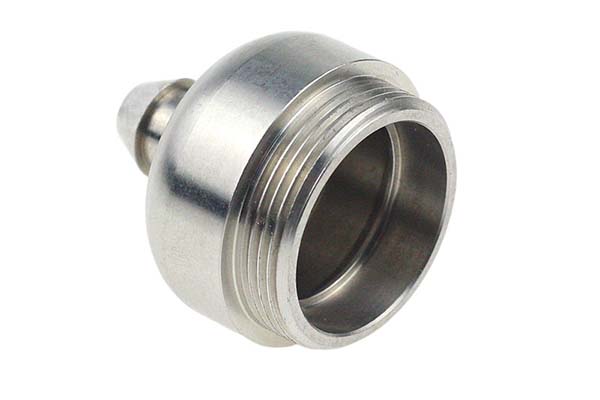
You likely touch or use mild carbon steel every single day. It’s in your car, your kitchen appliances, and the building you work in. Also called low carbon steel, this material is the most widely used steel globally. Its popularity comes down to three things: it’s affordable, flexible, and easy to work with. This guide will walk you through its key traits, common uses, and how it compares to other metals.
What Exactly Is Mild Carbon Steel?
What makes it different from other steels?
Mild carbon steel gets its name from its low carbon content, typically between 0.05% and 0.25%. This small amount of carbon is the key. It makes the steel soft and ductile rather than hard and brittle. The simple chemical makeup keeps costs low and makes mass production straightforward.
| Element | Typical Content | What It Does |
|---|---|---|
| Carbon (C) | 0.05 – 0.25% | Keeps steel soft and easy to shape |
| Manganese (Mn) | 0.30 – 0.80% | Adds minor strength, removes impurities |
| Silicon (Si) | 0.10 – 0.30% | Prevents bubbles, adds small strength |
| Phosphorus (P) | ≤0.04% | Kept low to avoid brittleness |
| Sulfur (S) | ≤0.05% | Kept low to maintain toughness |
What Properties Make It So Useful?
Physical traits you can count on
Mild steel shares similar density with other steels at ~7.85 g/cm³. This makes it easy to combine with other steel parts without compatibility issues. Its melting point sits between 1450–1500°C, high enough for welding but not so high that production becomes expensive. The material also dissipates heat well, with thermal conductivity around 45 W/(m·K). This makes it ideal for parts that get warm, like appliance casings or car body panels.
Mechanical properties explained simply
The mechanical traits of mild steel prioritize flexibility over raw strength. Here’s what that means in practice:
- Hardness: 100–150 HB (Brinell) – Soft enough to bend with basic tools
- Tensile Strength: 300–500 MPa – Strong enough for everyday uses like shelving or car doors
- Yield Strength: 200–350 MPa – Bends without permanent damage during shaping
- Elongation: 20–35% – Stretches significantly before breaking
- Impact Toughness: 60–100 J/cm² – Absorbs shocks well, denting rather than cracking
Why weldability and machinability matter
Mild steel offers the best weldability among all carbon steels. You can weld it without preheating for thin parts, saving significant time in construction and manufacturing. It’s also easy to machine with standard high-speed steel (HSS) tools. You don’t need expensive carbide bits, which keeps tooling costs down.
Formability is another major advantage. You can roll it into sheets, draw it into wire, press it into fasteners, or bend it into pipes. This versatility makes it suitable for nearly any shape you need.
The one drawback is corrosion resistance. Mild steel rusts easily in damp conditions. However, this weakness is easy to fix with coatings like galvanizing or painting.
Where Is Mild Carbon Steel Used?
How do industries put it to work?
Mild steel’s low cost and flexibility make it essential across many sectors. Here are the most common applications.
Structural components
Construction relies heavily on mild steel for affordable framing:
- Structural beams and columns support homes, offices, and bridges
- Rebar adds tensile strength to concrete foundations
- Fencing and guardrails use galvanized mild steel for outdoor durability
Automotive parts
Car manufacturers use mild steel for non-critical, formable parts:
- Body panels like doors, hoods, and fenders shape easily into curved designs
- Bumpers dent to absorb minor impacts, protecting expensive internal components
- Exhaust pipes on entry-level vehicles offer an affordable option
Pipes and tubes
The material’s formability makes it ideal for fluid transport:
- Water pipes deliver clean water to homes and businesses
- Low-pressure oil and gas pipes transport fuel in residential systems
- Structural tubes appear in furniture, playground equipment, and bike racks
Sheet metal and appliances
Mild steel sheet metal is everywhere in household items:
- Appliance casings for refrigerators, washing machines, and ovens
- Roofing sheets cover homes and warehouses
- Metal containers like food cans, paint cans, and storage bins
Fasteners and wire products
Its ductility makes it perfect for small, versatile parts:
- Fasteners like bolts, nuts, screws, and nails
- Wire for fencing, electrical applications, and crafts
How Is Mild Carbon Steel Manufactured?
From raw material to finished product
The production process is straightforward and cost-effective. Most mild steel is made in a basic oxygen furnace (BOF). Molten iron mixes with scrap steel, and oxygen blows in to reduce carbon content to the target range. The molten steel then casts into slabs for sheets, billets for pipes and wire, or blooms for beams.
Hot rolling vs. cold rolling
Hot rolling heats slabs or billets to 1100–1200°C and passes them through rollers to reduce thickness. The resulting surface is rough, and tolerances are loose. This method works well for structural parts like beams and rebar where appearance doesn’t matter.
Cold rolling takes hot-rolled steel, cools it, and rolls it again at room temperature. The result is thinner, smoother, and slightly harder material. Cold-rolled mild steel has a smooth surface and tight tolerances, making it perfect for appliance casings and car body panels that need painting.
Welding and machining techniques
Mild steel’s weldability is its biggest strength. Arc welding (MIG/TIG) is most common. MIG welding works fast for mass production like assembling car bodies, while TIG welding handles precise work like pipe joints. For parts thinner than 10 mm, no preheating is needed.
Machining is also easy with standard HSS tools. Turning creates cylindrical parts like bolts on a lathe. Milling produces flat surfaces or slots for appliance brackets. Stamping presses sheet metal into shapes like can lids, producing thousands of parts per hour. Machining costs are typically 30–50% lower than for medium or high carbon steel.
Surface treatment for protection
Most mild steel needs coating to prevent rust:
| Treatment | Process | Best Use |
|---|---|---|
| Galvanizing | Dipping in molten zinc | Roofing, fencing, water pipes (lasts 20–50 years) |
| Painting/Powder Coating | Applying colored coating | Appliance casings, car panels, furniture |
| Chrome Plating | Electroplating with chromium | Decorative parts like furniture hardware |
How Does Mild Steel Compare to Other Materials?
When should you choose something else?
Mild steel excels at cost and flexibility, but it’s not always the right choice. Here’s how it stacks up against alternatives.
Mild carbon steel vs. medium/high carbon steel
| Factor | Mild Carbon Steel | Medium Carbon Steel | High Carbon Steel |
|---|---|---|---|
| Carbon Content | 0.05–0.25% | 0.30–0.60% | 0.60–1.00% |
| Hardness | 100–150 HB | 180–220 HB | 55–65 HRC |
| Tensile Strength | 300–500 MPa | 800–1000 MPa | 1800–2800 MPa |
| Elongation | 20–35% | 10–20% | 5–10% |
| Weldability | Excellent | Good | Poor |
| Cost | Low ($4–6/kg) | Moderate ($6–8/kg) | Moderate ($8–12/kg) |
| Best For | Panels, pipes, fasteners | Axles, gears, beams | Cutting tools, springs |
Mild carbon steel vs. stainless steel (304)
| Factor | Mild Carbon Steel | 304 Stainless Steel |
|---|---|---|
| Corrosion Resistance | Poor (needs coating) | Excellent (rust-proof) |
| Hardness | 100–150 HB | 159 HB |
| Cost | Low ($4–6/kg) | High ($15–20/kg) |
| Weldability | Excellent | Good (needs special filler) |
| Best For | Budget, non-corrosive uses | Food equipment, outdoor parts |
Mild carbon steel vs. aluminum
| Factor | Mild Carbon Steel | Aluminum |
|---|---|---|
| Density | 7.85 g/cm³ (heavy) | 2.70 g/cm³ (light) |
| Strength | Higher (300–500 MPa) | Lower (200–300 MPa) |
| Corrosion Resistance | Poor | Good (natural oxide layer) |
| Cost | Lower ($4–6/kg) | Higher ($4.40–6.60/kg) |
| Best For | Structural parts, pipes | Lightweight parts |
Real-World Examples: Mild Steel in Action
Case study 1: Automotive body panels
A budget car manufacturer faced high costs using aluminum for body panels. Aluminum was light but expensive, and welding required special equipment.
Solution: They switched to cold-rolled mild steel panels, galvanized and painted.
Results:
- Material costs reduced by 40%
- Welding time cut by 30%
- Production volume increased by 25%
The steel’s formability allowed curved panels, and its weldability simplified assembly.
Case study 2: Galvanized water pipes
A city water department replaced cast iron pipes every 20 years. Cast iron was heavy, expensive, and prone to rust.
Solution: They installed galvanized mild steel pipes.
Results:
- Pipe costs reduced by 50%
- Lifespan extended to 40 years
- Installation time cut by 40%
Galvanization prevented rust, while the lighter weight made installation easier.
Case study 3: Appliance sheet metal stamping
A home appliance brand needed to mass-produce washing machine casings. Stainless steel was too expensive, and high carbon steel was too hard to stamp.
Solution: They used cold-rolled mild steel sheets with powder coating.
Results:
- Per-unit cost reduced by 35%
- Stamping speed increased by 50%
- Customer returns dropped by 10%
The steel’s machinability and formability enabled efficient mass production.
Mild carbon steel remains the world’s most widely used steel for good reason. Its low carbon content delivers a unique combination of affordability, flexibility, and ease of use. You’ll find it in cars, buildings, appliances, and countless everyday items. While it lacks the strength of high carbon steel or the corrosion resistance of stainless steel, its cost-effectiveness and workability make it the practical choice for most applications. For projects where budget and formability matter more than extreme performance, mild steel is hard to beat.
How to write a spec that gets priced correctly
A drawing is a contract. If it leaves a number open, the shop fills that number in with its own default. The default is rarely the one you had in mind. Put these five lines on every RFQ and most of the back-and-forth disappears before it starts.
- Alloy designation and the standard behind it
- Temper or heat treatment condition
- Mechanical properties you actually need
- Mill certificate and traceability requirement
- Finish and the faces it applies to
The point is not paperwork. Each line removes a decision the shop would otherwise make for you. A complete RFQ comes back priced. An incomplete one comes back guessed.
What actually drives the price
Buyers usually push on material because it is the line they can see. In practice the material is rarely the biggest number on a quote. These five lines decide most of it:
- alloy grade and mill availability
- stock size versus finished size
- heat treatment and testing
- machinability
- certification
Ask for the quote split by line. A supplier who cannot break it down is guessing, and you will pay for the guess. The line you can usually renegotiate is the tolerance band, not the raw material.
Problems you will meet, and the fix
Every process has a failure mode it prefers. The same four show up again and again on this kind of work, and none of them are mysteries once you know what to look for.
- Substituting a similar grade without telling anyone
- Hardness that varies across a single bar
- Corrosion in a weld heat-affected zone
- Distortion after heat treatment on a thin part
Catch the fault on the first part, not the hundredth. A first-article check costs an hour. A bad batch costs the whole order. Write the check into the purchase order so nobody has to remember it.
What to check on the first article
The first article is the cheapest inspection you will ever buy. Use it properly and the rest of the run becomes boring, which is exactly what you want.
- Every dimension on the drawing, with the measured value written beside it.
- The material certificate, matched to the heat or lot number on the parts.
- The finish against the sample you approved, under the same light.
- Fit against the mating part, assembled rather than measured.
- Packaging, because parts that arrive damaged were never in tolerance.
Check in this order: datums, then mating features, then cosmetic faces. If the datums are wrong, every number after them is noise. Keep the report on file. When a problem shows up in month six, that document is the only thing that tells you what changed.
How to compare two quotes fairly
Two numbers are not comparable unless the scope matches. Line them up before you decide, because a low number with three gaps is not a low number.
Same drawing, same material, same finish, same inspection. Anything else is a different job wearing the same part number. Then look at what each quote leaves out. Freight, packaging, certificates and tooling are the usual gaps.
Ask each supplier to state their assumptions in writing. The one who does is usually the one who has run the process before.
Scaling from one part to a batch
The first part teaches you the process. The hundredth teaches you the process cost.
Watch three things as volume grows: setup amortisation, tool wear, and how much hand work the finish still needs. If the unit price barely moves between ten and a hundred, the cost sits in material or in hand work, not in setup. Ask which, because only one of them is negotiable.
Lead time behaves the same way. A one-off is scheduled around other jobs. A repeat order is scheduled around your forecast. Give the shop a forecast and the lead time gets shorter, not longer.
FAQ: Common Questions About Mild Carbon Steel
Does mild carbon steel rust easily?
Yes, mild steel rusts easily in damp, humid, or salty environments. To prevent this, use galvanized mild steel for outdoor parts or apply paint or powder coating for indoor items. For highly corrosive areas, consider switching to stainless steel.
Is mild steel strong enough for structural use?
Yes, mild steel provides sufficient strength for most structural applications like building frames, bridges, and rebar. Its yield strength of 200–350 MPa and toughness make it reliable for load-bearing uses where extreme strength isn’t required.
Can you weld mild steel to stainless steel?
Yes, you can weld mild steel to stainless steel, but you need the right filler material, typically 309 stainless steel filler. The process requires careful technique to avoid cracking and ensure a strong joint.
What’s the difference between hot-rolled and cold-rolled mild steel?
Hot-rolled steel has a rough surface and looser tolerances, making it suitable for structural parts where appearance doesn’t matter. Cold-rolled steel is smoother, harder, and has tighter tolerances, making it ideal for finished products like appliance casings and car panels.
How do you prevent mild steel from rusting?
Common methods include galvanizing (dipping in molten zinc), painting or powder coating, and chrome plating for decorative parts. Regular maintenance and avoiding prolonged exposure to moisture also help extend its life.
Our solution for Mild Carbon Steel: Properties, Uses
YiguProto runs metal sourcing and machining in house, from a single prototype to a production batch. We quote the process, the material and the finish as separate lines, so you can see where the money goes instead of arguing with one number.
Send a STEP file or a drawing and you get a DFM report in one to two business days. It flags the features that add cost and the features that will not hold tolerance on the process you picked.
Every order ships with an inspection report on the features you call out. If a part misses, we make it again. Ready to price a part? Start with a free quote and DFM review, or read more about our metal sourcing and machining. You can also talk to an engineer before you commit to a drawing.
FAQ about Mild Carbon Steel: Properties, Uses
Is there a minimum order quantity?
No hard minimum. One part is fine. What changes with volume is which costs dominate, so a single unit is priced mostly on setup and a thousand units are priced mostly on cycle time and material.
What happens if a part is out of specification?
We measure it against the same drawing you approved and, if it misses, we make it again. What matters is that the report exists, because a disagreement without data is just an opinion.
What is Mild Carbon Steel: Properties, Uses used for?
Mild Carbon Steel: Properties, Uses turns up wherever the part has to do a real job at a predictable cost: brackets, housings, fixtures, covers and the fittings that hold them together. The honest test is whether the properties match the load and the environment, not whether the material is fashionable.
What is the lead time for Mild Carbon Steel: Properties, Uses?
Expect 5 to 12 business days depending on mill stock. Tooling, material stock and the finishing queue all move that number, so we confirm the date in writing before the run starts rather than after.
How do I compare two quotes fairly?
Match the scope first: same drawing, same material, same finish, same inspection. Then read the exclusions. Freight, tooling and certificates are the usual gaps, and a low number with three gaps is not a low number.
What tolerance can you hold on Mild Carbon Steel: Properties, Uses?
The working default is ±0.05 mm on machined features, ±0.1 mm on formed ones. Tighter than that the process changes and so does the price, because every step tighter adds inspection time. Call out only the faces that mate with something else and leave the rest on the general tolerance.
The short version
Mild Carbon Steel: Properties, Uses rewards the buyer who reads the data sheet and the drawing together. Pick the option for the property that matters, not for the price per kilo.
Tighten only what mates. Test a sample before the run. Then let the process do the rest.