
Blogs
Our Selective Laser Melting (SLM) 3D Printing Services
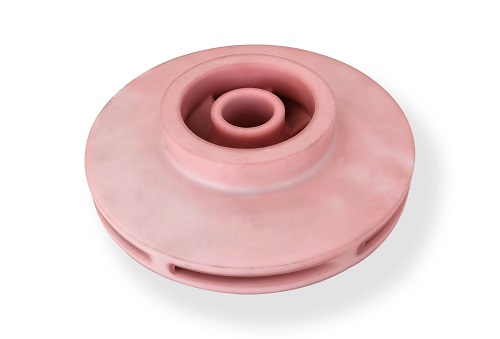
Our Selective Laser Melting (SLM) 3D Printing Services, explained the way we would explain it across a table: what it is good at, what it costs you, and the details that keep the part out of the scrap bin.
Key takeaways
- At our shop we leverage cutting-edge Selective Laser Melting (SLM) to redefine metal additive manufacturing.
- Selective Laser Melting (SLM) is a game-changing metal additive manufacturing technique under the powder bed fusion umbrella.
- The SLM workflow is a streamlined sequence of steps, each critical to achieving high-quality parts. Here’s a breakdown:
- SLM parts often require surface treatment to improve aesthetics, functionality, or durability.
Our Selective Laser Melting (SLM) 3D Printing Services
At our shop we leverage cutting-edge Selective Laser Melting (SLM) to redefine metal additive manufacturing. Our advanced SLM technology delivers high-precision, complex geometry parts across industries—from aerospace to medical—with faster turnaround times, reduced waste, and customized solutions that meet your unique needs.
Whether you need rapid prototyping or industrial-scale production, our shop’s expertise turns your designs into high-performance reality.

What is Selective Laser Melting (SLM)?
Selective Laser Melting (SLM) is a game-changing metal additive manufacturing technique under the powder bed fusion umbrella. It uses a high-powered laser to melt and fuse metal powder layers, creating 3D printing parts through layer-by-layer manufacturing. Unlike traditional methods, SLM builds parts directly from digital models, eliminating the need for molds or tooling.
To help you understand how SLM stands out, here’s a comparison with other additive manufacturing techniques:
| Technique | Material Type | Precision Level | Best For |
| SLM | Metal Powders | High (±0.1mm) | Complex, high-strength metal parts |
| Fused Deposition Modeling (FDM) | Plastics | Low (±0.5mm) | Low-cost plastic prototypes |
| Stereolithography (SLA) | Resins | Medium (±0.2mm) | Detailed plastic/ceramic parts |
| Electron Beam Melting (EBM) | Metal Powders | Medium (±0.3mm) | Large metal parts (high temp) |
Our SLM process overview covers every step from design to post-processing, ensuring you grasp the SLM principle and its value for your projects.
The SLM 3D Printing Process: Step-by-Step
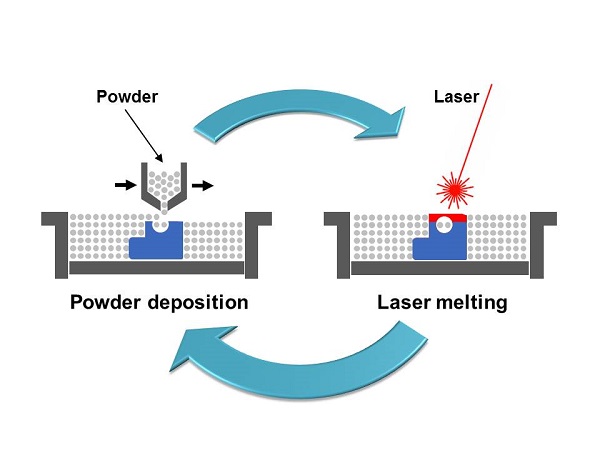
The SLM workflow is a streamlined sequence of steps, each critical to achieving high-quality parts. Here’s a breakdown:
- Design & Preparation: Convert 3D CAD models into STL files. Our team optimizes designs for SLM (e.g., adding support structures in SLM to prevent warping).
- Powder Spreading: A recoater spreads a thin layer (20–100μm) of metal powders for SLM onto the build platform.
- Laser Melting Process: A fiber laser (100–400W) melts the powder according to the design, fusing it to the layer below.
- Layer Deposition: The platform lowers by one layer height, and the process repeats until the part is complete.
- Post-Processing: Remove the part from the build chamber, then perform post-processing steps (e.g., support removal, heat treatment).
Key SLM process parameters we control include laser power, scan speed, and layer height—these variables impact part strength and surface quality. Our average SLM cycle time for a medium-sized part (100x100x50mm) is 8–12 hours.
SLM-Compatible 3D Printing Materials
Choosing the right material is vital for SLM success. We offer a wide range of SLM 3D printing materials, each selected for its mechanical properties and industry suitability:
| Material Type | Common Alloys | Tensile Strength | Key Applications |
| Stainless steel in SLM | 316L, 17-4 PH | 500–1,100 MPa | Medical devices, food equipment |
| Titanium alloys for SLM | Ti-6Al-4V, Ti-6Al-7Nb | 860–950 MPa | Orthopedic implants, aerospace |
| Aluminum alloys in SLM | AlSi10Mg, Al6061 | 300–450 MPa | Automotive parts, electronics |
| Nickel-based superalloys | Inconel 718, Hastelloy X | 1,200–1,400 MPa | Jet engine components, turbines |
| Copper alloys for SLM | CuCrZr, pure copper | 200–400 MPa | Heat exchangers, electrical parts |
| Precious metals in SLM | Gold (Au750), Silver (Ag999) | 150–300 MPa | Dental restorations, jewelry |
We also test composite materials for SLM (e.g., metal-ceramic blends) to expand application possibilities. Our team provides guidance on material properties in SLM (e.g., corrosion resistance, fatigue life) to match your project goals.
Surface Treatment for SLM 3D Printing Parts
SLM parts often require surface treatment to improve aesthetics, functionality, or durability. our shop offers a full suite of post-processing techniques to meet your needs:
| Treatment Method | Purpose | Resulting Surface Roughness (Ra) |
| SLM surface finishing | Basic smoothing | 5–15 μm |
| Polishing SLM parts | High-gloss appearance | 0.1–0.5 μm |
| Heat treatment for SLM parts | Reduce internal stress, improve strength | N/A (mechanical property focus) |
| Machining SLM components | Tighten tolerances | ±0.02mm accuracy |
| Surface coating for SLM | Enhance corrosion resistance | e.g., PTFE, ceramic coatings |
| Surface hardening methods | Increase wear resistance | e.g., carburizing, nitriding |
We use surface inspection in SLM tools (e.g., profilometers) to ensure surface quality control—all parts meet Ra values specified in your requirements.
SLM 3D Printing Tolerances & Precision
SLM dimensional accuracy is one of its greatest strengths, making it ideal for parts that require tight fits. our shop’s process achieves industry-leading tolerance levels in SLM, backed by advanced measurement tools:
| Feature Type | Typical Tolerance | Measurement Technique |
| Linear Dimensions (≤100mm) | ±0.05mm | Coordinate Measuring Machine (CMM) |
| Hole Diameters (5–20mm) | ±0.03mm | Laser Scanning |
| Flatness | 0.1mm/m | Optical Flatness Tester |
| Geometric tolerances in SLM (e.g., parallelism) | ±0.02mm | CMM + CAD Comparison |
Our SLM tolerance control process includes pre-build machine calibration and in-process monitoring. We also follow SLM tolerance standards (e.g., ISO/ASTM 52900) to ensure consistency. For projects needing even higher precision, we offer SLM accuracy improvement services (e.g., post-machining, design tweaks).
SLM 3D Printing Applications by Industry
SLM is transforming industries worldwide—here are how our shop’s solutions impact key sectors:
| Industry | Key Applications | Materials Used | our shop’s Value Add |
| Aerospace | Engine components, turbine blades, brackets | Ti-6Al-4V, Inconel 718 | Weight reduction + high-temperature resistance |
| Automotive | Lightweight frames, sensor housings, tooling | AlSi10Mg, 316L | Faster prototyping + cost savings |
| Medical | Orthopedic implants, dental crowns, surgical tools | Ti-6Al-7Nb, CoCrMo | Patient-specific designs + biocompatibility |
| Dental | Dental restorations (crowns, bridges), implant abutments | Precious metals, CoCrMo | Same-day prototypes + precise fit |
| Tooling & Molds | Injection mold inserts, cooling channels | H13 steel, 17-4 PH | Faster cooling + longer tool life |
| Consumer Electronics | Heat sinks, connector parts | Copper, aluminum | Compact design + high thermal conductivity |
SLM vs. Traditional Manufacturing & Advanced Techniques
SLM outperforms traditional methods in many areas—but we also offer hybrid solutions to meet unique needs:
| Method | SLM Advantages | Traditional Manufacturing (e.g., Machining) Advantages |
| Complexity | Handles undercuts/hollow structures | Limited to simple shapes |
| Waste | 5% waste (recyclable powder) | 30–40% waste (scrap metal) |
| Tooling | No tooling required | Requires expensive molds/tools (≥$10k) |
| Lead Time | 3–5 days (prototypes) | 2–4 weeks (prototypes) |
At our shop we also offer:
- Hybrid manufacturing with SLM: Combine SLM with machining for parts that need ultra-precise surfaces.
- Multi-material SLM: Build parts with two or more materials (e.g., Ti-6Al-4V + 316L) for mixed properties.
- In-process monitoring in SLM: Use cameras and sensors to detect defects early, reducing rework.
SLM process simulation: Predict part behavior (e.g., warping) before building—saving time and materials.
How to write a spec that gets priced correctly
A drawing is a contract. If it leaves a number open, the shop fills that number in with its own default. The default is rarely the one you had in mind. Put these five lines on every RFQ and most of the back-and-forth disappears before it starts.
- A model and a drawing that agree
- Material by standard number
- Tolerance only where it mates
- Finish and the faces it applies to
- Quantity and required date
The point is not paperwork. Each line removes a decision the shop would otherwise make for you. A complete RFQ comes back priced. An incomplete one comes back guessed.
What actually drives the price
Buyers usually push on material because it is the line they can see. In practice the material is rarely the biggest number on a quote. These five lines decide most of it:
- process choice
- material
- tolerance band
- finish
- volume
Ask for the quote split by line. A supplier who cannot break it down is guessing, and you will pay for the guess. The line you can usually renegotiate is the tolerance band, not the raw material.
Problems you will meet, and the fix
Every process has a failure mode it prefers. The same four show up again and again on this kind of work, and none of them are mysteries once you know what to look for.
- A drawing that contradicts the model
- A tolerance with no datum
- A cosmetic callout with no approved sample
- A quote compared against a different scope
Catch the fault on the first part, not the hundredth. A first-article check costs an hour. A bad batch costs the whole order. Write the check into the purchase order so nobody has to remember it.
What to check on the first article
The first article is the cheapest inspection you will ever buy. Use it properly and the rest of the run becomes boring, which is exactly what you want.
- Every dimension on the drawing, with the measured value written beside it.
- The material certificate, matched to the heat or lot number on the parts.
- The finish against the sample you approved, under the same light.
- Fit against the mating part, assembled rather than measured.
- Packaging, because parts that arrive damaged were never in tolerance.
Check in this order: datums, then mating features, then cosmetic faces. If the datums are wrong, every number after them is noise. Keep the report on file. When a problem shows up in month six, that document is the only thing that tells you what changed.
How to compare two quotes fairly
Two numbers are not comparable unless the scope matches. Line them up before you decide, because a low number with three gaps is not a low number.
Same drawing, same material, same finish, same inspection. Anything else is a different job wearing the same part number. Then look at what each quote leaves out. Freight, packaging, certificates and tooling are the usual gaps.
Ask each supplier to state their assumptions in writing. The one who does is usually the one who has run the process before.
Scaling from one part to a batch
The first part teaches you the process. The hundredth teaches you the process cost.
Watch three things as volume grows: setup amortisation, tool wear, and how much hand work the finish still needs. If the unit price barely moves between ten and a hundred, the cost sits in material or in hand work, not in setup. Ask which, because only one of them is negotiable.
Lead time behaves the same way. A one-off is scheduled around other jobs. A repeat order is scheduled around your forecast. Give the shop a forecast and the lead time gets shorter, not longer.
How to read a supplier's quote
A quote is a short document with a long shadow. Four things in it decide whether the job runs smoothly, and only one of them is the price.
- The scope line. It should name the process, the material and the finish, not just the part.
- The tolerance basis. General tolerance or the drawing, and which standard it follows.
- The exclusions. Tooling, freight, certificates and inspection are the usual omissions.
- The validity date. Material prices move, and an open-ended quote is a promise nobody can keep.
Read the exclusions before you read the total. A quote that leaves out tooling is not cheaper. It is a quote for a different job.
What to send with the first order
The first order sets the pattern for every order after it. Send a complete package once and the shop files it, and the second order takes a fraction of the time.
- A STEP or native model plus a PDF drawing carrying the same revision letter.
- The material callout by standard number, not by trade name.
- The finish and the exact faces it applies to.
- Any test the part must pass: fit, seal, drop, salt spray, dielectric.
- A contact who can answer a question inside one working day.
Then write down what was agreed. An email that confirms the material, the finish and the date is worth more than a longer purchase order that leaves them open.
When this is the wrong choice
A good supplier tells you when the process does not fit. These are the cases where we say so.
- The volume is so low that setup costs more than the parts are worth.
- The tolerance is tighter than the process can hold without a second operation.
- The geometry cannot be made without a tool feature that will not pay back.
- The material you need is not available in the form the process requires.
- The schedule is shorter than the tooling or setup time, and nobody has said so yet.
None of these are refusals. They are reasons to look at a different route, and the earlier that conversation happens the cheaper it is. The most expensive mistake in manufacturing is a process chosen before the question was understood.
Planning the ramp from prototype to production
The gap between one good part and a thousand identical ones is a plan, not a machine. Three decisions close it.
First, freeze the design. Every change after tooling starts is a re-cut, and re-cuts are where schedules go. Second, decide the inspection level. A prototype is checked by eye; a production part is checked against a report. Third, agree the change process in writing, including who pays for it.
Write the ramp down as dates and owners, not as intentions. A ramp plan with three names and three dates is worth more than a page of good intentions.
What documentation to expect
Paperwork is not bureaucracy when a part fails at the customer. It is the only record of what was agreed. A normal shipment should carry four documents.
- A dimensional report covering every callout on the drawing.
- A material certificate traceable to the heat or lot number.
- A finish or coating certificate where the specification requires one.
- A packing list that matches the carton labels.
If a supplier cannot produce these on request, they are not running a controlled process. Ask for one sample set before you place the first order and you will know exactly what you are buying.
How to handle a change after the order
Changes happen. What matters is whether the change is priced, scheduled and recorded, or absorbed quietly and discovered later.
Send the change as a new revision, not as a note in an email. Ask for three answers in writing: what it costs, what it does to the date, and what happens to material or tooling already committed. Then decide.
A change without a revision number is a rumour. The shop will build what it has on file, and both sides will be right and unhappy at the same time.
FAQ of SLM 3D Printing
Our solution for Our Selective Laser Melting (SLM)
YiguProto runs custom manufacturing in house, from a single prototype to a production batch. We quote the process, the material and the finish as separate lines, so you can see where the money goes instead of arguing with one number.
Send a STEP file or a drawing and you get a DFM report in one to two business days. It flags the features that add cost and the features that will not hold tolerance on the process you picked.
Every order ships with an inspection report on the features you call out. If a part misses, we make it again. Ready to price a part? Start with a free quote and DFM review, or read more about our custom manufacturing. You can also talk to an engineer before you commit to a drawing.
FAQ about Our Selective Laser Melting (SLM)
What is the minimum order quantity (MOQ) for SLM parts at Yigu?
We have no strict MOQ—we handle one-off prototypes, small batches (1–100 parts), and large-scale production (1,000+ parts). For prototypes, we often offer discounts to support your R&D.
How long does it take to get an SLM part from Yigu?
Prototypes are typically ready in 3–5 days (from design approval to shipping). For production runs, lead times depend on batch size: 2–3 weeks for 100–500 parts, and 4–6 weeks for 1,000+ parts. Rush options are available for urgent projects.
Can Yigu help with SLM design optimization if I don’t have experience?
Absolutely! Our team of design engineers offers free SLM design optimization services. We review your CAD models to improve part strength, reduce material use, and ensure manufacturability—critical for getting the most out of SLM.
Is there a minimum order quantity?
No hard minimum. One part is fine. What changes with volume is which costs dominate, so a single unit is priced mostly on setup and a thousand units are priced mostly on cycle time and material.
What happens if a part is out of specification?
We measure it against the same drawing you approved and, if it misses, we make it again. What matters is that the report exists, because a disagreement without data is just an opinion.
What material should I specify?
Specify by standard, not by trade name. A trade name can change under you between two orders; a standard number cannot. Then add the one property that actually decides the part, whether that is strength, heat resistance or chemical exposure.
The short version
Our Selective Laser Melting (SLM) rewards the buyer who reads the data sheet and the drawing together. Pick the option for the property that matters, not for the price per kilo.
Tighten only what mates. Test a sample before the run. Then let the process do the rest.