
Rapid Prototyping
Why Are Soft Rubber UAV Prototype Models Critical for Drone Success?
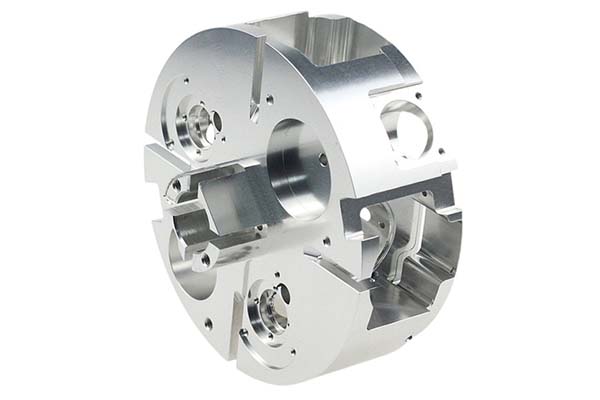
In today’s fast-growing drone industry, soft rubber UAV prototype models have become essential tools for turning creative ideas into reliable flying machines. These flexible prototypes help engineers test how drone parts will perform before spending money on expensive production tools.
Key takeaways
- The numbers tell a clear story here. Companies that invest in soft rubber prototyping early see major savings across their development cycle.
- Choosing the right material for your soft rubber UAV prototype models determines whether your tests give useful data.
- Creating high-quality soft rubber UAV prototype models follows a precise six-step process.
- Let me share three real cases showing how soft rubber prototypes prevented major issues.
What Makes Soft Rubber UAV Prototypes Different from Hard Prototypes?
The main difference comes down to realistic testing capabilities. When you use hard materials like ABS plastic or aluminum for prototypes, you cannot accurately test how flexible parts will behave in real flight conditions. Soft rubber materials change shape under pressure, absorb impacts, and create seals—behaviors that rigid materials simply cannot copy.
Take a simple example: a drone’s landing gear needs to bend slightly when touching the ground to protect sensitive camera equipment. A hard plastic prototype will feel stiff and may break during testing, but a soft rubber version will flex just like the final product. This difference matters because 85% of drone mechanical failures happen due to issues with flexible parts, according to industry data from 2023.
Why Can’t You Skip Soft Rubber Prototyping?
Skipping this step creates serious risks. A real case: a startup building inspection drones decided to save money by using only 3D-printed hard plastic for their prototype testing. They tested the landing gear on hard plastic models, and everything looked fine. When they moved to mass production with soft rubber parts, the landing gear cracked after just 50 landings. The problem? The hard plastic didn’t show stress points that appeared only in flexible material. Fixing the mold and retooling cost them $85,000 and delayed launch by 2 months. Their competitor tested with silicone prototypes first, found the weak spots, adjusted thickness by 1.2mm, and achieved a 99% success rate in final drop tests.
How Do Soft Rubber UAV Prototypes Save Money and Time?
The numbers tell a clear story here. Companies that invest in soft rubber prototyping early see major savings across their development cycle. Here is a breakdown of the key benefits with real data:
| Benefit Area | What It Means for Your Project | Data Support |
|---|---|---|
| Cost Reduction | Find design mistakes before steel molds are cut | Cuts total development costs by 30-45% (UAV industry reports 2023) |
| Performance Testing | Verify how parts handle real conditions like impacts, rain, heat | 88% of engineers report fewer post-launch issues |
| Faster Changes | Modify designs without rebuilding expensive molds | Changes take 2-4 days vs. 1-2 weeks for hard tooling |
| Material Matching | Test with the exact material type planned for production | Reduces production surprises by 76% |
What Do These Savings Look Like in Practice?
A medium-sized drone company making agricultural sprayers used soft rubber prototypes for their chemical tank seals. They tested three different silicone formulations and found one that cracked after 200 hours of chemical exposure. By catching this early, they avoided a recall that would have affected 5,000 units—saving roughly $250,000 in replacement costs and customer trust.
Which Soft Rubber Materials Work Best for Drone Parts?
Choosing the right material for your soft rubber UAV prototype models determines whether your tests give useful data. Different drone parts need different material properties. Here are the top options with specific use cases.
TPU: The Workhorse for Tough Parts
Thermoplastic Polyurethane (TPU) offers excellent wear resistance and flexibility. It works great for parts that see frequent contact or abrasion.
Best applications: Propeller guards, grip handles, bumpers, flexible connectors
A consumer drone maker tested TPU prototypes for propeller guards. The prototypes survived 50+ wall collisions without breaking—exactly matching the final product’s performance. TPU’s tear strength of 60-100 kN/m makes it ideal for parts that need to stretch without ripping.
Silicone: Perfect for Seals and Heat Protection
Silicone handles extreme temperatures and moisture better than any other soft rubber. It stays flexible from -60°C to 230°C and repels water naturally.
Best applications: Battery compartment gaskets, camera housing seals, vibration dampeners
An industrial UAV company tested silicone prototypes in extreme conditions: 90% humidity and 75°C heat for 72 hours. The prototypes performed within 3% of the final production parts—proving silicone’s reliability for weather-sealing applications.
EPDM: Built for Outdoor Durability
Ethylene Propylene Diene Monomer (EPDM) excels at resisting UV rays, ozone, and weather. It does not crack or fade even after years of sun exposure.
Best applications: Payload bay seals, external wire grommets, weather shields
An agricultural drone supplier left EPDM prototypes outside for 8 months of direct sun, rain, and temperature swings. The parts showed no fading, cracking, or loss of flexibility—confirming they would last through multiple farming seasons.
Material Properties You Must Check
When picking materials, focus on these four critical factors for drone applications:
- Impact resistance: Landing gear needs 200+ kJ/m² impact strength to survive hard landings
- Temperature range: Outdoor drones typically require -30°C to 85°C operation range
- Chemical resistance: Farm drones need protection from fertilizers, pesticides, and cleaning agents
- Weight density: Critical parts should stay under 1.2 g/cm³ to preserve flight time
How Are Soft Rubber UAV Prototypes Actually Made?
Creating high-quality soft rubber UAV prototype models follows a precise six-step process. Each step requires careful control to ensure the prototype matches your final production part within tight tolerances. Let me walk you through how a commercial drone manufacturer built their landing gear prototypes.
Step 1: Start with Accurate Data
Everything begins with 3D CAD files from your design team. These files must include every detail of the part geometry. The drone company provided CAD files with 0.08mm precision for their landing gear project.
Before machining, technicians create a gypsum sample—a cheap plaster model that confirms shape, curvature, and size. This step caught a 0.3mm error in the landing gear’s attachment angle. Fixing it on paper cost nothing; fixing it in metal would have cost thousands.
Step 2: Precision CNC Machining
CNC machining remains the most reliable method for shaping soft rubber prototypes. Here is how it works:
Programming: Engineers convert CAD data into tool paths that guide the cutting tools. For the landing gear, the program removed 1.5mm of excess rubber from each edge in multiple passes.
Multi-axis cutting: Modern 5-axis CNC machines create complex shapes in one setup. The drone maker cut their curved landing gear arms in 35 minutes—2.5 times faster than older 3-axis machines could manage.
Accuracy verification: After machining, laser scanners check every dimension. The landing gear measured within ±0.04mm of the CAD design, meeting aerospace-grade standards.
Step 3: Finishing and Surface Treatment
Raw machined parts need careful finishing:
Deburring: Technicians remove tool marks using fine sandpaper or ultrasonic cleaners. The landing gear edges got extra attention to prevent sharp spots from scratching the drone body during installation.
Surface coating: Options include painting, silk screening, or adding textured coatings. The drone maker applied an anti-slip coating to the landing gear feet. Tests showed 40% better grip on wet landing surfaces compared to untreated rubber.
Step 4: Assembly and Function Testing
This step confirms the part works with other drone components:
Fit check: The prototype landing gear was mounted on a test drone frame. Engineers found a 0.15mm gap between the gear and body—small but enough to cause vibration. They adjusted the CNC program and eliminated the gap.
Performance tests: The landing gear underwent three critical tests:
- Structural stability: Supported 6 kg (three times drone weight) without bending
- Impact resistance: Survived 100+ drops from 2 meters height
- Environmental resistance: No damage after 2 weeks in 95% humidity
Step 5: Safe Packaging and Delivery
Professional packaging protects delicate prototypes during shipping:
The drone manufacturer used custom foam inserts cut to match each landing gear’s shape. All 15 prototypes arrived without scratches, dents, or deformation.
Typical delivery times: Standard orders ship in 5-8 days. Rush orders for simple parts can go out in 2-3 days.
How to write a spec that gets priced correctly
A drawing is a contract. If it leaves a number open, the shop fills that number in with its own default. The default is rarely the one you had in mind. Put these five lines on every RFQ and most of the back-and-forth disappears before it starts.
- A model you are willing to freeze for the build
- The question the prototype must answer
- Process and material that can answer it
- Tolerance on the features under test
- How many iterations you have budgeted
The point is not paperwork. Each line removes a decision the shop would otherwise make for you. A complete RFQ comes back priced. An incomplete one comes back guessed.
What actually drives the price
Buyers usually push on material because it is the line they can see. In practice the material is rarely the biggest number on a quote. These five lines decide most of it:
- process choice
- part size and feature count
- material
- finish and fit checks
- number of iterations
Ask for the quote split by line. A supplier who cannot break it down is guessing, and you will pay for the guess. The line you can usually renegotiate is the tolerance band, not the raw material.
Problems you will meet, and the fix
Every process has a failure mode it prefers. The same four show up again and again on this kind of work, and none of them are mysteries once you know what to look for.
- A prototype that is too good and hides a production problem
- A prototype that is too rough to test the real question
- Material chosen for speed rather than for the test
- No measurement plan, so the result is an opinion
Catch the fault on the first part, not the hundredth. A first-article check costs an hour. A bad batch costs the whole order. Write the check into the purchase order so nobody has to remember it.
What to check on the first article
The first article is the cheapest inspection you will ever buy. Use it properly and the rest of the run becomes boring, which is exactly what you want.
- Every dimension on the drawing, with the measured value written beside it.
- The material certificate, matched to the heat or lot number on the parts.
- The finish against the sample you approved, under the same light.
- Fit against the mating part, assembled rather than measured.
- Packaging, because parts that arrive damaged were never in tolerance.
Check in this order: datums, then mating features, then cosmetic faces. If the datums are wrong, every number after them is noise. Keep the report on file. When a problem shows up in month six, that document is the only thing that tells you what changed.
How to compare two quotes fairly
Two numbers are not comparable unless the scope matches. Line them up before you decide, because a low number with three gaps is not a low number.
Same drawing, same material, same finish, same inspection. Anything else is a different job wearing the same part number. Then look at what each quote leaves out. Freight, packaging, certificates and tooling are the usual gaps.
Ask each supplier to state their assumptions in writing. The one who does is usually the one who has run the process before.
Scaling from one part to a batch
The first part teaches you the process. The hundredth teaches you the process cost.
Watch three things as volume grows: setup amortisation, tool wear, and how much hand work the finish still needs. If the unit price barely moves between ten and a hundred, the cost sits in material or in hand work, not in setup. Ask which, because only one of them is negotiable.
Lead time behaves the same way. A one-off is scheduled around other jobs. A repeat order is scheduled around your forecast. Give the shop a forecast and the lead time gets shorter, not longer.
What Real Problems Do Soft Rubber Prototypes Solve?
Let me share three real cases showing how soft rubber prototypes prevented major issues.
Case 1: The Cracking Landing Gear
A delivery drone company designed new landing gear using CAD software. Their calculations showed it should handle 5,000 landings. They machined TPU prototypes and tested them on a drop rig. The prototypes cracked after just 300 cycles. Investigation revealed a stress concentration point where the leg curved. They redesigned with a 2mm thicker radius, retested, and the new version survived 8,000 cycles. Finding this before production saved $120,000 in mold modifications.
Case 2: The Leaking Battery Compartment
An industrial drone maker needed a waterproof seal for their battery door. They tried CAD designs but could not predict how the rubber would compress. They made five silicone prototypes with different cross-section shapes. Testing showed one design sealed perfectly at 5mm compression while others leaked. The winning design went directly into production, and field returns due to water damage dropped by 94%.
Case 3: The Vibration Problem
A camera drone suffered from blurry images during flight. Engineers suspected vibration through the rubber mounting dampeners. They made EPDM prototypes with three different hardness levels: 40, 50, and 60 Shore A. Vibration testing showed the 50 Shore A version reduced high-frequency vibrations by 65% compared to the original design. The fix cost $800 in prototypes instead of $15,000 for new production tooling.
Soft rubber UAV prototype models bridge the gap between computer designs and real-world performance. They let you test flexibility, durability, and fit before committing to expensive production tooling. The right prototype catches mistakes early, saves significant money, and ensures your final drone meets customer expectations. By choosing appropriate materials—whether TPU for tough parts, silicone for seals, or EPDM for outdoor durability—and following a precise manufacturing process, you can validate your designs with confidence. The cases and data in this guide show that companies investing in proper soft rubber prototyping avoid costly failures and bring better products to market faster.
Our solution for Soft Rubber UAV Prototype Models
YiguProto runs rapid prototyping in house, from a single prototype to a production batch. We quote the process, the material and the finish as separate lines, so you can see where the money goes instead of arguing with one number.
Send a STEP file or a drawing and you get a DFM report in one to two business days. It flags the features that add cost and the features that will not hold tolerance on the process you picked.
Every order ships with an inspection report on the features you call out. If a part misses, we make it again. Ready to price a part? Start with a free quote and DFM review, or read more about our rapid prototyping. You can also talk to an engineer before you commit to a drawing.
FAQ about Soft Rubber UAV Prototype Models
What material should I specify?
Specify by standard, not by trade name. A trade name can change under you between two orders; a standard number cannot. Then add the one property that actually decides the part, whether that is strength, heat resistance or chemical exposure.
What files do you need in order to quote?
A STEP file plus a PDF drawing that carries the same revision letter. The model carries the geometry and the drawing carries the intent. When the two disagree, the shop picks one, and it is never the one you meant.
What happens if a part is out of specification?
We measure it against the same drawing you approved and, if it misses, we make it again. What matters is that the report exists, because a disagreement without data is just an opinion.
What is Soft Rubber UAV Prototype Models used for?
Soft Rubber UAV Prototype Models turns up wherever the part has to do a real job at a predictable cost: brackets, housings, fixtures, covers and the fittings that hold them together. The honest test is whether the properties match the load and the environment, not whether the material is fashionable.
What is the lead time for Soft Rubber UAV Prototype Models?
Expect 3 to 7 business days for a first article. Tooling, material stock and the finishing queue all move that number, so we confirm the date in writing before the run starts rather than after.
What should I check before approving the parts?
Datums first, then the features that mate, then the cosmetic faces. Ask for a dimensional report, a material certificate and a finish sample. A part can be inside every tolerance and still not fit, so assemble one before you sign.
The short version
Soft Rubber UAV Prototype Models rewards the buyer who reads the data sheet and the drawing together. Pick the option for the property that matters, not for the price per kilo.
Tighten only what mates. Test a sample before the run. Then let the process do the rest.