
Die Casting
What You Need to Know About Alloy Die Casting? A Professional Overview
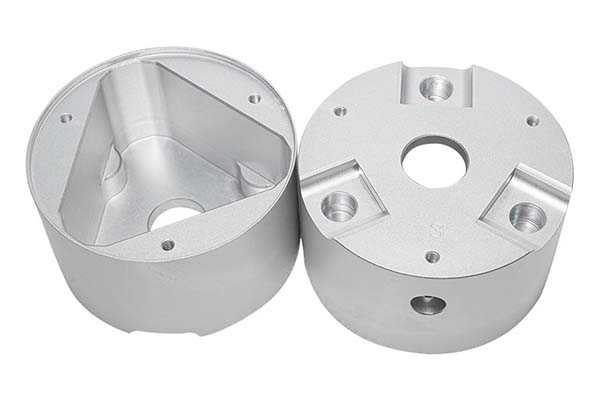
Alloy die casting shapes the metal parts all around you. Your car’s engine block, your phone’s frame, your laptop’s heat sink—all likely started as molten alloy forced into steel molds at high pressure. This process dominates modern manufacturing because it delivers what industries need: complex shapes, tight tolerances, and mass production economics.
How Does Alloy Die Casting Work?
Core principle
Alloy die casting forces molten metal into a precision steel mold cavity at high pressure—5 to 150 MPa—and high speed—0.5 to 5 meters per second. The metal fills every detail, then solidifies rapidly under sustained pressure. When the mold opens, a finished part emerges, often requiring minimal post-processing.
The four steps
Step 1: Melting—Alloy heats to molten state. Temperatures vary: aluminum at 660°C, zinc at 420°C, magnesium at 650°C, copper at 1085°C.
Step 2: Injection—Molten alloy shoots into the mold cavity under high pressure and speed. The metal travels from the injection chamber through runners and gates, filling every corner.
Step 3: Solidification—Pressure holds while the metal cools and solidifies. This takes 10-30 seconds depending on part thickness.
Step 4: Demolding—The mold opens. Ejector pins push the part out. Excess material like flash and runners gets trimmed.
| Step | Key Action | Typical Duration |
|---|---|---|
| Melting | Heat alloy to molten | Continuous |
| Injection | Force into mold | 0.05-0.5 seconds |
| Solidification | Cool under pressure | 10-30 seconds |
| Demolding | Eject and trim | 5-10 seconds |
Core features that matter
High precision: Dimensional accuracy of ±0.1mm for small parts. Surface finish of Ra 1.6-6.3μm. Many parts need no machining at all.
Near-net shape: Material waste drops to 5-10% versus 20-30% for traditional casting. You buy less metal, throw away less scrap.
High efficiency: Small hot-chamber machines run 3000-7000 cycles per day. Perfect for mass production.
Complex shapes: Thin walls down to 0.5mm for aluminum. Internal channels, intricate details—features other processes cannot replicate.
What Alloys Are Used in Die Casting?
Aluminum alloys
Density 2.7 g/cm³ —one-third of steel. High plasticity, excellent heat conductivity, strong corrosion resistance with surface treatment.
Advantages: Lightweight, cost-effective for high volumes, good mechanical strength at 100-300 MPa tensile.
Limitations: Requires high injection pressure. Prone to porosity, which limits heat treatment options.
Best for: Automotive engine blocks, body frames, 5G base station housings, pump components.
Zinc alloys
Low melting point at 380-420°C. Excellent castability—fills thin features easily. High dimensional stability with minimal shrinkage.
Advantages: Fast cycle times at 10-15 seconds per part. Low production cost, cheaper than aluminum for small parts. Easy to plate and paint—great for cosmetic parts.
Limitations: High density at 7.1 g/cm³ —heavier than aluminum. Poor high-temperature resistance—softens above 100°C.
Best for: Smartphone cases, laptop hinges, remote controls, toy parts.
Magnesium alloys
Ultra-low density at 1.8 g/cm³ —lightest structural metal. High strength-to-weight ratio. Good electromagnetic shielding.
Advantages: Ideal for weight-critical parts. Reduces product weight by 20-30% versus aluminum.
Limitations: High cost at 2-3× more than aluminum. Flammable when molten—requires special safety measures.
Best for: Satellite brackets, high-end automotive steering wheels, tablet frames.
Copper alloys
Excellent electrical and thermal conductivity. High hardness at HRC 30-40 after heat treatment. Strong wear resistance.
Advantages: Critical for conductive parts. Durable in harsh environments—high temperature, corrosive conditions.
Limitations: Very high melting point at 1085°C —requires specialized molds. Slow solidification means long cycle times.
Best for: Motor rotors, heat sinks, high-pressure fittings.
| Alloy | Density | Melting Point | Key Strengths | Best Applications |
|---|---|---|---|---|
| Aluminum | 2.7 | 660°C | Lightweight, conductive | Engine blocks, housings |
| Zinc | 7.1 | 420°C | Fast cycles, easy plating | Phone frames, hinges |
| Magnesium | 1.8 | 650°C | Lightest, high strength | Aerospace, portable devices |
| Copper | 8.9 | 1085°C | Conductive, wear-resistant | Rotors, heat sinks |
What Are the Technical Advantages?
Economy
High metal utilization at 90-95% cuts raw material costs. Mass production drops per-unit cost dramatically. An aluminum bracket costs $2-5 via die casting versus $8-12 via machining.
Performance
Castings achieve Brinell hardness of 80-120 HB for aluminum alloys. Dimensional stability ensures perfect interchangeability—10,000 identical parts fit the same assembly.
Efficiency
Automated lines with robotic demolding run 24/7, cutting labor costs by 30-40%. Cycle times of 10-60 seconds outpace sand casting at 1-2 hours per part.
What Are the Key Limitations?
Porosity risks
High-speed filling traps air, creating tiny pores of 0.1-0.5mm. This limits heat treatment—annealing can expand pores, ruining parts.
Short mold life
Steel molds last 80,000-150,000 cycles for aluminum casting. Each mold costs $50,000-$200,000, making small batches uneconomical.
Anodizing challenges
Surface pores cause uneven coloration during anodizing. Extra polishing adds 10-15% to production time for cosmetic parts.
Size restrictions
Most machines handle parts from 0.1-10 kg. Larger components need specialized, expensive equipment.
| Limitation | Impact | Mitigation |
|---|---|---|
| Porosity | Weakens parts, limits heat treat | Vacuum assist, speed control |
| Short mold life | High per-part cost for small batches | H13 steel, TiAlN coatings |
| Anodizing issues | Uneven color, extra polishing | High-pressure cleaning, low-silicon alloys |
| Size limits | Cannot make large parts | Specialized large machines |
Where Is Alloy Die Casting Used?
Automotive—largest user
New energy vehicles: Aluminum battery housings (lightweight, corrosion-resistant). Motor casings (high precision reduces energy loss).
Traditional vehicles: Zinc door handles, gear shift knobs. Magnesium structural components cut weight and improve fuel efficiency.
Electronics and home appliances
Consumer electronics: Zinc smartphone frames (durable, easy to plate). Aluminum laptop heat sinks (excellent conductivity).
Home appliances: Magnesium washing machine drums (lightweight, rust-proof). Zinc remote control bodies (cost-effective at high volume).
Aerospace and communications
Aerospace: Magnesium satellite brackets (ultra-lightweight, high strength). Copper electrical connectors (conductive, heat-resistant).
Communications: Aluminum 5G base station enclosures (corrosion-resistant). Zinc antenna parts (precision-shaped for signal clarity).
| Industry | Applications | Key Benefit |
|---|---|---|
| Automotive | Battery housings, motor casings, door handles | Light weight, fuel efficiency |
| Electronics | Phone frames, heat sinks, remote bodies | Precision, cost-effective |
| Aerospace | Satellite brackets, connectors | Light weight, reliability |
How Do You Overcome Common Challenges?
Reduce porosity
Use vacuum-assisted die casting to extract air before injection. This cuts porosity by 50-70%.
Control injection speed at 1-3 m/s for aluminum. Turbulent flow traps more air. Smooth laminar flow keeps gas out.
Extend mold life
Use H13 steel with TiAlN coating. This extends mold lifespan by 20-30%.
Implement regular maintenance—clean and lubricate every 1000 cycles. Catch wear before it causes defects.
Improve anodizing results
Use high-pressure water jet cleaning before casting to remove mold debris. This reduces surface defects by 40%.
Choose aluminum alloys with low silicon content, like Al-5Mg. Silicon causes uneven anodization.
| Challenge | Solution | Improvement |
|---|---|---|
| Porosity | Vacuum assist, 1-3 m/s speed | 50-70% less |
| Mold wear | H13 + TiAlN, 1000-cycle maintenance | 20-30% longer life |
| Anodizing issues | High-pressure cleaning, low-silicon alloy | 40% fewer defects |
How to write a spec that gets priced correctly
A drawing is a contract. If it leaves a number open, the shop fills that number in with its own default. The default is rarely the one you had in mind. Put these five lines on every RFQ and most of the back-and-forth disappears before it starts.
- 3D model with the parting line marked
- Alloy grade and the standard it meets
- Wall thickness and draft on every face
- Machining allowance on the faces that will be cut
- Pressure tightness or porosity class
The point is not paperwork. Each line removes a decision the shop would otherwise make for you. A complete RFQ comes back priced. An incomplete one comes back guessed.
What actually drives the price
Buyers usually push on material because it is the line they can see. In practice the material is rarely the biggest number on a quote. These five lines decide most of it:
- die steel and cavity count
- part weight and wall section
- draft and slide count
- porosity requirement
- machining allowance
Ask for the quote split by line. A supplier who cannot break it down is guessing, and you will pay for the guess. The line you can usually renegotiate is the tolerance band, not the raw material.
Problems you will meet, and the fix
Every process has a failure mode it prefers. The same four show up again and again on this kind of work, and none of them are mysteries once you know what to look for.
- Cold shuts where two flow fronts meet
- Porosity that shows up only after machining
- Soldering on a hot spot in the die
- Shrinkage voids in a heavy section
Catch the fault on the first part, not the hundredth. A first-article check costs an hour. A bad batch costs the whole order. Write the check into the purchase order so nobody has to remember it.
What to check on the first article
The first article is the cheapest inspection you will ever buy. Use it properly and the rest of the run becomes boring, which is exactly what you want.
- Every dimension on the drawing, with the measured value written beside it.
- The material certificate, matched to the heat or lot number on the parts.
- The finish against the sample you approved, under the same light.
- Fit against the mating part, assembled rather than measured.
- Packaging, because parts that arrive damaged were never in tolerance.
Check in this order: datums, then mating features, then cosmetic faces. If the datums are wrong, every number after them is noise. Keep the report on file. When a problem shows up in month six, that document is the only thing that tells you what changed.
How to compare two quotes fairly
Two numbers are not comparable unless the scope matches. Line them up before you decide, because a low number with three gaps is not a low number.
Same drawing, same material, same finish, same inspection. Anything else is a different job wearing the same part number. Then look at what each quote leaves out. Freight, packaging, certificates and tooling are the usual gaps.
Ask each supplier to state their assumptions in writing. The one who does is usually the one who has run the process before.
Scaling from one part to a batch
The first part teaches you the process. The hundredth teaches you the process cost.
Watch three things as volume grows: setup amortisation, tool wear, and how much hand work the finish still needs. If the unit price barely moves between ten and a hundred, the cost sits in material or in hand work, not in setup. Ask which, because only one of them is negotiable.
Lead time behaves the same way. A one-off is scheduled around other jobs. A repeat order is scheduled around your forecast. Give the shop a forecast and the lead time gets shorter, not longer.
How to read a supplier's quote
A quote is a short document with a long shadow. Four things in it decide whether the job runs smoothly, and only one of them is the price.
- The scope line. It should name the process, the material and the finish, not just the part.
- The tolerance basis. General tolerance or the drawing, and which standard it follows.
- The exclusions. Tooling, freight, certificates and inspection are the usual omissions.
- The validity date. Material prices move, and an open-ended quote is a promise nobody can keep.
Read the exclusions before you read the total. A quote that leaves out tooling is not cheaper. It is a quote for a different job.
What to send with the first order
The first order sets the pattern for every order after it. Send a complete package once and the shop files it, and the second order takes a fraction of the time.
- A STEP or native model plus a PDF drawing carrying the same revision letter.
- The material callout by standard number, not by trade name.
- The finish and the exact faces it applies to.
- Any test the part must pass: fit, seal, drop, salt spray, dielectric.
- A contact who can answer a question inside one working day.
Then write down what was agreed. An email that confirms the material, the finish and the date is worth more than a longer purchase order that leaves them open.
When this is the wrong choice
A good supplier tells you when the process does not fit. These are the cases where we say so.
- The volume is so low that setup costs more than the parts are worth.
- The tolerance is tighter than the process can hold without a second operation.
- The geometry cannot be made without a tool feature that will not pay back.
- The material you need is not available in the form the process requires.
- The schedule is shorter than the tooling or setup time, and nobody has said so yet.
None of these are refusals. They are reasons to look at a different route, and the earlier that conversation happens the cheaper it is. The most expensive mistake in manufacturing is a process chosen before the question was understood.
Industry Experience: Alloy Die Casting in Action
An automotive supplier produced aluminum battery housings with 8% scrap from porosity. Leaking cells caused field failures. Switching to vacuum-assisted die casting with 1.5 m/s injection speed cut porosity scrap to 1.5%. Housings passed pressure tests consistently.
An electronics manufacturer needed zinc phone frames with mirror finishes. Traditional castings had surface pores that showed through plating. Adding high-pressure water jet cleaning before casting eliminated pores. Plating came out perfect. Scrap dropped from 12% to 2%.
An aerospace contractor produced magnesium satellite brackets that had to be ultra-light but strong. Standard die casting left porosity that weakened parts. Using vacuum assist and slow 1 m/s fill achieved density above 98%. Brackets passed all load tests at 30% lower weight than aluminum alternatives.
Alloy die casting delivers what modern manufacturing demands: complex shapes, tight tolerances, and mass production economics. Aluminum dominates at 85% share for its lightweight and cost-effectiveness. Zinc excels for small precision parts with beautiful finishes. Magnesium leads where every gram counts. Copper serves conductive and wear-resistant applications. Each alloy brings unique strengths and limitations. Success requires matching alloy to application, controlling porosity through vacuum assist and speed management, extending mold life with proper materials and maintenance, and addressing surface quality for cosmetic parts. When done right, alloy die casting produces parts that are strong, precise, and economical—the foundation of countless products we use every day.
How we can help
YiguProto runs die casting in house, from a single prototype to a production batch. We quote the process, the material and the finish as separate lines, so you can see where the money goes instead of arguing with one number.
Send a STEP file or a drawing and you get a DFM report in one to two business days. It flags the features that add cost and the features that will not hold tolerance on the process you picked.
Every order ships with an inspection report on the features you call out. If a part misses, we make it again. Ready to price a part? Start with a free quote and DFM review, or read more about our die casting. You can also talk to an engineer before you commit to a drawing.
Frequently asked questions
Is there a minimum order quantity?
No hard minimum. One part is fine. What changes with volume is which costs dominate, so a single unit is priced mostly on setup and a thousand units are priced mostly on cycle time and material.
How long does a first article take?
Usually a few business days once the drawing is frozen, and longer if tooling is involved. The date we give you is the date we confirm in writing, not the date we hope for.
What happens if a part is out of specification?
We measure it against the same drawing you approved and, if it misses, we make it again. What matters is that the report exists, because a disagreement without data is just an opinion.
What should I check before approving the parts?
Datums first, then the features that mate, then the cosmetic faces. Ask for a dimensional report, a material certificate and a finish sample. A part can be inside every tolerance and still not fit, so assemble one before you sign.
What material should I specify?
Specify by standard, not by trade name. A trade name can change under you between two orders; a standard number cannot. Then add the one property that actually decides the part, whether that is strength, heat resistance or chemical exposure.
Does the process work for prototypes as well as production?
Yes, and that is usually the point. Running the prototype on the production process removes a whole class of surprises, because the part you test is made the same way as the part you sell.
The short version
Good parts reward the buyer who reads the data sheet and the drawing together. Pick the option for the property that matters, not for the price per kilo.
Tighten only what mates. Test a sample before the run. Then let the process do the rest.