
Die Casting
What Are Die Casting Products Used for Across Industries, and Why?
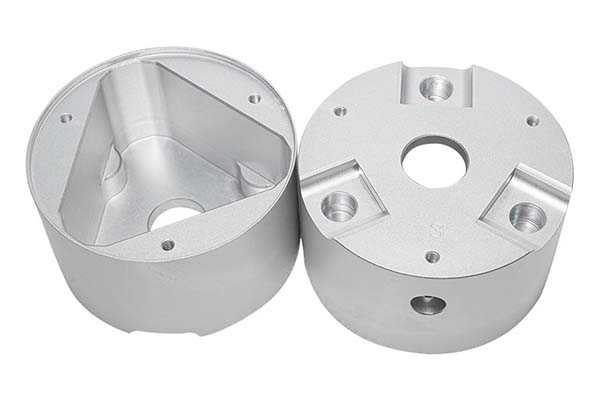
Die casting products surround you everywhere. The engine in your car, the phone in your hand, the lock on your door—all rely on parts made by forcing molten metal into steel molds at high pressure. This process dominates modern manufacturing because it solves a critical problem: how to make complex, precise, lightweight parts by the millions at costs other methods cannot match.
Why Does Transportation Rely So Heavily on Die Casting?
Automotive leads the way
The transportation sector consumes 60-70% of all die casting production worldwide. Why? Because every kilogram saved in a vehicle translates directly to fuel savings or extended electric range.
Powertrain components like engine blocks, transmission housings, and oil pans are almost always aluminum die castings. Alloys like ADC12 and A380 fill the dies, and the rapid solidification under pressure creates a dense microstructure that improves heat dissipation by 20-30% compared to sand cast alternatives. BMW’s B58 engine block uses die casting to integrate 12 internal water channels into a single piece, shaving 15kg off a welded steel design.
NEV-specific parts have exploded with electric vehicles. Motor shells, battery pack housings, even entire body structures now come from die casting. Tesla’s 4680 battery pack shell uses a 9000-ton press to form a single piece that replaces 70+ welded components. This cuts weight by 30kg, extends range by 50-80km, and reduces assembly time by 40%.
Chassis and body parts like suspension brackets and door hinges use high-strength aluminum alloys such as AlSi10MgMn. They deliver 320-350MPa tensile strength—meeting crash safety requirements—while reducing unsprung mass for better handling.
Rail transit and aviation
High-speed trains need lightweight, reliable components. CRRC’s Fuxing train uses die cast aluminum seat frames that weigh 40% less than steel while lasting 10+ years without deformation. Door systems and brake calipers benefit from die casting’s dimensional accuracy of ±0.1mm per meter.
Aircraft manufacturers turn to magnesium die castings for small precision parts. At 1.74g/cm³, magnesium is the lightest structural metal. Boeing’s 787 Dreamliner uses over 100 die cast magnesium components—avionics housings, fuel system connectors—cutting total weight by 500kg.
How Does Electronics Benefit from Die Casting?
Consumer electronics demands miniaturization
Smartphones and tablets pack tremendous functionality into impossibly thin spaces. The middle frame—a critical structural and functional component—is almost always a magnesium die casting like AZ91D. It integrates antenna channels, button slots, and heat dissipation paths into an area as small as 60cm².
Apple’s iPhone 15 Pro middle frame achieves 0.8mm wall thickness while maintaining electromagnetic interference shielding above 80dB. No signal loss, no structural weakness.
Laptops and wearables follow the same logic. Dell’s XPS 17 uses an aluminum die cast shell with integrated cooling fins just 1mm thick. This manages heat from 45W processors without adding weight.
Communication infrastructure
5G base stations operate outdoors in brutal conditions— -40°C to 60°C, humidity over 90%. RF device housings and power enclosures must survive this while maintaining signal integrity.
Aluminum die castings like ADC12 with corrosion-resistant coatings meet IP67 waterproof ratings. Huawei’s 5G base station RF housings use die casting to achieve no signal leakage or water damage for 5+ years.
| Electronics Application | Material | Key Requirement |
|---|---|---|
| Smartphone middle frame | Magnesium AZ91D | 0.8mm walls, EMI >80dB |
| Laptop shell | Aluminum A356 | Integrated cooling fins |
| 5G base station housing | Aluminum ADC12 | IP67, 5-year outdoor life |
Why Are Home Appliances Full of Die Castings?
Kitchen and heating appliances
Rice cookers, coffee machines, and induction cooktops need excellent thermal conductivity to work properly. Aluminum alloys like A380 deliver 150-180 W/m·K —far better than stainless steel.
Xiaomi’s rice cooker liner uses die casting to form a 3mm-thick wall with non-stick coating. Temperature variation across the cooking surface stays under 5°C, ensuring perfectly cooked rice every time.
Water heaters and air conditioners rely on die cast compressor shells and heat exchanger manifolds. Alloys like AlSi12Cu withstand internal pressures up to 3MPa. Gree’s air conditioner compressor shells use die casting to achieve zero refrigerant leakage for 10+ years.
Bathroom and security products
Shower heads and faucet handles need precise water control and beautiful finishes. Zinc alloys like ZAMAK 5 fill this role perfectly. They cast with incredible detail—forming 0.5mm water channels that create specific spray patterns—then accept chrome plating down to Ra <0.8μm for mirror finishes.
Smart door locks require wear resistance and precision. Lock bodies in ZAMAK 3 accommodate complex gear trains while maintaining smooth operation—key insertion force under 5N.
How Does Industrial Machinery Use Die Casting?
Hydraulic and pneumatic systems
Pump housings, valve bodies, and cylinder blocks operate under extreme pressure—up to 30MPa for hydraulic systems. They cannot leak. They cannot fail.
Aluminum alloys like A356 with porosity under 1% meet these demands. Bosch Rexroth’s hydraulic valve bodies achieve dimensional tolerances of ±0.05mm, ensuring precise fluid control in heavy machinery.
Robotics
Industrial robots need lightweight, rigid components to move fast and position accurately. ABB’s IRB 6700 robot uses die cast aluminum joint housings that weigh 30% less than steel. Lower inertia means better accuracy—±0.02mm positioning.
| Industrial Application | Material | Key Requirement |
|---|---|---|
| Hydraulic valve body | Aluminum A356 | <1% porosity, ±0.05mm |
| Robot joint housing | Aluminum AlSi10MgMn | 30% weight savings, ±0.02mm accuracy |
What Role Does Die Casting Play in Medical Equipment?
Diagnostic devices
CT scanners need massive rotating frames that spin quietly while shielding patients from radiation. Siemens’ SOMATOM CT machine uses a die cast aluminum frame spanning 1.2 meters. It achieves rotation noise below 50dB —critical for patient comfort—while incorporating lead inlays for X-ray shielding.
Ultrasound probe housings demand similar precision and protection.
Surgical instruments
Forceps handles, scalpel holders, and other precision tools must survive repeated sterilization without corroding or harboring bacteria. Stainless steel die castings like 316L meet ISO 13485 medical standards. They emerge from the mold with smooth surfaces that clean easily and resist rust.
What Emerging Industries Are Adopting Die Casting?
New energy systems
Solar inverters generate heat that must be managed. JinkoSolar’s PV inverter heat sinks use die cast aluminum fins just 2mm thick at a density of 5 fins per centimeter. This design dissipates 40% more heat than traditional extruded sinks.
Energy storage systems like Tesla’s Powerwall 3 use large aluminum die castings that integrate cooling channels and fire barriers directly into the housing. Safety without added complexity.
Unmanned systems and VR/AR
Drone gimbals must balance extreme lightness with vibration resistance. DJI’s Mavic 3 uses a magnesium die cast bracket weighing under 50g that withstands 200-500Hz vibrations while keeping the camera perfectly stable.
Virtual reality headsets need curved structures that fit human contours. Meta’s Quest 3 uses aluminum die cast brackets just 1.2mm thick shaped to match head anatomy perfectly. Comfort for 2+ hour sessions becomes possible.
What About Specialized Strategic Applications?
| Field | Product Example | Material | Critical Requirement |
|---|---|---|---|
| Explosion-proof | Mining lamp housings | Copper alloys | Non-flammable, no gas leakage |
| Food/pharma | Mixer blades | 316L stainless | FDA food-grade, Ra <0.4μm |
| Military | Fuze shells | 7075 aluminum | ±0.01mm tolerance, lightweight |
Explosion-proof environments demand materials that cannot spark. Copper alloy die castings meet IECEx standards while maintaining structural integrity.
Food and pharmaceutical machinery requires surfaces that prevent bacterial growth. 316L stainless die castings achieve Ra <0.4μm finishes that clean easily and resist corrosion from sanitizing agents.
Military applications demand extreme precision and reliability. Fuze shells in 7075 aluminum hold ±0.01mm tolerances to ensure detonation accuracy while keeping weight manageable for portable equipment.
How to write a spec that gets priced correctly
A drawing is a contract. If it leaves a number open, the shop fills that number in with its own default. The default is rarely the one you had in mind. Put these five lines on every RFQ and most of the back-and-forth disappears before it starts.
- 3D model with the parting line marked
- Alloy grade and the standard it meets
- Wall thickness and draft on every face
- Machining allowance on the faces that will be cut
- Pressure tightness or porosity class
The point is not paperwork. Each line removes a decision the shop would otherwise make for you. A complete RFQ comes back priced. An incomplete one comes back guessed.
What actually drives the price
Buyers usually push on material because it is the line they can see. In practice the material is rarely the biggest number on a quote. These five lines decide most of it:
- die steel and cavity count
- part weight and wall section
- draft and slide count
- porosity requirement
- machining allowance
Ask for the quote split by line. A supplier who cannot break it down is guessing, and you will pay for the guess. The line you can usually renegotiate is the tolerance band, not the raw material.
Problems you will meet, and the fix
Every process has a failure mode it prefers. The same four show up again and again on this kind of work, and none of them are mysteries once you know what to look for.
- Cold shuts where two flow fronts meet
- Porosity that shows up only after machining
- Soldering on a hot spot in the die
- Shrinkage voids in a heavy section
Catch the fault on the first part, not the hundredth. A first-article check costs an hour. A bad batch costs the whole order. Write the check into the purchase order so nobody has to remember it.
What to check on the first article
The first article is the cheapest inspection you will ever buy. Use it properly and the rest of the run becomes boring, which is exactly what you want.
- Every dimension on the drawing, with the measured value written beside it.
- The material certificate, matched to the heat or lot number on the parts.
- The finish against the sample you approved, under the same light.
- Fit against the mating part, assembled rather than measured.
- Packaging, because parts that arrive damaged were never in tolerance.
Check in this order: datums, then mating features, then cosmetic faces. If the datums are wrong, every number after them is noise. Keep the report on file. When a problem shows up in month six, that document is the only thing that tells you what changed.
How to compare two quotes fairly
Two numbers are not comparable unless the scope matches. Line them up before you decide, because a low number with three gaps is not a low number.
Same drawing, same material, same finish, same inspection. Anything else is a different job wearing the same part number. Then look at what each quote leaves out. Freight, packaging, certificates and tooling are the usual gaps.
Ask each supplier to state their assumptions in writing. The one who does is usually the one who has run the process before.
Scaling from one part to a batch
The first part teaches you the process. The hundredth teaches you the process cost.
Watch three things as volume grows: setup amortisation, tool wear, and how much hand work the finish still needs. If the unit price barely moves between ten and a hundred, the cost sits in material or in hand work, not in setup. Ask which, because only one of them is negotiable.
Lead time behaves the same way. A one-off is scheduled around other jobs. A repeat order is scheduled around your forecast. Give the shop a forecast and the lead time gets shorter, not longer.
How to read a supplier's quote
A quote is a short document with a long shadow. Four things in it decide whether the job runs smoothly, and only one of them is the price.
- The scope line. It should name the process, the material and the finish, not just the part.
- The tolerance basis. General tolerance or the drawing, and which standard it follows.
- The exclusions. Tooling, freight, certificates and inspection are the usual omissions.
- The validity date. Material prices move, and an open-ended quote is a promise nobody can keep.
Read the exclusions before you read the total. A quote that leaves out tooling is not cheaper. It is a quote for a different job.
What to send with the first order
The first order sets the pattern for every order after it. Send a complete package once and the shop files it, and the second order takes a fraction of the time.
- A STEP or native model plus a PDF drawing carrying the same revision letter.
- The material callout by standard number, not by trade name.
- The finish and the exact faces it applies to.
- Any test the part must pass: fit, seal, drop, salt spray, dielectric.
- A contact who can answer a question inside one working day.
Then write down what was agreed. An email that confirms the material, the finish and the date is worth more than a longer purchase order that leaves them open.
Industry Experience: Die Casting Solving Real Problems
An automotive supplier needed to reduce weight in a transmission housing without losing strength. Traditional sand casting produced heavy, porous parts. Switching to aluminum die casting with vacuum assist cut weight by 25%, eliminated porosity, and passed all durability tests. Annual savings exceeded $2 million.
A smartphone manufacturer struggled with signal interference from metal frames. Magnesium die casting with precise antenna channel integration solved it. The frames provided structural rigidity while maintaining >80dB shielding effectiveness. No signal loss, no dropped calls.
A medical device company needed surgical tools that could be sterilized hundreds of times. Stainless steel machining was slow and expensive. Die casting produced near-net shapes in seconds, with minimal finishing. Costs dropped 40% while meeting all ISO standards.
Die casting products dominate modern manufacturing because they deliver what industries need most: complex shapes, lightweight construction, consistent quality, and mass production economics. Transportation relies on die castings for engine blocks and battery housings that save weight and extend range. Electronics demands die cast frames that integrate multiple functions into impossibly thin spaces. Home appliances need die cast components that conduct heat precisely and look beautiful. Industrial machinery depends on die cast valves and housings that withstand extreme pressure without leaking. Medical equipment requires die cast parts that meet strict safety standards while enabling advanced diagnostics and treatment. Emerging industries from renewable energy to virtual reality are finding new applications every year. Die casting’s combination of design freedom, performance, and affordability ensures it will remain essential for decades to come.
Our solution for Die Casting Products
YiguProto runs die casting in house, from a single prototype to a production batch. We quote the process, the material and the finish as separate lines, so you can see where the money goes instead of arguing with one number.
Send a STEP file or a drawing and you get a DFM report in one to two business days. It flags the features that add cost and the features that will not hold tolerance on the process you picked.
Every order ships with an inspection report on the features you call out. If a part misses, we make it again. Ready to price a part? Start with a free quote and DFM review, or read more about our die casting. You can also talk to an engineer before you commit to a drawing.
FAQ about Die Casting Products
What files do you need in order to quote?
A STEP file plus a PDF drawing that carries the same revision letter. The model carries the geometry and the drawing carries the intent. When the two disagree, the shop picks one, and it is never the one you meant.
What material should I specify?
Specify by standard, not by trade name. A trade name can change under you between two orders; a standard number cannot. Then add the one property that actually decides the part, whether that is strength, heat resistance or chemical exposure.
Does the process work for prototypes as well as production?
Yes, and that is usually the point. Running the prototype on the production process removes a whole class of surprises, because the part you test is made the same way as the part you sell.
What happens if a part is out of specification?
We measure it against the same drawing you approved and, if it misses, we make it again. What matters is that the report exists, because a disagreement without data is just an opinion.
Can Die Casting Products be made in small quantities?
Yes, and small quantities are where a good supplier earns the next order. Setup dominates the price at low volume, so the cheapest route is usually the one with the fewest operations, not the cheapest material.
How much does Die Casting Products cost?
Price comes from five lines: material, machine or tool time, setup, finishing and inspection. The material itself is usually the smallest of them. Send a drawing and we will split the quote so you can see which line is doing the damage.
The short version
Die Casting Products rewards the buyer who reads the data sheet and the drawing together. Pick the option for the property that matters, not for the price per kilo.
Tighten only what mates. Test a sample before the run. Then let the process do the rest.