
Plastic Materials
Are High-Temperature Silicone Plugs Right for Your Application?
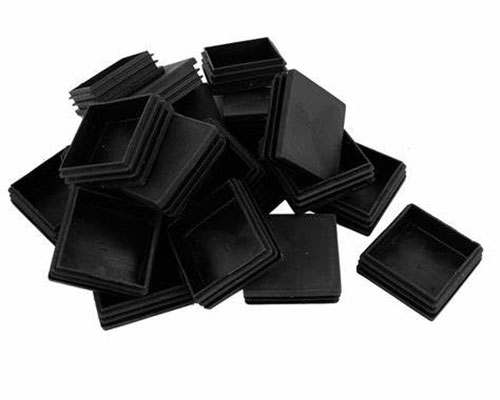
Industrial processes, medical devices, and food production often involve extreme heat. Standard plugs melt, harden, or fail under these conditions. High-temperature silicone plugs solve this problem. They seal openings, protect threads, and maintain integrity where other materials give up. This guide explains what makes them different, how they’re made, where to use them, and how to choose the right one.
Key takeaways
- High-temperature silicone plugs outperform standard options across several critical areas.
- Manufacturing these plugs requires precise control and quality materials. Each step builds the final heat resistance.
- High-temperature silicone plugs solve sealing challenges where heat destroys ordinary materials.
What Makes High-Temperature Silicone Plugs Different?
High-temperature silicone plugs outperform standard options across several critical areas. The differences matter when your application pushes material limits.
Temperature Resistance
High-temperature silicone plugs withstand 200-350°C continuously. Short-term exposure to 350°C for two hours causes no damage. They don’t crack, harden, or lose shape.
Standard silicone plugs top out at 150°C. Above 180°C, they deform permanently. Rubber and plastic plugs fail even faster—melting or becoming brittle between 80-120°C.
Physical Durability
These plugs maintain strength under stress. Tensile strength ranges from 3-8 MPa. They stretch over 400% before breaking. After compression, they return to original shape without permanent deformation.
Standard silicone manages 2-5 MPa tensile strength and under 300% elongation. Repeated use causes compression set—they don’t snap back fully. Rubber and plastic plugs crack easily under friction or repeated stress.
Chemical Stability
Heat often pairs with chemical exposure. These plugs resist acids from pH 2-12, alkalis, oils, and solvents. No corrosion, no swelling, no degradation.
Standard silicone handles mild chemicals but swells in oil and degrades in strong acids. Rubber and plastic dissolve or degrade in most industrial chemicals.
Safety Compliance
For sensitive applications, food-grade variants meet FDA and GB standards. Medical-grade options are biocompatible—they don’t irritate tissue.
Standard silicone rarely carries food or medical certification. It may contain harmful additives. Rubber and plastic are often non-toxic but lack approvals for food or medical contact.
| Property | High-Temp Silicone | Standard Silicone | Rubber/Plastic |
|---|---|---|---|
| Temperature Range | 200-350°C | Up to 150°C | 80-120°C max |
| Tensile Strength | 3-8 MPa | 2-5 MPa | <2 MPa |
| Elongation | >400% | <300% | Low |
| Chemical Resistance | pH 2-12, oils, solvents | Limited | Poor |
| Certifications | FDA, medical grade available | Rarely certified | Usually non-toxic only |
How Are High-Temperature Silicone Plugs Made?
Manufacturing these plugs requires precise control and quality materials. Each step builds the final heat resistance.
Step 1: Material Blending
Base silicone uses fumed silica gel. This high-purity material has low impurities, boosting density and heat resistance. Cheaper precipitated silica won’t achieve the same performance.
Additives get mixed in carefully:
- Heat stabilizers like iron oxide prevent thermal oxidation above 300°C
- Antioxidants extend service life beyond 5 years in high-heat environments
- For food and medical grades, non-toxic plasticizers replace phthalates
The blend must be uniform. Any inconsistency creates weak points that fail under heat.
Step 2: Molding
The molding method depends on plug shape and production volume.
Compression molding works for high volumes of standard shapes. Silicone compound heats in a mold at 160-180°C under 10-20 MPa pressure. The material flows, fills the cavity, and cures into shape. Blind hole plugs and simple geometries use this method.
Extrusion molding suits long, cylindrical plugs. Silicone pushes through a die, creating continuous lengths. After cooling, automatic cutters slice plugs to size. Through-hole plugs often use this method.
Step 3: Vulcanization
Primary vulcanization cures the basic shape. Molded plugs go into ovens at 180-200°C for 5-10 minutes. This sets the structure but doesn’t complete the process.
Secondary vulcanization is critical for heat resistance. Plugs post-cure at 200-220°C for 2-4 hours. This removes volatile by-products that would otherwise degrade at high temperatures. Skip this step, and plugs lose heat resistance over time.
Step 4: Quality Testing
Every batch undergoes verification:
- Temperature testing: Samples expose to 350°C for 2 hours. No deformation, no hardness change.
- Dimensional accuracy: Calipers check diameter within ±0.1mm for precision plugs.
- Toxicity testing for food and medical grades: No heavy metals, no volatile organic compounds.
Where Do You Use High-Temperature Silicone Plugs?
Different industries rely on these plugs for specific challenges.
Industrial Manufacturing
Protecting holes during finishing is a common use. During high-temperature spraying at 250°C+, plugs cover screw holes and process openings. They keep paint and coatings out of threaded areas. After spraying, they remove cleanly without residue.
Sealing communication cabinets keeps dust and chemicals out. Through-holes for cables need protection. Plugs seal these openings while allowing wires to pass through.
Electroplating lines use plugs to mask areas that shouldn’t plate. The plugs resist both heat and chemical baths.
Case example: An automotive parts manufacturer painted engine components at 280°C. Standard rubber plugs melted, allowing paint into threaded holes. Rework cost thousands monthly. Switching to high-temperature silicone plugs eliminated the problem. Each plug reused 40-50 times before replacement.
Medical Devices
Sealing medicine bottles prevents contamination. Small blind hole plugs of 3-10mm diameter seal vial necks. Medical-grade silicone ensures no leachables contaminate drugs.
Protecting instrument ports during sterilization matters. Autoclaves run at 134°C under pressure. Plugs must maintain seals through repeated cycles. They also must be biocompatible—no tissue irritation when contacting medical devices.
Case example: A surgical instrument manufacturer struggled with port contamination during sterilization. Rubber plugs degraded after 5-10 autoclave cycles. Debris entered instruments. Medical-grade silicone plugs now withstand 100+ cycles without losing flexibility. Contamination dropped to zero.
Food Processing
Sealing food can lids maintains freshness. Plugs create airtight seals during processing and storage. Food-grade variants ensure no chemicals migrate into food.
Covering baking mold holes prevents batter leakage. Commercial ovens reach 220°C. Plugs stay flexible, seal tightly, and remove easily. They’re dishwasher-safe for cleaning between uses.
Case example: A commercial bakery used metal plugs to seal holes in baking pans. Metal expanded at different rates than pans, causing leaks. Batter escaped, creating mess and waste. High-temperature silicone plugs matched pan expansion, sealed perfectly, and eliminated leakage.
Scientific Research
Sealing laboratory flasks during high-temperature experiments keeps systems closed. Distillation at 200°C requires perfect seals. Plugs fit ground glass joints and maintain vacuum or pressure.
Protecting sensor ports in environmental chambers matters for accuracy. Chambers cycle from -40°C to 300°C. Plugs must seal through extreme temperature swings without leaking.
How Do You Choose the Right Plug?
Selecting correctly ensures proper sealing and long life.
Match Diameter to Hole Size
Small diameters of 3-10mm suit medical bottles, test tubes, and small process holes.
Medium diameters of 11-20mm work for standard industrial openings.
Large diameters of 21-50mm fit automotive parts and communication cabinet ports.
Rule: Choose a plug diameter 0.5-1mm larger than the hole. This interference fit ensures tight sealing.
Select the Right Shape
Through-hole plugs have hollow centers. They fit holes that need penetration—sensor wires, cables, or tubing passing through.
Blind hole plugs have solid bottoms. They seal one-end-closed openings like bottle necks and threaded holes that end inside parts.
Countersunk thread plugs feature recessed tops. They fit countersunk threaded holes in machine parts. The recess matches screw head profiles.
Consider Application Requirements
Temperature exposure: Continuous or intermittent? Higher temperatures may need premium formulations.
Chemical contact: What fluids touch the plug? Verify compatibility with your specific chemicals.
Reuse expectations: Single-use or reusable? Reusable plugs need higher durability grades.
Certification needs: Food contact requires FDA-grade. Medical use needs biocompatibility testing. Industrial applications can use standard grades.
| Application | Recommended Type | Key Consideration |
|---|---|---|
| Paint spraying | Countersunk thread | Residue-free removal |
| Medicine bottles | Small blind hole | Medical-grade material |
| Baking pans | Food-grade through-hole | Dishwasher safe |
| Cable pass-through | Through-hole | Wire accommodation |
| Thread protection | Countersunk thread | Thread pitch matching |
How to write a spec that gets priced correctly
A drawing is a contract. If it leaves a number open, the shop fills that number in with its own default. The default is rarely the one you had in mind. Put these five lines on every RFQ and most of the back-and-forth disappears before it starts.
- Resin grade with the standard number
- The property that actually decides the part
- Colour, texture and the face they apply to
- Environmental exposure: UV, chemical, temperature
- Any flame, food or medical rating required
The point is not paperwork. Each line removes a decision the shop would otherwise make for you. A complete RFQ comes back priced. An incomplete one comes back guessed.
What actually drives the price
Buyers usually push on material because it is the line they can see. In practice the material is rarely the biggest number on a quote. These five lines decide most of it:
- resin grade and additive package
- part weight
- tooling
- colour and texture
- certification and testing
Ask for the quote split by line. A supplier who cannot break it down is guessing, and you will pay for the guess. The line you can usually renegotiate is the tolerance band, not the raw material.
Problems you will meet, and the fix
Every process has a failure mode it prefers. The same four show up again and again on this kind of work, and none of them are mysteries once you know what to look for.
- Stress cracking at a moulded-in insert
- UV yellowing on an outdoor part
- Creep under a sustained load at temperature
- Warp on a glass-filled grade with the wrong gate
Catch the fault on the first part, not the hundredth. A first-article check costs an hour. A bad batch costs the whole order. Write the check into the purchase order so nobody has to remember it.
What to check on the first article
The first article is the cheapest inspection you will ever buy. Use it properly and the rest of the run becomes boring, which is exactly what you want.
- Every dimension on the drawing, with the measured value written beside it.
- The material certificate, matched to the heat or lot number on the parts.
- The finish against the sample you approved, under the same light.
- Fit against the mating part, assembled rather than measured.
- Packaging, because parts that arrive damaged were never in tolerance.
Check in this order: datums, then mating features, then cosmetic faces. If the datums are wrong, every number after them is noise. Keep the report on file. When a problem shows up in month six, that document is the only thing that tells you what changed.
How to compare two quotes fairly
Two numbers are not comparable unless the scope matches. Line them up before you decide, because a low number with three gaps is not a low number.
Same drawing, same material, same finish, same inspection. Anything else is a different job wearing the same part number. Then look at what each quote leaves out. Freight, packaging, certificates and tooling are the usual gaps.
Ask each supplier to state their assumptions in writing. The one who does is usually the one who has run the process before.
Scaling from one part to a batch
The first part teaches you the process. The hundredth teaches you the process cost.
Watch three things as volume grows: setup amortisation, tool wear, and how much hand work the finish still needs. If the unit price barely moves between ten and a hundred, the cost sits in material or in hand work, not in setup. Ask which, because only one of them is negotiable.
Lead time behaves the same way. A one-off is scheduled around other jobs. A repeat order is scheduled around your forecast. Give the shop a forecast and the lead time gets shorter, not longer.
How to read a supplier's quote
A quote is a short document with a long shadow. Four things in it decide whether the job runs smoothly, and only one of them is the price.
- The scope line. It should name the process, the material and the finish, not just the part.
- The tolerance basis. General tolerance or the drawing, and which standard it follows.
- The exclusions. Tooling, freight, certificates and inspection are the usual omissions.
- The validity date. Material prices move, and an open-ended quote is a promise nobody can keep.
Read the exclusions before you read the total. A quote that leaves out tooling is not cheaper. It is a quote for a different job.
What to send with the first order
The first order sets the pattern for every order after it. Send a complete package once and the shop files it, and the second order takes a fraction of the time.
- A STEP or native model plus a PDF drawing carrying the same revision letter.
- The material callout by standard number, not by trade name.
- The finish and the exact faces it applies to.
- Any test the part must pass: fit, seal, drop, salt spray, dielectric.
- A contact who can answer a question inside one working day.
Then write down what was agreed. An email that confirms the material, the finish and the date is worth more than a longer purchase order that leaves them open.
When this is the wrong choice
A good supplier tells you when the process does not fit. These are the cases where we say so.
- The volume is so low that setup costs more than the parts are worth.
- The tolerance is tighter than the process can hold without a second operation.
- The geometry cannot be made without a tool feature that will not pay back.
- The material you need is not available in the form the process requires.
- The schedule is shorter than the tooling or setup time, and nobody has said so yet.
None of these are refusals. They are reasons to look at a different route, and the earlier that conversation happens the cheaper it is. The most expensive mistake in manufacturing is a process chosen before the question was understood.
How Do You Maintain and Reuse These Plugs?
Proper care extends plug life significantly.
Cleaning Methods
Industrial plugs after paint or chemical exposure: Wipe with isopropyl alcohol or compatible solvent. Avoid sharp tools that scratch surfaces. Scratches create leak paths.
Food and medical plugs: Wash with warm soapy water. Autoclave at 134°C for sterilization. Dishwasher cleaning works for food applications.
Inspection Before Reuse
Check for:
- Cracks or cuts in the surface
- Permanent deformation (won’t return to shape)
- Hardening or softening compared to new plugs
- Surface contamination that won’t clean off
Expected Lifespan
Most high-temperature silicone plugs reuse 30-50 times with proper care. Some industrial applications achieve 100+ cycles. When plugs show any damage or reduced sealing, replace them.
High-temperature silicone plugs solve sealing challenges where heat destroys ordinary materials. They withstand 200-350°C, resist chemicals, maintain elasticity, and meet strict safety standards for food and medical use. Manufacturing involves careful material selection, precise molding, and critical secondary vulcanization. Applications span industrial finishing, medical devices, food processing, and research. Choosing the right plug means matching diameter, shape, and material grade to your specific requirements. With proper care, these plugs deliver reliable service across dozens of reuse cycles.
Our solution for High-Temperature Silicone Plugs
YiguProto runs plastic part production in house, from a single prototype to a production batch. We quote the process, the material and the finish as separate lines, so you can see where the money goes instead of arguing with one number.
Send a STEP file or a drawing and you get a DFM report in one to two business days. It flags the features that add cost and the features that will not hold tolerance on the process you picked.
Every order ships with an inspection report on the features you call out. If a part misses, we make it again. Ready to price a part? Start with a free quote and DFM review, or read more about our plastic part production. You can also talk to an engineer before you commit to a drawing.
FAQ about High-Temperature Silicone Plugs
How much does High-Temperature Silicone Plugs cost?
Price comes from five lines: material, machine or tool time, setup, finishing and inspection. The material itself is usually the smallest of them. Send a drawing and we will split the quote so you can see which line is doing the damage.
How do I compare two quotes fairly?
Match the scope first: same drawing, same material, same finish, same inspection. Then read the exclusions. Freight, tooling and certificates are the usual gaps, and a low number with three gaps is not a low number.
Does the process work for prototypes as well as production?
Yes, and that is usually the point. Running the prototype on the production process removes a whole class of surprises, because the part you test is made the same way as the part you sell.
How long does a first article take?
Usually a few business days once the drawing is frozen, and longer if tooling is involved. The date we give you is the date we confirm in writing, not the date we hope for.
What is High-Temperature Silicone Plugs used for?
High-Temperature Silicone Plugs turns up wherever the part has to do a real job at a predictable cost: brackets, housings, fixtures, covers and the fittings that hold them together. The honest test is whether the properties match the load and the environment, not whether the material is fashionable.
What should I check before approving the parts?
Datums first, then the features that mate, then the cosmetic faces. Ask for a dimensional report, a material certificate and a finish sample. A part can be inside every tolerance and still not fit, so assemble one before you sign.
The short version
High-Temperature Silicone Plugs rewards the buyer who reads the data sheet and the drawing together. Pick the option for the property that matters, not for the price per kilo.
Tighten only what mates. Test a sample before the run. Then let the process do the rest.