
Die Casting
What Is Integrated Die Casting and How to Overcome Its Technical Challenges?
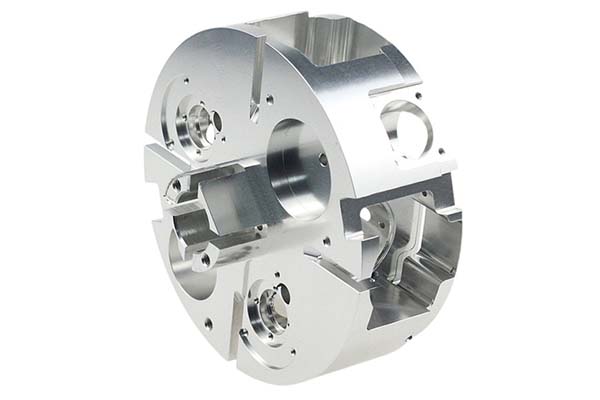
If you follow manufacturing news, you have probably heard about integrated die casting. Tesla calls it Giga-casting. Volvo calls it Mega-casting. Whatever the name, the concept is the same: taking dozens or even hundreds of individual stamped and welded parts and combining them into one single casting.
Key takeaways
- Integrated die casting is a manufacturing process that produces large, complex components as a single piece—replacing assemblies that traditionally required multiple parts and joining steps.
- The benefits are clear, but getting there is hard. Three major challenges stand in the way.
- Integrated die casting is transforming manufacturing—especially for electric vehicles.
What Exactly Is Integrated Die Casting?
Integrated die casting is a manufacturing process that produces large, complex components as a single piece—replacing assemblies that traditionally required multiple parts and joining steps.
The Basic Concept
Think of a car’s rear floor. Traditionally, it might consist of:
- 70+ stamped steel parts
- 100+ welding spots
- 20+ fasteners
- Hours of assembly time
With integrated die casting, you make the entire rear floor in one step. One mold. One shot of molten aluminum. One finished component that comes out of the machine ready to install.
What Makes It Possible?
Three key technologies enable integrated die casting:
Super-large machines: Conventional die casting machines have 500–2,000 tons of clamping force. Integrated die casting needs 6,000–12,000 tons. Tesla uses 9,000-ton machines for the Model Y rear floor. These giants can inject over 1,000kg of molten aluminum in a single shot.
Specialized alloys: Traditional die casting alloys like ADC12 do not work well for giant castings. New heat-free aluminum alloys (like AlSi10MgMn) are designed to reduce cracking and porosity in large sections.
Advanced process control: Integrated castings require:
- Ultra-high vacuum (over 95kPa) to remove air
- Precise temperature control (mold temperature stable within ±5°C)
- Optimized flow rates (1–1.5 m/s injection speed)
The Result
A complete component that:
- Replaces 50–100 traditional parts
- Eliminates 80% of welding spots
- Cuts assembly time from hours to minutes
- Reduces weight by 10–15%
How Does Integrated Die Casting Compare to Traditional Manufacturing?
The advantages become clear when you stack them side by side.
| Metric | Integrated Die Casting | Traditional Stamping + Welding |
|---|---|---|
| Production time per component | Under 2 minutes | Hours (stamping 70+ parts + assembly) |
| Daily output | ~1,000 units | ~50 units |
| Part weight | Aluminum, 10–15% lighter | Steel, heavier |
| Manufacturing cost | 40% lower (Tesla data) | Higher (multiple processes) |
| Factory space | 30% less needed | More assembly lines |
| Labor | 50% fewer workers | Labor-intensive assembly |
| Failure points | 90% fewer (no welds/fasteners) | 100+ potential failure points |
| Structural reliability | 80% lower failure rate | Multiple weak connections |
Breaking Down the Numbers
Efficiency: Making 70 stamped parts takes 10–15 minutes per part, plus 2+ hours for welding and assembly. Total: over 2 hours per finished component. Integrated die casting does it in under 2 minutes. That is 60× faster.
Weight: Aluminum is one-third the density of steel. Even with thicker sections for strength, integrated castings are 10–15% lighter than stamped steel assemblies. For an EV, that means 5–8% more range from the same battery.
Cost: Tesla reports 40% lower manufacturing costs for parts made with integrated die casting. Fewer machines, less labor, less factory space, and faster production all add up.
Reliability: Every weld and every fastener is a potential failure point. Integrated castings have 90% fewer connections, which means fewer things to break under stress.
Where Is Integrated Die Casting Used Today?
Automotive Underbody Structures
The automotive industry—especially electric vehicles—leads the way.
Tesla Model Y rear floor: The most famous example. One casting replaces 70+ stamped parts. Assembly time dropped from 2 hours to 1.5 minutes. Weight reduced by 18kg.
Volvo EX90 front cabin: Volvo’s Mega-casting integrates 40+ parts into one component. Weight saving: 12kg compared to traditional design.
NIO ES8 battery tray: A single casting holds the battery pack. Structural rigidity improved by 30% —critical for protecting batteries in crashes.
What’s Coming Next?
Cell-to-chassis integration: Future EVs will combine battery trays, underbodies, and side sills into one giant casting. This could reduce weight by another 15% and increase battery space by 10%.
Truck frames: Manufacturers are developing 12,000-ton machines to cast complete truck cab frames—integrating 80+ parts into one.
Aerospace components: Small aircraft fuselage sections made from cast aluminum instead of titanium could cut costs by 50%.
What Are the Technical Challenges of Integrated Die Casting?
The benefits are clear, but getting there is hard. Three major challenges stand in the way.
Challenge 1: Material Performance Limitations
The problem: Large castings are prone to porosity and oxide inclusions. Trapped air creates bubbles inside the metal. Oxidation forms weak spots. In automotive crash zones, these defects can mean failure.
Data point: With conventional alloys and processes, 10–15% of large castings fail quality tests for high-stress applications.
The solutions:
Use heat-free aluminum alloys: Alloys like AlSi10MgMn (with 0.5% manganese) resist oxidation much better than standard ADC12. They reduce inclusions by 60%.
Optimize vacuum and degassing:
- Ultra-high vacuum (over 98kPa) removes air before injection
- Rotary degassing with argon pulls hydrogen out of the molten metal
- Combined, these cut porosity to under 1% —meeting ASTM E446 Level B standards
Add local pressurization: Install 20–30 pressure pins in mold hot spots (thick sections where shrinkage happens). During solidification, these pins apply extra pressure to compress any forming bubbles.
Challenge 2: High Maintenance and Repair Costs
The problem: When a traditional assembly gets damaged—say, a small crack in the rear floor—you replace just the damaged part. With an integrated casting, the whole component is one piece. A tiny crack means replacing the entire thing.
Cost impact: Maintenance costs can be 300% higher compared to modular designs.
The solutions:
Design for repairability: Add reinforcement ribs (3–5mm thick) in high-risk areas like bumper attachment points. These local features prevent minor impacts from spreading into cracks.
Use laser repair technology: High-power fiber lasers (10kW) can weld small cracks (under 5mm) in aluminum castings. This restores 90% of structural strength at 1/10 the cost of full replacement.
Implement predictive maintenance:
- Vibration sensors on machines
- Mold temperature monitors
- Early warning systems for wear
- This reduces unexpected downtime by 40%
Challenge 3: Supporting Technology Requirements
The problem: Integrated die casting depends on three supporting technologies, and all must work perfectly:
- High-precision large molds: A 3-meter-long underbody mold requires dimensional accuracy of ±0.1mm. Traditional machining cannot achieve this consistently.
- Stable molten metal supply: A 1,000kg shot needs molten aluminum at 680–700°C, stable within ±3°C. Temperature fluctuations cause cold shuts and incomplete filling.
- Process optimization: With so many variables, finding the right settings through trial and error is impossibly slow.
The solutions:
Advanced mold manufacturing:
- 5-axis CNC machining centers with 0.001mm positioning accuracy
- Laser scanning inspection to verify every dimension
- This ensures molds meet the required precision
Automated molten metal control:
- Inline temperature sensors at the furnace spout
- Flow meters in the delivery system
- Automatic adjustment of heating power and flow rate
- Temperature stability maintained within ±2°C
Process simulation:
- CAE software (like AnyCasting) simulates filling and solidification
- Run 100+ simulations before cutting steel
- Predict and fix issues like air traps or uneven cooling in advance
Real-world result: A manufacturer using simulation identified a porosity risk in a battery tray design. They modified the cooling channel layout before building the mold, saving $200,000 in rework and avoiding a 6-month delay.
How Can You Successfully Adopt Integrated Die Casting?
Based on industry experience, follow this phased approach.
Phase 1: Start Small
Do not jump straight to a 9,000-ton machine making entire car bodies.
Begin with medium-sized parts:
- Battery frames (2,000–3,000 ton machines)
- Shock towers
- Motor housings
Master the fundamentals:
- Vacuum control
- Material degassing
- Temperature management
- Defect prevention
Phase 2: Build Supporting Infrastructure
Invest in simulation capability: You need CAE software and people who know how to use it. This is not optional—it is essential.
Develop your supply chain: Ensure you have reliable sources for:
- Heat-free aluminum alloys
- High-performance release agents
- Replacement mold components
Train your team: Operators need to understand:
- How to interpret simulation results
- How to adjust parameters in real time
- How to spot early signs of problems
Phase 3: Scale Up Gradually
Move to larger parts only after proving the process on medium components.
Consider a hybrid approach: For some products, the best solution might be a mix of integrated castings and traditional parts. Do not force integration where it does not make sense.
Monitor costs carefully: Track defect rates, cycle times, and maintenance costs. Integrated die casting only pays off if you achieve high yields.
How to write a spec that gets priced correctly
A drawing is a contract. If it leaves a number open, the shop fills that number in with its own default. The default is rarely the one you had in mind. Put these five lines on every RFQ and most of the back-and-forth disappears before it starts.
- 3D model with the parting line marked
- Alloy grade and the standard it meets
- Wall thickness and draft on every face
- Machining allowance on the faces that will be cut
- Pressure tightness or porosity class
The point is not paperwork. Each line removes a decision the shop would otherwise make for you. A complete RFQ comes back priced. An incomplete one comes back guessed.
What actually drives the price
Buyers usually push on material because it is the line they can see. In practice the material is rarely the biggest number on a quote. These five lines decide most of it:
- die steel and cavity count
- part weight and wall section
- draft and slide count
- porosity requirement
- machining allowance
Ask for the quote split by line. A supplier who cannot break it down is guessing, and you will pay for the guess. The line you can usually renegotiate is the tolerance band, not the raw material.
Problems you will meet, and the fix
Every process has a failure mode it prefers. The same four show up again and again on this kind of work, and none of them are mysteries once you know what to look for.
- Cold shuts where two flow fronts meet
- Porosity that shows up only after machining
- Soldering on a hot spot in the die
- Shrinkage voids in a heavy section
Catch the fault on the first part, not the hundredth. A first-article check costs an hour. A bad batch costs the whole order. Write the check into the purchase order so nobody has to remember it.
What to check on the first article
The first article is the cheapest inspection you will ever buy. Use it properly and the rest of the run becomes boring, which is exactly what you want.
- Every dimension on the drawing, with the measured value written beside it.
- The material certificate, matched to the heat or lot number on the parts.
- The finish against the sample you approved, under the same light.
- Fit against the mating part, assembled rather than measured.
- Packaging, because parts that arrive damaged were never in tolerance.
Check in this order: datums, then mating features, then cosmetic faces. If the datums are wrong, every number after them is noise. Keep the report on file. When a problem shows up in month six, that document is the only thing that tells you what changed.
How to compare two quotes fairly
Two numbers are not comparable unless the scope matches. Line them up before you decide, because a low number with three gaps is not a low number.
Same drawing, same material, same finish, same inspection. Anything else is a different job wearing the same part number. Then look at what each quote leaves out. Freight, packaging, certificates and tooling are the usual gaps.
Ask each supplier to state their assumptions in writing. The one who does is usually the one who has run the process before.
FAQ About Integrated Die Casting
Can integrated die casting be used for materials other than aluminum?
Currently, it is mainly limited to aluminum alloys (AlSi10MgMn, A356). Magnesium is too reactive—high oxidation risk in large cavities. Steel requires melting points that would need 20,000+ ton machines, which are not economical yet. Research continues on magnesium with protective gas environments, but commercial use is 3–5 years away.
What production volume justifies investing in integrated die casting?
Due to high upfront costs (a 6,000-ton machine plus mold costs around $15 million), you need at least 100,000 units per year to make it economical. Below 50,000 units, traditional processes are still cheaper. At 50,000 units, integration might cost $300 per part versus $200 for stamping+welding. At 200,000 units, integration wins.
How do you ensure integrated castings are safe in crashes?
Two key measures:
- Material selection: Use high-strength alloys (tensile strength ≥350MPa) with 0.2–0.4% copper for impact resistance.
- Design optimization: Add energy-absorbing structures (crumple zones with variable wall thickness). Simulate crash performance with FEA before production to ensure NCAP 5-star compliance.
Can integrated castings be recycled?
Yes—easily. Aluminum is highly recyclable. An integrated casting at end-of-life goes into the scrap stream, melts down, and becomes new aluminum. The recycling rate for automotive aluminum is over 90%.
What happens if a mold cracks or wears out?
Mold replacement is expensive but planned for. A typical mold for a large integrated casting costs $2–4 million and lasts 50,000–100,000 shots. Manufacturers budget for this and often have spare molds to avoid production interruptions.
Integrated die casting is transforming manufacturing—especially for electric vehicles. By combining dozens of parts into single castings, it cuts production time from hours to minutes, reduces weight by 10–15%, and lowers costs by 40%. The rear floor of a Tesla Model Y, once made from 70+ stamped pieces, now comes out of a machine as one component.
But the technology is not easy. Three major challenges must be overcome:
- Material limitations (porosity, oxidation) → solved with heat-free alloys, vacuum systems, and local pressurization
- High repair costs → addressed through repairable design, laser welding, and predictive maintenance
- Strict support requirements → met with precision molds, automated metal control, and extensive simulation
Success requires a phased approach: start with medium parts, build infrastructure, and scale gradually. The investment is significant—$15 million for a 6,000-ton line—but for volumes over 100,000 units per year, the payoff is real.
Integrated die casting is not for everyone. But for high-volume products that need to be light, strong, and affordable, it is becoming the new standard.
Our solution for Integrated Die Casting
YiguProto runs die casting in house, from a single prototype to a production batch. We quote the process, the material and the finish as separate lines, so you can see where the money goes instead of arguing with one number.
Send a STEP file or a drawing and you get a DFM report in one to two business days. It flags the features that add cost and the features that will not hold tolerance on the process you picked.
Every order ships with an inspection report on the features you call out. If a part misses, we make it again. Ready to price a part? Start with a free quote and DFM review, or read more about our die casting. You can also talk to an engineer before you commit to a drawing.
FAQ about Integrated Die Casting
What is Integrated Die Casting used for?
Integrated Die Casting turns up wherever the part has to do a real job at a predictable cost: brackets, housings, fixtures, covers and the fittings that hold them together. The honest test is whether the properties match the load and the environment, not whether the material is fashionable.
What files do you need in order to quote?
A STEP file plus a PDF drawing that carries the same revision letter. The model carries the geometry and the drawing carries the intent. When the two disagree, the shop picks one, and it is never the one you meant.
What tolerance can you hold on Integrated Die Casting?
The working default is ±0.1 mm on cast features, ±0.05 mm after machining. Tighter than that the process changes and so does the price, because every step tighter adds inspection time. Call out only the faces that mate with something else and leave the rest on the general tolerance.
How long does a first article take?
Usually a few business days once the drawing is frozen, and longer if tooling is involved. The date we give you is the date we confirm in writing, not the date we hope for.
How much does Integrated Die Casting cost?
Price comes from five lines: material, machine or tool time, setup, finishing and inspection. The material itself is usually the smallest of them. Send a drawing and we will split the quote so you can see which line is doing the damage.
What material should I specify?
Specify by standard, not by trade name. A trade name can change under you between two orders; a standard number cannot. Then add the one property that actually decides the part, whether that is strength, heat resistance or chemical exposure.
The short version
Integrated Die Casting rewards the buyer who reads the data sheet and the drawing together. Pick the option for the property that matters, not for the price per kilo.
Tighten only what mates. Test a sample before the run. Then let the process do the rest.