
Rapid Prototyping
How to Design and Produce High-Quality Hardware Shrapnel Prototypes?
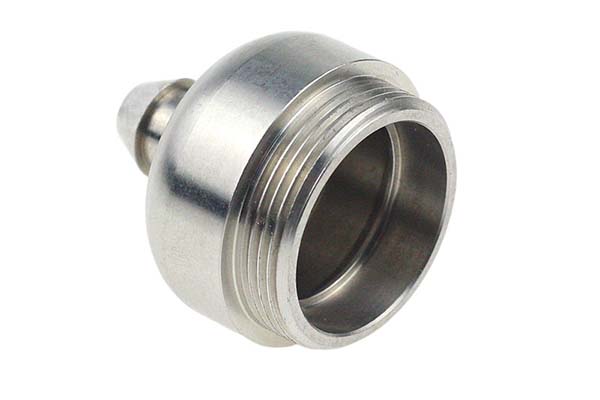
Creating a reliable hardware shrapnel prototype is more complex than it looks. These small parts play a big role in electronics, cars, and industrial gear. Their job? To provide steady pressure, conduct electricity, or absorb shock—sometimes for thousands of cycles. A weak design or wrong material choice can ruin a whole product.
Key takeaways
- Before you cut any metal, you must define what the part needs to do. Skipping this step often leads to expensive rework.
- Making a shrapnel involves several steps. Each one must match your requirements.
- The right supplier makes your job easy. The wrong one causes delays and bad parts.
- Making a quality hardware shrapnel prototype is about matching the material and process to the part’s job.
What Are the Core Requirements for a Good Shrapnel Prototype?
Before you cut any metal, you must define what the part needs to do. Skipping this step often leads to expensive rework.
How Does Functional Performance Shape Your Choices?
The part’s job decides the material and process. Ask yourself these questions:
- What force is needed? A battery contact might need 8N of rebound force after being pushed down 5mm. This requires a material with high elasticity, like phosphor bronze or spring steel.
- How many cycles will it last? A switch in a laptop lid might need to work 50,000 times. For high fatigue life, materials like beryllium copper or heat-treated spring steel are better.
- Does it need to conduct electricity? For a ground contact, low resistance is key. Phosphor bronze or beryllium copper work well here.
Real example: A client once made a shrapnel for a smartwatch charger from stainless steel. It looked fine but failed after 500 cycles. The rebound force dropped by 40%. We switched to phosphor bronze (C5191), and it passed 20,000 cycles easily. The material change cost a bit more but saved the product.
What Precision Standards Really Matter?
Tighter tolerances mean higher costs. Be smart about where you need precision.
- Critical dimensions: Hole positions for a connector might need ±0.05mm. Use wire EDM or high-end CNC for these.
- Non-critical areas: Outer edges or thickness in low-stress zones can be ±0.1mm or looser. Standard CNC is fine.
Tip: Only mark tight tolerances on your drawing where absolutely needed. A part with all dimensions at ±0.05mm can cost twice as much as one with mixed tolerances.
How Do Batch Size and Timeline Affect Your Plan?
Your quantity and deadline drive the production method.
- 1-5 pieces, need it fast: Use CNC machining. No mold, quick setup. Get parts in 3-5 days.
- 10-50 pieces for testing: Still often CNC, but ask about quantity discounts. Some shops give 10-15% off for 10+ parts.
- 50+ pieces: Time to consider stamping. The mold costs 2,000-5,000 CNY upfront, but each part becomes very cheap.
How to Choose the Right Production Process?
Making a shrapnel involves several steps. Each one must match your requirements.
Which Material Fits Your Shrapnel Best?
The material is the foundation. Here’s a breakdown of common choices.
| Material | Key Properties | Cost (CNY/kg) | Best Use Cases |
|---|---|---|---|
| Stainless Steel (SUS301) | Good elasticity, corrosion resistant, moderate hardness | 80-120 | General parts: switch contacts, battery holders in normal environments |
| Phosphor Bronze (C5191) | High conductivity, great elasticity (≥95% rebound), easy to solder | 60-90 | Electronic contacts: USB connectors, circuit board springs |
| Spring Steel (65Mn, SK5) | Very hard (HRC 45-50 after heat treat), long fatigue life, low cost | 50-80 | High-load parts: car door latches, industrial springs |
| Beryllium Copper (QBe2) | Extremely strong, good conductor, stable shape | 500-800 | High-end electronics: aerospace connectors, precision switches |
Processing note: Thin materials under 0.5mm are tricky to machine. They bend easily. For stainless steel under 0.3mm, consider etching or wire EDM instead of standard CNC.
What Processing Method Should You Use?
Match the method to your precision needs and quantity.
| Method | Best For | Precision | Cost (per piece) | Notes |
|---|---|---|---|---|
| CNC Machining | Small batches (1-10 pcs), complex shapes with holes or curves | ±0.01mm | 200-500 (steel) | Good for thicker materials (>0.5mm). Thin parts need special fixtures. |
| Wire EDM | Ultra-thin materials (≥0.05mm), super high precision | ±0.005mm | Fast: 300-600 / Slow: 800-1,500 | Slow wire is for critical parts. Fast wire is cheaper but less precise. |
| Stamping | Large batches (50+ pcs), simple flat shapes | ±0.05-0.1mm | 50-150 (incl. mold fee) | Mold cost is high (2,000-5,000 CNY), so only for big quantities. |
| Etching | Ultra-thin (≥0.02mm), complex patterns like grids or holes | ±0.02-0.05mm | 100-300 | Edges can be rough. Good for parts that can’t take mechanical stress. |
Real example: A medical device needed a 0.08mm thick shrapnel with a tiny hole pattern. CNC was impossible (too thin). Stamping deformed the edges. We used etching, which kept the shape perfect. It cost 250 CNY per piece for 5 parts, but it worked.
Which Surface Treatments Add Value?
Finishes protect the part and improve function.
- Electroplating (Nickel/Gold): Nickel resists rust. Gold lowers resistance for contacts. Add 50-500 CNY per piece.
- Heat Treatment: For spring steel or beryllium copper. Tempering removes brittleness. Add 50-150 CNY.
- Passivation: Only for stainless steel. Makes it more rust-proof. Add 30-80 CNY.
- Cleaning: Always needed to remove oils from machining. Usually 20-50 CNY.
How Do You Test If It’s Good Enough?
Don’t skip testing. It catches problems early.
| Test | Method | Pass Standard |
|---|---|---|
| Elasticity | Compress to set depth, measure force | Force within ±10% of design (e.g., 5N ±0.5N) |
| Fatigue | Cycle 10,000+ times at set speed | No cracks, force drop ≤15% |
| Dimensional Check | Measure key spots with caliper or CMM | Within drawing tolerance (±0.05mm etc.) |
| Conductivity | Test resistance across contact points | ≤0.1Ω for conductive parts |
| Corrosion | Salt spray test for 48 hours | No rust or peeling |
How Can You Cut Costs Without Hurting Quality?
Smart choices in design and process save money. Here are proven ways.
What Design Tweaks Lower Machining Time?
- Avoid tiny features: Holes under 0.2mm or walls under 0.1mm are slow to machine. Making a hole 0.3mm instead of 0.15mm can cut CNC time by 30%.
- Use standard thickness: If you design for 0.5mm thick material, suppliers have it in stock. Odd sizes like 0.47mm may need special orders, costing extra.
When Can You Switch to a Cheaper Material?
Look for substitutes with similar properties.
- Instead of beryllium copper (500 CNY/kg), try phosphor bronze (80 CNY/kg) if you don’t need extreme strength. Save over 80% on material.
- Instead of spring steel (80 CNY/kg), try stainless steel (100 CNY/kg) for light loads. Performance is close, cost difference is small.
How Does Batch Size Change the Best Method?
- 1-5 pieces: CNC is cheapest. No mold fees.
- 10 pieces: Still CNC, but ask for a bundle discount if ordering multiple designs.
- 50 pieces: Stamping wins. Even with a 2,000 CNY mold, the per-part cost drops to 1/3 of CNC.
Cost comparison example:
- Simple shrapnel, 1 piece, CNC + stainless: 300 CNY
- Same part, 10 pieces, CNC + stainless: 2,500 CNY total (250 CNY each)
- Same part, 50 pieces, stamping + stainless: 4,000 CNY total (80 CNY each, includes mold)
Switching to stamping for 50 pieces saves 68% compared to making 10 pieces with CNC.
How to write a spec that gets priced correctly
A drawing is a contract. If it leaves a number open, the shop fills that number in with its own default. The default is rarely the one you had in mind. Put these five lines on every RFQ and most of the back-and-forth disappears before it starts.
- A model you are willing to freeze for the build
- The question the prototype must answer
- Process and material that can answer it
- Tolerance on the features under test
- How many iterations you have budgeted
The point is not paperwork. Each line removes a decision the shop would otherwise make for you. A complete RFQ comes back priced. An incomplete one comes back guessed.
What actually drives the price
Buyers usually push on material because it is the line they can see. In practice the material is rarely the biggest number on a quote. These five lines decide most of it:
- process choice
- part size and feature count
- material
- finish and fit checks
- number of iterations
Ask for the quote split by line. A supplier who cannot break it down is guessing, and you will pay for the guess. The line you can usually renegotiate is the tolerance band, not the raw material.
Problems you will meet, and the fix
Every process has a failure mode it prefers. The same four show up again and again on this kind of work, and none of them are mysteries once you know what to look for.
- A prototype that is too good and hides a production problem
- A prototype that is too rough to test the real question
- Material chosen for speed rather than for the test
- No measurement plan, so the result is an opinion
Catch the fault on the first part, not the hundredth. A first-article check costs an hour. A bad batch costs the whole order. Write the check into the purchase order so nobody has to remember it.
What to check on the first article
The first article is the cheapest inspection you will ever buy. Use it properly and the rest of the run becomes boring, which is exactly what you want.
- Every dimension on the drawing, with the measured value written beside it.
- The material certificate, matched to the heat or lot number on the parts.
- The finish against the sample you approved, under the same light.
- Fit against the mating part, assembled rather than measured.
- Packaging, because parts that arrive damaged were never in tolerance.
Check in this order: datums, then mating features, then cosmetic faces. If the datums are wrong, every number after them is noise. Keep the report on file. When a problem shows up in month six, that document is the only thing that tells you what changed.
How to compare two quotes fairly
Two numbers are not comparable unless the scope matches. Line them up before you decide, because a low number with three gaps is not a low number.
Same drawing, same material, same finish, same inspection. Anything else is a different job wearing the same part number. Then look at what each quote leaves out. Freight, packaging, certificates and tooling are the usual gaps.
Ask each supplier to state their assumptions in writing. The one who does is usually the one who has run the process before.
Scaling from one part to a batch
The first part teaches you the process. The hundredth teaches you the process cost.
Watch three things as volume grows: setup amortisation, tool wear, and how much hand work the finish still needs. If the unit price barely moves between ten and a hundred, the cost sits in material or in hand work, not in setup. Ask which, because only one of them is negotiable.
Lead time behaves the same way. A one-off is scheduled around other jobs. A repeat order is scheduled around your forecast. Give the shop a forecast and the lead time gets shorter, not longer.
How to read a supplier's quote
A quote is a short document with a long shadow. Four things in it decide whether the job runs smoothly, and only one of them is the price.
- The scope line. It should name the process, the material and the finish, not just the part.
- The tolerance basis. General tolerance or the drawing, and which standard it follows.
- The exclusions. Tooling, freight, certificates and inspection are the usual omissions.
- The validity date. Material prices move, and an open-ended quote is a promise nobody can keep.
Read the exclusions before you read the total. A quote that leaves out tooling is not cheaper. It is a quote for a different job.
What to send with the first order
The first order sets the pattern for every order after it. Send a complete package once and the shop files it, and the second order takes a fraction of the time.
- A STEP or native model plus a PDF drawing carrying the same revision letter.
- The material callout by standard number, not by trade name.
- The finish and the exact faces it applies to.
- Any test the part must pass: fit, seal, drop, salt spray, dielectric.
- A contact who can answer a question inside one working day.
Then write down what was agreed. An email that confirms the material, the finish and the date is worth more than a longer purchase order that leaves them open.
When this is the wrong choice
A good supplier tells you when the process does not fit. These are the cases where we say so.
- The volume is so low that setup costs more than the parts are worth.
- The tolerance is tighter than the process can hold without a second operation.
- The geometry cannot be made without a tool feature that will not pay back.
- The material you need is not available in the form the process requires.
- The schedule is shorter than the tooling or setup time, and nobody has said so yet.
None of these are refusals. They are reasons to look at a different route, and the earlier that conversation happens the cheaper it is. The most expensive mistake in manufacturing is a process chosen before the question was understood.
How to Pick a Supplier and Avoid Problems?
The right supplier makes your job easy. The wrong one causes delays and bad parts.
Which Regions Specialize in What?
- Shenzhen/Dongguan: Best for electronic shrapnel. Fast, cheap, good at plating. Great for small to medium precision parts.
- Suzhou: Top for ultra-high precision. Have slow wire EDM and strict quality control. Good for parts under 0.1mm thick.
- Shanghai: Strong in automotive and industrial parts. Know IATF 16949 standards. Good for large, high-strength shrapnel.
What Should You Clarify Before Ordering?
- Material proof: Ask for a certificate. Some shops use cheap substitutes. For SUS304, request a material composition report.
- Hidden fees: Does the quote include plating? Testing? Taxes? A low quote often excludes these, adding 200-500 CNY later.
- Delivery reality: Thin parts or wire EDM take longer. If you need it in 3 days, expect a 30-50% rush fee.
Making a quality hardware shrapnel prototype is about matching the material and process to the part’s job. Start by defining the needed force, cycles, and precision. For most electronic contacts, phosphor bronze is a reliable, cost-effective choice. For high loads, use spring steel with heat treatment. Choose CNC machining for small batches and stamping for 50 pieces or more. Always test elasticity and key dimensions before moving to production. And when picking a supplier, check their specialty—Shenzhen for speed, Suzhou for precision. By following these steps, you get a prototype that works right the first time, saving time and money.
How we can help
YiguProto runs rapid prototyping in house, from a single prototype to a production batch. We quote the process, the material and the finish as separate lines, so you can see where the money goes instead of arguing with one number.
Send a STEP file or a drawing and you get a DFM report in one to two business days. It flags the features that add cost and the features that will not hold tolerance on the process you picked.
Every order ships with an inspection report on the features you call out. If a part misses, we make it again. Ready to price a part? Start with a free quote and DFM review, or read more about our rapid prototyping. You can also talk to an engineer before you commit to a drawing.
Frequently asked questions
Is there a minimum order quantity?
No hard minimum. One part is fine. What changes with volume is which costs dominate, so a single unit is priced mostly on setup and a thousand units are priced mostly on cycle time and material.
How do I compare two quotes fairly?
Match the scope first: same drawing, same material, same finish, same inspection. Then read the exclusions. Freight, tooling and certificates are the usual gaps, and a low number with three gaps is not a low number.
What should I check before approving the parts?
Datums first, then the features that mate, then the cosmetic faces. Ask for a dimensional report, a material certificate and a finish sample. A part can be inside every tolerance and still not fit, so assemble one before you sign.
What files do you need in order to quote?
A STEP file plus a PDF drawing that carries the same revision letter. The model carries the geometry and the drawing carries the intent. When the two disagree, the shop picks one, and it is never the one you meant.
How long does a first article take?
Usually a few business days once the drawing is frozen, and longer if tooling is involved. The date we give you is the date we confirm in writing, not the date we hope for.
What happens if a part is out of specification?
We measure it against the same drawing you approved and, if it misses, we make it again. What matters is that the report exists, because a disagreement without data is just an opinion.
The short version
Good parts reward the buyer who reads the data sheet and the drawing together. Pick the option for the property that matters, not for the price per kilo.
Tighten only what mates. Test a sample before the run. Then let the process do the rest.